
Ling-3.1-flash – A New Generation Large Model Launched by the Bailing Team at Ant Group
Executive Summary:
Ling-3.1-flash is a new generation large language model launched by the Bailing team at Ant Group. It employs a hybrid linear Attention architecture and MoE sparse activation technology, with a total ...
1. What is Ling-3.1-flash
Ling-3.1-flash is a new generation large language model launched by the Bailing team at Ant Group. It employs a hybrid linear Attention architecture and MoE sparse activation technology, with a total parameter count of approximately 560B, and only about 25B parameters activated per Token. It supports a context window as large as 1M. This model is specifically designed for real-world long-process tasks, capable of autonomously completing complex tasks such as office report writing, medical consultation, code compilation, and performance optimization over several hours. It has now been integrated into Ant Group's internal desktop Agent client "Xiaohu" and offers a two-week free trial period.
Technical positioning and domain: Belongs to the field of natural language processing and multimodal generation, positioned for long-context, long-process Agent task execution scenarios. Unlike conventional conversational models, Ling-3.1-flash emphasizes maintaining task state and goal consistency during continuous execution over several hours, rather than restarting with each conversation round. This makes it uniquely positioned for engineering Agent applications.
Development background: Developed by the Bailing team at Ant Group, it continues the technical approach of Ling-3.0-flash. Ant Group has deep expertise in vertical domains such as financial technology and healthcare. The team conducted scenario-specific reinforcement learning alignment based on real-world feedback from applications like Aofu and Haodf, aiming to create a production-level model capable of solving actual business problems.
Core value: Addresses key pain points of traditional large models in long-process tasks, such as state loss, context limitations, and high inference costs. By combining a hybrid linear architecture with sparse activation, it maintains model capacity while keeping inference costs within acceptable limits, making enterprise-level long-task automation possible.
Technical features: Uses a hybrid architecture with 7 layers of KDA and 1 layer of Gated MLA. It features 512 routing experts with a shared expert mechanism, enabling the 25B activated parameters to drive the 560B total parameter model. It also builds a complete workflow, including requirement analysis, task planning, tool calling, result verification, and path correction, supporting efficient long-process execution under a 1M context window.
2. Key Features
Long-flow Task Closure Execution: The model connects requirement analysis, task planning, tool calling, intermediate result verification, and path correction into a single workflow chain, maintaining consistency with the goal and historical information during hours of continuous execution. This capability distinguishes it from traditional turn-based dialogue models, enabling it to autonomously advance complex engineering tasks, such as implementing a Lua native compiler from scratch in approximately 17 hours.
Ultra-long Context Handling: Supports a 1M context window, allowing it to accommodate long documents, large codebases, and complete task histories in one go. During the free trial period, the context limit is 256K, which is already far beyond the 200K level of mainstream competitors, significantly reducing the workload of manually splitting information and providing foundational capabilities for long document analysis and large codebase understanding.
Daily Office Automation: Starting from a vague requirement, the model automatically breaks down tasks and integrates scattered information from web pages, documents, and tables to generate complete deliverables such as research reports, Excel spreadsheets, and PPTs. This feature has achieved a score of Elo 1673 in the GDPVal-AA V2.1 evaluation, closely following Claude Opus 5's score of 1708.
Medical Professional Communication: Trained with scenario-aligned reinforcement learning using real feedback from applications such as Aifu and Haodf, the model can convert patients' fragmented symptom descriptions into actionable recommendations such as medical checklists, interpretation of examination indicators, and medication follow-up. It achieved a score of 65.35 in the HealthBench Professional evaluation, leading among similar flash models.
Software Development and Debugging: The model can locate issues, modify code, test and verify, and iteratively fix problems in an unfamiliar codebase over several hours. In practical tests, it achieved a 1.432x acceleration in Pyright optimization with all 2279 tests passing, and an 8.015x acceleration in rewriting a C image library in Rust, demonstrating its capability to execute complex engineering tasks.
Security Vulnerability Analysis: The model autonomously performs long-range vulnerability detection, root cause analysis, PoC construction, and patch generation. It has successfully fixed a high-risk stack overflow vulnerability in the open-source version of OceanBase. This capability transforms security analysis from being primarily human-driven to model-driven, improving the efficiency and coverage of vulnerability response.
Web/Mobile/3D Development: Supports the generation of marketing web pages, App interfaces, SVG vector assets, and Three.js 3D interactive demonstrations, covering various output forms in front-end development and creative design. This expands the model's application boundaries in the intersection of design and development.
3. How to Use
Access the Experience Entry: Open the Ling Studio official website (https://chat.ant-ling.com/chat) or the MaaS platform of Ant Digital (https://maas.antdigital.com/models/modelservice-1790229240754001388) and navigate to the corresponding model page. Both entry points provide access to Ling-3.1-flash. Users can choose based on their preferred usage habits.
Confirm Free Experience Eligibility: After the model's release, a two-week free trial period will be offered. During this time, all features can be used directly, but the context length is limited to 256K. After the trial period ends, continued use will require a paid subscription. Specific pricing details will be announced officially at a later date.
Directly Describe Task Requirements: There is no need to write complex instructions. Simply clearly describe the objective using natural language. For example, "Help me organize industry materials and generate a research report and PPT." The model will automatically break down the task and plan the execution path.
Choose the Appropriate Usage Method: For simple single-round tasks, describe your requirements directly in the chat interface. For Agent-style long-running tasks, it is recommended to use harnesses such as Claude Code, OpenCode, or Pi first. These harnesses can better manage tool calling and intermediate states, fully leveraging the model's long-term execution capabilities.
Follow Up on Intermediate Results and Provide Feedback: Timely supplement information or adjust the direction based on the model's intermediate outputs. The model will incorporate user feedback to correct the execution path and improve the final deliverables. This interactive approach has a direct impact on the final quality of long-process tasks.
4. Pros and Cons Analysis
| Pros |
|---|
| Ultra-long context window: Supports 1M context, capable of handling long documents, large codebases, and complete task histories, reducing the need for manual information segmentation and providing foundational capabilities for long-running tasks. |
| Strong long-running task capabilities: Can maintain task state and autonomously progress for several hours; in testing, it completed a Lua native compiler from scratch in approximately 17 hours, achieving a 1.432x acceleration with Pyright and passing all 2,279 tests. |
| High cost-effectiveness with sparse activation: With a total of 560B parameters, only about 25B are activated, combined with a hybrid linear architecture, achieving a balance between model capacity and inference cost, and lowering the computational threshold for enterprise-level deployment. |
| Scenario-aligned training: Reinforced with RLVR for specialized vertical scenarios such as healthcare, achieving a HealthBench Professional score of 65.35, outperforming comparable flash models and demonstrating communication capabilities validated by real-world demands in professional domains. |
5. Comparative Analysis with Similar Tools
| Comparison Dimension | Ling-3.1-flash |
|---|---|
| Core Architecture | Hybrid linear Attention (7-layer KDA with 1-layer Gated MLA) + MoE sparse activation, total parameters 560B, activated 25B |
| Context Window | 1M (256K during free trial) |
| Lua Compiler Task | 97.8% (178/182 test items passed) |
| Pyright Performance Optimization | 1.432x acceleration |
| C Image Library Rust Rewrite | 8.015x acceleration |
| Medical Evaluation | HealthBench Professional 65.35 (leading among similar flash models) |
| Office Evaluation | GDPVal-AA V2.1 Elo 1673 (closely following Claude Opus 5's 1708) |
| Open Source Plan | Planned to open source after the paid version is launched |
| Access Cost | Free trial for two weeks, then paid |
Selection Recommendations: For enterprise-level Agent tasks requiring ultra-long context processing, such as large codebase analysis, long document research, and report generation across multiple data sources, Ling-3.1-flash's 1M context window and its capability to handle long workflows in a closed loop provide clear advantages. Additionally, the free trial period reduces evaluation costs. If the project has strict performance requirements for code rewriting and optimization, such as maximizing code acceleration ratios, Claude Fable 5 performs more outstandingly, as demonstrated in tasks like the C image library Rust rewrite.
For vertical applications in healthcare and other specialized domains, Ling-3.1-flash has undergone scenario-specific RLVR alignment training, resulting in superior performance on the HealthBench Professional benchmark. Moreover, Ant Group has deep business experience in finance and healthcare, making it more suitable for scenarios requiring specialized domain knowledge. On the other hand, Claude Fable 5 slightly outperforms in general code generation accuracy, making it more appropriate for scenarios with extremely high code correctness requirements. Teams should make decisions based on task type, performance needs, and budget constraints, and can also conduct targeted validation of Ling-3.1-flash during the free trial period.
6. Editor's Summary
Ling-3.1-flash demonstrates clear technological innovation in its ability to handle long context and long-flow task execution. The design of the hybrid linear Attention architecture, featuring 7 layers of KDA paired with 1 layer of Gated MLA, combined with a MoE mechanism that includes 512 routing and shared experts, enables efficient inference with only 25B activated parameters out of a total of 560B. This architectural choice maintains model capacity while controlling per-step computational load, providing the engineering foundation for sustained execution under 1M context. Its long-flow task closed-loop design connects requirement analysis, task planning, tool calling, result verification, and path correction into a complete workflow, addressing the persistent issue of state loss in traditional models during multi-round interactions. Practical testing, such as completing a Lua compiler verification in approximately 17 hours, validates the real-world value of this capability.
In terms of practical value, the model has demonstrated real-world performance in scenarios such as office automation, healthcare communication, software development, and security analysis. A GDPVal-AA V2.1 Elo score of 1673 indicates that it has reached near-top-tier model performance in complex office tasks; a HealthBench Professional score of 65.35 verifies the effectiveness of scenario-specific RLVR alignment training; and the practical repair of a high-risk stack overflow vulnerability in OceanBase demonstrates the reliability of its security analysis capabilities. These achievements show that the model is not merely a laboratory demonstration, but an engineering product suitable for production environments.
In terms of target users, this model is well-suited for enterprise developers, security researchers, healthcare IT teams, and office automation stakeholders who need to process long documents, large codebases, and complex multi-step tasks. The free trial period lowers the evaluation barrier, and the open-source plan following the release of the paid version opens the possibility for further development.
Looking ahead, the architectural direction of Ling-3.1-flash aligns closely with the trends in Agent-based applications. As Agent-like applications transition from demonstrations to production use, the ability to handle long context and long-flow execution will become a core competitive dimension. Ant Group's accumulated business expertise in vertical domains provides the model with continuous scenario feedback and optimization data. If the open-source plan is successfully implemented, it has the potential to influence the developer ecosystem. However, its performance on certain tasks, such as code rewriting, still lags behind top-tier models, and this gap will need to be addressed through future version iterations.
7. Application Scenarios
Daily Office Automation: Aggregate information scattered across web pages, documents, and spreadsheets into research reports, data tables, and presentation slides. Users only need to input a vague requirement, and the model automatically completes data retrieval, analysis, and result generation. Suitable for market research, industry analysis, and preparation of presentation materials, significantly reducing the time required for manual organization.
Healthcare Management: Patients can describe scattered symptoms in natural language, and the model clarifies symptoms, organizes medical history, and interprets test reports, converting discomfort into a list of medical visits and providing actionable recommendations for medication and follow-up appointments. Applicable for online medical consultation assistance, health counseling, and chronic disease management follow-ups, helping healthcare institutions improve communication efficiency and service quality.
Software Development and Debugging: When developers encounter unfamiliar codebases, the model can help understand the code structure, establish test baselines, identify, and fix issues, supporting continuous iteration over several hours. It has been validated in tasks such as Lua compiler implementation, Pyright performance optimization, and C image library rewriting in Rust. Suitable for scenarios such as legacy system maintenance, performance optimization, and cross-language migration.
Security Vulnerability Analysis: The model autonomously completes the full process of vulnerability detection, root cause analysis, PoC construction, and patch generation. It has successfully identified and fixed a high-risk stack overflow vulnerability in the open-source version of OceanBase. Applicable for enterprise security teams conducting code audits, vulnerability response, and security patch development, enhancing the level of automation and response speed in security analysis.
Frontend and Creative Development: Supports the generation of marketing web pages, App interfaces, SVG vector assets, and Three.js 3D interactive demonstrations, covering rapid prototyping from concept to final product. Suitable for marketing campaign page creation, product demo setup, and creative asset production, reducing communication costs between frontend development and design collaboration.
8. FAQ
Q: What is the free trial period for Ling-3.1-flash? Are there any restrictions?
A: The free trial period lasts for two weeks, during which all features of the model can be used. However, the context length is limited to 256K, which is lower than the full version's 1M. After the trial period ends, continued use requires payment. The specific pricing plan will be announced officially later.
Q: What does the 1M context window of Ling-3.1-flash mean in practical use?
A: A 1M context window can accommodate tens of thousands of words of documents or large codebases in one go, allowing the model to understand the complete task background without manual information segmentation. During the free trial period, with a 256K limit, it is recommended to prioritize medium-scale tasks. Full version experience will be available after the paid version is launched.
Q: Does Ling-3.1-flash support local deployment?
A: The model is not currently open-sourced and does not support local deployment. The official plans to open-source it after the paid version is released, at which point developers can perform local deployment and secondary development based on the open-source version. For now, it can only be used online via the Ling Studio website or the MaaS platform of Ant Group.
Q: How does Ling-3.1-flash perform compared to Claude Fable 5 in code tasks?
A: In the Lua compiler task, Ling-3.1-flash achieved a success rate of 97.8% (178/182), slightly lower than Claude Fable 5's 99.0%. For Pyright optimization, it achieved an acceleration of 1.432 times, close to Claude Fable 5's 1.502 times. In the C image library rewritten in Rust, it achieved an acceleration of 8.015 times, significantly lower than Claude Fable 5's 27.310 times. Overall, Claude Fable 5 outperforms Ling-3.1-flash in general code generation accuracy and extreme optimization scenarios. However, Ling-3.1-flash has a differentiated advantage in long-context and long-flow code tasks.
Q: How was the medical capability of Ling-3.1-flash trained?
A: The model was trained for vertical scenarios such as healthcare based on real user feedback from applications like Aifu and Haodf, using RLVR (rule-based reinforcement learning) for scenario alignment. The focus was on improving professional expression and multi-round communication capabilities. It achieved a score of 65.35 on the HealthBench Professional benchmark, leading among similar flash models.
Q: What are the considerations when using Ling-3.1-flash for Agent-type long tasks?
A: It is recommended to use it in conjunction with tools like Claude Code, OpenCode, or Pi, which can better manage tool calling and intermediate states. Additionally, users should promptly supplement information or adjust the direction based on the model's intermediate outputs. The model will incorporate feedback to correct its execution path, and this interactive approach has a direct impact on the final delivery quality.
9. Project Links
- Ling Studio Official Website: https://chat.ant-ling.com/chat (official experience entry, offers free trial)
- Ant Digital MaaS Platform: https://maas.antdigital.com/models/modelservice-1790229240754001388 (model service page)
Related AI Model Articles
Claude Haiku 5.5 – Anthropic's Most Lightweight Model
Claude Haiku 5.5 is the latest small language model officially released by Anthropic on October 7, 2026. It is positioned as a high-value product with the tagline "cheapest, fastest, and most capable....
IQuest-Q1 Review: A 320B Sparse MoE Open-Source Agent Foundation Model Specializing in Code and Long-Horizon Agent Tasks
IQuest-Q1 is an open-source Agent foundation model developed by IQuestLab, with a core focus on code generation and Agent task execution. The model employs a sparse MoE architecture, featuring a total...
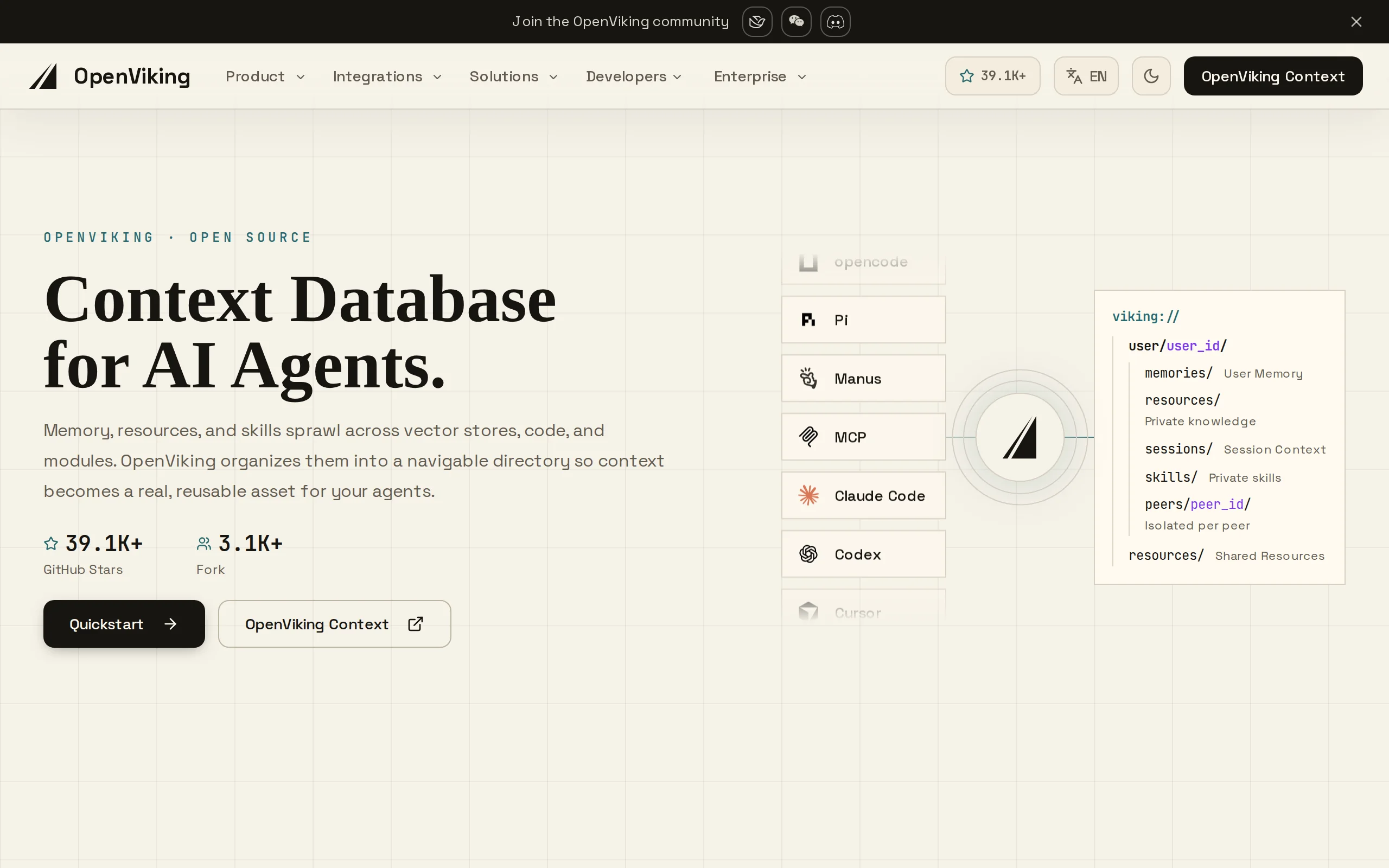
OpenViking – ByteDance's Open-Source AI Agent Context Database
OpenViking is an open-source AI Agent context database developed by ByteDance's Volcano Engine. Its core idea is to unify the Agent's memory, knowledge RAG, and skills within a custom `viking://` virt...
GPT-6.1 Sol – OpenAI's New Generation Mainstream Model
GPT-6.1 Sol is a new generation mainstream model launched by OpenAI in 2026, serving as an upgraded version of GPT-6 Sol. It achieves nearly the same level of intelligence as the latter at just one-fi...
© All Rights Reserved. Some content on this site is partially generated by AI with human review.