
Nano Banana 2.1: In-Depth Review of Google DeepMind's Image Generation and Conversational Editing Model
Executive Summary:
Nano Banana 2.1 (Model ID: gemini-nano-banana-2.1) is the second-generation image generation and conversational editing model officially released by Google DeepMind on October 6, 2026. It belongs to t...
1. What is Nano Banana 2.1
Nano Banana 2.1 (Model ID: gemini-nano-banana-2.1) is the second-generation image generation and conversational editing model officially released by Google DeepMind on October 6, 2026. It belongs to the Gemini 3 series and is built upon the underlying architecture of Gemini 3.6 Flash. This model deeply integrates native multimodal reasoning, 1M token long context support, and knowledge grounding capabilities. It supports output resolutions of 1K, 2K, and 4K, and can generate images by fusing up to 14 reference images. Compared to its predecessor, Nano Banana 2, the core improvements are concentrated in four areas: design completeness, mask-based local editing precision, multi-character consistency, and visual naturalness. Particularly, its factual accuracy score for infographics has significantly increased to 0.521. The model is now fully integrated into multiple platforms, including Gemini App, Google AI Studio, Gemini API, and Google Flow, targeting professional visual production scenarios such as advertising design, e-commerce visuals, character creation, and educational illustrations.
Technical positioning and domain: Nano Banana 2.1 belongs to the subcategory of multimodal image generation and editing within the generative AI field. Its unique positioning lies in integrating image generation and conversational editing into a single native multimodal reasoning process, rather than the traditional diffusion model's "text-to-image" one-way mapping. It is an efficient generation member of the Google Gemini 3 series, with a technical approach emphasizing image creation and fine-grained control through native multimodal reasoning.
Development background: This model was developed by the Google DeepMind team, building upon the long-term accumulation of native multimodal architecture and long-context reasoning technology from the Gemini 3 series. The motivation behind its development was to address the shortcomings of traditional image generation models in three core areas: controllability of local edits, multi-subject cross-image consistency, and factual accuracy of infographics. It particularly targets the higher demands for precision and reliability in professional visual production scenarios.
Core value: Nano Banana 2.1 solves the industry-wide issue of previous image generation models being "adept at generating but lacking in editing." Through its mask-constrained local editing mechanism (Elo 1049), it achieves near Photoshop-level deterministic regional modifications. Its multi-character consistency capability (Elo 1106) resolves the pain points of facial drift and appearance inconsistency for people and products in continuous generation. By leveraging knowledge grounding and Google search retrieval, it elevates the factual accuracy of infographics to a level suitable for actual use in educational contexts.
Technical features: Nano Banana 2.1 is based on the Gemini 3.6 Flash native long-context multimodal model, offering a maximum context window of 1M tokens. It can understand both text and image inputs within the same model and jointly generate image and text outputs. The Thinking inference mode it provides allows the model to explicitly reason and plan design requirements, layout structures, and editing constraints before generation, significantly improving the quality of complex design tasks. It also supports artifact optimization for ultra-wide aspect ratios such as 1:4, 4:1, 1:8, and 8:1.
2. Key Features
Mask/Ink-Based Local Editing: Users can specify the image region to be modified by circling or sketching, and the model will make changes only to the designated area under dual constraints of spatial localization and attention control, preserving the main subject's position, size, and the rest of the image unchanged. This capability achieved an Elo score of 1049 in the Mask/Ink-Based Editing evaluation, approaching the deterministic editing control of Photoshop. It is suitable for precise operations such as product retouching and subtle adjustments to human subjects.
Multi-Image Fusion and Multi-Character Consistency: The model supports inputting up to 14 reference images simultaneously, enabling the fusion of multiple characters or products within a single image. It ensures consistency in facial features, clothing details, and product appearances across the fusion and subsequent rounds of editing. The multi-character consistency evaluation score reached 1106, significantly addressing the issues of facial drift and appearance inconsistency in cross-image generation. This is ideal for fashion editorial compositions and multi-product displays.
Knowledge-Enhanced Infographic Generation: The model can access real-time world knowledge from Gemini and combine it with Google Web Search and Image Search for retrieval grounding, organizing the retrieved factual information into structured visual presentations. The factual accuracy evaluation score for infographics reached 0.521, far surpassing the previous generation, Nano Banana 2. It can now generate educationally accurate diagrams, such as the internal structure of the Earth and cloud classification charts, as well as complex infographics.
Text-to-Image Generation and Ultra-High Resolution Output: The model supports generating high-quality images directly from natural language text prompts, with output resolutions available in three options: 1K, 2K, and 4K. Compared to previous versions, version 2.1 demonstrates significantly improved material texture, light transitions, and spatial detail in ultra-high-resolution (4K) outputs, closely resembling real photography. The typical "AI flavor" commonly seen in generated images is notably reduced, and the model has also optimized the tiling artifacts that often occur during ultra-wide format generation.
Thinking Inference Mode and No Thinking Mode: The model provides two inference modes for users to switch between as needed. When Thinking mode is enabled, the model first performs explicit reasoning and planning for design requirements, layout structure, and editing constraints before executing the generation process, resulting in significantly higher scores in infographic design, overall preference, and factual tasks. No Thinking mode focuses on rapid response, ideal for sketch exploration and batch draft generation where speed is a priority.
3. How to Use
Select the Access Point: Nano Banana 2.1 can be accessed through multiple product interfaces, including Gemini App, Google AI Studio, Gemini API, Google Flow, or Stitch. Gemini App is ideal for general users engaging in conversational content creation, while Google AI Studio and the API are suitable for developers looking to integrate programmatically. Google Flow is tailored for automated workflow scenarios. Developers can directly invoke the model ID
gemini-nano-banana-2.1via the API.Obtain an API Key (for Developers): Go to the Google AI Studio console to apply for an API Key. To apply, you will need a Google account and must agree to the Gemini API service terms. After obtaining the key, configure authentication information in your local development environment and initiate requests using REST API or the official SDK.
Input Prompts: Describe the image content you want to generate or modify using natural language. Example prompts: "Generate a retro poster in Swiss style" or "Change the person's coat in the image to a red leather jacket." The model has strong instruction-following capabilities and supports multi-turn conversational iterative modifications.
Upload Reference Images (Optional): In scenarios requiring multi-character fusion or consistent product generation, you can upload up to 14 reference images. The model will extract character features, product appearances, and style information from the reference images and maintain visual consistency of these elements in the generated output.
Specify Edit Area (for Editing Scenarios): Use a selection mask or doodle tool to mark the areas of the image that need modification. The model will only make changes to the marked regions, preserving the original content, position, and size of the rest of the image, enabling precise local control.
Enable Thinking Mode (Optional): For high-precision tasks such as infographic design or complex layout creation, it is recommended to enable Thinking Mode. The model will first perform explicit reasoning and planning before generating, resulting in improved design completeness and factual accuracy. If response speed is a priority, you can keep the model in No Thinking Mode.
Multi-turn Iteration and Export: Continue providing modification suggestions through conversation. The model retains previously confirmed changes in each round of editing, preventing degradation. Finally, choose an output resolution of 1K, 2K, or 4K. When exporting, you must comply with Gemini's usage terms and content safety policies.
4. Pros and Cons Analysis
| Pros |
|---|
| Professional-level design maturity: Infographic Design Elo reaches 1048, capable of stably completing layout, font, and hierarchy-integrated graphic design products, directly producing visual drafts that are close to deliverable standards, significantly lowering the threshold for professional design. |
| Precise local editing capability: Mask/Ink-Based Editing scores 1049, allowing precise modifications to selected areas while keeping the main subject's position, size, and the rest of the image completely unchanged, offering a Photoshop-like level of deterministic control, ranking among the top in similar models within the industry. |
| Outstanding multi-role consistency: Multi-role consistency reaches 1106, supporting up to 14 reference images for fusion, maintaining consistent appearances of characters and products in continuous generation and composition scenarios, effectively addressing the industry pain point of cross-image consistency. |
| Significantly enhanced factual accuracy: Infographic Factuality reaches 0.521, combining Gemini's world knowledge with Google Search grounding to provide factually accurate content generation in infographic and educational illustration scenarios, suitable for real-world objects and knowledge visualization. |
| High-resolution images appear natural and realistic: Under 4K output, material textures, lighting, and spatial details are closer to real photography, significantly reducing the "AI feel" of traditionally generated images, meeting the high-quality demands of professional visual production. |
| Switchable Thinking inference mode: Offers both Thinking and No Thinking modes, allowing users to dynamically balance generation quality and response speed based on task complexity. The Flexible design is suitable for different types of workloads. |
5. Comparative Analysis with Similar Tools
| Comparison Dimension | Nano Banana 2.1 (Google DeepMind) | ChatGPT Images 2.5 (OpenAI) |
|---|---|---|
| Underlying Architecture | Native multimodal model based on Gemini 3.6 Flash, 1M token long context, image output of 4K tokens | Dual-model architecture of the GPT Image 2.5 family: Flare (fast version) and Sunburst (precision version), with a prompt window reaching 20,000 characters |
| Core Positioning | High-efficiency generation + conversational editing + knowledge grounding, targeting professional design production and educational illustrations | Transitioning from "generation" to "precise editing," making editability a default feature, approaching the designer's "layer editing" mental model |
| Generation Capabilities | Text-to-image, 1K/2K/4K output, knowledge-enhanced infographics, localized multilingual text rendering, and support for ultra-wide formats | Native resolution steps of 1K/2K/4K, maximum side of 3840px, supporting aspect ratios from 1:3 to 3:1, and native transparent background (PNG/WebP) |
| Editing Capabilities Highlights | Masking/sketch-based local editing Elo 1049, multi-character consistency 1106, confirmed modifications in multi-round editing remain stable | "Only modify the specified parts, keeping the rest unchanged," confirmed modifications in multi-round editing are less likely to degrade, with subject fidelity recognized as industry-leading |
| Multi-image Handling | Up to 14 reference images, with multi-character and multi-product consistency fusion | Up to 16 reference images, supporting masking to limit editing scope |
| Knowledge Grounding | Calls on Gemini world knowledge + Google Web Search and Image Search for retrieval, infographic factual accuracy of 0.521 | No real-time search grounding, infographic accuracy and layout have measurable improvements but lack external knowledge retrieval |
Selection Recommendations: For scenarios requiring educational illustrations, knowledge posters, and factual content generation, Nano Banana 2.1 has a significant advantage due to its knowledge-enhancing mechanism with Google search grounding, especially for tasks with high accuracy requirements such as biological structures and geographical knowledge. It is recommended to prioritize version 2.1 for these tasks. For teams seeking greater editing flexibility, transparent background material output, and higher limits for multi-reference image processing, ChatGPT Images 2.5's subject verification and layer editing mental model better align with the designer's workflow. Its support for 16 reference images and native transparent background capabilities provide additional value in e-commerce material production. If the requirement is only for general image creation on a daily basis and there is no need for high-accuracy infographics, the previous generation Nano Banana 2 can still serve as an economical alternative. However, considering that it will be shut down on October 29, 2026, it is advisable to directly adopt version 2.1 for new projects.
6. Editor's Summary
The technological innovation of Nano Banana 2.1 is primarily reflected in the deep integration of the end-to-end native multimodal reasoning architecture with the image local editing control mechanism. Unlike the common industry approach of combining diffusion models with external editing modules, version 2.1 leverages the native long-context capabilities of Gemini 3.6 Flash to complete a closed-loop reasoning process within a single model, encompassing text understanding, image parsing, spatial localization, and generation output. Its Thinking mode performs explicit planning of design requirements and layout structure before generating content. This "reason first, generate later" technical approach effectively improves the consistency and completeness of complex design tasks, offering a promising direction for the evolution of image generation models.
In terms of practical value, Nano Banana 2.1's performance on three key metrics—mask-based local editing (Elo 1049), multi-character consistency (Elo 1106), and infographic factual accuracy (0.521)—demonstrates that the model has advanced image generation from "usable" to "production-ready." Particularly, its ability to generate accurate infographics has significantly reduced factual error rates by incorporating real-time search grounding, making it truly applicable in scenarios with strict accuracy requirements such as educational content and scientific illustration. Compared to previous versions, improvements in wide-area tiling artifacts and degradation during multi-round edits also highlight the model's targeted response to real-world production challenges.
The target user profile for this model is relatively clear: professional designers and creative teams can leverage its precise local editing and multi-character consistency capabilities to enhance visual production efficiency. Educational content creators and science communication organizations can utilize its knowledge-enhanced generation capabilities to produce factually accurate instructional visuals. E-commerce operations teams can achieve low-cost mass production of product visual assets through multi-image fusion and consistency maintenance. For independent developers and small and medium-sized enterprises, the API integration method lowers the barrier to adoption, though considerations regarding the stability and compliance costs of Google Cloud Services should be taken into account.
As the latest iteration of the Gemini 3 series in the image generation domain, Nano Banana 2.1 demonstrates a clear direction of advancement in both technical approach and product definition. With the continued optimization of the Thinking mode for more complex tasks and the further maturation of the 4K resolution workflow, the model's value within professional visual production pipelines is worth ongoing attention. The technical benchmarks it establishes in factual accuracy and editing controllability are also expected to positively influence similar products in the industry.
7. Application Scenarios
Advertising and Marketing Material Design: Advertising teams can use Nano Banana 2.1 to quickly generate posters, social media visuals, e-commerce product visuals, and UI mockups. The model can autonomously handle layout, typography, color blocks, and information hierarchy, directly producing near-final visual drafts. Combined with the mask-based local editing feature, designers can make precise adjustments based on the generated content, reducing the production cycle for individual materials from hours to minutes.
E-commerce Product Visual Production: E-commerce operations teams can place product images into different scenes or combine multiple products for display. Under the multi-image fusion mechanism, the model maintains consistency in product appearance, size, and details. With 4K output capabilities, it can cost-effectively generate large volumes of product display images, scene images, and advertisements, reducing the costs associated with traditional photography and post-production editing.
Character and Avatar Content Creation: Creators can leverage the multi-character consistency capability to combine multiple model reference images into fashion大片 or ensure the same character appears continuously across a sequence of frames. This feature is suitable for character story series, virtual idol visual content, and scene storyboard design, ensuring consistency in facial features and clothing style across multiple frames.
Educational and Informational Diagram Generation: Educators and science communication content creators can utilize Gemini's world knowledge and search grounding capabilities to generate factually accurate educational diagrams, knowledge posters, and complex charts depicting topics such as the Earth's internal structure, cloud classification, and the photosynthesis process. The model's factual accuracy score for information diagrams is 0.521, significantly higher than previous generations, making it ideal for creating teaching materials and science publications.
8. FAQ
Q: What is the difference between Nano Banana 2.1 and Nano Banana 2?
A: Nano Banana 2.1 is an iterative version released by Google DeepMind on October 6, 2026. Key improvements include: masked/doodle local editing accuracy (Elo 1049), multi-character consistency (Elo 1106), infographic factualness (0.521, previous generation was approximately 0.4), and design completeness (Elo 1048). It also optimizes tiling artifacts in ultra-wide aspect ratios such as 1:4, 4:1, 1:8, and 8:1. The previous version, Nano Banana 2, is scheduled to be retired on October 29, 2026. It is recommended that users start new projects directly with version 2.1.
Q: Can Nano Banana 2.1 be deployed and run locally?
A: No. Nano Banana 2.1 is only available via the Google Cloud API and does not support local deployment or private operation. Users can access it through platforms such as Gemini App, Google AI Studio, Gemini API, Google Flow, or Stitch. There is currently no officially provided offline version for users requiring local deployment.
Q: How to choose between Thinking and No Thinking mode?
A: When Thinking mode is enabled, the model explicitly reasons and plans based on design requirements, layout structure, and editing constraints before generating output. This leads to higher scores in infographic design, factualness, and overall preference tasks, making it suitable for high-precision demand scenarios. No Thinking mode offers faster response times and is ideal for sketch exploration and bulk draft generation. Users can dynamically switch between modes based on task complexity.
Q: How is consistency across multiple characters and products ensured?
A: The model uses a native multimodal architecture to uniformly understand text and multiple reference images. During generation, it explicitly encodes and constrains the features of each subject, maintaining consistency in character faces and product appearances. After users upload reference images, they can provide generation or modification instructions through dialogue, and the model will continuously preserve the confirmed features of the subjects without drift. Up to 14 reference images can be accepted in a single session.
Q: How is the factualness of the infographics generated by Nano Banana 2.1 ensured?
A: The model can access real-time world knowledge from Gemini and combines it with Google Web Search and Image Search for retrieval grounding. Before generating, the model searches for real information and then organizes it into a visual structure for output, thereby reducing the risk of content errors in infographics. This mechanism achieves a factualness score of 0.521, making it suitable for educational illustrations and real-world object generation. However, users should still combine professional judgment for final review.
9. Project Links
- Google AI Studio Experience Platform: https://aistudio.google.com/
- Official Model Card (Google DeepMind): https://deepmind.google/models/model-cards/nano-banana-2-1/
- Gemini Official Image Generation Page: https://gemini.google/overview/image-generation/
- Official Google DeepMind Organization Page: https://deepmind.google/
- Gemini API Documentation: https://ai.google.dev/gemini-api/docs
Related AI Model Articles
Mistral Large 4 – Mistral AI's Most Flagship Open-Source Large Model
Mistral Large 4 is the latest flagship open-source large model launched by Mistral AI, a French artificial intelligence company, and is nicknamed "Le Chonk" (the chubby cat). This model employs a fine...
EmbeddingGemma 2 – Review of Google's Open-Source Native Multimodal Embedding Model
EmbeddingGemma 2 is an open-source native multimodal Embedding model developed by Google, built upon the Gemma 4 architecture. It unifies five modalities—text, code, images, video, and audio—into a si...
Kling 4.0 – A New Generation AI Video Generation Model Launched by Kuaishou
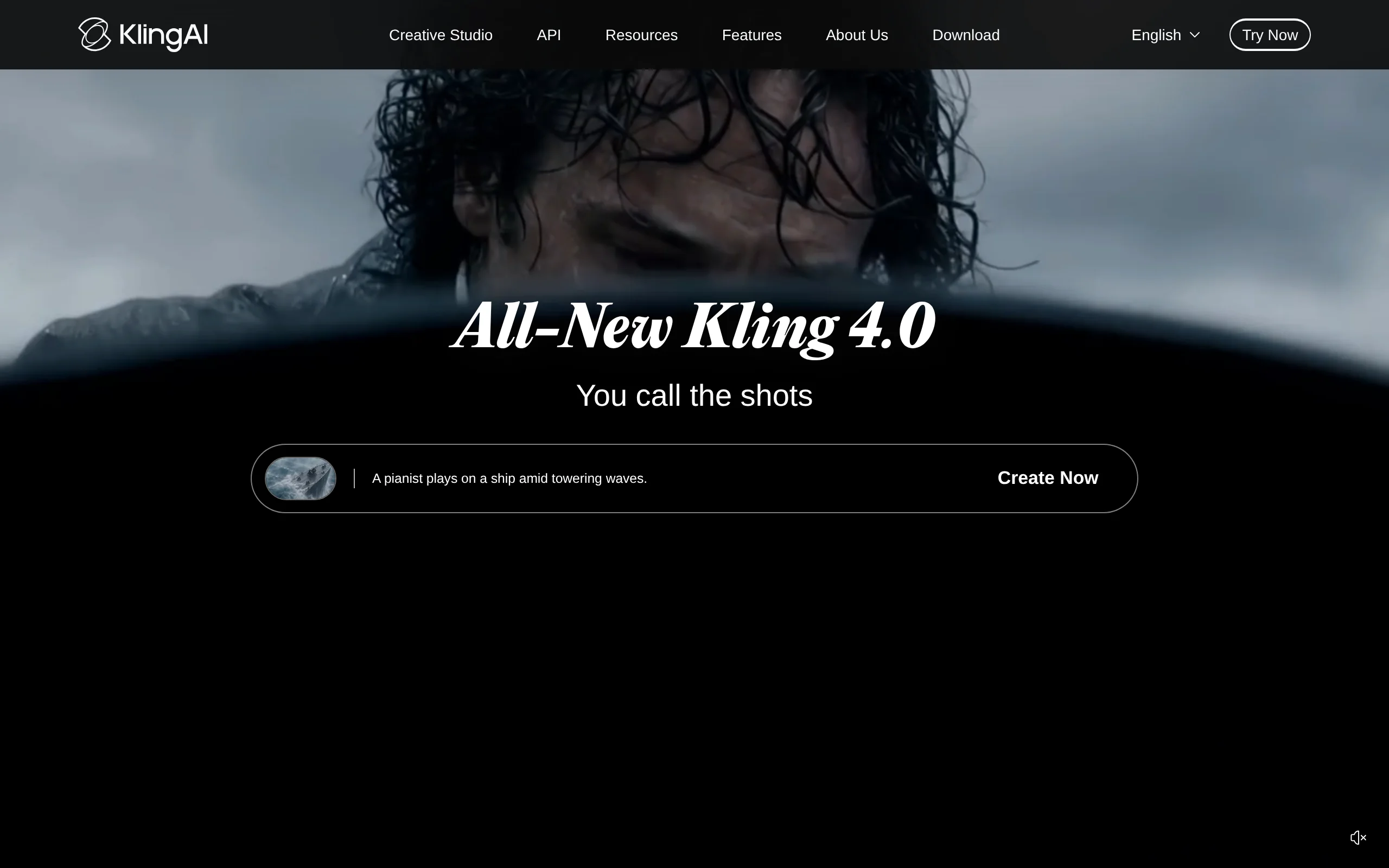
Kling 4.0 is the latest generation video generation model introduced by Kuaishou's Keling AI. The lightweight version, Kling 4.0 Flash, is now open for early access, with the full version expected to ...
In-Depth Review of M3.1-Flash-Preview: MiniMax's Text Programming Model for Everyday Development Scenarios
M3.1-Flash-Preview is the latest text programming model launched by MiniMax, initially released on the MiniMax Code intelligent programming client. Designed for everyday development scenarios, this mo...
© All Rights Reserved. Some content on this site is partially generated by AI with human review.