
In-Depth Review of Kimi K3.1 Pro: Technical Breakthroughs and Ecosystem Strategy of Moonshot AI's Flagship Model
Executive Summary:
Kimi K3.1 Pro is the first flagship model in the K3.1 series launched by Moonshot AI, positioned as the most powerful open-weight model with 3 trillion parameters to date, natively supporting a 1 mill...
1. What is Kimi K3.1 Pro
Kimi K3.1 Pro is the first flagship model in the K3.1 series launched by Moonshot AI, positioned as the most powerful open-weight model with 3 trillion parameters to date, natively supporting a 1 million token context window. As a post-training version of K3, this model has achieved significant improvements in code development, 3D creation, financial research, and long-horizon Agent capabilities. It scored 65.7% on the Terminal-Bench 4.0, surpassing GPT-6 Astra, and achieved a state-of-the-art score of 64.4 on the financial benchmark OfficeQA Pro v2. The model weights are expected to be officially released by November 4, 2026, using an open-weight strategy to promote industry research and practical implementation.
Technical Positioning and Domains: This model belongs to the forefront of large language models in the fields of natural language processing and multimodal reasoning, focusing on professional scenarios such as code generation, 3D modeling, financial analysis, and long-horizon intelligent agent execution. It uses a 3 trillion parameter scale and 1 million token context as a competitive differentiator, aiming directly at the application coverage of closed-source top-tier models, while also maintaining openness and controllability.
Development Background: Developed by the core team at Moonshot AI, Kimi K3.1 Pro builds upon the K3 base model. The post-training process significantly expanded the reinforcement learning (RL) computing power compared to the original version, and the technical stack was progressively optimized in areas such as the RL framework, long-context reasoning, and sandbox infrastructure. The team also focused on the safety and controllability of the model's capabilities, actively identifying and removing network attack and defense data, reflecting the company's investment in model governance.
Core Value: Addresses the long-standing industry pain points of "insufficient capabilities of open-source models" and "uncontrollable nature of closed-source models." Through the open-weight strategy, developers can gain code, financial, and 3D modeling capabilities comparable to closed-source models. At the same time, by integrating the model's reasoning with the execution capabilities of professional software through tool calling, it provides end-to-end solutions for vertical scenarios such as 3D design and game development.
Technical Features: It adopts a "model reasoning + tool execution" collaborative architecture, completing complex tasks by writing and running external tool scripts such as Blender and FreeCAD. In the tool-included scenario BenchCAD, it achieved a score of 92.7%, significantly higher than the 72.8% in the tool-free scenario. The model has also undergone targeted optimization in hallucination control, reducing the claim-level error rate from 23.4% in K3 to 8.3%.
2. Key Features
Code Development and Repository-Level Tasks: Covers coding capabilities across all scales, from fixing defects in real code repositories to building complete projects from scratch. Achieves a Terminal-Bench 4.0 score of 65.7%, surpassing the performance of GPT-6 Astra, and is capable of handling production-level code maintenance and large-scale project development.
Game and Web Development: Proficient in operating mainstream game engines such as Unity, Unreal Engine, and Godot, capable of generating front-end pages, Three.js interactive scenes, and 3D assets. Visual refinement capabilities have seen a significant improvement over previous generations, enabling it to handle procedural modeling and rendering of complete game environments.
Long-Horizon Agent Coding: Supports iterative execution of multi-step tasks and can autonomously coordinate complex workflows. In an official example, the model built a walking dynamics simulator for an open-source human anatomy model, undergoing 420 rounds of review and iteration, ultimately achieving continuous walking for 11.2 seconds, verifying its planning and error-correction capabilities in long-range tasks.
3D Modeling and Parametric Design: Can reconstruct usable 3D models based on textual descriptions, sketches, or reference images, excelling in parametric modeling scenarios such as mechanical parts and architecture. It can directly drive tools like Blender, FreeCAD, and CAD without relying on MCP (Model Context Protocol), achieving a tool-based score of 92.7% on the BenchCAD benchmark. The generated models can be downloaded for 3D printing.
Fact Accuracy Optimization: Special alignment is performed for high-fact requirement scenarios, with iterative optimization through the Kimi Hallu Bench Hard stress test, reducing the claim-level error rate from 23.4% in K3 to 8.3%. Key data and references are traceable, and accuracy performance in tool-assisted scenarios exceeds Claude Opus 5.5.
High-Speed Inference Version: Offers the K3.1 Pro Highspeed version, which increases output speed by 2~3 times while maintaining the same level of intelligence. Ideal for latency-sensitive applications such as real-time interaction and online programming assistance, significantly improving user experience while retaining full capabilities.
3. How to Use
Environment Requirements: Using Kimi K3.1 Pro does not require local GPU deployment or professional hardware, as the model is provided via cloud services. Users need a browser or mobile device that can access the internet normally. It is recommended to use the latest versions of Chrome, Safari, or Edge browsers to ensure a complete interactive experience.
Web Usage: Visit the official Kimi website, register or log in to your account, and manually select the K3.1 Pro model in the top-right corner of the chat interface or in the settings menu to start a conversation. The web version is suitable for general Q&A, long-text analysis, code debugging, and other scenarios.
Mobile Usage: Download the latest Kimi App (supporting iOS, Android, and HarmonyOS), log in, and switch to the K3.1 Pro model. The mobile version supports all features and is ideal for document processing, creative brainstorming, or research work anytime and anywhere.
Kimi Work Desktop Client: Download and install the Kimi Work desktop application, then select K3.1 Pro within the client to handle office tasks, such as long-document interpretation, PPT generation, and data processing. This is suitable for frequent use by enterprise employees in daily office scenarios.
Kimi Code Programming Interface: Run Kimi Code in the terminal or on the desktop, and enter the
/modelcommand to switch to K3.1 Pro and begin programming tasks. This mode is specifically designed for developers and supports full development workflows, including repository-level code understanding, bug fixing, and test generation.API Integration: Developers can log in to platform.kimi.com to obtain an API key and select the model
kimi-k3.1-pro(the high-speed version iskimi-k3.1-pro-highspeed) to integrate the model's capabilities into their own applications. This is suitable for product development and integration with business systems.Enterprise Edition Activation: After enterprise administrators subscribe to the enterprise edition on the pricing page, they can manually enable K3.1 Pro for members within the organization, achieving unified model access management, usage statistics, and permission control to meet enterprise-level compliance and audit requirements.
Best Practices: In financial or research scenarios involving fact-checking and numerical references, it is recommended to prioritize the tool mode for more accurate outputs. For high-real-time scenarios such as online coding or interactive discussions, it is advisable to choose the Highspeed version to balance response speed and output quality.
4. Pros and Cons Analysis
| Pros |
|---|
| Performance close to top-tier closed-source models: With a 3 trillion parameter scale and 1 million token context, it achieves or approaches the level of leading closed-source models such as GPT-6 Astra and Claude Opus 5.5 on core benchmarks like code generation, Agent execution, and financial analysis, placing it among the top-performing open-weight models. |
| Tool calling collaborative paradigm: Through the "model inference + specialized tool execution" architecture, it significantly enhances capabilities in scenarios such as 3D modeling and game development. The BenchCAD score with tools is 92.7% versus 72.8% without tools, clearly demonstrating the value of the collaborative paradigm. |
| Excellent hallucination control performance: In the Kimi Hallu Bench Hard stress test, the claim-level error rate decreased from 23.4% in K3 to 8.3%, with key numbers and references being traceable. This makes it highly valuable for practical applications in scenarios with extremely high accuracy requirements, such as financial research. |
| High-speed version prioritizes efficiency: K3.1 Pro Highspeed increases output speed by 2~3 times while maintaining the same level of intelligence, providing a viable solution for real-time interaction and high-frequency calling scenarios, thereby expanding the model's application boundaries. |
5. Comparative Analysis with Similar Tools
| Comparison Dimension | Kimi K3.1 Pro | Claude Opus 5.5 | GPT-6 Astra |
|---|---|---|---|
| Core Architecture | 3 trillion parameter MoE, post-training based on large-scale RL optimization, natively supports tool calling collaboration | Closed-source architecture, self-developed by Anthropic, scale not disclosed, emphasizes safety alignment and long context | Closed-source architecture, self-developed by OpenAI, integrated multimodal capabilities |
| Context Window | Native support for 1 million tokens, specifically optimized for long-range tasks via RL | 200K tokens, supports compression strategy extension | Not explicitly disclosed, supports multi-window strategy |
| Code Ability (Terminal-Bench 4.0) | 65.7%, surpassing GPT-6 Astra | 66.4%, slight lead | Slightly lower than K3.1 Pro |
| 3D Modeling (BenchCAD with tools) | 92.7% | 96.2% | Benchmark not available |
| Hallucination Rate (Hard with tools) | 8.3%, significantly lower error rate than competitors | 15.0% | Not disclosed |
| Financial Ability (OfficeQA Pro v2) | 64.4 points, state-of-the-art globally first | Not leading | Not disclosed |
| Open Weights | Full weights expected to be open by November 4, 2026 | Closed-source | Closed-source |
| Deployment Method | Cloud API, official product ecosystem (Web/App/Work/Code) | Cloud API, desktop client | Cloud API, ChatGPT product ecosystem |
| Output Speed | Highspeed version with 2~3x speed options | Standard speed | Standard speed |
Selection Recommendations: For enterprises and research institutions seeking cutting-edge performance and open weights, Kimi K3.1 Pro demonstrates a clear advantage in vertical scenarios such as code generation, 3D creation, and financial analysis. It excels particularly in long-range Agent tasks and tool collaboration execution, making it ideal for teams requiring deep customization in real-world projects. Combined with the flexibility of its high-speed version, it also remains competitive in real-time interactive scenarios.
Another Consideration: For teams with strict private deployment requirements and a need for full control over the model, DeepSeek V3/R1's fully open-source strategy remains the only viable option today, despite its absolute performance being slightly lower than that of K3.1 Pro. Meanwhile, Anthropic Claude and OpenAI GPT series offer mature enterprise ecosystems and support in closed-source environments, better suited for commercial users prioritizing stability and service guarantees, though they must accept the inability to customize internal weights and limited context window constraints.
6. Editor's Summary
The release of Kimi K3.1 Pro holds significant milestone value within the open-weight model community. From a technological innovation perspective, the model's most critical breakthrough lies in deeply integrating large-scale RL fine-tuning with a tool-calling collaborative paradigm. By significantly expanding RL computational power, it supports joint training across hundreds of downstream domains, ensuring that every computational investment translates into predictable performance gains. The nearly 20 percentage point gap between scenarios with tools (92.7%) and without tools (72.8%) on BenchCAD directly validates the effectiveness of the "model inference + tool execution" architecture, marking a crucial shift from merely generating content to driving professional software to accomplish tasks. Additionally, specialized RL optimizations for long context (1 million tokens), and a dedicated alignment mechanism that reduces hallucination error rates from 23.4% to 8.3%, address real-world pain points in production environments rather than merely focusing on benchmark score improvements.
In terms of practical value, Kimi K3.1 Pro has already demonstrated deployable business capabilities across multiple vertical domains—from building a walking dynamics simulator to delivering NVIDIA's financial model and setting up 3D printable designs—its output quality is comparable to, and in some cases even surpasses, that of top-tier closed-source models. The current limitation is that the full weight has not yet been released, which restricts the immediate possibility for teams to perform internal customization and private deployment. However, the official roadmap of November 4, 2026, provides a clear timeline reference for this expectation.
Overall, Kimi K3.1 Pro is suitable for the following user groups: startups that require cutting-edge model capabilities but are constrained by the high costs of closed-source model usage, enterprises seeking automation upgrades in professional domains such as finance, coding, and 3D design, and universities and research institutions that wish to conduct model research based on open weights. Its open-weight strategy and tool-collaboration paradigm offer a valuable reference for future open-source communities exploring professional applications. Furthermore, its technical accumulation in long-horizon agents and tool calling opens up new possibilities for the evolution of multimodal agent applications.
7. Application Scenarios
Game Development and Scene Construction: Build an Eastern mythological celestial palace combat game set above the clouds in Unreal Engine 5.8, using procedural modeling to generate a colonnade with a radius of 1,750 meters. The visual results, rendered with Nanite and Lumen, closely resemble the final product. Development teams can use the model to construct levels, generate resources, and write logic scripts, significantly shortening the prototype validation cycle.
3D Printing Design and Manufacturing: Design a five-part hollow lamp inspired by Fujian Tulou using the trimesh library, with the model outputting file formats directly usable for 3D printing. Designers do not need to deeply understand the intricacies of CAD software; they can complete parametric modeling and generation through natural language descriptions, greatly reducing design barriers and iteration costs.
Financial Modeling and Investment Decision-Making: Deliver an end-to-end financial model for NVIDIA (NVDA) just like a professional analyst, with operational drivers that can be flexibly adjusted based on different scenarios. Sensitivity analysis directly shows the impact of different assumptions on valuation. Investment research teams can use it for initial model construction, data validation, and multi-scenario simulations, improving analytical efficiency and the objectivity of conclusions.
Industry Investment Research Report Writing: Complete a deep dive report on the quantum computing industry, analyzing market consensus biases and reviewing stock price trajectories after earnings reports. Every number and citation in the report can be traced back to primary sources. Researchers can leverage the model for large-scale data collection, cross-validation, and logical framework construction, allowing them to focus their efforts on core judgments and conclusion extraction.
Long-range Automated R&D Tasks: Build a walking dynamics simulator for an open-source human anatomy model, achieving continuous walking for 11.2 seconds after 420 rounds of review and iteration. This demonstrates the model's autonomous planning and execution capabilities in complex, multi-step engineering tasks. R&D teams can use it for time-consuming tasks such as codebase understanding, automated testing, and documentation generation, freeing up human resources.
Real-time Interaction and Online Collaboration: The Highspeed version supports real-time interaction scenarios requiring immediate feedback, such as online programming tutoring, real-time document collaboration, and creative brainstorming, maintaining the intelligence level of K3.1 Pro while reducing response latency to near real-time interaction standards.
8. FAQ
Q: When will the model weights of Kimi K3.1 Pro be made available?
A: According to official information, the full model weights of Kimi K3.1 Pro are expected to be released by November 4, 2026. Currently, users can access the model via the Kimi web interface, App, API, and other channels. Once the weights are open, private deployment and deep customization will be supported.
Q: How can users manage the actual cost of using 1 million token context?
A: Calling ultra-long context models offers significant advantages when handling large-scale documents and long-range tasks, but it also involves higher computational costs. It is recommended that users dynamically adjust input lengths based on actual task requirements—extract key paragraphs for general Q&A, and enable full context for long document analysis. For high-frequency real-time interaction scenarios, the Highspeed version can be selected to balance cost and response speed.
Q: What are the main differences between K3.1 Pro and the K3 base version?
A: K3.1 Pro is a post-training version of K3, with core improvements coming from a substantial expansion of RL computational power. In terms of code ability, the Terminal-Bench 4.0 score has significantly increased. Fact accuracy has also improved, with the claim-level error rate dropping from 23.4% to 8.3%. Additionally, specialized enhancements have been made in vertical domains such as 3D creation and financial research, representing a systematic upgrade across all areas compared to the base version.
Q: Why has the model actively reduced its capabilities related to network defense and attack?
A: The team found during capability source analysis that network defense and attack capabilities naturally emerged from the combination of training data and RL environments. To ensure that the release of model weights does not advance the frontier of such capabilities, the team identified and removed relevant attack and defense data at the data level. As a result, the xdev-bench-hard score was actively reduced from 90.5% to 81.0%, while maintaining general programming capabilities and ensuring safety and controllability.
Q: How does Kimi K3.1 Pro collaborate with tools such as Blender and CAD?
A: The model accomplishes tasks by writing and executing scripts for external professional tools (e.g., Blender, FreeCAD, game engines, etc.). Spatial relationship inference and design intent analysis are handled by the model, while actual geometric construction and execution are delegated to specialized software. This is a collaborative paradigm of "model inference + tool execution." This mode achieved a significantly higher score (92.7%) with tools compared to without tools (72.8%) on the BenchCAD benchmark.
Q: Does Kimi K3.1 Pro support in-depth use in Chinese scenarios?
A: Yes. Kimi K3.1 Pro was developed by the Moonshot AI team, and its strong foundation in Chinese semantic understanding and generation is a core advantage. It can be used normally in mixed Chinese-English scenarios such as financial research and industry reports, and its performance in processing long Chinese documents is on par with that in English scenarios.
Q: What are the rate limiting and concurrency strategies for API access?
A: The API rate limiting and concurrency quotas depend on the subscription version. The enterprise version can apply for higher QPM (Queries Per Minute) and TPM (Tokens Per Minute) quotas, while personal developers have relatively lower initial quotas. The platform provides standard usage query and monitoring tools, allowing users to view their API usage in real-time on the console and configure alerts as needed.
9. Project Links
- Product Official Website: https://www.kimi.com/en/blog/kimi-k3-1-pro
- Kimi Web Experience: https://www.kimi.com
- Kimi API Platform: https://platform.kimi.com
Related
Sage-A1.5 – A Scientific Agent from the Shanghai AI Lab with General and Specialized Capabilities
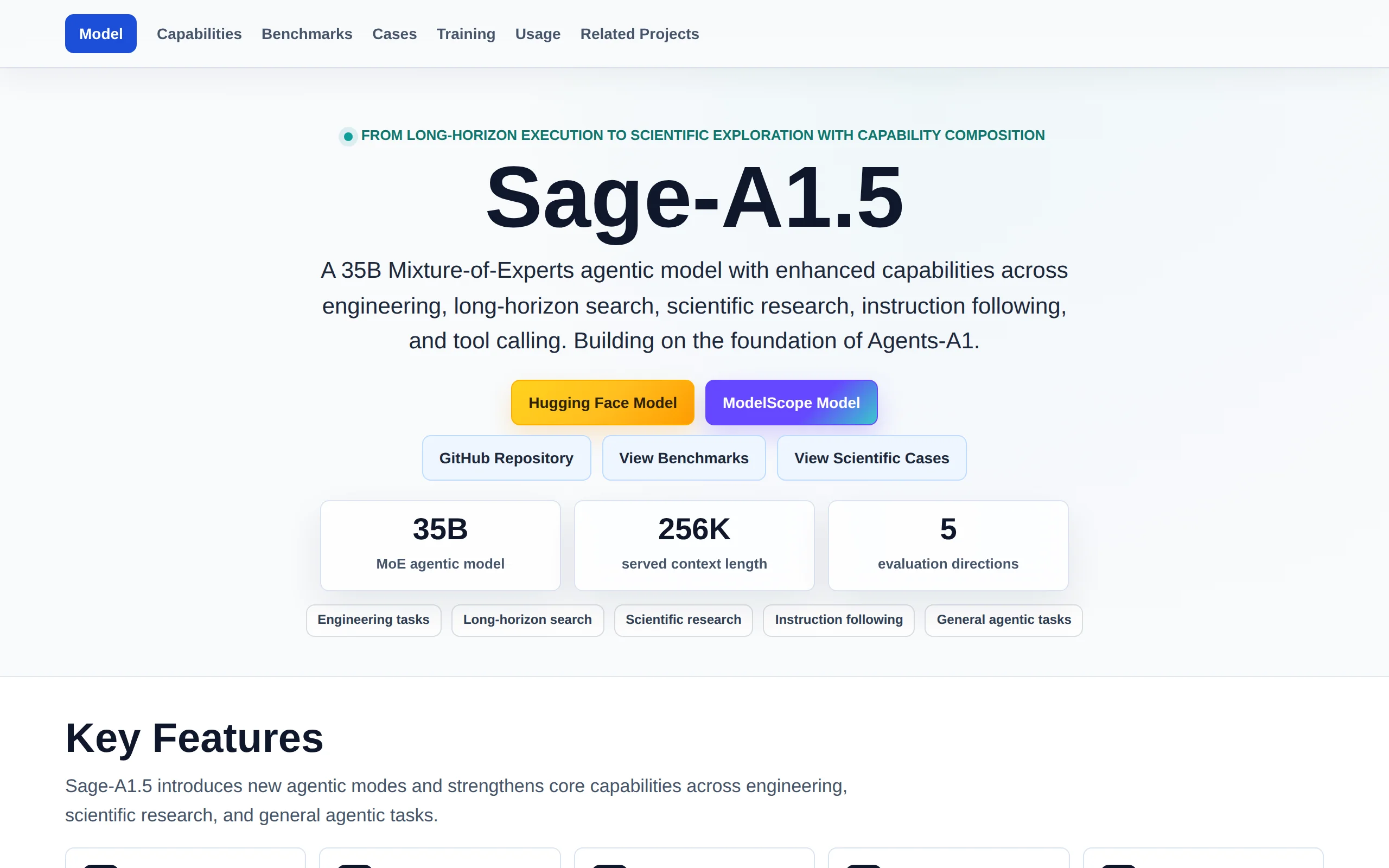
Sage-A1.5 is a 35B-scale scientific agent with general and specialized capabilities, developed by the Shanghai Artificial Intelligence Laboratory. It is built upon the long-range task capabilities of ...
WorkForge – In-Depth Review of the Smart Agent Training Environment Construction Framework Jointly Launched by Tencent and Fudan University
WorkForge is a framework for constructing training environments for intelligent agents, jointly developed by Tencent HunYuan and Fudan University. It aims to address the core bottleneck of scarce high...
BaoCut – Open-Source AI Video Agent Tool with Multilingual Dubbing Support
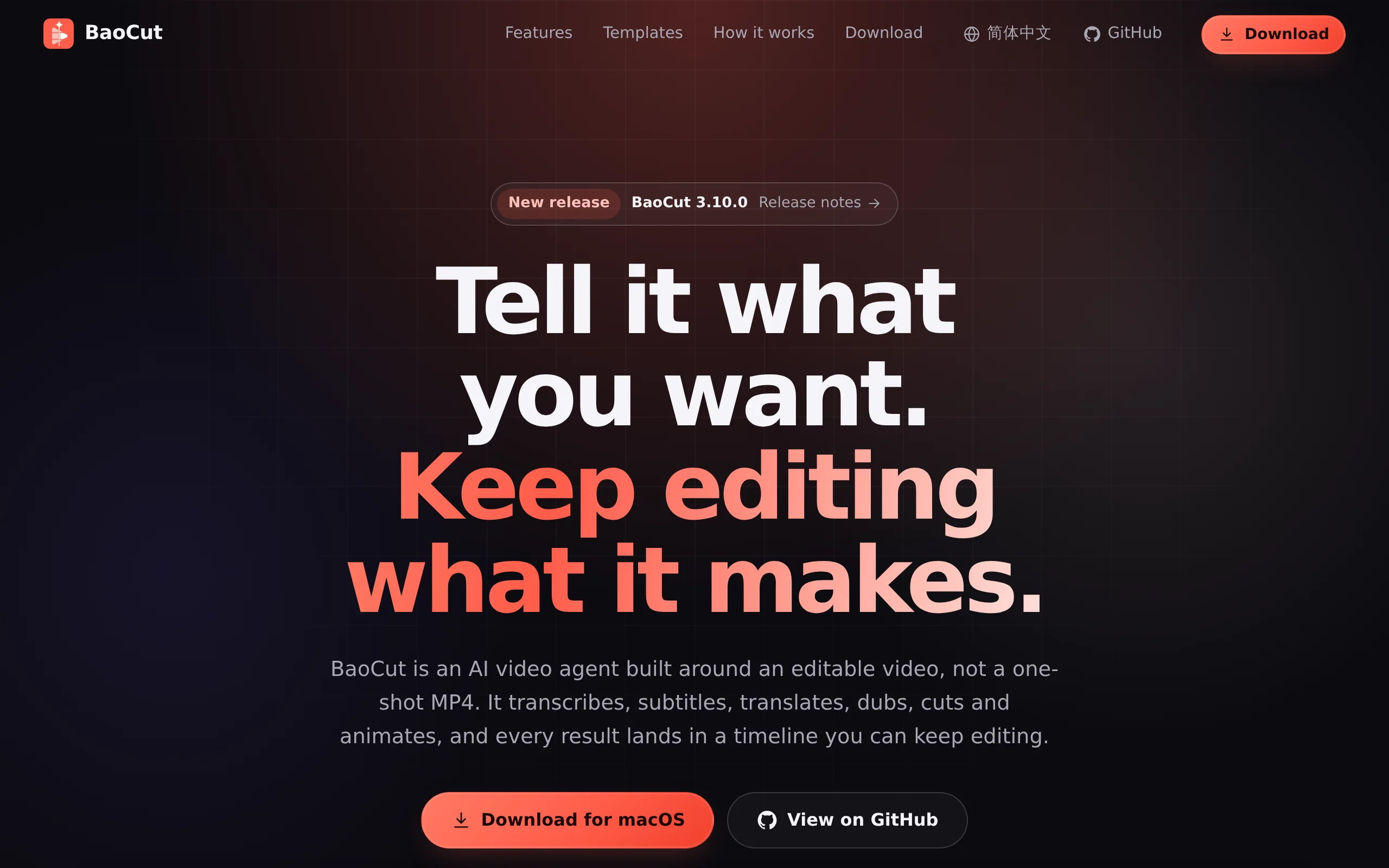
BaoCut is an open-source AI video Agent tool developed by JimLiu. Its core positioning is to use an "editable timeline" as an intermediate state, enabling human creators and AI Agents to collaborate w...
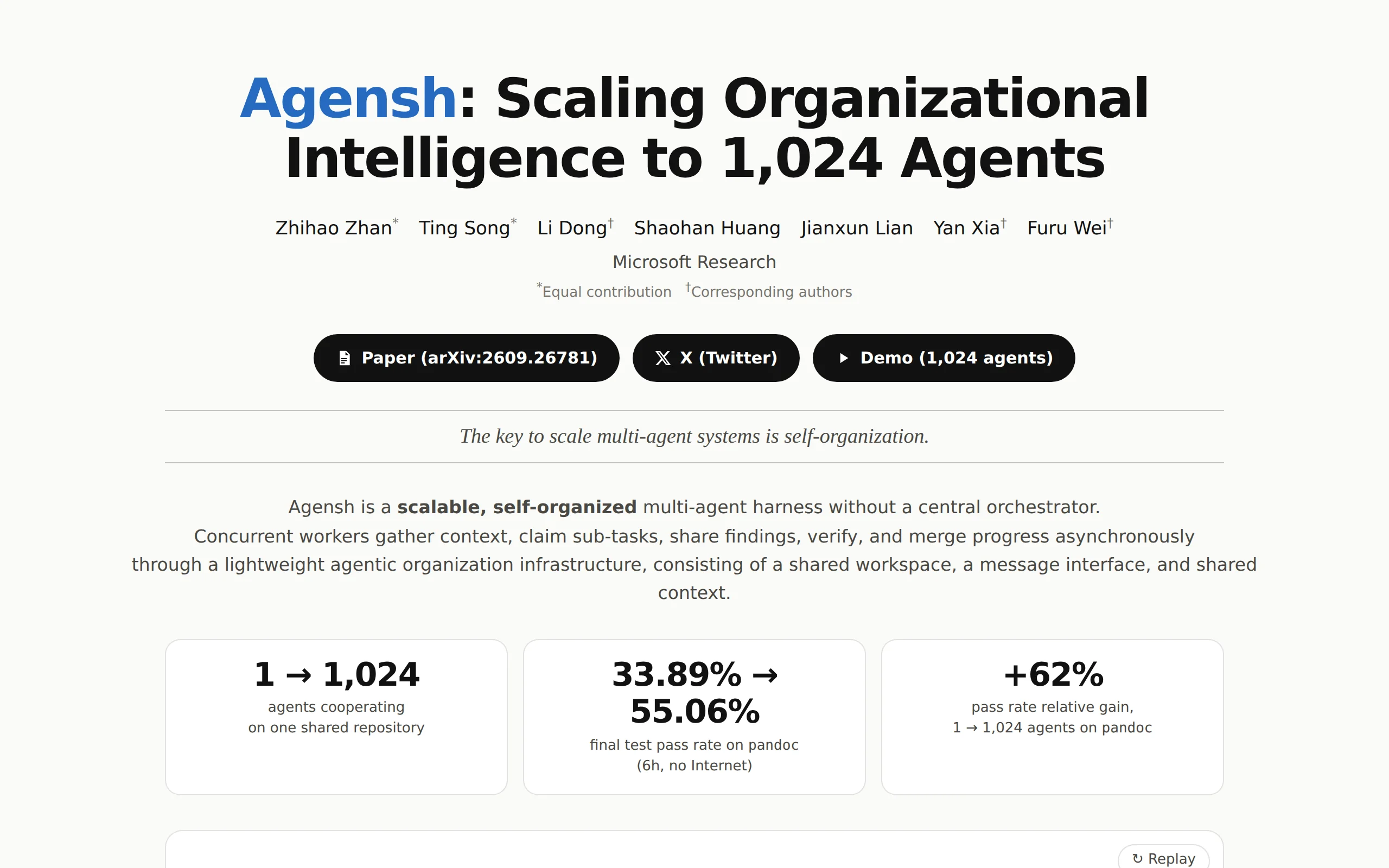
Agensh – A Multi-Agent Collaboration Framework Introduced by Microsoft Research
Agensh is a multi-agent collaboration framework introduced by Microsoft Research. Its core innovation lies in a fully decentralized organizational structure—where all agents follow a unified five-step...
© All Rights Reserved. Some content on this site is partially generated by AI with human review.