
Kling 4.0 – A New Generation AI Video Generation Model Launched by Kuaishou
Executive Summary:
Kling 4.0 is the latest generation video generation model introduced by Kuaishou's Keling AI. The lightweight version, Kling 4.0 Flash, is now open for early access, with the full version expected to ...
1. What is Kling 4.0
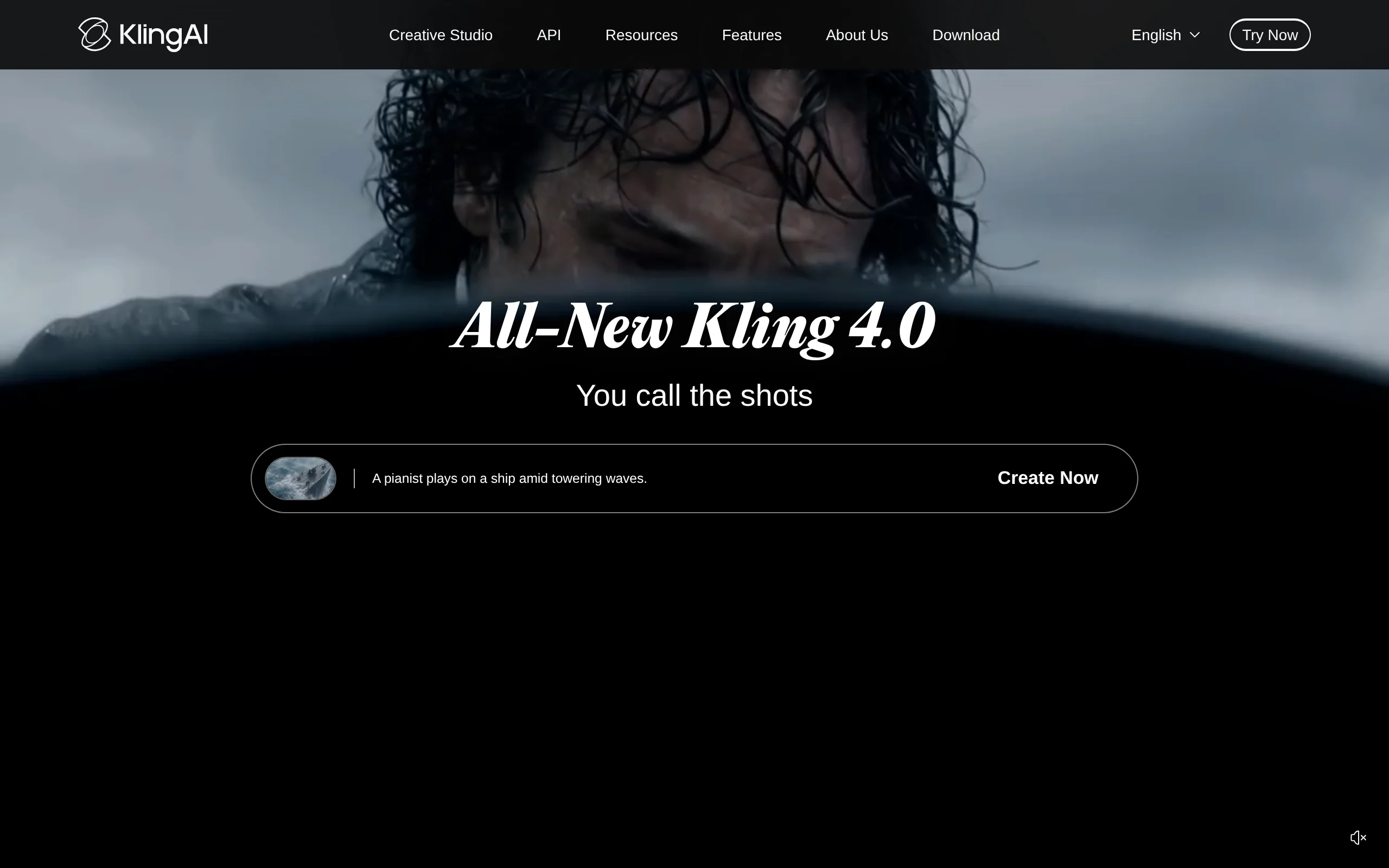
Kling 4.0 is the latest generation video generation model introduced by Kuaishou's Keling AI. The lightweight version, Kling 4.0 Flash, is now open for early access, with the full version expected to be available to all users by October 2026. This model has achieved systematic upgrades across three dimensions: visual realism, creative controllability, and narrative completeness. It supports generating native videos up to 30 seconds in length in a single session, precise control with up to 10 keyframes, multimodal reference inputs, 4K HDR professional-grade output, and high-quality lip-sync matching. It also features capabilities such as multilingual dialect support, creative replication, and ultra-long video continuation, offering creators a one-stop creative experience from inspiration to final output.
Technical Positioning and Domain: Kling 4.0 belongs to the generative AI video model track, focusing on cross-modal content generation from text/images to video. Compared to previous versions, its core breakthrough lies in advancing video generation from short clip concatenation to long, coherent narrative generation. The ability to generate 30-second native videos in a single session places it among the top-tier in the industry, directly addressing professional content production scenarios such as short video creation and advertising/film previsualization.
Development Background: This model was developed by Keling AI, a team under Kuaishou. After launching the initial version in 2024, the team accumulated extensive user feedback and engineering optimization experience through multiple rounds of rapid iteration. The release of Kling 4.0 marks Keling's transition from basic "video generation" capabilities to "controlled storytelling," with technical foundations spanning large language models, visual understanding, multimodal alignment, and video encoding/decoding.
Core Value: Kling 4.0 focuses on solving three key practical issues. First, the limitation of video generation duration, which leads to incomplete narratives. By supporting 30-second native video generation and up to 2-minute continuation, AI-generated content can now have a complete structure with a clear beginning, development, climax, and conclusion. Second, the challenge of uncontrollable generation processes. Through multi-keyframe control and 15 types of multimodal reference inputs, creators can precisely define character states, scenes, and narrative nodes. Third, the limitation of audio-visual separation. By enabling stereo sound and high-precision lip-sync matching, Kling 4.0 achieves synchronized audio-visual generation, enhancing the realism and commercial viability of the final output.
Technical Features: On the technical level, Kling 4.0 combines the capabilities of a "long narrative engine," a "full-modal reference system," and a "precise editing pipeline." Specifically, it supports prompt inputs of up to 8000 tokens and has the ability to automatically expand prompts with director-like thinking. It allows up to 10 keyframes as input to achieve a one-shot control logic. Output specifications include 4K 10-bit HDR and 21:9 ultra-wide aspect ratio, meeting the diverse needs of professional film production and social media platforms.
2. Key Features
30-Second Native Output: Generates video clips up to 30 seconds in length in a single pass, delivering complete content with long takes and continuous storytelling without the need for segment splicing. Compared to the typical 10-second or shorter single-generation capability of contemporary competitors, this feature significantly reduces the cost of constructing narrative structures, making it especially suitable for creative scenarios requiring complete storylines, such as short-form video narratives and advertisement clips.
Multi-Keyframe Control: Supports input of up to 10 keyframe images, allowing creators to precisely control character states, scene transitions, and narrative milestones by setting keyframes. Compared to traditional text descriptions and control of only the first and last frames, multi-keyframe control establishes a more granular narrative framework, shifting the generation process from "model-driven improvisation" to "creator-led orchestration," making it ideal for storyboard previsualization and high-continuity, cinematic-grade content.
Multimodal Comprehensive Reference: A single generation task can combine up to 10 images, 5 video clips, and 7 subjects, totaling 15 reference inputs. This feature enables creators to simultaneously reference specific subject appearances, motion trajectories from video references, and the style and atmosphere of scenes, significantly reducing the debugging cost associated with repeated trial-and-error, and making the generation results much closer to the intended creative vision.
Precise Video Editing: Supports adding, modifying, and deleting subjects and backgrounds in already generated videos, and allows adjustments to visual elements such as style, weather, color, and material. This capability shifts video editing from a "re-generate from scratch" model to a "localized refinement" approach, enabling creators to make targeted adjustments to flawed frames without starting over, thereby improving the efficiency of post-production workflows.
High-Quality Lip Sync: Achieves synchronized coordination between dialogue, voice, and performance actions through joint modeling, giving characters a "lifelike" quality. Combined with dual-channel stereo audio output, the dialogue segments in the generated videos possess a realism close to live recordings, providing a solid foundation for narrative and voice-over content.
Creative Recreation: Smartly analyzes the visual language and narrative structure of reference videos, regenerating entirely new commercial videos while preserving the core creative elements. This feature transforms the narrative pacing and shot composition of reference videos into reusable generation logic, meeting the needs for bulk content production in advertising and social media contexts.
Multilingual and Dialect Support: Supports multilingual dialogue in Chinese, English, Japanese, Korean, Spanish, Portuguese, German, French, and Hindi, while also covering multiple regional dialects such as Beijing, Northeastern, Sichuan, and Cantonese accents. Combined with diverse visual styles (cinematic, animated, pixel art, etc.) and the ability to generate text, emojis, and logos, this expands the possibilities for international video content distribution and stylized expression.
3. How to Use
Access the Platform: Visit the official website of Kling AI (kling.ai) or open the Kling App, and log in using your Kuaishou account. The relevant features of Kling 4.0 are now integrated into the creation page of the Kling platform, and no additional software or plugins are required.
Obtain Access Privileges: The Flash version of Kling 4.0 is currently available only for Black Gold annual card members for early access. Regular users will need to wait until the official release in October 2026. It is recommended to follow the official Kling announcements to stay updated on the specific timeline for access availability.
Select Model Version: On the creation page, choose the Kling 4.0 Flash model (marked as an early access version). The official 4.0 version will be available after its release. There are differences in generation quality and feature completeness between the two versions. The Flash version is suitable for feature validation, while the official version is recommended for production use.
Write the Prompt: Describe your creative idea in Chinese or English within the input box, with support for up to 8000 tokens of input. Whether it's a single sentence of inspiration or a complete video script, you can input it directly. The model will automatically expand and refine the content, incorporating "director's thinking" to optimize the narrative pacing. It is recommended to provide clear descriptions of the subject, actions, scenes, and style to achieve results closer to your expectations.
Add Reference Materials: In the unified input box, freely combine images, videos, and subjects as references. Up to 10 images, 5 video clips, and 7 subjects can be uploaded per task. Reference materials will directly influence the appearance of characters, the style of scenes, and the logic of actions in the generated video. It is advised to prioritize high-quality materials with clear subjects.
Set Keyframes (Optional): Upload up to 10 keyframe images to define narrative nodes. Keyframes are used to control character states, scene transitions, and plot points, and are essential tools for precise storytelling. For content requiring exact control over the narrative flow (such as short films or ad storyboards), it is recommended to use this feature.
Configure Generation Parameters: Choose the video duration (maximum 30 seconds), aspect ratio (including 21:9 ultra-wide), visual style (cinematic, animation, pixel art, etc.), and output specifications (4K HDR or 1080p). Parameter configuration directly affects the final presentation of the generated video. It is recommended to select appropriate aspect ratios and specifications based on the target publishing platform.
Preview and Export: After generation is complete, preview the result directly on the timeline. If adjustments are needed, you can make precise edits to the video (adding or removing characters and backgrounds, adjusting style and weather, etc.). Once the effect is confirmed, export the video for use in commercial scenarios such as social media posting or ad campaigns.
4. Pros and Cons Analysis
| Pros |
|---|
| Outstanding Long Narrative Capability: Can generate a 30-second native video in a single session and support up to 2 minutes of continuous shooting. Its long shot and continuous storytelling capabilities provide a competitive edge in similar products, significantly lowering the technical barriers to creating complete storylines. |
| Multi-level Controllability: Supports up to 10 keyframes and 15 multimodal reference inputs, allowing precise customization of characters, actions, shots, and voice. This provides professional creators with a complete control chain from coarse-grained to fine-grained adjustments. |
| Integrated Audio-Visual Generation: Dual-channel stereo sound and high-precision lip-sync ensure natural audio-visual coordination, giving character dialogues a "human-like" feel that closely resembles live-action recordings, reducing the workload for post-production voice dubbing. |
| High Commercial Application Compatibility: Its creative replication capability can analyze the visual language and narrative structure of reference videos to generate new commercial videos. Combined with the 4K 10-bit HDR output specification, it aligns well with high-value content production scenarios such as advertising and social media. |
| Support for Multiple Languages and Dialects: Supports nine languages including French, German, and Hindi, as well as multiple regional dialects such as Beijing, Northeastern, Sichuan, and Cantonese, meeting both international dissemination and localized expression needs. |
5. Comparative Analysis with Similar Tools
| Comparison Dimension | Kling 4.0 (Kuaishou) | Seedance 2.5 (ByteDance) | Runway Gen-3 Alpha |
|---|---|---|---|
| Single Generation Duration | Up to 30 seconds of native output | Up to 30 seconds, now stable and publicly available | Approximately 10 seconds per generation |
| Reference Input Capability | 10 images + 5 videos + 7 subjects, totaling 15 references | 30 images + 10 videos + 10 audio references, totaling 50 references | Start and end frames + limited reference images |
| Keyframe Control | Up to 10 multi-keyframes, supporting "one-shot" long takes | Timestamp-level control for targeted segment editing | Limited keyframe support |
| Video Editing Capability | Add, remove, or modify subjects/backgrounds + adjust style, weather, and material | Timestamp editing + green screen editing + perspective/movement editing + reference editing | General video editing tools |
| Output Specifications | 4K/1080p 10-bit HDR**+21:9 ultra-wide aspect ratio | Native 4K, supports six aspect ratios | Up to 4K (partially planned) |
| Audio Capabilities | Dual-channel stereo + high-precision lip-sync + multilingual dialogue | Native audio-visual joint generation, supports sound effects and ambient audio, multi-character voice restoration | No native audio generation |
| Creative Replication | Parses the narrative structure and cinematography of reference videos for regeneration | Creative reference capability, without emphasis on narrative structure parsing | Style transfer and reference |
| Open Source License | Closed-source commercial model | Closed-source commercial model | Closed-source commercial model |
Note: Kling 4.0's 4K HDR output capability is marked as "coming soon," and the actual release time should be confirmed with the official announcement.
Selection Recommendations: For creators aiming for complete narrative structure and cinematic long takes, Kling 4.0's 30-second native output and multi-keyframe control offer clear advantages, making it suitable for short video storytelling, ad storyboard creation, and film pre-visualization scenarios. For content teams requiring a large volume of reference materials (especially audio references) and emphasizing multi-aspect ratio compatibility, Seedance 2.5's 50-reference capacity and support for six aspect ratios provide greater flexibility. Runway Gen-3 Alpha is more suitable for professional teams with established post-production workflows, as its editing toolchain ecosystem is relatively complete. Luma Dream Machine, on the other hand, is ideal for rapid concept validation and creative exploration, offering fast generation speeds but limited depth of control.
6. Editor's Summary
The release of Kling 4.0 marks a strategic shift for Kling AI from a "video generation tool" to a "narrative creation platform." From a technological innovation perspective, the ability to generate native audio in a single 30-second pass, combined with control over up to 10 keyframes, addresses the core pain point in the AI video generation field: the ease of producing short clips versus the difficulty of achieving coherent storytelling. The "omnichannel reference system" built on 15 types of multimodal reference inputs significantly reduces the hidden costs associated with repeated trial-and-error during the creative process, freeing creators from probabilistic guesswork.
In terms of audio-visual integration, the collaborative generation of dual-channel stereo sound and high-precision lip synchronization compensates for the long-standing shortcomings in audio-visual synchronization in AI video, bringing the output closer to professional production standards.
From a practical value standpoint, Kling 4.0's creative replication capabilities and precise video editing functions extend AI video generation from "zero-based creation" to a complete workflow encompassing "secondary creation" and "targeted modifications," covering the full spectrum of needs from inspiration to final output. The specification of 4K 10-bit HDR and 21:9 ultra-wide aspect ratio clearly targets professional commercial scenarios such as advertising production and film pre-visualization, rather than being limited to fragmented content creation on social media. Support for multiple languages and dialects provides a direct expansion path for international distribution and localized operations of video content.
In terms of target users, the core audience for Kling 4.0 includes short video creators, e-commerce content teams, film and animation pre-visualization teams, and advertising agencies. The creative replication and multimodal reference features are especially valuable for teams that need to produce large volumes of commercial content, while the multi-keyframe control and 30-second direct output capabilities better align with the needs of professional creators requiring precise narrative control.
In terms of growth potential, the technical architecture of Kling 4.0 provides a clear direction for future iterations — the launch of the 2-minute continuation shooting feature will further enhance its long-form storytelling capabilities, while the official opening of 4K HDR output will solidify its professional positioning. As technical details are gradually disclosed and the full version is officially released, Kling has the potential to establish a multi-dimensional competitive edge in the AI video generation space, spanning control precision, narrative completeness, and audio-visual quality. For professionals following the evolution of AI video generation technology, Kling 4.0 is an important sample worth continuous tracking.
7. Application Scenarios
Social Media Short Video Batch Production: Leverage Kling 4.0's 30-second native output and creative replication features to quickly mimic the narrative pacing and visual language of viral videos. Operations teams can first select a reference video, use the creative replication function to analyze its narrative structure and shot composition, and then generate batches of branded content for Douyin, Xiaohongshu, and TikTok, achieving low-cost, high-efficiency matrix content output.
E-commerce Product Advertisement Production: Utilize 15 modal reference inputs to accurately reproduce the appearance, texture, and detail characteristics of products, combined with 4K HDR quality and cinematic-level camera movement to generate high-quality product showcase short films. Brands can produce high-standard product videos suitable for e-commerce product pages, information feed ads, and offline large screens without the need to set up physical shooting scenarios, replacing the time and cost of traditional studio filming.
Fashion and Beauty Virtual Endorsement: Supports virtual try-on for outfits and makeup, combined with high-precision lip-sync generation to create "live human" voiceovers, allowing virtual models to present products and recommendations just like real-life influencers. For fashion e-commerce and beauty brands, this scenario enables the rapid generation of multi-style, multi-angle presentation content, significantly increasing the frequency of new product launches and SKU coverage.
Film and Animation Storyboard Previsualization: With multi-keyframe one-shot control and visual styles such as cinematic, animation, and fantasy, directors and animation teams can generate storyboard previsualizations and concept films at low cost before formal production. By setting keyframes to control character states, scenes, and narrative nodes, teams can verify the feasibility of narrative pacing, camera movement, and visual style before committing to large-scale production, reducing uncertainty in the pre-production phase.
8. FAQ
Q: What is the difference between Kling 4.0 and Kling 4.0 Flash?
A: Kling 4.0 Flash is a lightweight beta version currently available only to black-gold annual card members. There are differences in generation quality and feature completeness—Flash focuses on quickly validating core capabilities, while the official version 4.0 is expected to be fully released in October 2026, featuring complete video editing, 4K HDR output, and more. Regular users can choose to wait for the official release or opt to try the Flash version early through an annual card membership.
Q: What input methods does Kling 4.0 support?
A: Kling 4.0 supports three input methods: first, pure text prompts (up to 8000 tokens), where the model automatically expands and polishes the text while incorporating "director's thinking"; second, a combination of text and images, allowing up to 10 images, 5 video clips, and 7 subjects as multimodal references; third, an optional input of 10 keyframes, used for precise control of character states, scenes, and narrative nodes. These three methods can be used in combination.
Q: Has the 4K HDR output feature of Kling 4.0 officially launched?
A: According to the official information, Kling 4.0 supports 4K 10-bit HDR and 21:9 ultra-wide aspect ratio. However, this output specification is marked as "coming soon." The current beta Flash version mainly outputs at 1080p resolution. The exact launch date will be determined by the official announcement from Kling. It is recommended to follow the Kling AI official website and App for updates on feature releases.
Q: How to use the continuation shooting feature in Kling 4.0?
A: Kling 4.0 supports multiple continuation shoots, allowing the video to be extended up to 2 minutes in length. The specific method involves taking the final frame of the initially generated video as the starting reference for the continuation. The model will then continue generating subsequent segments based on the previous frame and narrative logic. This feature is marked as "coming soon," and once officially launched, it will provide the corresponding operation interface on the creation page.
Q: Can content generated by Kling 4.0 be used for commercial purposes?
A: Yes. Kling 4.0 is designed for commercial use scenarios, and the generated videos can be used for social media posting, advertising, product demonstrations, and other commercial applications. The videos can be exported for use in social media and advertising contexts. It is recommended to review Kling's user agreement and licensing terms before use to confirm specific usage scope and constraints (such as whether AI-generated content needs to be labeled).
9. Project Links
- Kling AI Official Website: https://kling.ai/
- Official GitHub Organization: https://github.com/kwai-kolors (Kwai Kling official technical organization; model code and related tools will be released here in the future)
Related AI Model Articles
Mistral Large 4 – Mistral AI's Most Flagship Open-Source Large Model
Mistral Large 4 is the latest flagship open-source large model launched by Mistral AI, a French artificial intelligence company, and is nicknamed "Le Chonk" (the chubby cat). This model employs a fine...
EmbeddingGemma 2 – Review of Google's Open-Source Native Multimodal Embedding Model
EmbeddingGemma 2 is an open-source native multimodal Embedding model developed by Google, built upon the Gemma 4 architecture. It unifies five modalities—text, code, images, video, and audio—into a si...
Nano Banana 2.1: In-Depth Review of Google DeepMind's Image Generation and Conversational Editing Model
Nano Banana 2.1 (Model ID: gemini-nano-banana-2.1) is the second-generation image generation and conversational editing model officially released by Google DeepMind on October 6, 2026. It belongs to t...
In-Depth Review of M3.1-Flash-Preview: MiniMax's Text Programming Model for Everyday Development Scenarios
M3.1-Flash-Preview is the latest text programming model launched by MiniMax, initially released on the MiniMax Code intelligent programming client. Designed for everyday development scenarios, this mo...
© All Rights Reserved. Some content on this site is partially generated by AI with human review.