
In-Depth Review of M3.1-Flash-Preview: MiniMax's Text Programming Model for Everyday Development Scenarios
Executive Summary:
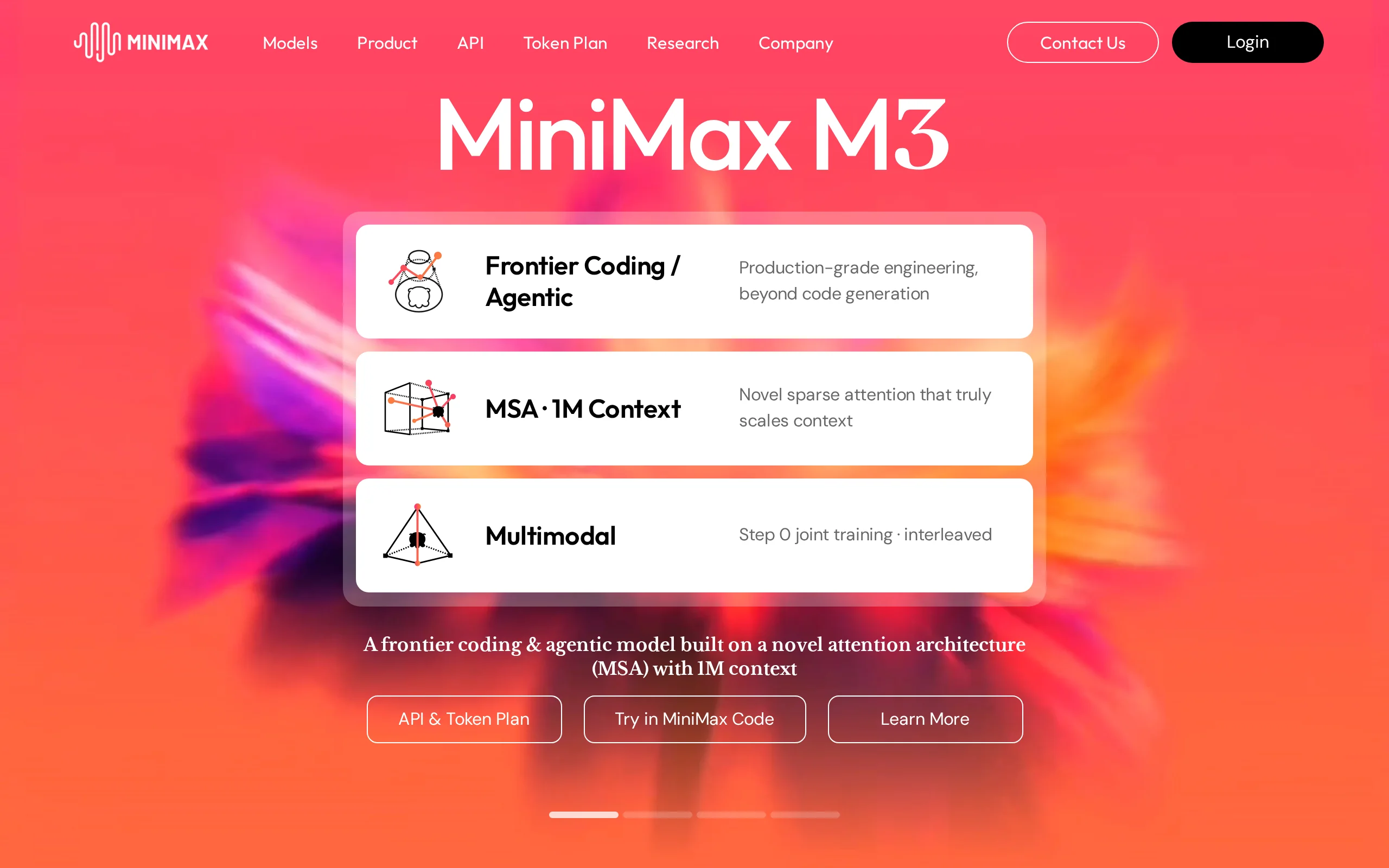
M3.1-Flash-Preview is the latest text programming model launched by MiniMax, initially released on the MiniMax Code intelligent programming client. Designed for everyday development scenarios, this mo...
1. What is M3.1-Flash-Preview
M3.1-Flash-Preview is the latest text programming model launched by MiniMax, initially released on the MiniMax Code intelligent programming client. Designed for everyday development scenarios, this model supports native multimodal input and a context window of up to millions of tokens, enabling a complete workflow from bug fixing to full feature development, forming a "diagnosis → implementation → testing → delivery" closed loop. M3.1-Flash-Preview inherits the MoE (Mixture of Experts) sparse hybrid expert foundation from the M3 model, offering five levels of inference strength control ranging from low to max. It is currently available only to users of MiniMax Code and Token Plan.
Technical positioning and domain: It belongs to the intersection of natural language processing and code generation, focusing on the direction of coding agents (Coding Agent). M3.1-Flash-Preview is positioned as the "main model for everyday development" within the MiniMax product matrix, complementing the M3 model designed for complex tasks. It addresses high-frequency coding scenarios with lower inference costs and faster response speeds.
Development background: Developed by the MiniMax team, this model is optimized based on the M3 foundation released earlier. M3 itself is renowned for its MoE architecture with a total parameter count of 428B, activating approximately 23B parameters per token. M3.1-Flash-Preview further enhances inference speed and cost efficiency on this foundation, showcasing MiniMax's ongoing accumulation in the areas of sparse attention and model compression.
Core value: It addresses the pain point of code large models struggling to balance "response speed" and "understanding depth." By leveraging the MSA sparse attention mechanism, the computational load of processing millions of tokens is reduced to about 1/20 of the previous generation. Combined with Q8KV4 mixed-precision KV Cache and W4A4 expert quantization, it significantly lowers memory usage and token consumption while maintaining the ability to handle long contexts, making high-frequency calls in everyday development scenarios feasible.
Technical features: It employs a fully sparse-optimized MSA attention mechanism, eliminating the last full-attention computation bottleneck in the model. It replaces traditional multi-head prediction heads with DSpark speculative decoding, where a small model "guesses" and a large model validates in parallel, greatly increasing generation throughput. Native multimodal input capabilities support text, image, and video formats, making requirement understanding more intuitive.
2. Key Features
End-to-end Development Workflow: Complete the entire development process from issue identification, code implementation, to testing verification and result delivery in one seamless flow. The model can automatically break down development tasks and reliably deliver results in both bug fixing and full feature development scenarios, effectively covering daily coding needs and reducing the cost of switching between multiple tools.
Deep Requirement Understanding and Edge Case Handling: The model deeply understands the technical essence of development requirements and meticulously handles various edge cases. During code reviews and feature implementation, the model proactively considers scenarios such as null values, abnormal inputs, and concurrency conflicts, ensuring stable and reliable delivery quality and significantly reducing the likelihood of rework.
Automatic Regression Test Completion: Automatically generates and completes regression test cases after code changes. The model analyzes the existing test coverage of the code and generates corresponding tests for new or modified logic, verifying the impact of changes on existing functionality and effectively reducing regression risks after code merging.
Native Multimodal Input: Supports multiple input formats, including text, images, and videos. Developers can directly upload UI design drafts, error screenshots, or operation screen recordings. The model can integrate visual information to better understand requirements, offering more intuitive and accurate interpretations than pure text descriptions, especially suitable for frontend development and UI debugging scenarios.
Million-level Context Window: Capable of processing up to 1 million tokens of context, allowing for the analysis of large codebases and long documents in one go. This avoids information loss caused by context truncation in traditional models, making it ideal for complex tasks such as large project architecture analysis and cross-file refactoring.
Five-tier Reasoning Strength Control: Provides five Effort adjustment levels: low / medium / high / xhigh / max. Developers can flexibly balance speed and depth based on task complexity: choose the low tier for lightweight tasks to achieve near-instantaneous responses, or select the max tier for complex tasks to obtain more in-depth reasoning.
Fast Response and High Throughput: Approximately 280ms first-token latency and a generation speed of 126 tokens per second, with the low tier reducing first-token latency to as low as 210ms. Combined with the DSpark speculative decoding acceleration mechanism, lightweight development tasks achieve near-real-time response experiences, significantly improving interaction smoothness during coding.
Low-cost Reasoning Architecture: Based on a MoE + MSA sparse architecture and aggressive quantization strategies, the KV cache memory usage is approximately half that of the M3 model, with token consumption and computational costs significantly lower than comparable models. Q8KV4 mixed-precision KV Cache and W4A4 NVFP4 expert quantization reduce memory usage substantially while maintaining quality.
3. How to Use
Download and Install MiniMax Code: Visit the official MiniMax Code website and download the client installer corresponding to your operating system (Windows / macOS / Linux). Launch the application after installation is complete. It is recommended to confirm that your system meets the minimum requirements for running the client to ensure smooth model inference.
Register or Log In to Your Account: After opening the MiniMax Code client, log in using your MiniMax account. If you don't have an account yet, you must first complete the registration process. Note that M3.1-Flash-Preview is currently available only to MiniMax Code and Token Plan users. Ensure your account has the appropriate access permissions.
Select the Model and Configure Inference Intensity: Switch to M3.1-Flash-Preview in the model selector within the client. Adjust the inference intensity (Effort) based on the complexity of the current task. The available options are low, medium, high, xhigh, and max — for simple bug fixes, it is recommended to use low or medium settings, while for complex feature development, high or higher settings are advised.
Input Development Tasks and Receive Deliverables: Describe your development requirements in natural language. You can also attach relevant code snippets, error logs, design diagrams, or operation screen recordings. The model will automatically perform issue localization, code implementation, and testing verification, delivering runnable code results. It is recommended to clearly define functional boundaries and acceptance criteria in your task description to achieve more aligned deliverables.
Verification and Iteration: Review and run the code delivered by the model. M3.1-Flash-Preview will automatically generate regression test cases, and developers can run the tests to confirm that changes have not disrupted existing functionality. If adjustments are needed, additional modification requirements can be appended to the conversation, and the model will perform iterative optimization based on the context.
4. Pros and Cons Analysis
| Pros |
|---|
| End-to-end development workflow: Completes the entire development process from issue identification, code implementation, testing and verification, to result delivery in one stop. It covers all common development scenarios, reduces the cost of switching between multiple tools for developers, and improves overall delivery efficiency. |
| Support for ultra-long context and multimodal input: Supports a context window of up to 1 million tokens and accepts multiple input formats such as text, images, and videos. It can process large codebases and understand visual information in one go, offering clear advantages in code refactoring and UI development scenarios. |
| Fast response and high throughput: Approximately 280ms first token latency, with a generation speed of 126 tokens per second. The low-tier first token latency can be as low as 210ms, providing near-instantaneous performance for lightweight tasks and significantly improving the smoothness of coding interactions. |
| Outstanding cost efficiency: The MoE + MSA sparse architecture, combined with Q8KV4 mixed-precision KV Cache and W4A4 expert quantization, results in KV Cache memory usage approximately half that of M3. Token consumption and computational costs are significantly lower than those of comparable models. |
5. Comparative Analysis with Similar Tools
| Comparison Dimension | M3.1-Flash-Preview (MiniMax) | Kimi K2.7 Code (Moonshot AI) |
|---|---|---|
| Core Architecture | MoE sparse mixture of experts, inherits from the M3 base, MSA sparse attention, full specifications not disclosed by the official | 1T total parameters / 32B activated MoE, MLA attention mechanism |
| Context Window | 1 million tokens, supports one-time processing of large codebases | 256K tokens, relatively limited long-text processing capability |
| Inference Strength Control | Five Effort levels adjustable: low / medium / high / xhigh / max | Fixed thinking mode, cannot be turned off, lower flexibility |
| Response Speed | Approximately 280ms first-character latency, 126 tokens/second generation speed | Specific first-character latency not disclosed, focuses on long thinking |
| Multimodal Support | Text / image / video input, native multimodal understanding | Text / image / video input (MoonViT) |
| Deployment Method | Limited to MiniMax Code client and Token Plan, cloud-hosted | API call + official client, cloud-hosted |
| Open Source License | Closed-source, model weights not open | Closed-source, model weights not open |
| Community Ecosystem | MiniMax ecosystem is closed-loop, limited third-party integration | Moonshot AI ecosystem, relatively active developer community |
Selection Recommendations: For daily development teams seeking ultra-fast response times and low-cost high-frequency calls, M3.1-Flash-Preview offers a clear advantage with its five-tier inference strength control and ultra-long context capabilities, making it particularly suitable for teams handling large codebases or relying on multimodal input. However, its closed ecosystem and client binding require the team to be willing to adopt MiniMax Code as their primary development tool.
For teams that have already deeply integrated Kimi K2.7 Code or Claude 3, migration costs must be carefully considered. Claude 3 demonstrates mature performance in complex reasoning and code quality, and has broader third-party integration. Kimi K2.7 Code, on the other hand, has differentiated advantages in the Chinese context and long-text processing. If a team requires high openness in the tool ecosystem or needs flexible invocation across multiple IDE environments, it is recommended to prioritize evaluating competitors with more mature API integration solutions.
6. Editor's Summary
M3.1-Flash-Preview demonstrates MiniMax's solid expertise in the areas of sparse attention and model compression with its innovative technical approach. By replacing the full attention anchor layers in the first three layers of M3 with MSA sparse layers, eliminating the computational bottleneck of the final full attention layer, and combining with Q8KV4 mixed-precision KV Cache and W4A4 NVFP4 expert quantization, the computational load for million-level context is reduced to approximately 1/20 of its predecessor, with KV cache memory halved. These technical choices directly address the pain points of inference costs in long-context scenarios, rather than simply stacking parameter scale.
The introduction of the DSpark speculative decoding head enhances generation throughput by using a small model to "guess" and a large model to validate in parallel, reflecting a pragmatic engineering approach.
In terms of practical value, the "definition → implementation → testing → delivery" closed-loop design of M3.1-Flash-Preview, along with five levels of inference intensity control, makes it highly practical and flexible for everyday development scenarios. With a first-token latency of approximately 280ms and a generation speed of 126 tokens per second, lightweight tasks can approach real-time response, significantly reducing the waiting cost of AI-assisted coding. For agile development teams that require frequent iterations, this improvement in experience is substantial.
The model is suitable for individual developers and small to medium-sized teams that prioritize development efficiency and cost control, especially those who need to handle large codebases and rely on multimodal inputs (such as UI design drafts and error screenshot images). Its closed ecosystem and client-bound characteristics also mean that users must adopt MiniMax Code as their primary development tool. As a Preview version, its stability in handling complex tasks still requires validation through more real-world projects; if the API and model weights are later made available, it has the potential to further expand its application boundaries.
7. Application Scenarios
Daily Bug Fixing: Quickly identify the root cause of issues based on error logs and code snippets. Developers can directly paste exception stacks or error screenshots into MiniMax Code, select the medium inference intensity, and the model can complete boundary condition checks and provide a fix within approximately 320ms first-character latency, making it suitable for high-frequency iteration in agile development workflows.
Full Feature Development: End-to-end delivery from requirement description to executable code. Developers describe functional requirements in natural language, and the model automatically breaks down tasks, implements business logic, and completes regression tests, forming a "development → testing → verification" loop, significantly reducing the number of intermediate steps from design to implementation.
Understanding and Refactoring Large Codebases: With a 1 million token context window, the model can process an entire repository at once for architecture analysis and cross-file refactoring impact assessment. Developers no longer need to manually split code segments; the model can provide refactoring recommendations based on a global perspective, avoiding omissions caused by context truncation in traditional models.
Regression Test Completion and Quality Assurance: After modifying existing functionality, the model automatically generates corresponding test cases and verifies the impact of the changes on existing features. Once developers submit code changes, M3.1-Flash-Preview analyzes the scope of the changes, generates targeted tests, and evaluates potential regression risks, reducing the likelihood of quality issues after code merging.
Multimodal Requirement Understanding and Frontend Development: Supports uploading UI design drafts, screenshots, or operation screen recordings. The model combines visual information to understand requirements and generate corresponding code. Frontend developers can directly drag design drafts into the client, and the model will generate the page structure and styles based on that, reducing discrepancies between textual descriptions and visual expectations.
8. FAQ
Q: What is the difference between M3.1-Flash-Preview and M3?
A: M3.1-Flash-Preview is optimized based on the M3 foundation, targeting everyday development scenarios and enhancing inference speed and cost efficiency. It replaces the full attention anchor layers in the first three layers of M3 with MSA sparse layers, and uses DSpark speculative decoding instead of EAGLE multi-head prediction heads. The KV cache memory is approximately half of that in M3, and the first-token latency is reduced to about 280ms, making it more suitable for high-frequency coding scenarios.
Q: What input formats does M3.1-Flash-Preview support?
A: It supports native multimodal input, including text, images, and videos. Developers can directly upload error screenshots, UI design drafts, or operation screen recordings. The model combines visual information to understand the requirements, offering more intuitive and accurate results than pure text descriptions, especially suitable for front-end development and interface debugging scenarios.
Q: How should I choose among the five levels of inference effort?
A: The low level is suitable for simple bug fixes and quick Q&A, with first-token latency as low as 210ms; the medium level is suitable for regular coding tasks; the high and above levels are suitable for complex feature development and deep reasoning. It is recommended to dynamically adjust based on task complexity: use low levels for lightweight tasks to get instant responses, and use high levels for complex tasks to achieve more in-depth reasoning quality.
Q: Does M3.1-Flash-Preview support API calls?
A: Currently, it is only available for MiniMax Code clients and Token Plan users. Public API access is not yet open. If you need to integrate it into your own application, please keep an eye on MiniMax's official future API release plans.
Q: Are there any limitations when using the million-level context window in practice?
A: Although it supports a context window of up to 1 million tokens, the actual usable length is limited by hardware memory and inference cost. When processing very long codebases, it is recommended to prioritize inputting files most relevant to the current task, to balance context utilization efficiency and inference speed.
Q: How is the code generation quality of M3.1-Flash-Preview ensured?
A: The model automatically generates and completes regression test cases to verify the impact of code changes on existing functionality. It is recommended that developers review and run the code delivered by the model, clearly defining functional boundaries and acceptance criteria in the task description to achieve more predictable delivery results.
9. Project Links
- MiniMax Code Official Website: https://www.minimax.io/code (Product website, provides client downloads)
- MiniMax Official Website: https://www.minimax.io (Company product and model overview)
- MiniMax Official Blog (M3 Technical Introduction): https://www.minimax.io/blog/minimax-m3 (Official technical release notes, including details about the M3 architecture and MiniMax Code updates)
- MiniMax Open Platform: https://platform.minimax.io (Official API and Token Plan management portal)
Related AI Model Articles
Mistral Large 4 – Mistral AI's Most Flagship Open-Source Large Model
Mistral Large 4 is the latest flagship open-source large model launched by Mistral AI, a French artificial intelligence company, and is nicknamed "Le Chonk" (the chubby cat). This model employs a fine...
EmbeddingGemma 2 – Review of Google's Open-Source Native Multimodal Embedding Model
EmbeddingGemma 2 is an open-source native multimodal Embedding model developed by Google, built upon the Gemma 4 architecture. It unifies five modalities—text, code, images, video, and audio—into a si...
Nano Banana 2.1: In-Depth Review of Google DeepMind's Image Generation and Conversational Editing Model
Nano Banana 2.1 (Model ID: gemini-nano-banana-2.1) is the second-generation image generation and conversational editing model officially released by Google DeepMind on October 6, 2026. It belongs to t...
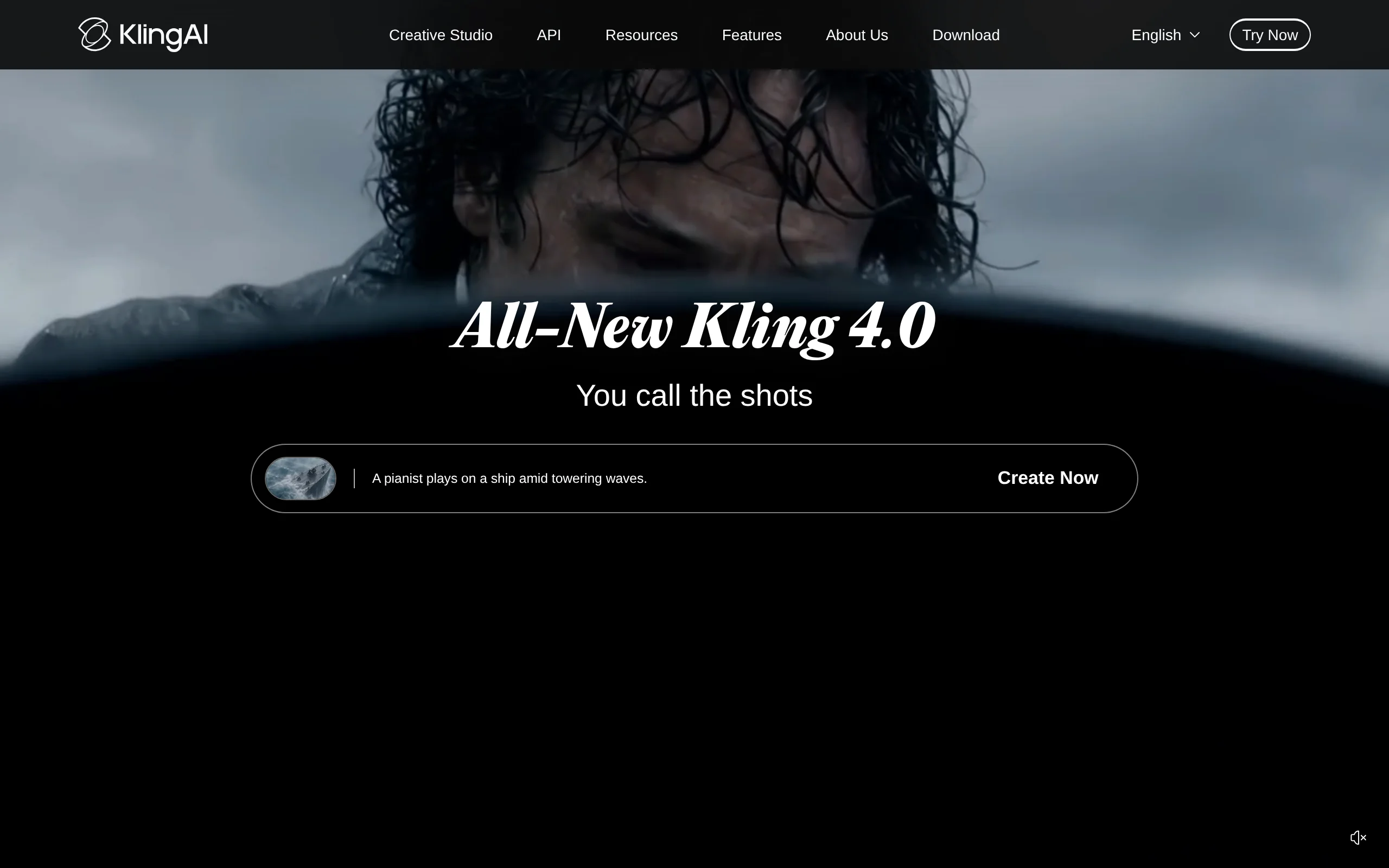
Kling 4.0 – A New Generation AI Video Generation Model Launched by Kuaishou
Kling 4.0 is the latest generation video generation model introduced by Kuaishou's Keling AI. The lightweight version, Kling 4.0 Flash, is now open for early access, with the full version expected to ...
© All Rights Reserved. Some content on this site is partially generated by AI with human review.