
Mistral Large 4 – Mistral AI's Most Flagship Open-Source Large Model
Executive Summary:
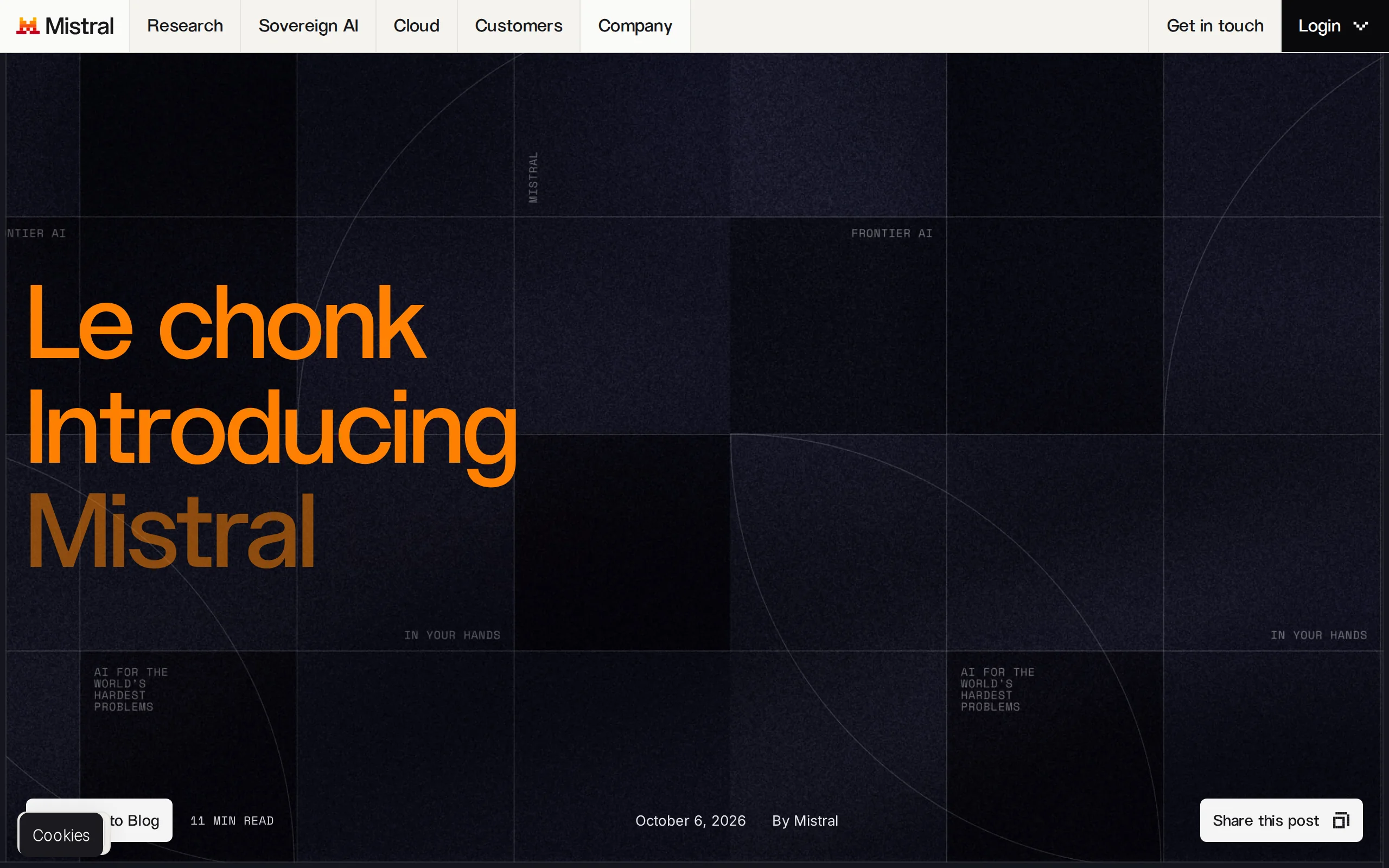
Mistral Large 4 is the latest flagship open-source large model launched by Mistral AI, a French artificial intelligence company, and is nicknamed "Le Chonk" (the chubby cat). This model employs a fine...
1. What is Mistral Large 4
Mistral Large 4 is the latest flagship open-source large model launched by Mistral AI, a French artificial intelligence company, and is nicknamed "Le Chonk" (the chubby cat). This model employs a fine-grained Mixture of Experts (MoE) architecture, with a total parameter count of 1.05T. During each inference, it activates approximately 49B parameters and is equipped with a 1.6B visual encoder, enabling native multimodal understanding and a super-long context window of 1M tokens. The model has already been launched on the Mistral API and has shown outstanding performance in professional tasks such as software engineering, financial process analysis, and remote sensing image localization. It primarily targets use cases in local deployment for network defense and enterprise sovereignty.
Technical positioning and domain: Mistral Large 4 belongs to the intersection of natural language processing and multimodal understanding, and is positioned as a flagship large model for enterprise-level and sovereign-controlled applications. Its unique feature lies in combining ultra-large-scale parameters (1.05T) with a sparse activation mechanism, achieving intelligence levels close to dense large models while maintaining inference efficiency. It also extends its capabilities to image understanding and localization tasks through a visual encoder, covering multiple vertical scenarios such as code generation, financial analysis, remote sensing evaluation, and network defense.
Development background: The model was developed by the Mistral AI team in France, a company renowned for its open-source large models, having previously launched well-known models such as Mistral 7B and Mixtral 8x7B. Mistral Large 4 was trained from scratch, taking about two months, using approximately 4000 NVIDIA Grace Blackwell GPUs. The entire training process was completed in Mistral's own European data centers. This approach aims to ensure controllability of the training process and traceability of data, supporting its narrative of "sovereign AI," allowing customers to access model services not affected by foreign government supply disruptions.
Core value: Mistral Large 4 addresses the demand of enterprise users for both high performance and data sovereignty. Its fine-grained MoE architecture activates only 49B parameters out of the total 1.05T during each inference, bringing inference costs close to those of small dense models and significantly lowering deployment barriers. At the same time, the open availability of weights for download and the fact that all training was conducted in Mistral's own European data centers allow customers to deploy the model on their own servers or within regions protected by EU law, thereby mitigating geopolitical risks. It has achieved 62% on the DeepSWE software engineering benchmark and 67% on the Finch financial process benchmark, demonstrating its practical value in specialized tasks.
Technical features: The core innovation lies in the combination of the fine-grained MoE architecture with visual grounding capabilities — the model divides the 1.05T parameters into numerous "expert" sub-networks, activating only a portion of them for each token processed, and includes a 1.6B visual encoder to handle image input, enabling pixel-level object identification. In addition, the model employs a post-training continuous reinforcement learning strategy, continuously optimizing long-chain performance in tasks such as reasoning, coding, and financial processes. It was trained on over 160 languages, supporting multilingual capabilities and sovereign deployment.
2. Key Features
Fine-grained Mixture-of-Experts Architecture: The model has a total of 1.05T parameters, divided into numerous "expert" subnetworks. Only a small portion of these is activated for processing each token, achieving a computational cost comparable to a 49B dense model. This design trades sparse activation for the capacity of a large model and the inference efficiency of a small model, enabling enterprise users to access flagship model capabilities at a lower computational cost. It is the most technically distinctive core feature of Mistral Large 4.
Native Multimodal Understanding: The model can process both text and image inputs and generate text outputs, with a context window of up to 1M tokens. The visual encoder is deeply integrated with the language model, supporting mixed text and image input scenarios such as document parsing, chart interpretation, and technical drawing analysis. It is particularly suitable for enterprise-level tasks that require simultaneous processing of visual information and textual logic.
Long-chain Software Engineering: Achieves a 62% pass rate on the DeepSWE v1.1 benchmark for real-world engineering tasks, capable of autonomously completing multi-step development processes including requirement analysis, coding implementation, and debugging and fixing. This ability stems from continuous reinforcement learning, allowing the model to demonstrate strong planning and execution capabilities in long-chain reasoning tasks, and can assist developers in handling complex engineering challenges.
Enterprise Financial Analysis: Achieves a 67% score on the Finch financial process benchmark, excelling at extracting data from messy tables and multi-source documents, building analytical models, and generating structured reports. This feature is tailored for practical business scenarios such as reconciliation, auditing, and financial planning, significantly improving the efficiency and accuracy of financial teams in data processing.
Visual Grounding: Building upon multimodal understanding, the model can output specific coordinate positions of targets within images. After the visual encoder extracts image features and aligns them with language instructions across modalities, it can achieve pixel-level target identification in complex images such as satellite imagery and technical drawings, reaching 73% on the DIOR-RSVG benchmark. This capability can be applied to scenarios such as disaster loss assessment and power line inspections.
Diagram to CAD Conversion: The model can convert technical diagrams into CAD models, with official claims of strong performance in semiconductor-related tests. This feature combines visual understanding with structured output capabilities, enabling the model to automatically recognize geometric elements and annotations in diagrams and generate model data usable by CAD software. It holds potential for application in industrial design and manufacturing.
Network Defense: The preview version offers a less restricted and more powerful cybersecurity feature, suitable for tasks such as vulnerability scanning and attack-defense simulations. The model weights can be downloaded and run locally, free from the security constraints of closed-source models, allowing security teams to perform sensitive operations in a fully controlled environment and meeting enterprise-level security audit requirements.
Multilingual Support and Sovereign Deployment: Trained on over 160 languages, covering major global languages, supporting cross-lingual task processing. The model can be deployed on private servers or APIs located within regions protected by EU laws. Combined with the background of training conducted in self-operated data centers across Europe, it provides AI services that are not affected by supply disruptions from foreign governments, aligning with the concept of sovereign AI.
3. How to Use
Register an account: Visit the official Mistral Studio website (console.mistral.ai), click the register button, and complete account creation by filling in your email and setting a password. Enterprise users can choose the enterprise registration process to gain more advanced permissions and support services. After registration, you must verify your email to activate your account.
Create an API Key: After logging into the Mistral Studio console, click "Create New Key" on the "API Keys" or "API 密钥" management page. The system will generate a string of keys used for authentication during API calls. Please store this key securely, as it will be used as an identity credential in subsequent API requests. If the key is leaked, it may lead to unauthorized usage.
Confirm the model ID: Confirm that the model identifier is
mistral-large-4in the console or API documentation. This ID is used to specify the model version to be called in the request, ensuring that the request is routed to the correct model instance. Model IDs may vary across versions; please refer to the official documentation for the accurate ID.Choose the integration method: Users can choose between API calling or local deployment based on their specific needs. API calling requires using the official endpoint
https://api.mistral.ai, which is suitable for rapid integration and prototype validation. Local deployment requires downloading the model weights from official channels and is appropriate for enterprise scenarios with strict requirements on data privacy and sovereignty.Compose the request: When sending an HTTP request, include the API Key in the request header (typically
Authorization: Bearer <API_KEY>), and include the model name (model: "mistral-large-4") and input content (messagesarray) in the request body. Text input and image input (Base64 encoded) are supported, and the request body can be flexibly constructed based on the task type.Testing and optimization: For the first call, it is recommended to use the example code provided by the official documentation or tools like Postman for testing, to ensure that the request format is correct and the returned results meet expectations. For specific business scenarios, you can optimize the output quality by adjusting parameters such as
temperatureandmax_tokens. You can also leverage the characteristics of continuous reinforcement learning to improve task performance through multiple iterations.
4. Pros and Cons Analysis
| Pros |
|---|
| Efficient Sparse MoE Architecture: With a total of 1.05T parameters, only 49B are activated at a time, balancing the capacity of a large model with the inference cost of a smaller one. It significantly reduces deployment and inference overhead while maintaining performance, making it suitable for enterprise-level large-scale applications. |
| Sovereignty and Security Control: The model was trained entirely in European data centers, and weights can be downloaded and deployed locally, making it immune to supply disruptions from foreign governments. It meets strict enterprise requirements for data sovereignty and compliance, and can be safely used within the EU legal protection area. |
| Native Multimodality and Visual Localization: A 1M context window combined with image selection and annotation capabilities enables pixel-level target localization in scenarios such as remote sensing and blueprints. Its visual localization capabilities surpass some state-of-the-art closed-source models in certain tasks, offering a clear differentiating advantage. |
| Broad Multilingual Support: Trained on over 160 languages, it supports cross-language tasks for major global languages. With continuous reinforcement learning during post-training, it demonstrates stable performance in tasks such as multilingual code generation and financial analysis. |
5. Comparative Analysis with Similar Tools
| Comparison Dimension | Mistral Large 4 | DeepSeek-V3 | Llama 4 |
|---|---|---|---|
| Core Architecture | Fine-grained MoE, total parameters 1.05T, activated 49B, with 1.6B visual encoder | MoE architecture, total parameters 671B, activated approximately 37B | MoE architecture, total parameters approximately 2T, activated approximately 100B (official data) |
| Context Window | 1M token, supports ultra-long documents and multi-turn conversations | 128K token, supports long text processing | 1M token (official data) |
| Multimodal Capabilities | Native multimodal, supports visual grounding, leading in remote sensing image identification | Pure text model, does not support image input | Native multimodal, supports image understanding and generation |
| Software Engineering Performance | DeepSWE v1.1 reaches 62%, strong in long-chain development | Excellent performance on benchmarks like HumanEval, stable code generation | Strong code generation, moderate performance on multi-step tasks |
| Deployment Method | Weights are open for download, supports local deployment and API calls | Open-source weights, supports local deployment and API calls | Open-source weights, supports local deployment and API calls |
| Open Source License | Open-source weights, specific license to be announced by the official | MIT License, fully open-source | Community license, commercial use requires application |
| Sovereignty and Compliance | Trained entirely in Europe with traceable data, suitable for EU compliance scenarios | Trained in China, data stored domestically, suitable for Chinese compliance scenarios | Trained in the U.S., affected by U.S. export controls |
Selection Recommendations: For enterprises based in Europe with strict requirements on data sovereignty and compliance, Mistral Large 4 is the preferred choice—its entirely European training background and downloadable weights ensure the model is not affected by foreign government supply cuts, and its visual grounding capabilities offer a differentiated advantage in scenarios such as remote sensing and blueprints. If the team prioritizes a mature ecosystem and community support, DeepSeek-V3's MIT license and rich open-source toolchain provide a lower barrier to entry, making it suitable for quick integration and secondary development.
For scenarios requiring both ultra-long context processing and multimodal understanding, both Mistral Large 4 and Llama 4 offer a 1M context window. However, Llama 4 has a larger parameter scale and higher hardware requirements, while Mistral Large 4's sparse activation mechanism provides a distinct advantage in inference cost. If the team relies on cloud-based APIs and does not involve sensitive data, Qwen3-Max's closed-source solution offers stable managed services, but lacks the flexibility of local deployment, making it less suitable for customization and privacy protection compared to open-source solutions.
6. Editor's Summary
Mistral Large 4, as Mistral AI's first flagship model following its successful $3 billion D-round financing, demonstrates the technical ambition of European AI forces in the large model domain. Its fine-grained MoE architecture achieves 49B activations under a total parameter count of 1.05T, a design that maintains flagship-level capabilities while ensuring inference efficiency, providing a viable path for enterprise-level deployment of ultra-large models. From a technical performance standpoint, scores of 62% on the DeepSWE software engineering benchmark and 67% on the Finch financial process benchmark prove the model's practical value in handling long-chain professional tasks. Meanwhile, its leading performance in visual localization tasks across scenarios such as remote sensing evaluation and blueprint recognition highlights its differentiated competitive advantage through multimodal integration.
In terms of practical value, Mistral Large 4's most notable contribution lies in the realization of the "sovereign AI" concept — training conducted entirely within European data centers and open weight downloads allow enterprise customers to deploy the model in fully controlled environments, mitigating potential impacts of geopolitical factors on AI service continuity. This feature holds particular appeal for sensitive industries such as finance, government, and defense, and is the core selling point that distinguishes Mistral AI from its competitors in the U.S. and China. However, the current preview status indicates that the model's capabilities are still under continuous optimization, and deployment in production environments should be approached with caution.
In terms of target users, this model is primarily aimed at three categories: first, enterprise technical teams with strict data sovereignty requirements; second, professional institutions that need to handle visual localization tasks such as remote sensing images and technical blueprints; and third, developers who are focused on multilingual support and ultra-long context processing. For individual developers and small teams with limited computational resources, the full 1.05T weight introduces a high deployment threshold. It is recommended that they prioritize experiencing the model through API access. In the future, as post-training reinforcement continues and the ecosystem toolchain becomes more complete, Mistral Large 4 is expected to unlock potential in more vertical scenarios, becoming a key cornerstone of the European sovereign AI ecosystem.
7. Application Scenarios
Long-chain Software Engineering: Development teams can use Mistral Large 4 to autonomously complete the entire development process, including requirement analysis, coding implementation, and debugging and fixing. With a 62% pass rate on the DeepSWE v1.1 benchmark, the model demonstrates the ability to handle complex engineering tasks involving multiple steps and files, assisting developers with code reviews, defect fixes, and feature iterations, significantly improving R&D efficiency.
Enterprise Financial Analysis: Finance teams can leverage the model to extract data from messy tables and multi-source documents, build analytical models, and generate structured reports. Achieving a 67% score on the Finch financial process benchmark, the model is suitable for reconciliation, auditing, and financial planning scenarios, capable of automatically comparing cross-table data and detecting anomalies, reducing manual verification time and lowering operational risks.
Remote Sensing Image Assessment: Insurance companies can use the model's visual localization capabilities to analyze aerial images and assess losses caused by natural disasters such as storms and floods; power companies can deploy the model to inspect transmission lines and automatically identify equipment anomalies; farms can use it to monitor crop growth. The model's 73% localization accuracy on the DIOR-RSVG benchmark ensures the reliability of pixel-level target identification.
Network Defense: Security teams can download the model's weights to local environments and run tasks such as vulnerability scanning and attack-defense simulations. The preview version offers a more powerful cybersecurity variant, free from the security constraints of closed-source models, allowing teams to perform sensitive operations in a fully controlled environment, making it suitable for high-security scenarios such as military and government applications.
Blueprint to CAD Conversion: Industrial design and manufacturing companies can use the model to automatically convert technical blueprints into CAD models. Officially, the model performs well in semiconductor-related tests. This feature can identify geometric elements and annotations in blueprints, generating structured data usable by CAD software, shortening the design cycle and reducing the workload of manual modeling.
8. FAQ
Q: What are the main differences between Mistral Large 4 and Mistral Large 3?
A: Mistral Large 4 transitions from a dense model architecture to a fine-grained MoE (Mixture of Experts) architecture, increasing the total parameter count from approximately 400B to 1.05T, with about 49B activated parameters, resulting in higher inference efficiency. It also introduces a new 1.6B visual encoder, supporting native multimodal input and visual localization, expanding the context window from 128K to 1M, and enhancing capabilities for long-chain tasks such as software engineering and financial analysis.
Q: Are the weights of Mistral Large 4 fully open-sourced? Can it be used for commercial purposes?
A: The weights of Mistral Large 4 are available for download and support local deployment and commercial use. The specific terms of the open-source license will be officially published by Mistral AI. Users are advised to review the license information on the Mistral AI official website before use to ensure compliance with their business requirements.
Q: What hardware configuration is required to deploy Mistral Large 4?
A: Due to its full weight size of 1.05T, local deployment requires a multi-GPU cluster. It is recommended to configure at least 8 NVIDIA A100 80GB or H100-level GPUs, along with large-capacity memory and high-speed storage. If computational resources are limited, the model can be accessed via the Mistral API without the need to build a dedicated hardware environment.
Q: What languages does Mistral Large 4 support for input and output?
A: The model was trained on over 160 languages, covering major global languages such as English, French, German, Spanish, Chinese, Japanese, and Arabic. It supports cross-language task processing and is suitable for multilingual enterprise environments and international business scenarios.
Q: How can I obtain the network security version of Mistral Large 4?
A: The network security version is part of the preview release, offering fewer restrictions and stronger cybersecurity capabilities. Users can access it through the Mistral Studio console or by contacting the Mistral AI sales team. The specific application process and usage conditions will be determined by official announcements.
9. Project Links
- Mistral Large 4 Product Page: https://mistral.ai/news/mistral-large-4
- Mistral Studio Console (API Experience Entry): https://console.mistral.ai
- Official Technical Announcement for Mistral Large 4 (English): https://mistral.ai/news/mistral-large-4
- Mistral API Documentation: https://docs.mistral.ai
- Official Mistral AI GitHub Organization: https://github.com/mistralai
- Mistral AI Hugging Face Organization Page: https://huggingface.co/mistralai
Related AI Model Articles
EmbeddingGemma 2 – Review of Google's Open-Source Native Multimodal Embedding Model
EmbeddingGemma 2 is an open-source native multimodal Embedding model developed by Google, built upon the Gemma 4 architecture. It unifies five modalities—text, code, images, video, and audio—into a si...
Nano Banana 2.1: In-Depth Review of Google DeepMind's Image Generation and Conversational Editing Model
Nano Banana 2.1 (Model ID: gemini-nano-banana-2.1) is the second-generation image generation and conversational editing model officially released by Google DeepMind on October 6, 2026. It belongs to t...
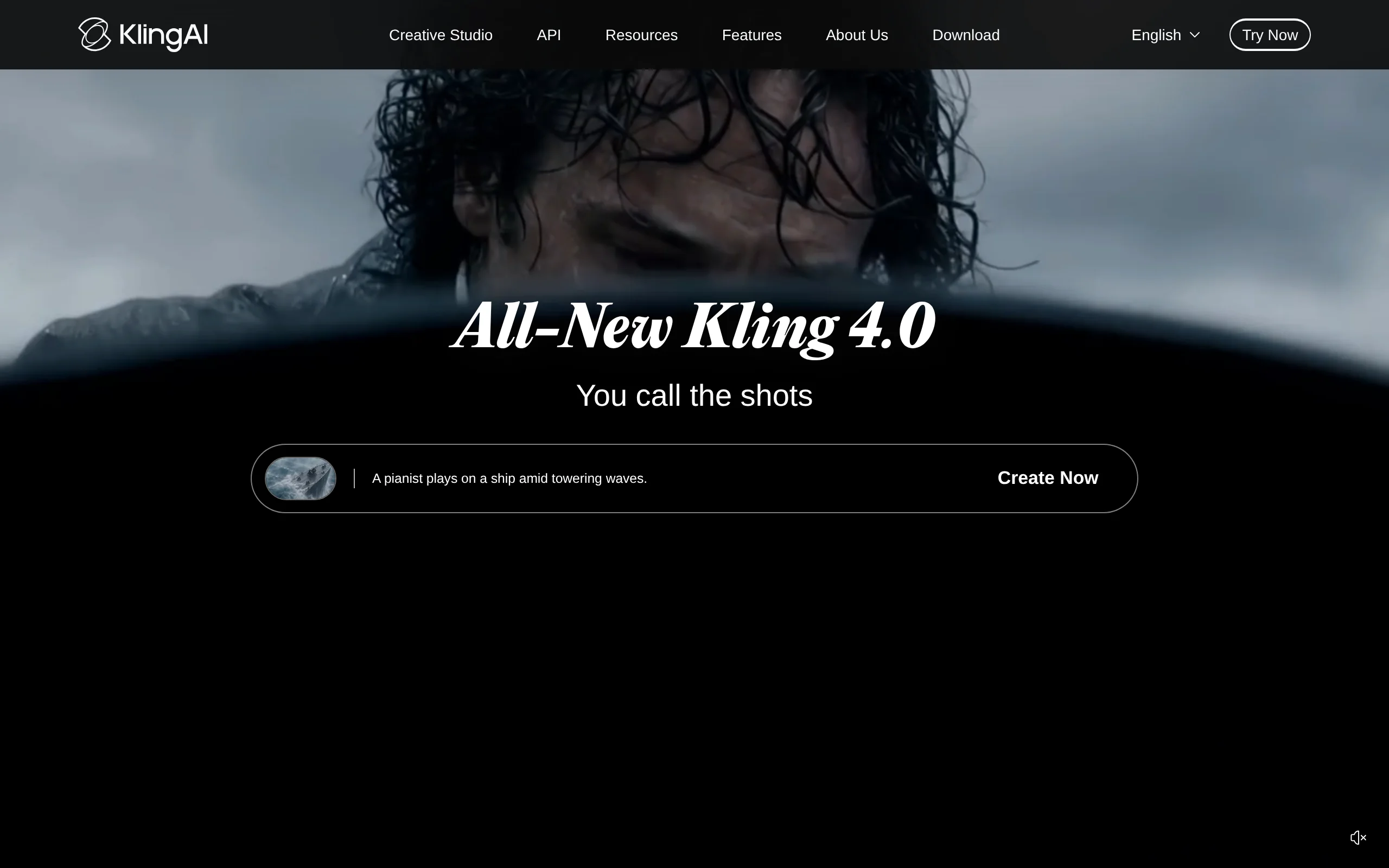
Kling 4.0 – A New Generation AI Video Generation Model Launched by Kuaishou
Kling 4.0 is the latest generation video generation model introduced by Kuaishou's Keling AI. The lightweight version, Kling 4.0 Flash, is now open for early access, with the full version expected to ...
In-Depth Review of M3.1-Flash-Preview: MiniMax's Text Programming Model for Everyday Development Scenarios
M3.1-Flash-Preview is the latest text programming model launched by MiniMax, initially released on the MiniMax Code intelligent programming client. Designed for everyday development scenarios, this mo...
© All Rights Reserved. Some content on this site is partially generated by AI with human review.