
In-Depth Evaluation of TeleOCR – The Open-Sourced Document Parsing Model by China Telecom's XingChen Lab
Executive Summary:
TeleOCR is an open-sourced document parsing model developed by China Telecom's XingChen Lab. It employs a lightweight vision-language architecture with approximately 1.2B parameters, unifying the proc...
1. What is TeleOCR
TeleOCR is an open-sourced document parsing model developed by China Telecom's XingChen Lab. It employs a lightweight vision-language architecture with approximately 1.2B parameters, unifying the processing of digital documents and camera-captured documents within a single framework. The model can parse text, layout, tables, formulas, and scientific charts into structured results such as Markdown and JSON. TeleOCR has achieved the top position on the OmniDocBench v1.6 leaderboard, as well as the top spot on PureDocBench and the championship in the ICDAR-2026 scientific chart parsing challenge. It supports local GPU deployment and is suitable for structured extraction scenarios such as contracts, academic papers, and archives.
Technical Positioning and Domain: TeleOCR belongs to the intersection of document intelligence and multimodal vision-language models (VLM). Its core task is to convert unstructured document images into machine-readable structured data. Compared to traditional OCR, which only outputs text sequences, TeleOCR directly addresses the composite task of "layout understanding + content recognition + structure reconstruction," placing it at the forefront of end-to-end integrated solutions in the document parsing technology stack.
Development Background: This model was developed by China Telecom's XingChen Lab (XingChen-AGI), a team with long-term technical expertise in vision-language models and document understanding. The motivation for its development stemmed from the error accumulation issues in traditional "layout detection → image correction → recognition" serial pipelines in complex scenarios, as well as the industry pain point of needing separate systems for digital and camera-captured documents. XingChen Lab chose to achieve high-precision parsing with a lightweight parameter scale, reflecting its engineering orientation toward private deployment and industry applications.
Core Value: TeleOCR addresses three key challenges in the document parsing domain: first, it unifies the processing of digital and camera-captured documents, eliminating architectural redundancy from deploying multiple systems; second, it directly handles curved, folded, and perspective-distorted pages through geometric-aware modeling, removing the need for an independent image correction module; third, it achieves leaderboard-leading parsing accuracy with approximately 1.2B parameters, significantly lowering the hardware requirements for local deployment, offering a high-cost-performance structured extraction solution for scenarios such as contracts, academic papers, and archives.
Technical Features: TeleOCR employs a unified vision-language architecture, explicitly learning the spatial structure of documents through geometric-aware modeling and curvature-guided sampling. It is complemented by a data loop formed by multi-node consensus voting and image-to-image self-validation, along with a progressive four-stage training strategy, enabling a step-by-step capability build-up from basic perception to fine-grained understanding under the constraint of a lightweight parameter scale.
2. Key Features
Text Recognition: High-precision extraction of textual content from documents, covering text information in printed materials and complex layouts. The digital document recognition accuracy rate reaches 97.22, a metric that places it among the leading performers in the OmniDocBench v1.6 evaluation, meeting the high fidelity requirements of business scenarios such as contracts and archives.
Layout Analysis: Identifies the position and hierarchical relationships of elements such as text, tables, formulas, and headings on the page, and outputs structured layout tree information. The model uses geometry-aware modeling to understand the spatial layout of the page, providing an accurate basis for region segmentation that supports subsequent table reconstruction and formula parsing, avoiding misalignment and serial errors.
Table Parsing: Accurately restores complex table structures such as row and column spans and merged cells. The TEDS (Tree Edit Distance based Similarity) score reaches 97.05, and for camera-captured documents, the TEDS (Wild) score is 89.05. This capability effectively handles structure-dense documents such as financial reconciliation statements and scientific data tables, maintaining the logical relationships between rows and columns.
Formula Parsing: Structurally parses the semantics and syntactic organization of formulas, achieving symbol-level accuracy with a CDM (Character Detection Match) score of 96.36. The model not only recognizes formula characters but also understands their hierarchical structure and computational relationships, enabling the conversion of printed formulas into LaTeX or Markdown formats, supporting the digital processing of scientific papers and educational test questions.
Scientific Chart Parsing: Identifies elements in scientific charts such as bar charts and line graphs, and extracts data, converting bar charts in papers directly into structured tables. This capability won the championship in the ICDAR-2026 Scientific Chart Parsing Challenge with a score of 41.81, offering practical value in the construction of academic literature knowledge bases and the reproduction of scientific data.
Camera-captured Document Processing: Directly processes real-world degraded documents such as perspective distortion, page curvature, and shadow blurring, without requiring an independent distortion removal model. Geometry-aware modeling explicitly learns document boundaries and spatial structures, allowing the model to handle scenarios such as handheld shooting and rephotography, expanding the applicability of mobile document capture.
Structured Output: Parsing results can be generated in various formats, including Markdown, JSON, tables, and formulas, facilitating direct integration with knowledge retrieval systems, RPA workflows, and business databases. Structured output eliminates the engineering cost of secondary parsing, enhancing the end-to-end efficiency of the document-to-data pipeline.
3. How to Use
The deployment and usage process of TeleOCR is clear and structured. Below are the complete steps from environment preparation to inference execution:
Environment Preparation: Install Python 3.10 or higher and ensure that you have an NVIDIA GPU environment with CUDA support. Model inference relies on GPU acceleration; it is recommended to have a GPU memory capacity of no less than 8GB to ensure efficient parsing of regular documents. The specific GPU memory usage can be adjusted via the
GPU_MEMORY_UTILIZATIONparameter.Clone the Code: Execute
git clone https://github.com/caipeng328/TeleOCR.gitto clone the project repository to your local machine, then navigate into the project directory withcd TeleOCR.Create Environment: Use conda to create a virtual environment named
teleocrand activate it. The commands areconda create -n teleocr python=3.10andconda activate teleocr, ensuring dependency isolation.Install Dependencies: Run
pip install -e .within the activated virtual environment to install the project dependencies. This command installs the project and its dependent packages in editable mode.Download the Model: Install the ModelScope client with
pip install modelscope, then use the modelscope command to download the model weights to the local./models/TeleOCRdirectory. The command format ismodelscope download --model XingChen-AGI/TeleOCR --local_dir ./models/TeleOCR.Prepare Directories: Set the input image directory variable
IMAGE_SUB_PATHto point to the path where the document images to be parsed are located. Set the result output directory variableRESULT_SAVE_PATHto point to the location where the parsed results will be saved.Run Inference: Execute
python infer.py, passing in the image path, result path,--use_async,--override, model path, and backend parameters. The--use_asyncflag enables asynchronous processing mode, while--overrideis used to overwrite existing outputs.Select Backend: For regular use cases, choose the
vllm-enginebackend. For high-concurrency batch processing scenarios, switch tovllm-async-engineto improve throughput.Set Layout Mode: For digital documents, use
LAYOUT_MODE="Detection"mode. For bent or degraded captured pages, switch to"Segmentation"mode, which offers stronger adaptability to geometric distortions.Tune Parameters: Adjust
MAX_MODEL_LEN(context length),GPU_MEMORY_UTILIZATION(GPU memory utilization ratio),PDF_TOOLS(PDF parsing backend), andMAX_PIXELS(maximum number of pixels per page) as needed to match specific hardware resources and document complexity.Get Results: Read the structured results such as Markdown, JSON, and tables from the output directory and integrate them into downstream knowledge retrieval or business automation systems.
Notes: On the first run, ensure that the model weights are fully downloaded. When processing a large volume of documents, it is recommended to first validate the layout mode and backend parameter configuration on a small sample to avoid resource waste or a decline in parsing quality due to improper parameter settings.
4. Pros and Cons Analysis
| Pros |
|---|
| Leading in benchmark performance: OmniDocBench v1.6 achieved a total score of 96.87, ranking at the top, surpassing professional models such as MinerU2.5-Pro, PaddleOCR-VL-1.6, and OvisOCR2. Its comprehensive parsing capability ranks among the top in public evaluations. |
| Lightweight parameters and low deployment threshold: With only about 1.2B parameters, it reduces hardware requirements for local GPU deployment, making it suitable for private deployment and information innovation scenarios. Compared to multi-modal large models with billions of parameters, it has a stronger engineering implementation advantage. |
| Unified framework for multi-source documents: Digital documents and camera-captured documents are parsed within the same model, eliminating the need to deploy multiple systems for different document sources, simplifying the architecture and reducing operational costs. |
| No need for pre-processing distortion correction modules: Geometric-aware modeling can directly handle curved, folded, or perspective-distorted pages, reducing error accumulation from independent correction modules and improving end-to-end parsing accuracy. |
| Highly efficient data closed-loop mechanism: A multi-node consensus voting system and image-to-image self-validation construct a training data pool with millions of entries. Most of the generated data does not require manual annotation, resulting in high data engineering efficiency and self-optimization capabilities. |
5. Comparative Analysis with Similar Tools
| Comparison Dimension | TeleOCR | PaddleOCR-VL-1.6 | MinerU2.5-Pro |
|---|---|---|---|
| Model Size | Approximately 1.2B parameters, lightweight vision-language architecture | 0.9B parameters | Not explicitly disclosed, professional document parsing model |
| OmniDocBench v1.6 Total Score | 96.87, ranks first on the leaderboard | Not on top | Not on top, outperformed by TeleOCR |
| Text Recognition Accuracy | 97.22 | 96.7 | Not separately disclosed |
| Table Parsing TEDS | 97.05 (digital documents) / 89.05 (captured documents) | 94.76 (digital documents) / 81.31 (captured documents) | Not separately disclosed |
| Captured Document Processing | Geometry-aware modeling, no need for a separate distortion correction module, directly handles curvature and perspective distortion | No mention of similar mechanisms in the documentation | No mention of similar mechanisms in the documentation |
| Scientific Figure Parsing | ICDAR-2026 competition champion (41.81 points) | No mention of competition results in the documentation | No mention of competition results in the documentation |
| Structured Output | Markdown / JSON / Tables / Formulas | Supports structured output | Supports structured output including Markdown |
| Open Source License and Ecosystem | Open-sourced on GitHub, weights provided by ModelScope, community in early stages | Baidu PaddlePaddle ecosystem, mature open-source community, comprehensive documentation | Open-source project, relatively active community |
Selection Recommendations: For scenarios requiring the processing of a large volume of captured documents (such as invoices collected on mobile devices or contracts taken on-site) and with high demands for table structure restoration, TeleOCR's geometry-aware modeling and 89.05 TEDS score for captured documents are clearly advantageous, making it the preferred choice. If the team has already deeply integrated with the Baidu PaddlePaddle ecosystem and primarily deals with digital documents, with high requirements for community maturity and Chinese technical support, PaddleOCR-VL-1.6 remains a reliable option.
For academic literature processing scenarios that demand ultra-high parsing accuracy and the ability to extract data from scientific charts and graphs, TeleOCR's leaderboard performance and ICDAR-2026 championship capabilities are more appealing. In scenarios requiring rapid integration and where the team is familiar with the vLLM inference engine, TeleOCR's vllm-engine backend support can reduce deployment complexity.
6. Editor's Summary
TeleOCR demonstrates notable technological innovation in the field of document parsing. Its unified vision-language architecture breaks the traditional "layout detection → image correction → recognition" serial pipeline paradigm, integrating document spatial structure learning into the model parameters through geometric-aware modeling and curvature-guided sampling. This fundamentally avoids the problem of error accumulation. This design choice achieves a leading score of 96.87 on the OmniDocBench v1.6 under the lightweight constraint of 1.2B parameters, validating the effectiveness of the "architectural innovation + data engineering" approach in the domain of document intelligence. The data closed-loop mechanism—multi-node consensus voting to filter pseudo-labels, image-to-image self-validation for automatic error correction, and progressive cleaning to build challenging example sets—provides the model with an intrinsic driving force for continuous optimization, making this methodology valuable for the development of similar models.
In terms of practical value, TeleOCR directly outputs structured results such as Markdown, JSON, tables, and formulas, significantly reducing the integration cost from document parsing to business systems. Its parameter scale of approximately 1.2B makes local GPU deployment feasible, offering an affordable private parsing solution for government and enterprise customers sensitive to data privacy, as well as for small and medium-sized teams. Its performance on complex tables (TEDS 97.05) and scientific diagrams (ICDAR-2026 champion) covers high-frequency, high-value scenarios such as contracts, archival documents, and financial forms.
In terms of target users, TeleOCR is suitable for development teams with document structuring needs, data service providers, research institutions, and enterprise users requiring local deployment. Its open-source nature and ModelScope weight distribution lower the barrier to entry, allowing technical teams to complete deployment and verification within a few hours. In terms of future development potential, as the community ecosystem matures and more industry scenarios provide real-world feedback, TeleOCR is expected to continue evolving in areas such as robustness in document capture, multilingual support, and compatibility with domestic computing power, becoming an important option in the infrastructure of document intelligence.
7. Application Scenarios
Contract and Document Digitization: Parse cross-line and cross-table layouts and structures in contracts and documents, converting scanned or photographed documents into searchable structured data. Legal and document management departments can use this to build full-text search libraries, enabling quick location of contract clauses and automatic extraction of key information, thereby improving the efficiency of compliance reviews.
Scientific Paper Analysis: Extract formulas, tables, and bar chart data from papers to support literature analysis and knowledge base construction. Researchers can automatically convert experimental data charts in papers into structured tables for cross-paper data comparison and meta-analysis. Symbol-level recovery of formulas supports LaTeX rewriting and validation.
Financial Document Processing: Identify scanned documents such as invoices and forms, tolerating perspective distortion and blurriness, and automatically input data into business systems. Financial staff can use their mobile phones to photograph documents for information collection, with the model directly outputting JSON structured data to connect with financial systems, reducing manual entry errors and accelerating reimbursement processes.
Educational Question Input: Convert printed formulas and table-based questions in exams into editable formats, supporting question bank development and intelligent grading. Educational technology companies can batch process historical exam papers, structuring and storing formula and chart-based questions for use as data foundations in intelligent exam composition and automated scoring systems.
Enterprise Report Automation: Convert scanned reports and business forms into structured tables in bulk, integrating with data analysis and RPA workflows. Operations teams can digitize paper or faxed reports, using unified structured outputs to connect with data warehouses, enabling automated aggregation and visual analysis of report data.
8. FAQ
Q: What is the core difference between TeleOCR and PaddleOCR-VL-1.6?
A: The core difference lies in the document capture processing capability and scientific figure parsing. TeleOCR employs a geometry-aware modeling approach, enabling direct processing of curved and perspective-distorted pages, achieving a TEDS score of 89.05 for captured document tables, significantly higher than PaddleOCR-VL-1.6's 81.31. Additionally, TeleOCR won the ICDAR-2026 scientific figure parsing challenge, demonstrating its ability to extract data from charts and graphs. PaddleOCR-VL-1.6, on the other hand, benefits from the maturity of the PaddlePaddle ecosystem and strong Chinese language support.
Q: What are the minimum GPU hardware requirements for TeleOCR?
A: The official documentation does not specify the minimum memory requirements, but the model contains approximately 1.2B parameters. Combined with the GPU_MEMORY_UTILIZATION parameter adjustment, a standard document parsing task is recommended to use GPUs with at least 8GB of memory. For high-resolution documents or batch processing scenarios, it is advisable to increase the memory configuration appropriately and balance resource usage by adjusting the MAX_PIXELS parameter to control the number of pixels per page.
Q: Is CPU inference supported?
A: The official documentation explicitly requires a GPU environment with CUDA support for inference, which relies on GPU acceleration. Inference speed will significantly decrease in a pure CPU environment, and it is not recommended for production use. The compatibility with domestic computing platforms (such as Ascend and Cambricon) will be announced by the official team.
Q: How to switch between digital document parsing mode and captured document parsing mode?
A: This can be achieved by setting the LAYOUT_MODE environment variable: use "Detection" mode for digital documents, and switch to "Segmentation" mode for curved or degraded captured pages. The latter provides stronger boundary perception and structural recovery capabilities for pages with geometric distortions.
Q: What fields are included in the JSON output of TeleOCR?
A: The JSON output typically includes structured fields such as text content, layout region coordinates, table structure (including row and column merging relationships), and semantic representation of formulas. The exact field definitions can be found in the project documentation. Users can directly integrate the JSON into knowledge retrieval systems or business databases without the need for secondary parsing.
Q: Where can the model weights be downloaded?
A: The model weights are hosted on the ModelScope platform and can be downloaded locally using the command modelscope download --model XingChen-AGI/TeleOCR --local_dir ./models/TeleOCR. The GitHub repository provides inference code and usage documentation.
9. Project Links
- GitHub Repository: https://github.com/caipeng328/TeleOCR (official code repository, providing inference code and usage documentation)
- ModelScope Model Library: https://www.modelscope.cn/models/XingChen-AGI/TeleOCR (official channel for downloading model weights)
- arXiv Technical Paper: https://arxiv.org/pdf/2608.12898 (official technical report, detailing the architecture and training methodology)
Related AI Model Articles
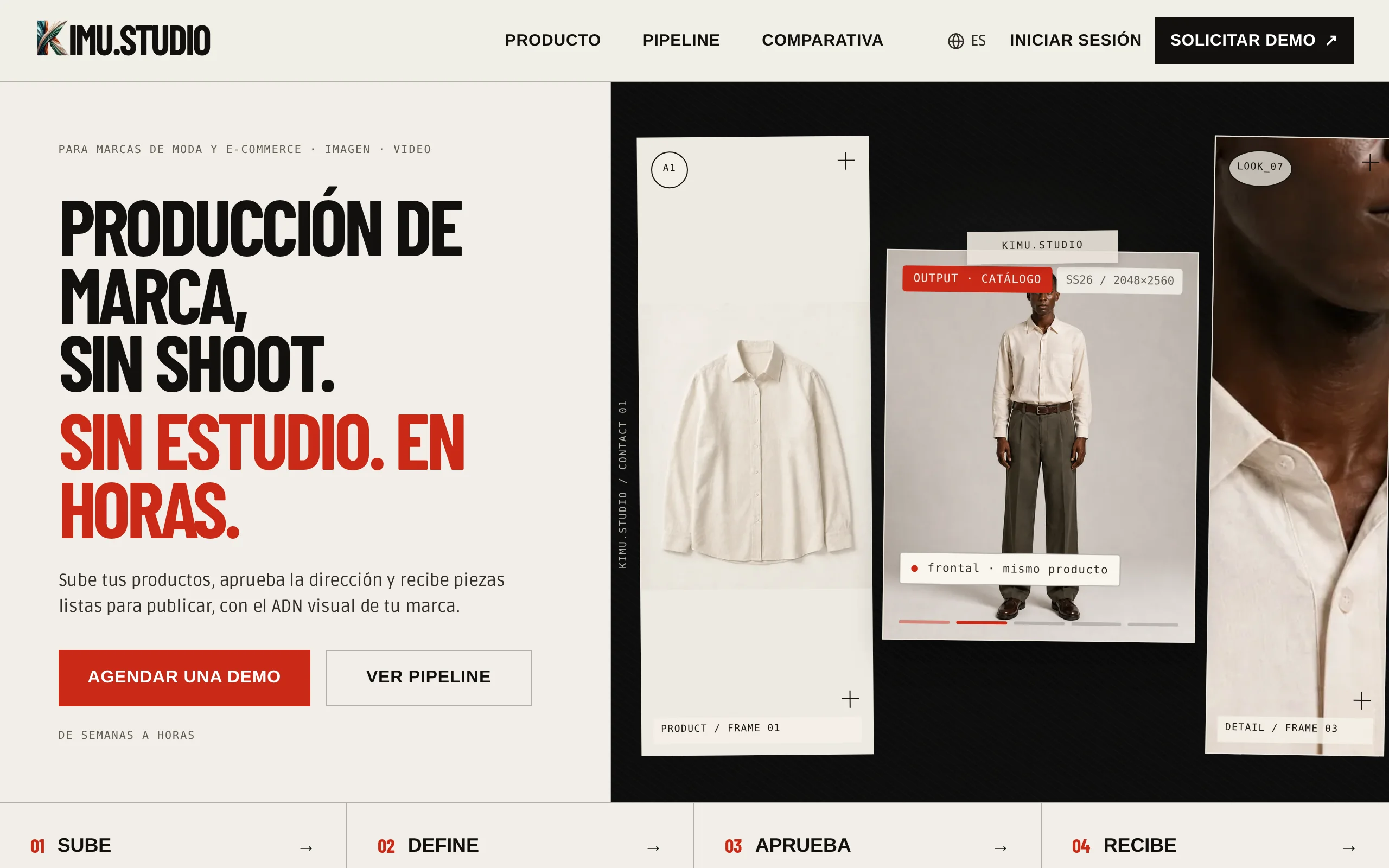
Kimu: In-Depth Review of the Open-Source AI Video Editor from the trykimu Team
Kimu (officially named Kimu Studio) is an open-source AI video editor developed by the trykimu team. Its core concept lies in describing requirements through natural language, allowing AI to automatic...
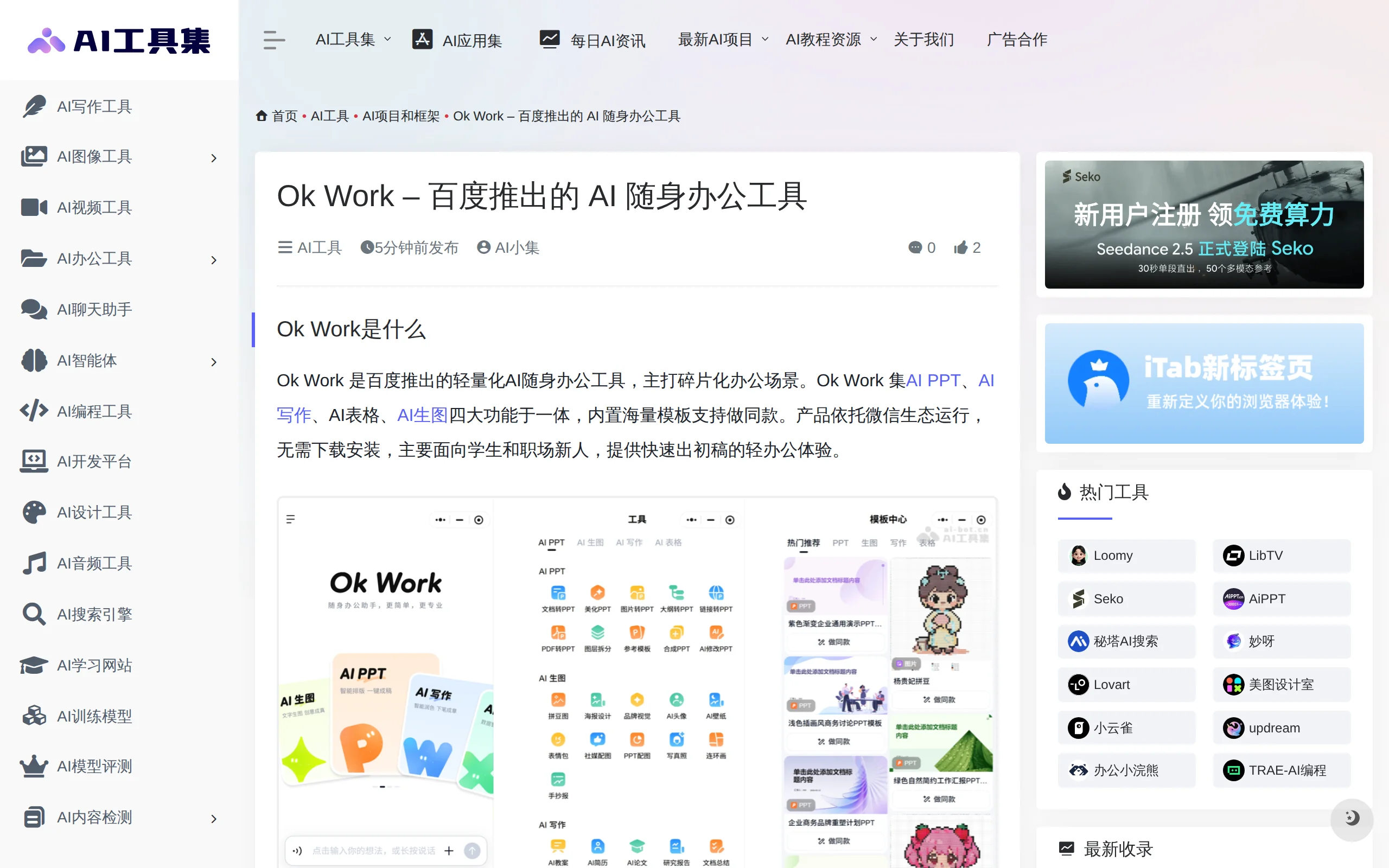
Ok Work – Baidu's AI On-the-Go Office Tool
Ok Work is Baidu's lightweight AI on-the-go office tool, running in the form of a WeChat Mini Program, targeting students and new professionals, and focusing on fragmented office scenarios. The produc...
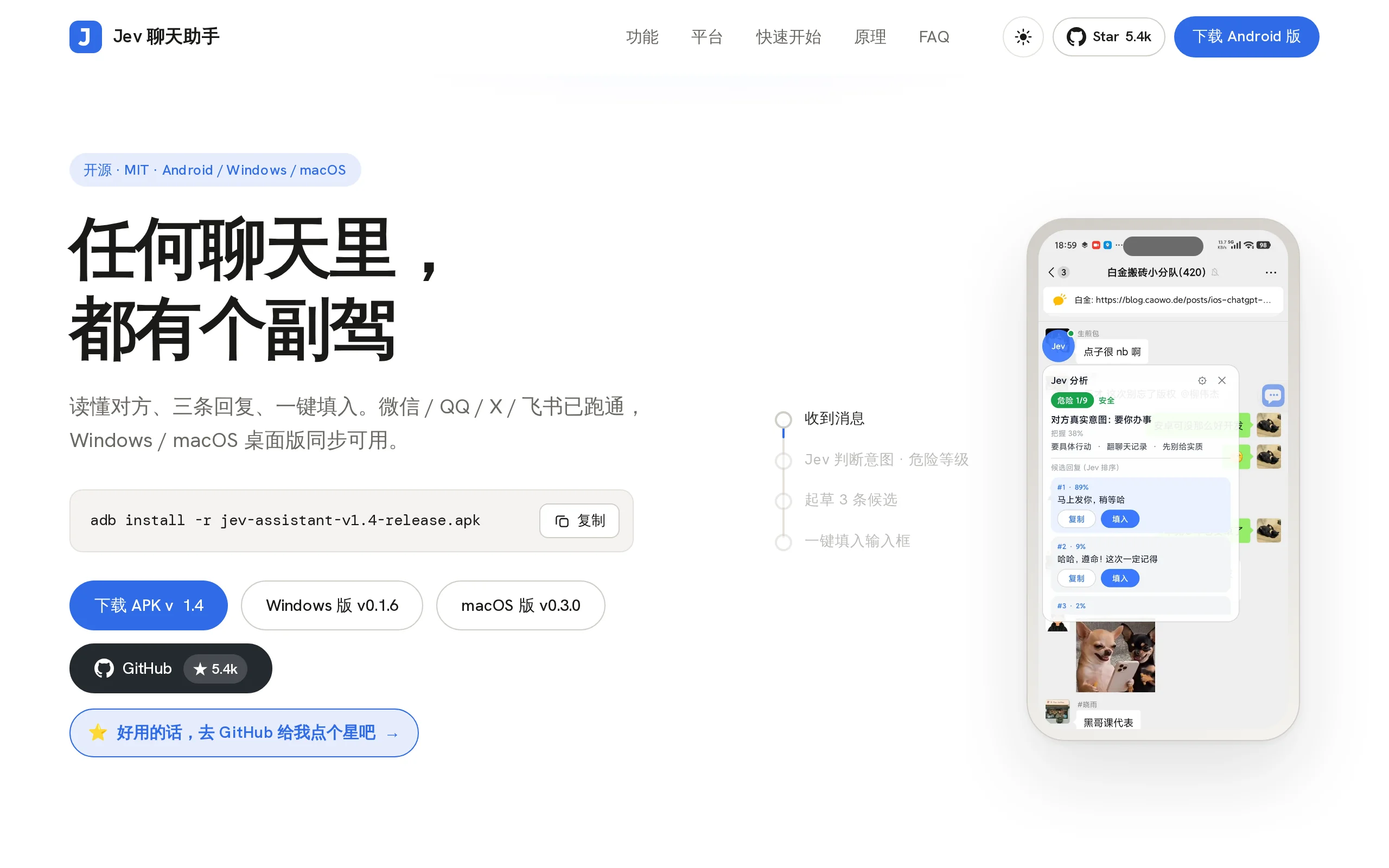
Jev Chat Assistant – Open-Source AI Chat Companion for Generating the Most Appropriate Responses
Jev Chat Assistant is an open-source, non-intrusive AI chat assistance application that provides real-time reply suggestions in popular messaging scenarios such as WeChat, QQ, X, and Feishu. The tool ...
GPT-6 Luna: OpenAI's Cost Revolution and Capability Democratization in Lightweight Models
GPT-6 Luna is a lightweight AI model introduced by OpenAI, and it is a derivative version of GPT-6 Astra, alongside GPT-6 Sol. It is positioned for high-frequency, large-scale task scenarios. The mode...
© All Rights Reserved. Some content on this site is partially generated by AI with human review.