
OXR: SoMark's Open-Source 1.3B Document Parsing Model, a New Intelligent Document Understanding Option for Agents
Executive Summary:
OXR is an open-source 1.3B parameter document parsing model developed by SoMark. It specializes in converting PDFs and document images into structured Markdown/JSON data that is agent-friendly. The mo...
1. What is OXR
OXR is an open-source 1.3B parameter document parsing model developed by SoMark. It specializes in converting PDFs and document images into structured Markdown/JSON data that is agent-friendly. The model can identify 13 types of document elements, including text, tables, formulas, chemical equations/structural formulas, code blocks, and more, and outputs layout coordinates and reading order information. OXR introduces an RSI (Recursive Self-Improvement) self-improvement loop during the post-training phase, achieving first-place results in three authoritative benchmark tests: OmniDocBench, olmOCR-Bench, and DocParsingBench, while maintaining leading parsing speed.
Technical Positioning and Domain: OXR belongs to the field of document intelligence parsing, specifically covering sub-directions such as OCR (Optical Character Recognition), layout analysis, structured information extraction, and document understanding. Its unique positioning lies in being designed to output formats tailored for AI Agents and automated workflows, rather than merely providing traditional OCR text results. This makes it clearly applicable in scenarios such as RAG knowledge base construction, enterprise document digitization, and scientific publishing.
Development Background: OXR was developed and open-sourced by the SoMark team. This team has accumulated technical expertise in document parsing and AI engineering. Choosing to pre-train a 1.3B parameter model from scratch, rather than fine-tuning a general-purpose large model, reflects their emphasis on the specificity of document parsing tasks. The open-source strategy aims to reduce the threshold for enterprises to access document parsing capabilities, while also accelerating model iteration through community feedback.
Core Value: OXR addresses the core pain points of traditional document parsing solutions, such as incomplete element coverage, missing layout information, and inconsistent output formats. The Markdown/JSON format it produces can be directly consumed by downstream agents, RAG systems, and large model workflows, eliminating the need for cumbersome post-processing steps. Its modular layout analysis design allows enterprises to replace custom layout models based on business needs, significantly reducing cross-domain adaptation costs.
Technical Features: OXR employs a two-stage architecture that combines a lightweight Layout Analysis model with the main model. During the recognition phase, it simultaneously performs content recognition and determines the reading order, reducing the overhead of independent sorting. In the post-training phase, it introduces the RSI loop mechanism, where multiple models analyze misclassified and weak samples to automatically generate training strategies and data, reducing reliance on manual annotation and establishing a sustainable path for model evolution.
2. Key Features
Document to Structured Data: Directly parse PDFs and document images into Markdown or JSON formats. The output results are organized in terms of layout and semantically ordered, making them consumable by Agent, RAG pipelines, and downstream business systems without requiring additional parsing logic.
Multi-element Recognition Coverage: Simultaneously identify and classify 13 types of document elements, including text, tables, formulas, chemical equations, chemical structures, and code blocks. It supports various document types such as academic papers, technical documents, exams, and research reports, with element coverage leading among open-source models.
Layout Information Output: Provides bounding box coordinates for each recognized element and organizes content hierarchy according to human reading order. This capability ensures that the parsing results include not only textual content but also retain layout structure information, which is essential for reconstructing and referencing complex documents.
Complex Layout Handling: Specifically optimized for challenging scenarios such as multi-column papers/newspapers, A3-sized exams, vertical text, and handwritten Chinese/English text. It can handle non-standard layouts that conventional OCR tools often misinterpret, significantly improving usability in real-world business scenarios.
Customizable Layout Analysis: The layout analysis is modularized and can be replaced with third-party or custom layout models. Enterprises can redefine element categories, region boundaries, and content grouping rules based on their business needs, while retaining the content recognition and reading order capabilities of OXR to achieve cross-domain customization.
Multi-mode Access: Offers four access methods: free API, online demo, one-click Docker deployment, and source code deployment. It is compatible with SoMark CLI/SDK (somark-py, somark-js), allowing developers to flexibly choose deployment options based on data security requirements and infrastructure conditions.
RSI Self-improvement Loop: Introduces a recursive self-improvement mechanism during the post-training phase, where multiple models analyze error samples and weak samples from various perspectives. This enables the automatic generation of training strategies and data, forming a continuous iterative evolution loop and reducing reliance on manual annotation.
3. Application Scenarios
RAG Knowledge Base Ingestion: Convert unstructured documents such as PDFs and scanned files into structured Markdown/JSON data with coordinate information, significantly improving the quality of document slicing, vector recall accuracy, and citation traceability during knowledge base construction. Enterprises can deploy OXR in their document preprocessing pipelines as a standard entry component for RAG systems.
Financial/Research Report Analysis: Financial research reports typically use multi-column layouts and contain numerous complex tables and chart descriptions. OXR can reliably output the structural relationships between tables, chart titles, and正文 content, enabling investment research platforms to achieve automated structured ingestion of reports and extraction of key data.
Education and Digital Examinations: Address typical challenges in educational scenarios such as A3-sized test papers, vertical text layouts, and handwritten Chinese or English content. OXR can support tasks like question bank construction, online grading, and error analysis, enabling the bulk conversion of paper-based exams into searchable and editable digital resources.
Research and Publishing Processes: Mathematical formulas, chemical equations, and chemical structures in academic papers are common challenges for general-purpose OCR. OXR can convert formulas into LaTeX, chemical equations into mhchem format, and structures into SMILES notation, facilitating direct reuse by researchers in writing, publishing, and literature management.
Enterprise Document Agent: Provide structured input for high-frequency enterprise document types such as contracts, resumes, records, and code documentation. Support adaptation to industry-specific layouts by replacing the layout analysis module, enabling the Document Agent to accurately understand layout semantics and perform subsequent automated operations.
4. How to Use
Environment Requirements: It is recommended to use a Linux environment with an NVIDIA GPU. Official testing was conducted using the RTX PRO 6000. For local deployment, you need Docker (recommended all-in-one method) or a Python 3.8+ environment, and you should reserve sufficient disk space to store the model weights (approximately 2.6GB for BF16 precision).
Download Resources: Clone the GitHub repository (https://github.com/SoMarkAI/OXR), download the OXR-1.0 BF16 weight files from Hugging Face or ModelScope, and place them in the local model directory.
Docker Launch: Build the
docker/Dockerfile.allinoneimage and mount the model directory to the corresponding path inside the container when launching. After the service starts, you can open the online demo interface by visitinglocalhost:8000/demoin your browser, and access/docsto view the API documentation.Source Code Deployment: Start the OXR model service first, followed by the Layout Analysis service, and finally the document parsing API service. Ensure that the service addresses and model paths are correctly configured in
config.yaml. This method is suitable for developers who need to customize or debug individual components.Initiate Parsing: Submit a parsing task by calling the
/v1/parse/syncsynchronous interface or the corresponding asynchronous interface. Alternatively, you can use the SoMark CLI/SDK, pointing the base URL to your local service address before submitting the file.Retrieve Results: Choose either
markdownorjsonas the output format in the request parameters. After parsing is complete, download the result file and verify whether the element coordinates and reading order meet your expectations.Production Integration: Integrate the local service or SoMark commercial service into your business pipeline. Evaluate the layout analysis performance based on the actual document types, and replace or fine-tune the layout analysis module as needed to adapt to specific business scenarios.
5. Pros and Cons Analysis
| Pros |
|---|
| Top Accuracy in Three Benchmarks: Ranked first in three benchmarks—OmniDocBench (97.18), olmOCR-Bench (87.84), and DocParsingBench (87.76)—with particularly strong performance in table scenarios. Its accuracy has been validated by third-party benchmarks. |
| Fast Parsing Speed: Parses 100 pages in approximately 101 seconds under the same conditions (RTX PRO 6000), and is officially listed as the fastest open-source model in testing. Its high throughput is well-suited for large-scale document batch processing, effectively reducing computational costs. |
| Broad Element Coverage: Supports 13 types of elements, including text, tables, formulas, chemical equations/structures, and code blocks, covering core document types across multiple industries such as academia, finance, and education, thereby reducing integration costs associated with using multiple tools. |
| Agent-Friendly Output: Directly outputs Markdown/JSON with layout coordinates and reading order, enabling seamless integration with RAG and Agent workflows. It eliminates the need for traditional OCR post-processing, significantly reducing system integration complexity. |
| Pluggable Layout Analysis: The modular design allows for replacement with third-party or self-developed layout models, reducing cross-domain adaptation costs and providing a flexible technical path for enterprise-level customized deployment. |
6. Comparative Analysis with Similar Tools
| Comparison Dimension | OXR | TeleOCR | MinerU2.5-Pro |
|---|---|---|---|
| Model Scale | 1.3B parameters | Approximately 1.2B parameters | Not publicly disclosed |
| Technical Approach | Lightweight layout model + main model in two stages; identification and reading order completed in the same stage | Single end-to-end model, handling both digital documents and photographed documents | Open-source document parsing toolchain, PDF content extraction pipeline |
| Element Coverage | 13 categories: text, tables, formulas, chemical equations/structures, code blocks, etc. | Text, layout, tables, formulas, scientific charts | Text, tables, formulas, images, headers/footers, etc. |
| Special Capabilities | Conversion of chemical structures to SMILES, equations to mhchem | Conversion of scientific charts to tables, distortion correction for photographed documents | Reading order restoration, header/footer removal, formula LaTeX conversion |
| Accuracy Performance | OmniDocBench 97.18, olmOCR 87.84, DocParsingBench 87.76 | OmniDocBench v1.6 96.87, Wild-OmniDocBench 88.53, PureDocBench 78.41 | Depends on specific configuration and model version; no unified benchmark provided by the official |
| Speed Performance | Approximately 101 seconds for 100 pages on RTX PRO 6000; officially claimed as the fastest open-source model | Officially outperforms MinerU2.5-Pro, PaddleOCR-VL-1.6, and OvisOCR2; no absolute time provided | No unified benchmark provided by the official |
| Layout Analysis | Standalone and pluggable, supports third-party or custom models | End-to-end built-in, no replacement design observed | Built-in layout analysis model, no replacement support |
| Reading Order | Completed in the same stage as identification, combined with semantic judgment | End-to-end unified processing | Restored in post-processing stage |
| Deployment Method | Docker all-in-one, source code deployment, free API, online demo | Open-source model weights, requires self-deployment | Open-source toolchain, supports pip installation and self-hosting |
| Open Source License | Open-source, specific license details refer to the repository | Open-source, specific license details see arXiv report and repository | Open-source (AGPL-like license, commercial use requires attention) |
| Typical Use Cases | Custom complex layout, Agent workflow, business requiring layout model replacement | Mixed sources such as scanned or photographed documents, scientific literature, mobile-captured documents | PDF content extraction, RAG preprocessing, batch document conversion |
Selection Recommendations: For enterprises aiming to build a RAG knowledge base or Agent workflow with clear requirements for output format and layout information, OXR's Agent-friendly output, pluggable layout design, and performance across three benchmarks make it a compelling candidate for evaluation, especially in scenarios involving specialized element recognition such as chemistry and education. If the business primarily deals with mobile-captured documents, scanned files, or mixed sources, TeleOCR's distortion correction and specialized optimization for real-world photographed documents offer more targeted advantages.
For teams that have already deeply integrated the PaddleOCR ecosystem or MinerU toolchain, migration cost is a critical factor to consider. OXR's strengths lie in its parsing quality and output standardization, but in terms of ecosystem maturity and community resources, PaddleOCR and MinerU have a more extensive foundation due to longer development periods. It is recommended that enterprises conduct small-scale comparative evaluations on their actual datasets, making decisions based on a comprehensive assessment of accuracy, speed, deployment cost, and ecosystem compatibility.
7. Editor's Summary
The release of OXR provides a new and noteworthy option in the field of document parsing. From a technological innovation perspective, the introduction of the RSI self-improvement closed-loop is a significant differentiator that sets it apart from traditional supervised fine-tuning during the post-training phase. By enabling multi-model collaboration to analyze misclassified and weak samples, and automatically generating training strategies and data, OXR reduces reliance on manual labeling to some extent, offering a novel technical pathway for the continuous iteration of document parsing models. The design of completing the identification and reading order stages simultaneously within the two-stage architecture also reflects engineering considerations in rethinking the parsing workflow.
From a practical value standpoint, OXR places equal emphasis on "parsing accuracy" and "output usability." Directly outputting Markdown/JSON with coordinates and reading order implies that downstream systems can skip traditional OCR post-processing steps such as cleaning, sorting, and structuring. This design aligns well with the real-world needs of RAG and Agent applications for document preprocessing. The pluggable layout analysis module further reduces the cost of cross-domain adaptation, allowing enterprises to customize layout rules without replacing the main model.
In terms of target users, OXR is primarily aimed at three categories: first, technical teams that need to build high-quality RAG knowledge bases; second, industry developers in sectors such as finance, education, and research that have complex document parsing requirements; and third, enterprise-level users with special layout customization needs. For individual developers and small teams, the free API and online demo provide a low-barrier entry point for experimentation.
Looking at its potential for growth, OXR's leading performance on three benchmarks and its open-source strategy have established a preliminary level of technical credibility. However, as a newly released project, its community ecosystem, documentation completeness, and long-term iteration pace still require time to be validated. If the RSI closed-loop mechanism can continue to demonstrate its effectiveness in future versions and more technical details are made public, it has the potential to develop a differentiated technical competitive advantage. Document parsing is a foundational infrastructure component for AI application deployment, and OXR's performance in this space is worth ongoing attention.
8. FAQ
Q: What is the fundamental difference between OXR and general-purpose OCR tools?
A: General-purpose OCR tools mainly output plain text or simple text box positions, while OXR outputs structured data in Markdown/JSON format, including layout coordinates, reading order, and element category labels. It can not only recognize text but also distinguish between 13 types of elements such as tables, formulas, and chemical structures, organizing the content in a human reading order. The output can be directly consumed by RAG systems and Agent workflows.
Q: How does the RSI self-improvement loop work specifically?
A: RSI (Recursive Self-Improvement) is an iterative mechanism introduced during the post-training phase of OXR. Its core process involves: multiple models analyzing error samples and weak samples from the training process from multiple perspectives, automatically generating improved training strategies and new training data, and then using this data for the next round of training. This loop reduces reliance on manual annotation, enabling the model to continuously learn from its own errors.
Q: Can the layout analysis module of OXR be replaced? How is this done?
A: Yes. OXR separates the layout analysis into an independent module, and the design supports replacing it with third-party or self-developed layout models. The method involves: aligning the output format of the custom layout model with OXR's interface specifications in source code deployment mode, and configuring the new layout service address in the config.yaml file. After replacement, OXR's content recognition and reading order capabilities remain intact.
Q: What input and output formats does OXR support?
A: OXR supports PDF and common document image formats as input. It supports Markdown and JSON as output formats. The JSON format includes structured information such as element types, bounding box coordinates, and reading order, while the Markdown format is suitable for direct document display and content reuse.
Q: What hardware configuration is required for local deployment of OXR?
A: The official testing was conducted using an RTX PRO 6000 GPU, with model weights in BF16 precision (approximately 2.6GB). It is recommended to use an NVIDIA GPU with 16GB or more of VRAM for better inference speed. CPU inference is theoretically possible but slow, making it unsuitable for production environments. Deployment via Docker is the simplest method, while source code deployment requires launching three service components separately.
Q: Can OXR be used for commercial purposes for free?
A: OXR is released as open source, with model weights hosted on Hugging Face. The specific open source license terms are subject to the annotations on the GitHub repository and Hugging Face model page. Additionally, SoMark provides a commercial service version suitable for enterprise users requiring technical support, SLA guarantees, or large-scale production deployment.
9. Project Links
- GitHub Repository: https://github.com/SoMarkAI/OXR
- Hugging Face Model Library: https://huggingface.co/SoMarkAI/OXR-1.0
Related
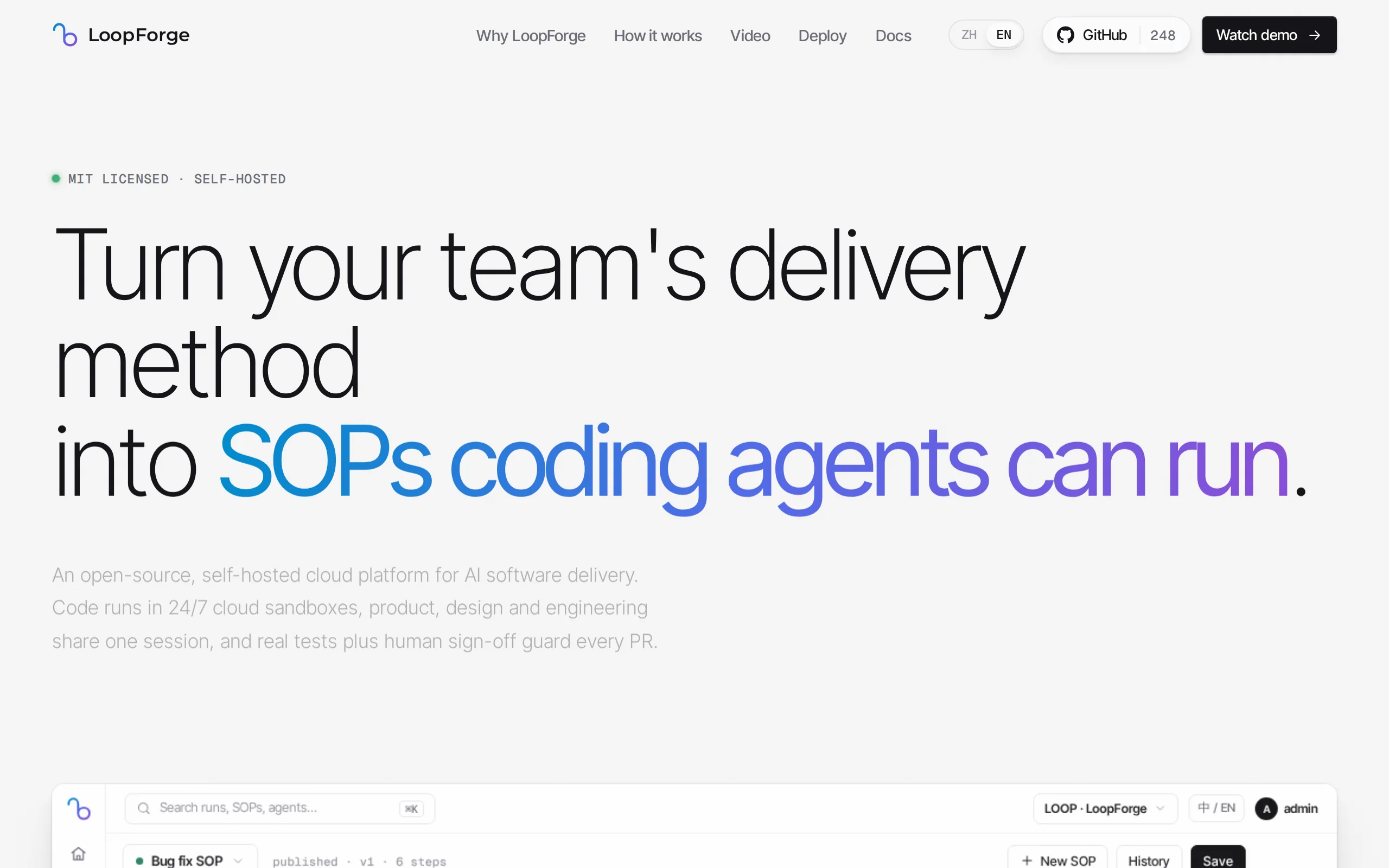
LoopForge – Tencent's Open-Source Cloud-Based AI R&D Collaboration Platform
LoopForge is an open-source, team-level cloud-based AI R&D collaboration platform developed by Tencent, designed to address engineering breakpoints that occur during multi-Agent handover processes. Un...
Muse Ember Review: Meta Redefines the Efficiency Boundaries of Lightweight Models
Muse Ember is Meta's smallest parameter-scale AI model introduced in mid-2026, specifically designed for high-frequency, repetitive tasks in agents. According to official benchmark data, this model ac...
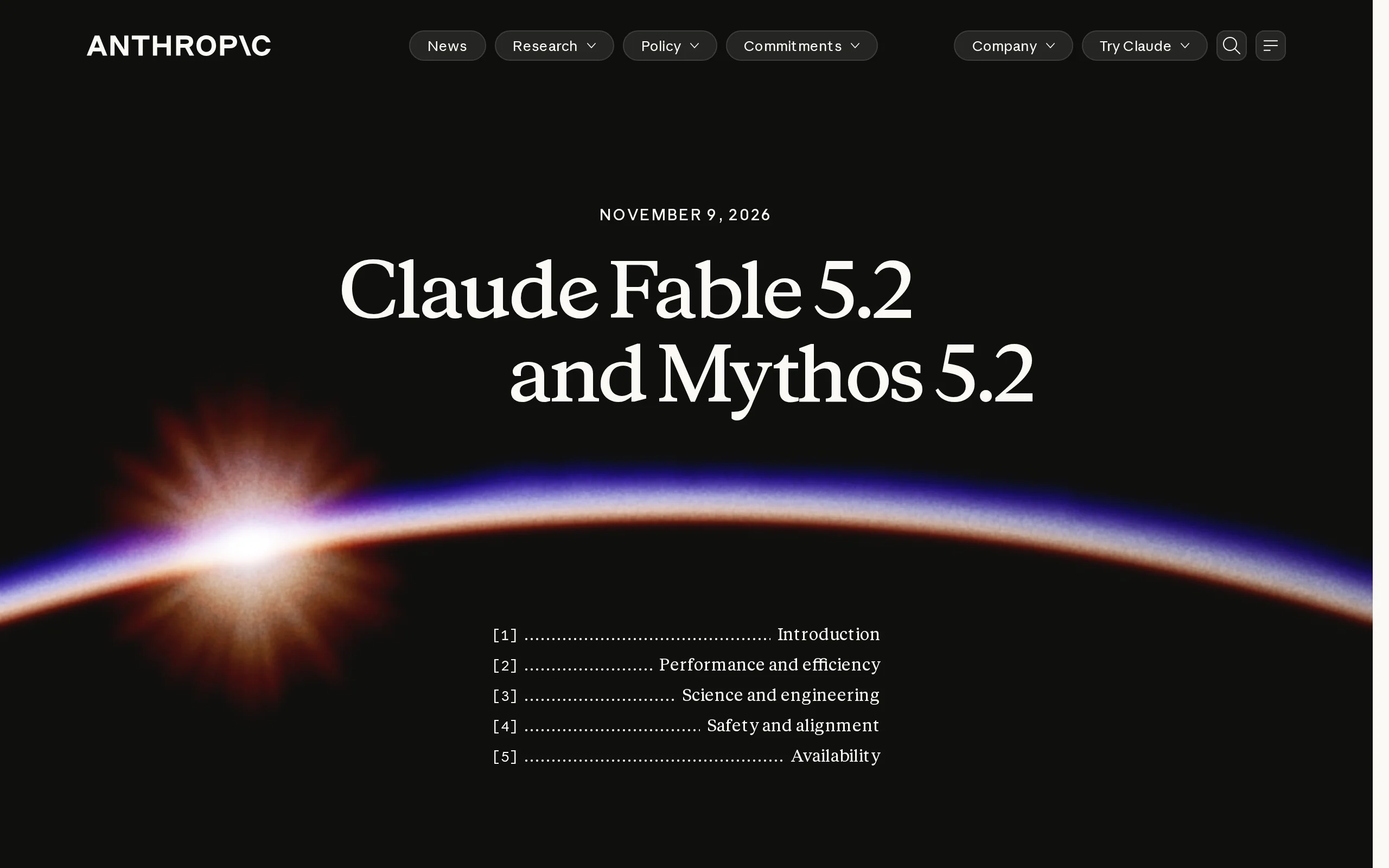
Claude Fable 5.2 – Anthropic's Flagship AI Model
Claude Fable 5.2 is Anthropic's flagship AI model, sharing a common origin with the security-focused Claude Mythos 5.2. This model is renowned for its capability of autonomous collaboration among thou...
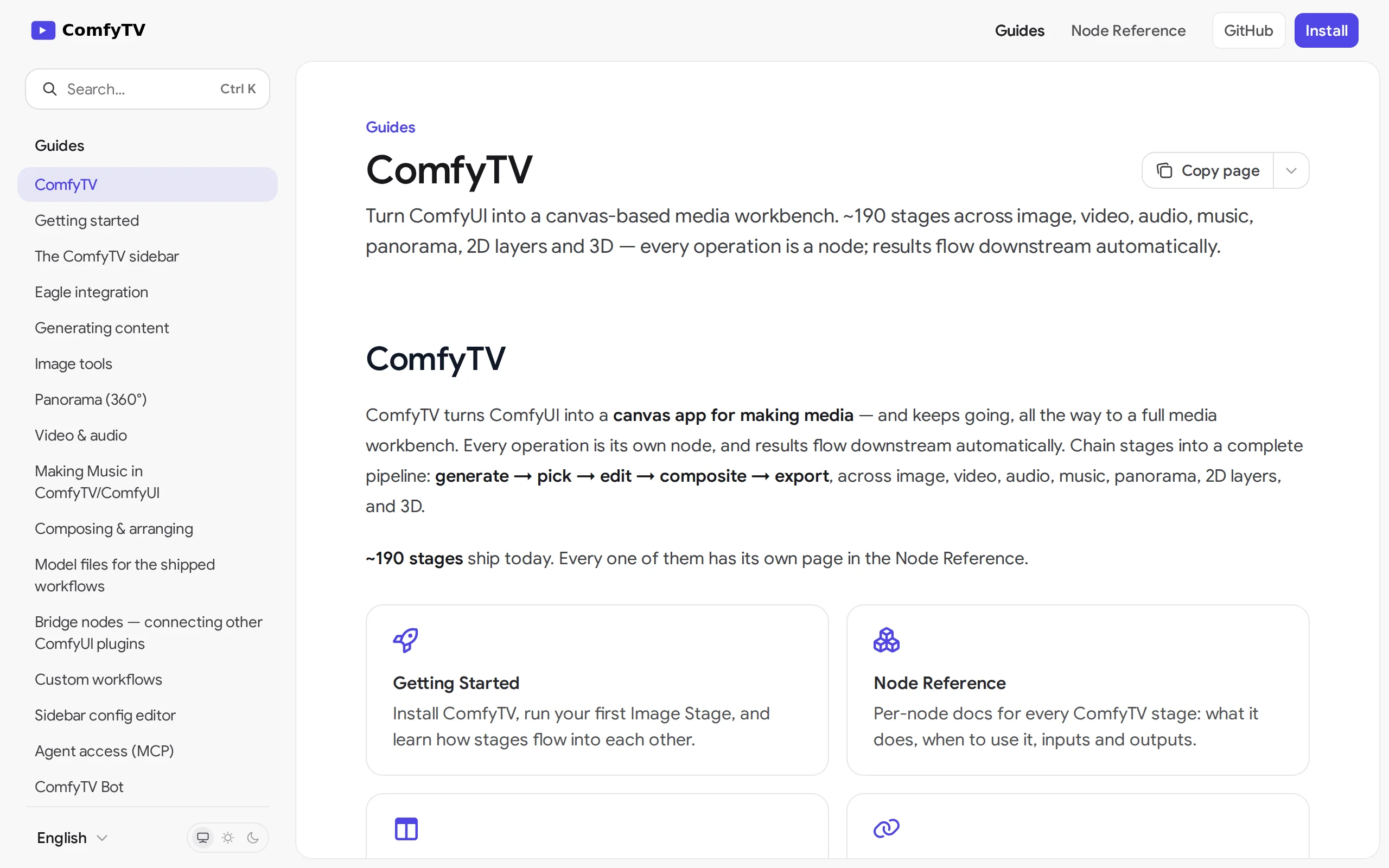
ComfyTV – Open-Source ComfyUI Plugin, Local Infinite Canvas Media Workbench
ComfyTV is an open-source ComfyUI plugin that operates entirely locally, transforming ComfyUI into an infinite canvas-style media workbench similar to TapNow and LibTV. Each operation on the canvas is...
© All Rights Reserved. Some content on this site is partially generated by AI with human review.