
Claude Fable 5.2 – Anthropic's Flagship AI Model
Executive Summary:
Claude Fable 5.2 is Anthropic's flagship AI model, sharing a common origin with the security-focused Claude Mythos 5.2. This model is renowned for its capability of autonomous collaboration among thou...
1. What is Claude Fable 5.2
Claude Fable 5.2 is Anthropic's flagship AI model, sharing a common origin with the security-focused Claude Mythos 5.2. This model is renowned for its capability of autonomous collaboration among thousands of agents. It once generated a fully functional operating system capable of booting up from scratch, with 1,000 agents running continuously for 8 days, and completed the formal proof of Fermat's Last Theorem in Lean language within 30 hours. Compared to its predecessor, Claude Fable 5.2 has improved generation speed by 30%, and its API pricing has been reduced to $8 per million input tokens and $40 per million output tokens. Its High-tier performance is approximately on par with the Max-tier of Opus 5.5, but at half the cost.
Technical positioning and domain: Claude Fable 5.2 belongs to the field of large-scale multi-agent collaboration and long-term autonomous engineering. It is designed to tackle ultra-complex and ultra-long-cycle tasks that traditional monolithic models struggle with. Its core capabilities span autonomous software development, challenging code migration, mathematical formal proof, scientific computing, full-stack hardware design, and robotic control, making it Anthropic's flagship model for high-complexity engineering and research scenarios.
Development background: Developed by Anthropic, this model shares the underlying technical framework with Claude Mythos 5.2. Anthropic has deep expertise in AI safety and alignment. The motivation behind developing Claude Fable 5.2 was to break through the limitations of monolithic models—by enabling autonomous orchestration of large-scale agent clusters, the model extends AI capabilities from "single-turn dialogue reasoning" to "multi-day continuous engineering delivery." Additionally, during training, Anthropic introduced a capability-oriented restriction mechanism to prevent potential risks from AI-driven self-development, demonstrating a safety-first approach to research and development.
Core value: Claude Fable 5.2 addresses the issues of context fragmentation and coordination challenges that traditional AI models face in long-cycle, multi-step engineering tasks. Its thousands of agents can autonomously establish collaboration protocols, assign roles, and review each other's code, without the need for human orchestration of pipelines. In practical validation, the model has completed tasks previously considered difficult for AI to accomplish independently, such as writing a bootable operating system from an empty folder and formalizing the proof of Fermat's Last Theorem in 30 hours, elevating AI's engineering delivery capabilities to a new level.
Technical features: Its core technical advantage lies in the combination of a multi-agent orchestration architecture and an adjustable Effort reasoning mechanism. The model supports multiple "effort levels" from Low to Max, allowing for precise balance between cost and performance by allocating different reasoning and computational budgets. Furthermore, the capability-oriented restriction mechanism introduced during training clearly defines boundaries between safety and practicality, ensuring the model maintains high standards in areas such as agent coding and hardware development, while imposing controlled constraints on sensitive capabilities like accelerator core optimization.
2. Key Features
Thousand-level Agent Collaboration: Can coordinate thousands of sub-Agents for autonomous task division. The model independently establishes collaboration protocols, assigns roles, and reviews code among agents, without relying on human-orchestrated pipelines. Agents self-coordinate task distribution and progress synchronization, maintaining consistent engineering context over multiple days to complete the full engineering workflow from coding, testing to code review.
Autonomous Software Development: Starting from an empty folder, no human intervention is required for writing code. In just 8 days, the model can generate a fully bootable operating system including kernel, drivers, file system, and graphical interface. This capability validates the model's stability and completeness in long-term software engineering projects, producing not demo-level code but fully functional systems capable of actual operation.
High-difficulty Code Migration: Previously led the complete migration of core production services from Python to Rust, improving service startup speed by approximately 26 times. This feature is suitable for modernization of legacy systems, as the model can understand semantic differences across programming languages, maintain business logic consistency during migration, and optimize runtime performance in the target language.
Mathematical Formalization Proof: 1,000 agents collaborated for 30 hours to complete the formalization of Fermat's Last Theorem in Lean language, reducing the proof code by 7 times compared to the initial version. This achievement demonstrates the model's deep mathematical reasoning and strict logical verification capabilities, transforming natural language descriptions of mathematical theorems into machine-verifiable formal proofs, offering practical value for trustworthy verification in mathematical research.
Scientific Computing Breakthroughs: Independently completed a black hole phase transition calculation that had been delayed for 23 years, and accurately determined the limit of a screening technique used by physicists for 15 years. This feature highlights the model's ability to handle large-scale brute-force derivations in fundamental scientific fields such as theoretical physics, extracting effective physical conclusions from complex mathematical computations.
Full-stack Hardware Design: A single paragraph of requirements can generate a specification document, four-layer PCB routing, 3D casing modeling, and firmware, with the prototype lighting up on the first try without any electrical modifications. The model integrates knowledge of electronic engineering, mechanical design, and embedded development into a single reasoning process, significantly shortening the cycle from concept to physical prototype in consumer electronics.
Robotics Control: Without specialized training, the RoboDojo dual-arm robot simulation benchmark achieved a success rate of 64.9%, significantly outperforming similar models. The model can directly output robot control strategies, completing vision-action closed-loop tasks, showcasing its generalization capability in translating digital-world reasoning into physical-world execution.
3. Application Scenarios
Large-scale Code Engineering: Suitable for legacy system language migration (e.g., Python to Rust), building a complete operating system from an empty directory, and other long-term projects requiring hundreds or even thousands of Agents to work continuously for several days. In traditional development models, such projects would require dozens of engineers to collaborate for months. With Claude Fable 5.2, tasks can be autonomously planned, decomposed, coded, and cross-reviewed, delivering complete engineering results within days. This scenario is ideal for enterprise R&D teams with clear delivery goals and tight timelines.
Mathematics and Scientific Research: Addresses complex and tedious problems that humans often set aside, such as formal verification of mathematical proofs and brute-force derivation calculations in theoretical physics. Researchers can submit theorems or physical problems in natural language to the model, which will autonomously perform formal transformations or numerical derivations, generating verifiable proof code or computational results. This scenario is well-suited for academic research institutions, mathematics and physics departments, and industrial research divisions that require validation of complex algorithms.
Hardware Product Development: Full-stack hardware design, from specification writing, component selection, four-layer PCB routing, to 3D casing modeling and firmware development. Hardware startup teams or consumer electronics manufacturers can describe product requirements in a paragraph, and the model will generate the complete set of design documents and production files. Prototypes can be powered on with zero electrical modifications, significantly reducing the trial-and-error costs associated with rapid prototyping and iteration.
Robotics and Physical World Control: Designed for tasks requiring a visual-action loop, such as dual-arm robot operations and automated laboratory instrument control. Without specialized training, the model achieves a 64.9% success rate on the RoboDojo dual-arm robot simulation benchmark. It can be used for rapid prototyping of robotic operation strategies and generating control logic for automated lab equipment, making it suitable for robotics research institutions and smart manufacturing enterprises.
4. How to Use
Select an Entry Point: Claude Fable 5.2 is now available on Claude.ai, Claude Code, Claude Platform (API), and major cloud platforms such as AWS, Google Cloud, and Microsoft Azure. Users can choose between web-based interaction, command-line tools, or API integration based on their workflow.
Confirm Subscription: Paid subscribers (Pro/Team, etc.) can use Fable credits this week, with 1–3 Fable credit resets granted based on subscription duration. Fable usage can account for up to 50% of the weekly usage limit. Before using, ensure your current subscription plan includes access to the Fable model and understand the credit allocation rules.
Determine Model Usage: For daily coding and knowledge tasks, it is recommended to first use primary models such as Opus 5.5. Switch to Fable 5.2 only when encountering complex problems. This model is designed as a "tackle-hard-problems" tool; using it for simple tasks would result in unnecessary credit consumption. Properly combining primary models with Fable can effectively control usage costs.
Calling Method One (Advisor Mode): Allow smaller models like Haiku, Sonnet, or Opus to proactively consult Fable 5.2 when facing difficult problems. This mode is suitable for teams that already have an Agent workflow. By setting trigger conditions, regular models can automatically escalate complex issues to Fable for processing, without requiring manual scheduling.
Calling Method Two (Orchestrator Mode): Use Fable 5.2 as the central orchestrator, delegating decomposed simple subtasks to cheaper smaller models for execution. This mode is ideal for large-scale task scenarios, where Fable handles overall planning and quality control, while smaller models perform bulk execution. This approach helps reduce overall inference costs while maintaining quality.
Choose a Tier: For regular tasks, the default Medium tier is sufficient. For difficult problems, upgrade to High or Xhigh tier. For maximum speed, enable the 2.5x Fast mode. Tiers essentially determine the allocation of inference computation budget. Higher tiers support longer reasoning chains and more rounds of tool calling, but performance does not increase monotonically with tier level. It is important to balance based on task complexity.
Issue Open-Ended Tasks: This is suitable for tasks that directly specify a goal and require long-term planning (e.g., code migration, system design), allowing the model to autonomously plan and dispatch sub-Agents to complete the task. The description of open-ended tasks should include clear delivery objectives, constraints, and acceptance criteria. The model will independently break down and execute intermediate steps.
5. Pros and Cons Analysis
| Pros |
|---|
| Ultra-long cycle autonomous engineering: Can direct over a thousand Agents to operate continuously for several days, delivering complete engineering results without human intervention, such as writing a bootable operating system from an empty folder. The engineering context consistency far exceeds that of monolithic models. |
| Scalable complex task capability: A single model can handle multiple roles simultaneously, including planning, coordination, coding, and submission, eliminating the need for humans to reallocate tasks across multiple models. It maintains collaborative efficiency even at the scale of thousands of Agents. |
| High difficulty domain breakthroughs: Completed the formal proof of Fermat's Last Theorem in 30 hours and cracked a black hole physics calculation that had been delayed for 23 years, demonstrating high-level deep reasoning capabilities across interdisciplinary fields such as mathematics and theoretical physics. |
| Physical world implementation capability: Handles the entire stack, from PCB circuit board design and 3D casing modeling to firmware writing. Three real devices were successfully powered on with zero electrical modifications. The robot control success rate is significantly higher than that of similar models, showcasing strong migration ability from digital reasoning to physical execution. |
| Outstanding cost-effectiveness: The High tier achieves the same level of coding performance as the Opus 5.5 Max tier at about half the cost. On FrontierCode 2.0, the Xhigh tier score of 49.1% leads in comparisons, demonstrating good cost control in high-end inference scenarios. |
6. Comparative Analysis with Similar Tools
Below is a comparison of Claude Fable 5.2 with GPT-6 Astra, Claude Opus 5.5, and its counterpart in the same series, Claude Mythos 5.2. The comparison data is sourced from official benchmark test results.
| Comparison Dimension | Claude Fable 5.2 | GPT-6 Astra | Claude Opus 5.5 |
|---|---|---|---|
| Core Architecture | Hundreds of Agent clusters autonomously collaborate, with multi-Agent orchestration | Monolithic model, no public large-scale Agent orchestration capabilities | Monolithic model, general flagship positioning |
| Agentic Coding (FrontierCode 2.0) | 49.1% (Xhigh tier, $14.19 per task) | 42.8% (Max tier, $6.68 per task) | Serves as the baseline for Fable High tier, approximately on par with Fable High tier |
| Software Engineering (FrontierSWE v2) | 69.9% | 65.5% | Not disclosed |
| Multidisciplinary Reasoning (HLE with tools) | 74.2% | 57.2% | Not disclosed |
| Computer Operation (OSWorld 2.1) | 89.3% | 79.5% | Not disclosed |
| Robotics Control (RoboDojo Sim, Max tier) | 64.9% | 29.8% | Not disclosed |
| Scientific Agent (Terminal-Bench-Science) | 74.6% | 68.1% | Not disclosed |
| Business Process Automation (AutomationBench) | 51.4% | 41.4% | Not disclosed |
| Pricing Strategy | $8 for input, $40 per million tokens for output; High tier is approximately half the price of Opus 5.5 Max tier | API pricing not disclosed | Serves as the cost baseline for Fable, with Max tier cost approximately twice that of Fable High tier |
Selection Recommendations: For teams requiring handling of long-term engineering tasks, complex code migration, or large-scale autonomous collaboration, Claude Fable 5.2 is currently the most comprehensive choice among the compared models. It outperforms GPT-6 Astra in dimensions such as software engineering, multidisciplinary reasoning, computer operation, and robotics control, with a particularly significant advantage in the remote labor index (41.3% vs. 20.8%). This makes it well-suited for R&D organizations aiming for high levels of autonomy in complex tasks. However, note that its per-task cost is relatively high, with the Xhigh tier costing $14.19, approximately double that of the GPT-6 Astra Max tier. Budget-sensitive teams can use Fable as a reserve for challenging tasks, while delegating routine tasks to lower-cost models.
Selection Focus for Different Scenarios: If the team's primary need is general coding assistance and daily development efficiency, GPT-6 Astra offers acceptable coding capabilities (42.8%) at a much lower per-task cost ($6.68), providing better cost-effectiveness; if the team already relies on the Claude ecosystem and needs to collaborate with models like Opus 5.5, Fable 5.2's High tier achieves the level of Opus 5.5 Max tier at about half the cost, making it a natural choice for upgrading existing workflows; if the business involves cybersecurity, attack-defense, or vulnerability analysis, the specialized Claude Mythos 5.2, which shares the same origin as Fable, is more suitable. Fable 5.2, on the other hand, is better suited for general high-complexity engineering and research tasks.
7. Editor's Summary
Claude Fable 5.2 has chosen a different technical path from mainstream monolithic models — breaking the boundaries of single-inference capabilities through autonomous orchestration of large-scale Agent clusters. The achievement of writing a bootable operating system with 1,000 Agents running continuously for 8 days, and completing a formal proof of Fermat's Last Theorem in 30 hours, validates the feasibility of multi-Agent collaboration in long-term tasks. This "trading scale for depth" technical approach provides a new paradigm reference for the engineering delivery of AI. In terms of practical value, the model has produced quantifiable results in scenarios such as code migration, hardware design, and robot control. Metrics such as a 26-fold increase in startup speed when migrating from Python to Rust, and the ability to power on a prototype without any electrical modifications, indicate that its capabilities have moved from laboratory demonstrations to actual engineering applications.
Notably, the model features a capability-oriented restriction mechanism — during the training phase, Anthropic actively suppresses the optimization of accelerator cores and improvements to the LLM architecture. This "self-imposed limitation" safety design is relatively rare in commercial AI products, reflecting the trade-off between capability and safety in cutting-edge models.
This model is suitable for three types of users: first, technical teams responsible for large legacy system migrations or complex engineering projects, who can leverage its long-cycle autonomous delivery capabilities to compress project timelines; second, researchers in fundamental science fields such as mathematics and physics, who can use its formal proof and brute-force derivation capabilities to handle computational tasks that are difficult for humans to complete; third, hardware startups and robotics researchers, who can significantly reduce prototype validation costs with its full-stack hardware design and zero-training robot control capabilities. For everyday coding and general-purpose question-answering needs, this model is not the optimal choice, and pairing it with a primary model like Opus 5.5 would be more reasonable. The future iteration direction of Claude Fable 5.2 is worth watching, especially how the capability-oriented restriction mechanism further optimizes the balance between safety and practicality, and the stability performance of the multi-Agent collaboration architecture in larger-scale tasks. Overall, this is a specialized flagship model aimed at high-difficulty, mission-critical scenarios, and it holds irreplaceable value in specific task types.
8. FAQ
Q: What is the difference between Claude Fable 5.2 and Claude Opus 5.5, and how should one choose between them?
A: They serve different purposes. Opus 5.5 is a general-purpose flagship model, suitable for routine tasks such as daily coding and knowledge-based Q&A. Fable 5.2 is designed for long-term, complex, and challenging tasks, with the capability to coordinate thousands of Agent clusters. The official recommendation is to use Opus 5.5 for everyday tasks and switch to Fable 5.2 only when encountering difficult problems. In terms of cost, the High tier of Fable 5.2 achieves the same coding performance as the Max tier of Opus 5.5 at about half the price.
Q: What are the differences between the tiers (Medium, High, Xhigh, Max) in Claude Fable 5.2?
A: Tiers essentially represent the computational budget allocated during inference. Higher tiers support longer reasoning chains, more tool calls, and more rounds of self-validation. However, performance does not increase monotonically with higher tiers. On FrontierCode 2.0, the Xhigh tier achieved the highest score (49.1%), while the Max tier dropped to 45.6%. Overthinking may introduce redundant changes. For routine tasks, the Medium tier is sufficient, while for complex problems, you can upgrade to High or Xhigh tiers.
Q: What is the API pricing for Claude Fable 5.2, and how do subscribed users utilize their quotas?
A: The API pricing is $8 per million input tokens and $40 per million output tokens. Paid subscribers (Pro/Team, etc.) can use Fable quotas this week, with 1–3 Fable quota resets granted based on subscription duration. Fable can account for up to 50% of the weekly usage limit. The cost for a single task in the Xhigh tier is approximately $14.19, so frequent usage should be monitored to avoid quota exhaustion.
Q: What does the "capability directional restriction" in Claude Fable 5.2 specifically refer to, and will it affect normal usage?
A: During training, Anthropic intentionally suppressed two specific capabilities: accelerator kernel optimization and large language model architecture improvements, bringing its performance back in line with Opus 5.5. This restriction does not impact adjacent capabilities such as Agent coding or hardware development. During inference, a transparent fallback mechanism is in place: if the system detects an attempt to develop non-standard accelerator kernels, it automatically switches to Opus 5 for a response. Normal engineering and research tasks are unaffected.
Q: What calling methods does Claude Fable 5.2 support?
A: It supports two modes. Advisor Mode: allows smaller models like Haiku, Sonnet, or Opus to consult Fable 5.2 when encountering difficult problems. Orchestrator Mode: uses Fable 5.2 as the main scheduler, breaking down complex tasks into simpler subtasks and assigning them to more cost-effective smaller models. Both modes require usage through Claude.ai, Claude Code, or Claude Platform (API).
Q: What is the relationship between Claude Fable 5.2 and Claude Mythos 5.2?
A: They share a common origin but have different focuses. Claude Mythos 5.2 specializes in cybersecurity, while Claude Fable 5.2 is aimed at general high-complexity engineering and research tasks. Both models share the same underlying technical framework, but they differ in their focus areas and training objectives.
9. Project Links
- Product Official Website: https://www.anthropic.com/claude-fable-and-mythos-5-2
- Official Experience Portal: https://claude.ai
Related
LoopForge – Tencent's Open-Source Cloud-Based AI R&D Collaboration Platform
LoopForge is an open-source, team-level cloud-based AI R&D collaboration platform developed by Tencent, designed to address engineering breakpoints that occur during multi-Agent handover processes. Un...
Muse Ember Review: Meta Redefines the Efficiency Boundaries of Lightweight Models
Muse Ember is Meta's smallest parameter-scale AI model introduced in mid-2026, specifically designed for high-frequency, repetitive tasks in agents. According to official benchmark data, this model ac...
ComfyTV – Open-Source ComfyUI Plugin, Local Infinite Canvas Media Workbench
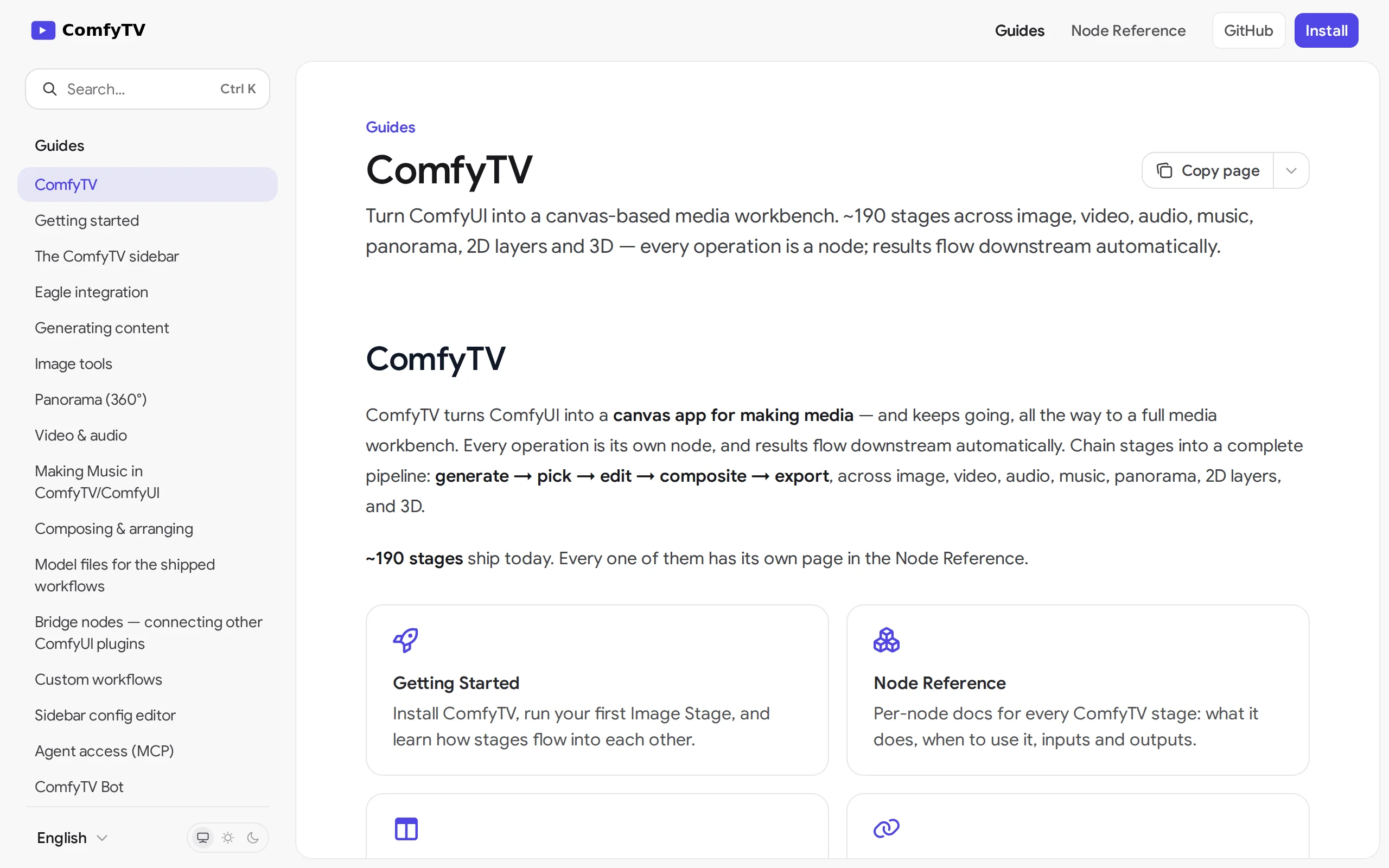
ComfyTV is an open-source ComfyUI plugin that operates entirely locally, transforming ComfyUI into an infinite canvas-style media workbench similar to TapNow and LibTV. Each operation on the canvas is...
Apollo World – Baidu Apollo's Multimodal World Model, Empowering Autonomous Driving Closed-loop Simulation and Data Flywheel
Apollo World is a multimodal world model driven by intelligent agents, introduced by Baidu Apollo for physical AI. Unlike traditional simulation tools, this system constructs virtual cities based on r...
© All Rights Reserved. Some content on this site is partially generated by AI with human review.