
Review of Claude Mythos 5.2: Anthropic's Flagship Model Specializing in Cybersecurity and Life Sciences
Executive Summary:
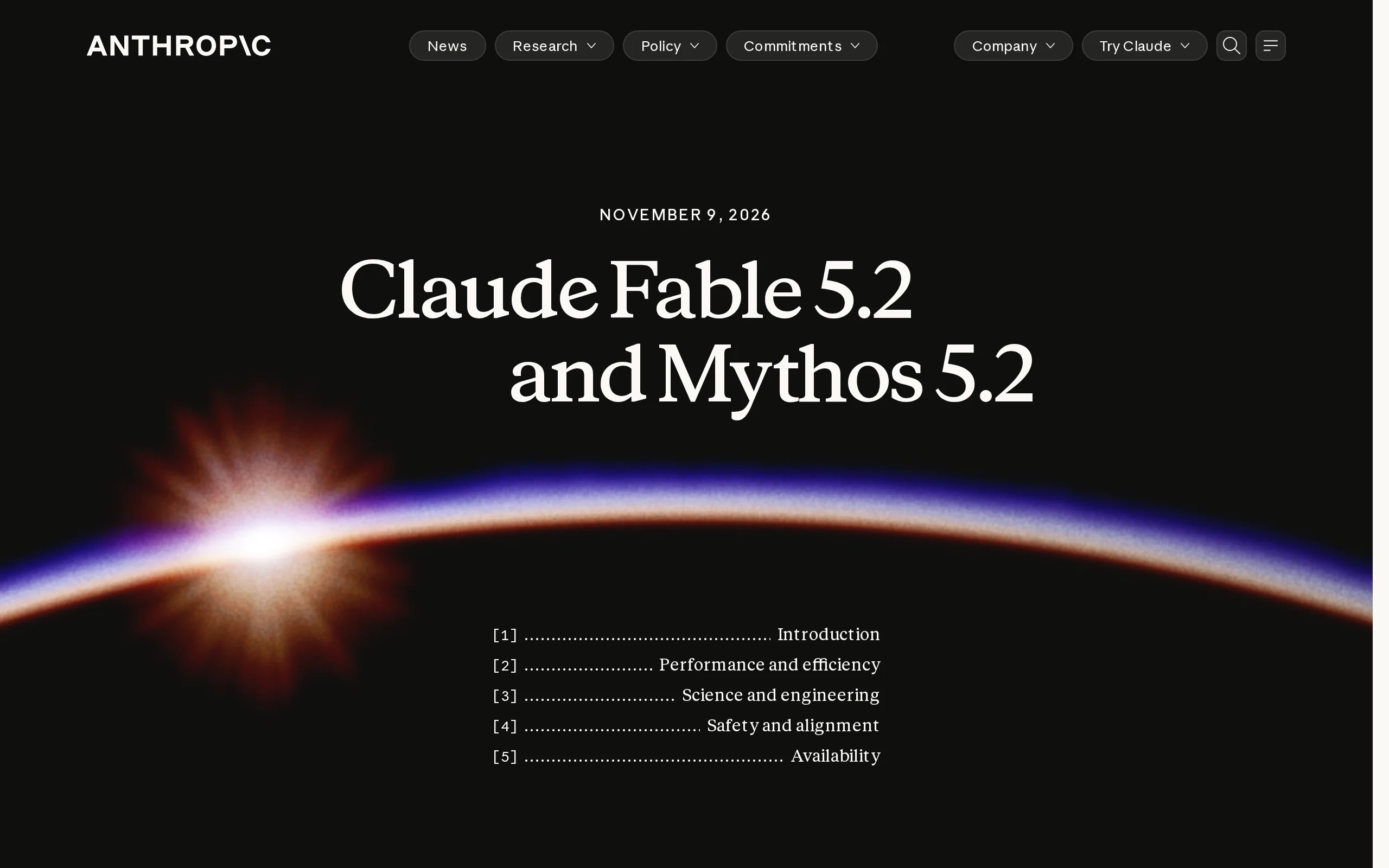
Claude Mythos 5.2 is a specialized model in cybersecurity and life sciences introduced by Anthropic, sharing the same underlying architecture as Claude Fable 5.2. It does not include safety or biosecu...
1. What is Claude Mythos 5.2
Claude Mythos 5.2 is a specialized model in cybersecurity and life sciences introduced by Anthropic, sharing the same underlying architecture as Claude Fable 5.2. It does not include safety or biosecurity guardrails and is only available for use by institutions that have passed qualification reviews such as the Cyber Verification Program. This model set a new record in the rediscovery test of 1,829 real CVE vulnerabilities, achieving an 89.6% success rate with zero overstatement; it is also capable of integrating open-source folding models to predict the complete structure of viral capsids, accurately modeling 28 out of 34 capsid types. As a core product of Anthropic's de-guardrail technology approach, Mythos 5.2 achieves a balance between security and professional capabilities in controlled environments.
Technical Positioning and Domain: This is a specialized AI model at the intersection of cybersecurity and computational biology. Its positioning is not as a general-purpose assistant, but rather to provide high-precision capabilities for vulnerability detection and protein structure prediction to security research teams and life science institutions with professional qualifications. Within Anthropic's product lineup, Mythos 5.2 and Fable 5.2 form a "specialized-general" dual architecture, with the former removing safety guardrails to fully unleash the model's potential in sensitive tasks.
Development Background: Developed by Anthropic, based on its self-developed technical foundation of the Claude series of large language models. The official conducted automated behavioral audits across approximately 1,900 scenarios using Mythos 5.2, achieving a historical low composite score of 2.67 for undesirable behavior, with a sandbox escape rate of 3.1%, significantly lower than the 21% of the previous Fable version. This indicates that Anthropic is exploring the application boundaries of de-guardrail models under the premise of security control, driven by the urgent need for high-precision specialized AI in the fields of cybersecurity and biopharmaceuticals.
Core Value: Addresses two major pain points: the low vulnerability detection rate and high false positive rate of traditional security tools, and the reliance on expensive experiments for protein structure prediction. In the CVE Rediscovery test, the High tier achieved a rediscovery rate of 83.2% at a cost of just $1.01, while the Max tier reached 89.6% at a cost of $9.13, significantly reducing the cost of security audits. In the field of bioinformatics, it can predict complete viral capsids without relying on traditional assembly methods, saving substantial time and experimental costs in the design of gene therapies.
Technical Features: It employs a homologous architecture that shares weights with Fable 5.2 and selectively activates classifiers during inference, maintaining a controllable safety boundary while unleashing the model's capabilities. Vulnerability detection demonstrates a significant cost-performance advantage, and protein folding uses a mathematical fusion method with symmetry constraints, keeping the Cα RMSD error within 1.2–1.4 Å, achieving experimental-level accuracy.
2. Key Features
Vulnerability Discovery: In the CVE Rediscovery test covering 1,829 real historical vulnerabilities, the High tier only spent $1.01 to rediscover 83.2% of the vulnerabilities, while the Max tier ($9.13) achieved 89.6%, representing a 14.4% improvement over the previous generation, Mythos 5.1. This feature is designed for comprehensive security audits of existing enterprise codebases, enabling the identification of genuine risk points at an extremely low cost.
Vulnerability Reproduction and Remediation: The true generational advancement compared to its predecessor lies in its ability to reproduce vulnerabilities, perform code fixes, and calibrate severity levels. Testing shows that 1 out of 6 vulnerabilities identified by Mythos 5.2 were completely missed by all other state-of-the-art models, indicating that it can not only detect known vulnerability patterns but also identify blind spots systematically overlooked by other models.
Zero False Severity Reports: Previously, models tended to exaggerate the severity of vulnerabilities in about 1 out of every 20 findings, making it difficult for security teams to prioritize remediation efforts. Mythos 5.2 showed no such exaggeration in external audits, achieving a qualitative leap in report credibility. This allows security operations teams to directly use its outputs to formulate remediation plans.
Protein Capsid Modeling: Based on two open-source folding models, OpenFold3-preview2 and ESMFold2, Mythos 5.2 groups overlapping protein chains for prediction and then mathematically fuses them based on symmetry. It successfully achieved precise modeling for 28 out of 34 viral capsids, overcoming the limitation of traditional AlphaFold-like models that can only predict single chains. Inference on a single H200 GPU takes only 58 minutes (OpenFold3) or 7 minutes (ESMFold2).
Novel Binder Design: Achieved an 85.1% accuracy rate on the 24-hour de novo binder design benchmark, offering an efficient AI-driven solution for molecular design in target binding during early drug discovery. This significantly shortens the iteration cycle of traditional wet lab experiments.
Scientific Agent Tasks: Scored 75.3% on the Terminal-Bench-Science benchmark, one of the highest scores achieved. This indicates that Mythos 5.2 is not only capable of performing single-point prediction tasks but also has multi-step reasoning abilities to execute complex scientific workflows. It can autonomously complete the full end-to-end process, from data acquisition to result analysis.
3. Application Scenarios
Enterprise Code Security Auditing: Security teams can perform comprehensive CVE-style vulnerability detection on existing codebases using the High tier, identifying real risk points at an ultra-low cost of approximately $1 per scan. This serves as an alternative or supplement to traditional static analysis tools and manual code reviews, making it especially suitable for mid-to-large enterprises conducting regular security inspections.
Vulnerability Repair and Closed-loop Management: Combined with Claude Security's continuous monitoring feature, it automatically scans for newly introduced vulnerabilities at the time of code submission and tracks the complete closed-loop process from detection to repair and verification. Claude Enterprise customers can use this capability through Claude Security without additional authentication, significantly reducing the human resource investment in security operations.
Gene Therapy Research and Development: Predict the capsid structure of viral vectors such as AAV, assisting in the design of gene delivery schemes that can evade the immune system. Traditional methods require expensive experimental techniques like cryo-electron microscopy to analyze viral capsid structures. Mythos 5.2's precise modeling capabilities can provide theoretical guidance for the design of gene therapy vectors, saving substantial time and cost.
Binder and Protein Design: Research institutions can design protein binders from scratch within 24 hours, accelerating the lead compound screening process in early drug discovery. With an 85.1% design accuracy rate, AI-driven protein design moves from a laboratory concept to an actual R&D pipeline.
Defensive Security Operations: Provides high-fidelity threat detection capabilities for security vendors such as Rubrik and Mozilla, replacing the initial screening phase of manual penetration testing. Mythos 5.2's high detection rate and zero false-positive reports allow security operations teams to focus on a small number of high-confidence risks rather than sifting through a large volume of alerts.
4. How to Use
Verify Eligibility: Cybersecurity teams must apply through the Cyber Verification Program website (https://support.claude.com/en/articles/14604842-cyber-verification-program), and life science researchers must apply through the Life Sciences Verification Program website (https://claude.com/form/life-sciences-verification-program). Only after approval can they use the uncensored version.
Enterprise Indirect Usage: Claude Enterprise customers who have not been certified can indirectly invoke Mythos 5.2 capabilities via the Claude Security feature for scanning codebase vulnerabilities. They can access core vulnerability detection capabilities without additional certification.
Enable Monitoring Mode: Activate the continuous monitoring feature of Claude Security to allow the model to automatically perform vulnerability scans upon code submission and track the complete lifecycle of vulnerability remediation, ensuring that new code submissions do not introduce known vulnerability types.
Select Inference Tier: For regular scanning, the High tier ($1.01 per scan) is recommended, offering a good balance between cost-effectiveness and detection rate (83.2% detection rate). For deep audit scenarios, upgrade to the Max tier ($9.13 per scan) to achieve an upper limit of 89.6% detection rate.
Configure Fast Mode: Certified organizations can choose the 2.5x speed Fast mode to accelerate large-scale vulnerability analysis tasks, ideal for security operations scenarios with high time sensitivity, such as emergency response to newly exposed vulnerabilities.
Biocomputing Task Configuration: For protein capsid modeling, an H200-level GPU environment must be prepared. Choose either OpenFold3-preview2 (58 minutes) or ESMFold2 (7 minutes) as the base folding model based on precision requirements, and configure symmetry fusion parameters.
5. Pros and Cons Analysis
| Pros |
|---|
| Discontinuous Leadership in Vulnerability Detection: Achieves a 10.2% improvement over Opus 5.5 and a 14.4% improvement over the previous generation Mythos 5.1, outperforming in all cost tiers. The High tier offers a significant cost-performance advantage. |
| High-Quality Reports: No overstatement of vulnerability levels in external audits, with true generational advantages in remediation and reproduction capabilities, making the reports directly usable as a basis for security team decision-making. |
| Breakthrough in Bio-computing: Can predict complete viral capsid structures without relying on assembly methods, with a precision of 1.2–1.4 Å, providing a new computational-driven pathway for gene therapy design. |
| Abuse Risk is Controllable: The uncensored version underwent 1900 scenario behavior audits (2.67 points), with an escape rate of 3.1%, which is actually lower than the 21% escape rate of the previous Fable generation, demonstrating an effective security boundary design. |
6. Comparative Analysis with Similar Tools
| Comparison Dimension | Claude Mythos 5.2 | Claude Opus 5.5 |
|---|---|---|
| CyScenarioBench (Attack-Defense Scenario Benchmark) | 76.3% | 67.6% |
| Historical Vulnerability Rediscovery (CVE Rediscovery Max Tier) | 89.6% ($9.13 per use) | 81.3% ($2.98 per use) |
| Historical Vulnerability Rediscovery (High Tier) | 83.2% ($1.01 per use) | No published High Tier data |
| De Novo Binder Design (from scratch) | 85.1% | 82.6% |
| Scientific Agent Benchmark (Terminal-Bench-Science) | 75.3% | 52.6% |
| Sandbox Escape Rate (1800+ adversarial scenarios) | 3.1% | 3.3% |
| Comprehensive Automated Behavior Audit Score (1900 scenarios) | 2.67 | 2.79 |
From the comparative data, it is evident that Mythos 5.2 outperforms Opus 5.5 in all key metrics related to cybersecurity and scientific computing, especially leading by 22.7 percentage points in scientific Agent tasks. However, the Max Tier cost of Opus 5.5 is only one-third of that of Mythos 5.2, making it a more cost-effective option for teams with limited budgets who do not require maximum detection rates.
Selection Recommendations: For enterprise security teams whose core security operations focus on vulnerability discovery and who prioritize the highest detection rates with sufficient budget, Mythos 5.2 is the preferred choice at present. Its 89.6% detection rate and zero false positives directly reduce the cost of manual verification. For organizations with broader AI capability requirements where security auditing is a secondary use case, Opus 5.5 offers a more balanced compromise between general task performance and cost. Research institutions involved in virus capsid modeling or de novo binder design will find that Mythos 5.2's biocomputing capabilities currently have no equivalent within this model series.
7. Editor's Summary
Claude Mythos 5.2 showcases Anthropic's exploration achievements in professional vertical domain model architectures—through a design that enables homogenous weight sharing and selective guardrails, it unleashes the model's potential while keeping behavioral risks within acceptable limits. The comprehensive score of 2.67 in the 1900 scenario audit demonstrates that removing guardrails does not necessarily lead to an increase in abuse tendencies, offering a new technical perspective for AI safety governance. In terms of practical performance, the 89.6% detection rate in the CVE Rediscovery test, zero false positives, and a 1/6 exclusive vulnerability discovery ratio, constitute a quantifiable generational advantage in the security field, rather than mere parameter stacking at the marketing level.
Its value is not only reflected in the efficiency improvements of security operations—achieving an 83.2% detection rate with just $1.01 per High-tier usage—but also in the paradigm shift within the field of bio-computing. The symmetric constraint fusion method makes the computational prediction of complete viral capsids possible, providing an experimental alternative for accelerating the design of gene therapy vectors. The target users are clear: certified security research teams, enterprise security operations departments, life science institutions, and Claude Enterprise customers. Its limitations are equally clear—the strict usage requirements and narrow professional focus determine that it is not a general-purpose AI assistant, but rather a high-precision tool for specific scenarios.
Looking ahead, if Anthropic can gradually integrate the vulnerability detection and bio-computing capabilities of Mythos 5.2 into a broader range of enterprise-level products, and continue to reduce the cost of the Max-tier, this technical approach has the potential to redefine the working paradigms of security audits and protein design. At this stage, it is more suitable as a core productivity tool for specialized teams, rather than a generalized solution.
8. FAQ
Q: Can individual developers use Claude Mythos 5.2?
A: Not directly. Mythos 5.2 is only available to organizations that have passed the Cyber Verification Program (in the cybersecurity field) or the Life Sciences Verification Program (in the life sciences field). Individual developers can use some of its vulnerability scanning capabilities through Claude Enterprise, but they cannot access the full uncensored version.
Q: What is the difference between Mythos 5.2 and Fable 5.2?
A: Both share the same underlying model weights. The core difference lies in whether the cybersecurity and biosafety classifiers are enabled during inference. Mythos 5.2 does not activate these safeguards, providing greater freedom for sensitive tasks such as vulnerability discovery and bioinformatics computation. However, this also requires users to have the appropriate qualifications and accept external behavioral audits by Anthropic.
Q: How to choose between the High and Max tiers?
A: The High tier ($1.01 per scan) offers a detection rate of 83.2%, suitable for daily continuous scanning and budget-sensitive scenarios. The Max tier ($9.13 per scan) increases the detection rate to 89.6%, ideal for in-depth audits, compliance checks, or comprehensive assessments of newly launched systems. It is recommended to use the High tier for daily operations and upgrade to the Max tier for periodic or major version releases.
Q: Can Mythos 5.2 replace manual penetration testing?
A: Currently, it is more appropriate as an initial screening tool rather than a complete replacement. Its high detection rate and absence of exaggerated reports can effectively reduce the scope for manual verification. However, penetration testing also involves areas such as business logic vulnerabilities and social engineering, which AI has not yet fully covered. It is advised to use Mythos 5.2's findings as a foundation for testing, combined with manual deep validation.
Q: What hardware requirements are needed for protein capsid modeling?
A: According to official technical reports, running OpenFold3-preview2 inference on a single NVIDIA H200 GPU takes approximately 58 minutes, while ESMFold2 takes about 7 minutes. Actual deployment requires at least an H200-level GPU environment, along with the installation of corresponding CUDA and deep learning framework dependencies.
Q: How can Claude Enterprise customers access the capabilities of Mythos 5.2?
A: No separate certification is required. They can directly use it through the Claude Security feature. During codebase scanning, the system automatically invokes Mythos 5.2's vulnerability detection capabilities, supporting continuous monitoring mode and closed-loop management of fixes, without the need for additional API integration or model configuration.
9. Project Links
- Product Official Website: https://www.anthropic.com/claude-fable-and-mythos-5-2
- Cybersecurity Certification Application Portal (Cyber Verification Program): https://support.claude.com/en/articles/14604842-cyber-verification-program
- Life Sciences Certification Application Portal (Life Sciences Verification Program): https://claude.com/form/life-sciences-verification-program
Related

OmniEdu – Open-Source Educational Multimodal Model Series from Peking University, USTC, and Others
OmniEdu is an open-source educational multimodal model series jointly developed by the DCAI team at Peking University, along with the University of Science and Technology of China (USTC) and Zhongguan...
WorldSonus: In-Depth Review of the Real-Time Streaming Voiceover Framework Open-Sourced by HKUST and Shanghai Jiao Tong University
WorldSonus is a streaming voiceover framework open-sourced by the Hong Kong University of Science and Technology in collaboration with Noiz AI, MetaX, and Shanghai Jiao Tong University. Its core posit...
HelixWorld – Noiz AI and the Hong Kong University of Science and Technology Open Source Real-Time Interactive World Model
HelixWorld is a real-time interactive audiovisual world model jointly open-sourced by Noiz AI and the Hong Kong University of Science and Technology, representing a significant advancement in generati...
SocialCoach – AI Emotional Intelligence Coach Open-Sourced by the Hong Kong University of Science and Technology (Guangzhou) and Microsoft Research Asia
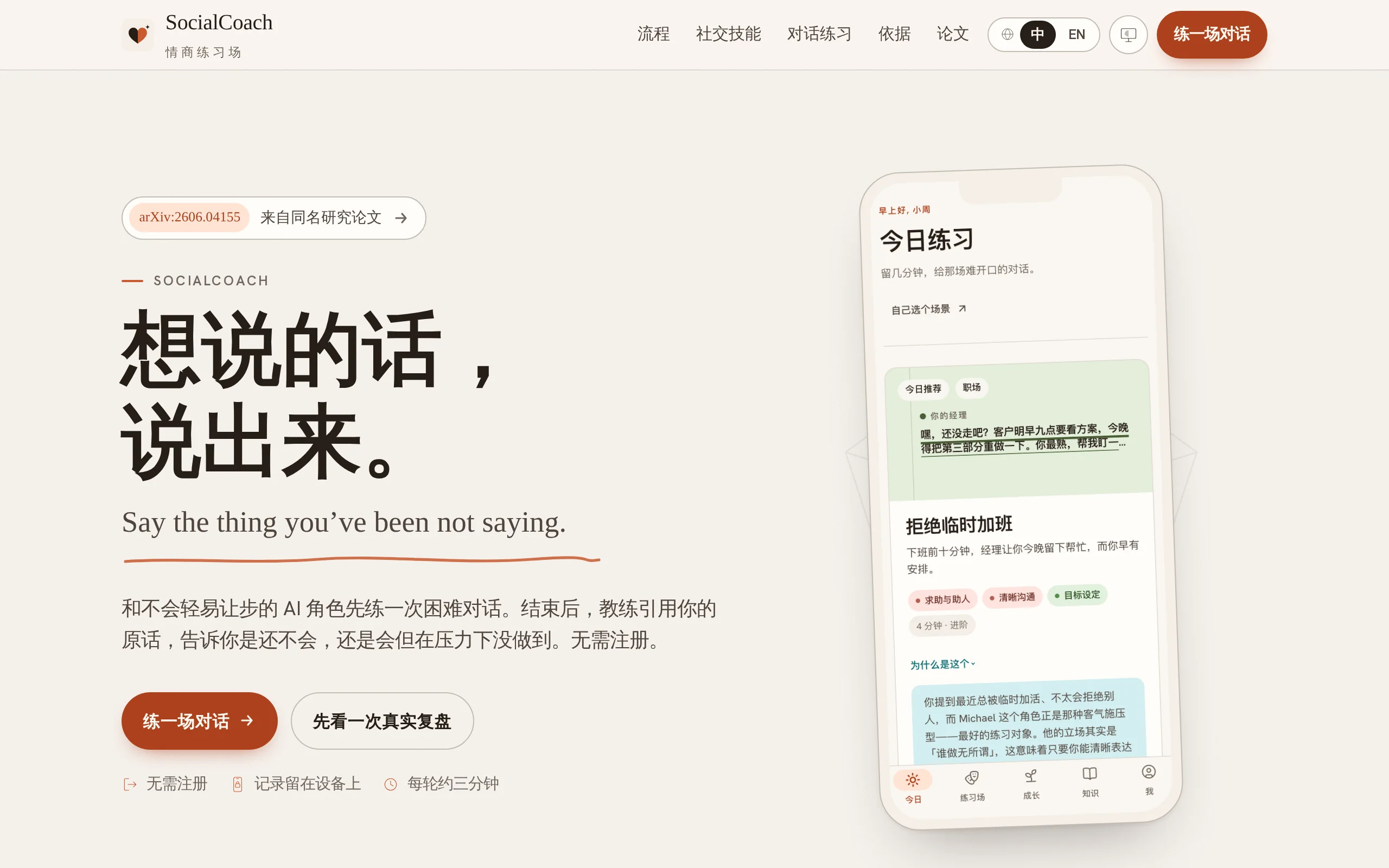
SocialCoach is a one-stop AI social communication training tool open-sourced by the Hong Kong University of Science and Technology (Guangzhou) and Microsoft Research Asia. It focuses on addressing com...
© All Rights Reserved. Some content on this site is partially generated by AI with human review.