
Apollo World – Baidu Apollo's Multimodal World Model, Empowering Autonomous Driving Closed-loop Simulation and Data Flywheel
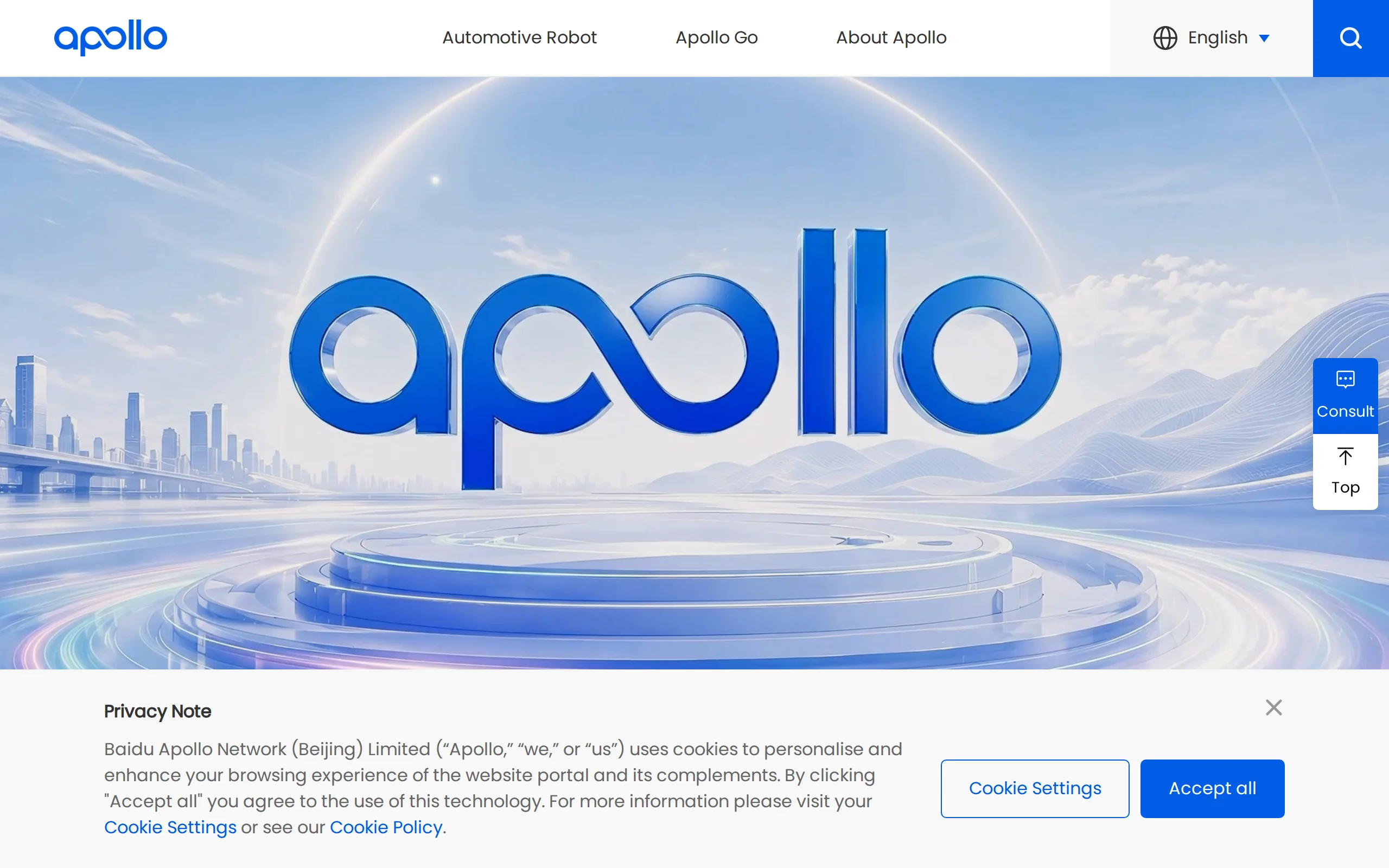
Executive Summary:
Apollo World is a multimodal world model driven by intelligent agents, introduced by Baidu Apollo for physical AI. Unlike traditional simulation tools, this system constructs virtual cities based on r...
1. What is Apollo World
Apollo World is a multimodal world model driven by intelligent agents, introduced by Baidu Apollo for physical AI. Unlike traditional simulation tools, this system constructs virtual cities based on real-world data, where vehicles, pedestrians, and non-motorized traffic are all AI agents capable of autonomous decision-making, rather than static props following fixed scripts. The model can generate real-time multimodal observational data such as camera images and LiDAR point clouds, enabling closed-loop interaction with autonomous vehicles in terms of perception, decision-making, and action. Apollo World supports complete travel tasks from any starting point to destination, and has been directly deployed in the virtual testing and validation of "Cao Luo Kuai Bao" (Baidu's Robotaxi platform), establishing a data flywheel system where real-world operations and virtual iterations reinforce each other.
Technical Positioning and Domain: Apollo World belongs to the intersection of autonomous driving simulation and physical AI, specifically positioned as a world model platform for virtual validation and iterative optimization of autonomous driving systems. Within the technical ecosystem, it serves as a hub connecting real-world road operations with virtual simulation testing, providing a scalable and repeatable testing environment for autonomous driving algorithms through high-fidelity scene reconstruction and intelligent agent interaction simulation.
Development Background: This system was developed by the Baidu Apollo team, leveraging over a decade of technical accumulation in autonomous driving by Baidu. Baidu began its autonomous driving layout in 2013 and launched the world's first open autonomous driving platform, Apollo, in 2017. The motivation behind Apollo World's development stems from industry challenges such as the inability of traditional simulation tools to cover real-world long-tail traffic scenarios and limited testing efficiency. It aims to achieve efficient transformation from real-world data to virtual testing through world model technology, supporting the rapid global expansion of "Cao Luo Kuai Bao."
Core Value: Apollo World addresses three major core issues in autonomous driving validation: high costs of real-world road testing, difficulty in reproducing long-tail scenarios, and the gap between simulation environments and the real world. Its innovative value lies in establishing a data closed-loop between real-world operations and virtual iterations: extracting high-value complex scenarios from massive real-world operational data, converting them into virtual tests that can be repeated infinitely, using the test results to feed back into the vehicle-side system for iteration, and then returning the updated system to real-world roads for validation, forming a continuous self-reinforcing flywheel effect.
2. Key Features
Causal Interactive World: Vehicles and pedestrians in the virtual city are AI agents driven by decision-making models, rather than animated props controlled by pre-set scripts. These agents have independent decision-making capabilities and adjust their behaviors in real-time based on actions such as deceleration, overtaking, and lane changing by the ego vehicle. This results in differentiated traffic responses, covering long-tail interaction scenarios that scripted simulations cannot exhaustively enumerate, significantly enhancing the realism and testing value of the simulation environment.
Full-Modal Observation Generation: The system generates observation data from multiple sensors in real-time, including camera images and LiDAR point clouds. When environmental conditions such as weather and lighting change, the sensor data synchronously and coherently adjust. This cross-modal consistency ensures that the distribution of virtual data aligns with real sensor data, allowing autonomous vehicles to "perceive the environment as if they were on real roads." This is a key capability that general video generation models typically lack.
End-to-End Closed-Loop Simulation: Control actions such as steering, acceleration, and deceleration from the driving system are fed back in real-time to the world model, which then updates the behavior of all agents and generates the next moment's observation data. This creates a continuous bidirectional loop: the world model outputs observations → the driving system makes decisions → decision actions are fed back → the world model updates and generates new observations. This supports a closed-loop validation of perception, decision-making, action, and feedback.
Long-Distance Continuous Mobility Tasks: The system supports continuous driving from any starting point to any destination, fully traversing different road types and scenarios such as urban roads, highways, and intersections. It realizes the complete mobility process from accepting an order, carrying passengers, to delivering them. Unlike traditional simulation tools that are limited to single intersections or fragmented scenarios, this feature enables validation of the driving system's stability and global planning capabilities over long-duration tasks.
Data Flywheel Validation System: High-value complex and risky scenarios are mined from real operational data and converted into virtual test cases that can be repeated infinitely. Test results are used to iterate the on-vehicle driving system, and the updated system returns to real roads for validation. The validation data then flows back into the world model. This closed-loop mechanism allows the virtual mileage to continuously expand alongside the scale of real operations, forming a self-reinforcing iterative cycle.
Ten Thousand Kilometers of Virtual Testing Per Day: Leveraging an efficient simulation engine and a parallel computing architecture, the system can complete approximately ten thousand kilometers of virtual testing mileage in a single day. According to estimates from third-party media, this volume of testing is equivalent to the cumulative mileage of a real-world test vehicle equipped with a safety driver over three consecutive years, greatly reducing validation costs and accelerating the algorithm iteration cycle.
3. Application Scenarios
Robotaxi Global Testing and Validation: Before global deployment,萝卜快跑 (Apollo Go) conducts systematic virtual validation of driving strategies using Apollo World. In virtual cities, it simulates differences in traffic rules, road infrastructure, and driving habits across various countries and regions, completing approximately 100,000 kilometers of virtual road testing per day. This allows potential risks to be identified and mitigated in advance, providing data support for official deployment.
Pre-deployment Simulation for New Cities: Before operating in a new city, autonomous vehicles complete full trip simulations—from receiving orders, picking up passengers, to delivering them—within the virtual cities built by Apollo World. This process helps the system uncover challenges posed by local-specific traffic conditions and rule differences in advance, enabling decision-making algorithms to undergo targeted optimization before real-world operations, thereby reducing cold-start risks.
Reproduction of Rare High-risk Scenarios: Rare and dangerous scenarios such as "ghost probe" situations, unprotected left turns, and extreme weather conditions are extracted from real-world operational data and repeatedly simulated in the virtual world. These scenarios occur very infrequently on actual roads and are difficult to test specifically, but Apollo World can convert them into controllable and repeatable test cases, systematically enhancing the driving system's ability to handle edge cases.
System Iteration and Regression Testing: Before each OTA update of the driving system, Apollo World replays a full set of high-value scenarios for regression testing. Only after confirming that the new version does not exhibit functional degradation in complex scenarios is it deployed to real vehicles. This process establishes a quality gate for algorithm updates, effectively preventing new issues from being introduced during optimization.
Physical AI Generalization Foundation: Baidu states that this technology stack has the potential to be extended to physical AI scenarios, such as providing the same virtual training and validation environment for humanoid robots and logistics robots in the future. This scenario highlights the application potential of world model technology in broader embodied intelligence domains.
4. How to Use
Obtain Access: Apollo World is currently not open to the public; it is a proprietary system used internally by Baidu Apollo for testing and validation of the Apollo Go service. External developers or companies wishing to use it must contact Baidu Apollo through their business cooperation channels to assess the possibility of collaboration. Individual developers are not currently supported for access applications.
Environment Integration Preparation: The using entity must have the capability to interface with the vehicle-side autonomous driving system and support data communication. This ensures that the perception outputs and decision-making instructions from the driving system can exchange data bidirectionally with the Apollo World simulation environment. The system requires that the vehicle-side hardware supports standard sensor interface protocols.
Scenario Configuration and Import: Import real operational data of the target city into Apollo World, and the system will automatically construct the corresponding virtual city environment. Users can set environmental parameters such as weather, time of day, and traffic volume, and select or extract high-value scenarios from the operational data for testing. They can then configure a testing task queue.
Execute Closed-Loop Simulation Testing: After starting the test, Apollo World continuously generates multi-modal observation data and feeds it back to the driving system. The control instructions from the driving system are then immediately fed back to the world model, forming an end-to-end closed-loop simulation. During the test, users can monitor the vehicle's status, agent interaction behaviors, and sensor observation data in real time.
Result Analysis and System Iteration: After the test is completed, the system generates a report evaluating the performance of the driving strategy, including safety metrics and analysis of decision-making rationality. Based on the test results, the vehicle-side driving system is iteratively updated. The revised algorithms are first validated through regression testing in Apollo World. Only after confirming there is no performance degradation are they deployed on actual vehicles, forming a complete iteration loop.
Notes: The using entity should understand Apollo World's "2+3" evaluation criteria, which include two basic thresholds—causality and interactivity—and three advanced metrics—physical accuracy, persistence, and real-time performance. Based on this, users should reasonably set their testing expectations. Virtual test results should still be combined with real-world road testing for a comprehensive assessment of system performance.
5. Pros and Cons Analysis
| Pros |
|---|
| Outstanding Interactive Authenticity: All traffic participants are AI agents capable of decision-making. Each action taken by the autonomous vehicle triggers differentiated world feedback, closely resembling real-world long-tail interaction scenarios and breaking through the limitations of traditional scripted simulations. |
| Full-Modal Observation Consistency: Camera images and LiDAR point clouds are generated in real-time across sensors and maintain consistency. The vehicle's perception system can directly consume virtual data without modification, significantly reducing the migration cost from simulation to real-world vehicles. |
| End-to-End Closed-Loop Simulation Capability: Perception, decision-making, action, and feedback continuously loop, allowing the driving system to seamlessly integrate with virtual testing. It supports long-duration, cross-scenario continuous driving simulations, surpassing traditional testing modes that are limited to single intersections or segments. |
| Significantly Improved Testing Efficiency: Approximately 100,000 kilometers of virtual road testing can be completed in a single day. The testing scale far exceeds real-world road testing capabilities, greatly reducing verification costs and accelerating the algorithm iteration cycle, thereby creating a scalable data flywheel effect. |
6. Comparative Analysis with Similar Tools
| Comparison Dimension | Baidu Apollo World | Wayve GAIA-2 |
|---|---|---|
| Generation Modality | Multi-modal synchronous generation of camera footage and LiDAR point clouds, ensuring cross-sensor consistency | Up to 5 camera video streams (448×960), with temporal and spatial consistency, no LiDAR generation |
| Interaction Method | End-to-end closed-loop: real-time feedback of the vehicle's actions, dynamic world response, supports long-range tasks from any start to end point | Mainly conditional generation: allows fine-grained control over the vehicle's movement, other vehicle and pedestrian behaviors, weather, time, and road network structure, open-loop generation of scene variations |
| Traffic Participant Modeling | AI agents make autonomous decisions, not script-driven, and respond to the vehicle's actions | Configurable dynamic agents' position, orientation, size, and behavior, with fine control granularity but classified as "setting" rather than "autonomous competition" |
| Deployment Form | Only serves "Cai Luo Kuai Pao," and has been used in its global testing and validation | Does not directly operate a fleet, but provides AI software to automotive manufacturers such as Nissan and Mercedes-Benz, as well as the Uber platform |
| Technical Transparency | Does not disclose the underlying model, parameter count, or training data, proposes a "2+3" standard but lacks third-party verification | Architecture is open (video tokenizer + latent space diffusion model), data covers the UK, Germany, and the US, with stronger reproducibility |
| Open Source License | Closed-source proprietary, not available for external use | Some components are open-sourced, core models are provided through commercial licensing |
| Community Ecosystem | Backed by the Baidu Apollo open-source platform, but Apollo World itself is not open | Relies on Wayve's academic foundation and industrial collaboration network |
Selection Recommendations: For technical teams focused on full-modal simulation in autonomous driving, Apollo World has clear advantages in interaction realism, full-modal consistency, and closed-loop simulation mechanisms. However, its closed-source nature limits external adoption. If integrating world model capabilities into your own system is required, Wayve GAIA-2 is more suitable for research and development scenarios that demand flexible scene configuration, due to its fine-grained conditional control and relatively open architecture. For developers aiming to start with visual prediction and build a customized world model, NVIDIA Cosmos offers a more mature developer toolchain and community support, making it ideal for rapid prototyping and technical pre-research.
7. Editor's Summary
Apollo World represents a significant evolution direction in autonomous driving simulation technology, shifting from "scripted scenario replay" to "agent interaction simulation." Its core innovation lies in modeling traffic participants as AI agents with decision-making capabilities and achieving cross-modal consistency generation between camera and LiDAR data. The combination of these two capabilities transforms virtual testing from a simple scenario reproduction into an exploratory validation tool capable of triggering unknown interaction behaviors. From a technological innovation perspective, the proposed "2+3" evaluation criteria establish essential benchmarks and advancement requirements for world models used in autonomous driving, offering methodological reference value to the industry. Although specific technical details are not fully disclosed, its end-to-end closed-loop simulation mechanism and data flywheel design demonstrate forward-thinking architectural concepts.
From a practical value standpoint, Apollo World directly supports the global testing and validation of Apollo Go, with a virtual road testing capacity of 100,000 kilometers per day, significantly reducing validation costs and timeframes. It has already generated clear benefits in actual operations. The data flywheel closed-loop of "real-world operations - virtual testing - system iteration - physical vehicle validation" provides an engineering path for the continuous evolution of autonomous driving systems. The system is accurately positioned and scenario-focused, offering clear practical value in the Robotaxi domain.
Apollo World is relevant to three main categories of users: first, autonomous driving R&D teams, especially Robotaxi operating companies, who can draw inspiration from its data flywheel and closed-loop simulation design concepts; second, simulation platform development organizations, who can refer to its agent interaction modeling and full-modal generation solutions; third, academic teams in the field of physical AI, whose potential for expanding the technology stack into broader robotic scenarios, such as humanoid robots and logistics robots, is worth monitoring.
In the future, as Baidu further discloses information about the technical foundation and training data of Apollo World, its influence in the world model domain of autonomous driving is expected to grow further. If the technology stack can successfully extend to more diverse physical AI scenarios, such as humanoid robots and logistics robots, the industrial value of this technical approach will be significantly enhanced. The industry looks forward to further developments in its platform openness initiatives and technical transparency.
8. FAQ
Q: What is the fundamental difference between Apollo World and traditional autonomous driving simulation tools?
A: In traditional simulation tools (such as CARLA, SUMO, etc.), traffic participants are mostly driven by pre-set scripts, with fixed and limited behavior patterns. In contrast, Apollo World models vehicles, pedestrians, and non-motorized traffic as AI agents with decision-making capabilities, enabling them to dynamically adjust their behavior in real-time based on the ego vehicle's actions and generate differentiated responses. This allows coverage of long-tail interaction scenarios that scripted simulations cannot exhaustively enumerate, making it closer to the real-world's inherent uncertainty.
Q: What does "full-modal generation" mean in Apollo World?
A: It refers to the system's ability to simultaneously generate various sensor observation data, such as camera images and LiDAR point clouds, while maintaining cross-modal consistency—for example, when weather changes, the rain and fog effects in the camera image are synchronized with the corresponding changes in the LiDAR point cloud's echo characteristics. This consistency allows the vehicle's perception system to directly "consume" virtual data without requiring modifications.
Q: Is Apollo World currently open to the public? Can individual developers use it?
A: Apollo World is not currently open to the public. It is a proprietary system used internally by Baidu Apollo for testing and validation of the "Rapido" autonomous driving service. External companies with collaboration intentions can contact Baidu Apollo's business channels; individual developers currently have no independent access to the system.
Q: What does the "2+3" judgment standard specifically refer to?
A: Baidu has set two fundamental criteria for world models: causality—strictly adhering to the unidirectional nature of time, predicting the next state from the current one rather than piecing together images; and interactivity—external actions can dynamically alter future world states. Advanced criteria include three aspects: physical accuracy, persistence, and real-time performance. These five indicators collectively define the complete requirements for world models suitable for autonomous driving.
Q: Can the virtual testing results from Apollo World replace real-world road testing?
A: No, they cannot fully replace real-world road testing. Apollo World is positioned as a supplement and pre-stage to real-world testing, enabling efficient identification of potential risks and accelerating the iteration cycle through high-fidelity virtual testing. However, its test results still need to be combined with real-world road validation for comprehensive evaluation. The system itself follows a closed-loop logic of "virtual testing → vehicle iteration → physical validation → data feedback," emphasizing continuous mutual verification between virtual and real environments.
9. Project Links
- Baidu Apollo Autonomous Driving Official Website: https://www.apollo.auto/en/ (Apollo World is an internal system and cannot be accessed directly by external users for experience)
- Apollo Open Source Platform GitHub Repository: https://github.com/ApolloAuto/apollo (Main repository of the Apollo open source autonomous driving platform; Apollo World is not included yet)
- Apollo Open Source Platform GitCode Mirror: https://gitcode.com/gh_mirrors/apo/apollo/overview (Official GitHub repository mirror, used for accelerating access for domestic users)
- Apollo GitHub Organization Homepage: https://github.com/orgs/ApolloAuto/repositories (Entry point to all open source repositories under the ApolloAuto organization)
Related
LoopForge – Tencent's Open-Source Cloud-Based AI R&D Collaboration Platform
LoopForge is an open-source, team-level cloud-based AI R&D collaboration platform developed by Tencent, designed to address engineering breakpoints that occur during multi-Agent handover processes. Un...
Muse Ember Review: Meta Redefines the Efficiency Boundaries of Lightweight Models
Muse Ember is Meta's smallest parameter-scale AI model introduced in mid-2026, specifically designed for high-frequency, repetitive tasks in agents. According to official benchmark data, this model ac...
Claude Fable 5.2 – Anthropic's Flagship AI Model
Claude Fable 5.2 is Anthropic's flagship AI model, sharing a common origin with the security-focused Claude Mythos 5.2. This model is renowned for its capability of autonomous collaboration among thou...
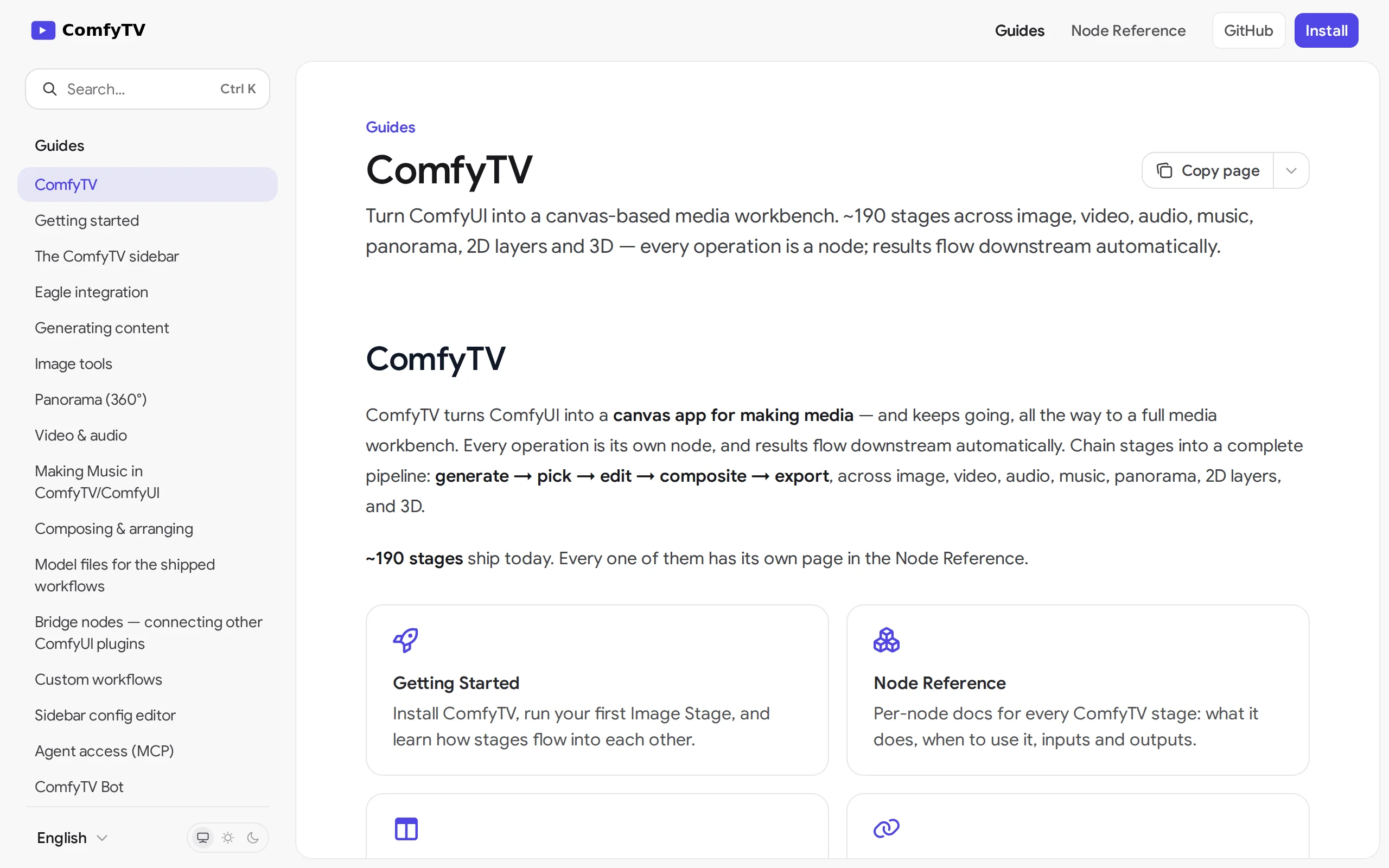
ComfyTV – Open-Source ComfyUI Plugin, Local Infinite Canvas Media Workbench
ComfyTV is an open-source ComfyUI plugin that operates entirely locally, transforming ComfyUI into an infinite canvas-style media workbench similar to TapNow and LibTV. Each operation on the canvas is...
© All Rights Reserved. Some content on this site is partially generated by AI with human review.