
Eleven Realtime: ElevenLabs' Architectural Breakthrough and Engineering Practices in Unified Voice Agent Models
Executive Summary:
Eleven Realtime is a unified voice agent model series introduced by ElevenLabs, featuring two versions: v1 Mini and v1 Max. Its core design philosophy is to integrate speech recognition (ASR), languag...
1. What is Eleven Realtime
Eleven Realtime is a unified voice agent model series introduced by ElevenLabs, featuring two versions: v1 Mini and v1 Max. Its core design philosophy is to integrate speech recognition (ASR), language model inference, tool calling, and text-to-speech (TTS) into a single model, replacing the traditional complex architecture that串联s multiple components. This series supports over 90 languages and can access more than 17,000 voice styles from the ElevenLabs voice library. v1 Max achieves an average first-sound latency of 0.57 seconds while maintaining a 98.8% speech inference accuracy. It is API-compatible with the OpenAI Realtime specification, significantly reducing migration costs for developers.
Technical Positioning and Domain: It belongs to the intersection of voice interaction and conversational AI, focusing on end-to-end modeling of real-time voice agents. Compared to traditional cascaded architectures (independent ASR + LLM + TTS), Eleven Realtime employs an end-to-end speech-to-speech approach, directly mapping audio input to audio output and eliminating the intermediate text conversion step. This provides structural advantages in latency, naturalness, and robustness. The model is applied in real-time dialogue, call center services, virtual characters, online education, and other voice interaction scenarios that are highly sensitive to latency and speech naturalness.
Development Background: The product was launched by ElevenLabs, a company renowned for its high-quality text-to-speech technology, with extensive technical expertise and a large-scale voice corpus in voice cloning and multilingual voice generation. The motivation behind developing Eleven Realtime stems from engineering bottlenecks in real-world voice agent applications: traditional multi-component solutions struggle to meet production-level requirements in terms of latency accumulation, conversational naturalness, and complexity in tool calling. This series aims to provide a production-ready, out-of-the-box real-time voice interaction model, extending the company's TTS expertise to full-stack voice intelligence and forming a complete product matrix from voice generation to real-time conversational capabilities.
Key Technical Features: Technically, it employs a streaming inference mechanism, allowing the model to understand and generate speech simultaneously, without waiting for the full input or for the entire output plan to be completed. Combined with WebSocket long connections, it enables bidirectional real-time audio transmission. The model natively includes dynamic conversational mechanisms, such as determining when to respond after user pauses, gracefully stopping and resuming when interrupted by the user, and generating response signals like interjections ("um," "right") to achieve a conversational rhythm close to that of a human. Tool calling capabilities are also embedded within the model's inference pipeline, with v1 Max achieving a task completion rate of 87.1% for tool usage, capable of performing multi-step operations on external systems.
2. Key Features
Integrated Voice Interaction Architecture: Combines speech recognition, LLM inference, tool calling, and speech synthesis into a single end-to-end model, completely eliminating the need to separately deploy and integrate ASR, VAD, LLM, and TTS components in traditional solutions. Developers only need to integrate one model to obtain full voice conversation capabilities, significantly reducing system integration complexity and operational costs. Audio is directly fed into the model, and after understanding and inference, the voice response is output directly, without passing through an explicit text transcription step, minimizing transmission latency and information loss.
Full-Duplex Real-Time Conversation: The model natively handles the "micro-decisions" of voice interaction, such as determining when to respond after a user pause, how to stop and resume when interrupted, and when to emit response signals like "um" or "right." These dynamic details are validated by the Full-Duplex-Bench benchmark, achieving a score above 94%, with conversation pacing close to that of a human. The model operates in a streaming fashion, understanding and generating simultaneously, without waiting for complete input or full output planning. First-sound latency is controlled within the 570–620 millisecond range.
Multilingual and Massive Voice Variety: Supports over 90 languages, covering major global languages, making it suitable for voice applications targeting international users. It is also compatible with over 17,000 voices from the ElevenLabs voice library, allowing for seamless voice switching during conversations. This provides ample flexibility for character creation and brand-specific voice customization. Multilingual capabilities are uniformly handled within the model, without relying on external translation or switching between multiple models.
Dual Version Strategy: v1 Mini is designed for low-cost natural conversation scenarios, optimizing resource consumption while maintaining smooth dialogue, making it ideal for high-frequency, low-complexity large-scale deployments. v1 Max is tailored for complex task scenarios, enhancing the inference and tool calling pipeline. It achieves a speech inference accuracy of 98.8% and a task completion rate of 87.1% for tool usage, suitable for enterprise-level scenarios requiring multi-step operations and integration with external systems. Both versions share the same API interface and can be switched as needed.
Native Tool Calling: The model itself performs the reasoning tasks of a language model, understanding user intent, conducting multi-turn dialogue reasoning, and determining when to call external tools. It continues to generate voice responses based on the results returned by the tools. The tool usage task completion rate for v1 Max (87.1%) is significantly higher than that of Mini (60.3%), enabling it to execute multi-step workflows that require business system integration, such as order inquiries and address modifications, making it ideal for enterprise scenarios like phone customer service and sales lead screening.
Enhanced Tool Calling Capabilities: The model natively supports Function Calling. Developers can define the tool schema using system prompts, and the model automatically determines the trigger timing and returns structured calling parameters during the conversation. The results of the tool execution are seamlessly reintegrated into the conversation context, driving the generation of subsequent voice responses and achieving a complete closed loop of "understanding—reasoning—calling—responding."
API Compatibility with OpenAI Realtime Specification: Complies with the OpenAI Realtime API protocol, supporting bidirectional audio stream transmission via WebSocket long connections. Developers who have already integrated with the OpenAI Realtime API only need to change the WebSocket address to
wss://api.elevenlabs.io/v1/convai/realtimeand update the model name to complete the migration, without needing to rewrite business logic. The upper-layer platform ElevenAgents further encapsulates channel integrations such as phone, web, and WhatsApp, along with enterprise-level features like knowledge base, guardrails, and monitoring.
3. How to Use
Eleven Realtime provides two primary methods of use: zero-code deployment via the ElevenAgents platform, or developer integration through the Realtime API. Each method is suitable for different scenarios, with the former targeting operations and product teams, and the latter intended for R&D teams requiring deep customization and system integration.
Environment Requirements and Prerequisites: Using ElevenAgents requires no local environment setup—only registration and login on the ElevenLabs official website. For Realtime API integration, you need to prepare an API Key (obtained from the ElevenLabs console) and ensure that your development environment supports the WebSocket protocol. It is recommended to use Python 3.8 or higher and install the official OpenAI SDK, or use any programming language that supports WebSocket.
Creating an Agent via ElevenAgents: Access the ElevenAgents platform and create a new Agent or open an existing one. In the model dropdown menu, select Realtime v1 Mini or v1 Max, and configure capabilities such as knowledge base, workflow, and guardrails as needed. After completing the configuration, you can integrate channels such as phone, web, and WhatsApp. The platform includes built-in testing and monitoring features, allowing you to publish and go live. The entire process is code-free, making it ideal for rapid validation and production deployment.
Integration via Realtime API: If you have already integrated with the OpenAI Realtime API, simply change the WebSocket address to
wss://api.elevenlabs.io/v1/convai/realtime, and replace the model name witheleven_realtime_v1_minioreleven_realtime_v1_max, while specifying a voice (e.g.,brian). Establish a bidirectional audio stream using the RealtimeAgent from the OpenAI SDK and WebSocket transport. Once the connection is successful, real-time voice interaction can be performed. For platform-level capabilities such as channels and knowledge bases, you should switch to ElevenAgents.Key Configurations and Best Practices: When choosing between the two versions, prioritize the Mini model for everyday conversational applications to control costs, and select the Max model for complex task scenarios to ensure robust inference capabilities. For tool calling scenarios, clearly define the Function Schema in advance and prepare logic for context refill based on the tool's returned results. In production, it is advisable to configure monitoring and guardrails through ElevenAgents to cover compliance checks and quality tracking. During the developer testing phase, use the platform's built-in simulation tools to verify latency and interruption handling effects before proceeding to official release.
4. Pros and Cons Analysis
| Pros |
|---|
| Integrated architecture reduces system complexity: Combines ASR, LLM, TTS, and tool calling into a single model, eliminating the costs of selecting and integrating multiple components, significantly simplifying the setup and maintenance of production-level voice agents, and making it suitable for rapid deployment. |
| Balances latency and accuracy: v1 Max achieves a 0.57-second first-sound latency while maintaining a 98.8% speech inference accuracy, breaking the engineering bottleneck where traditional solutions struggled to achieve both high accuracy and low latency. |
| Superior conversational naturalness: Scores over 94% on the Full-Duplex-Bench, with performance in dynamic conversation details such as pause response, interruption recovery, and turn-taking approaching human-level quality, making it ideal for front-end applications with high interaction experience requirements. |
| Supports multiple languages and a vast voice library: Supports over 90 languages and more than 17,000 voice resources, enabling a single system to serve global users, and offering a clear resource pool advantage for global deployment and character creation in voice applications. |
| Low migration barrier for API: Compatible with the OpenAI Realtime specification, developers already integrated with OpenAI only need to change the endpoint and model name to switch quickly, greatly reducing integration and migration costs. |
| Production-ready out-of-the-box: Through ElevenAgents, developers can directly obtain complete deployment capabilities including channel access, knowledge base, guardrails, and testing monitoring, significantly shortening the time from model to deployment. |
5. Comparative Analysis with Similar Tools
| Dimension | Eleven Realtime | OpenAI Realtime API (gpt-realtime-2.1) | Google Gemini Live |
|---|---|---|---|
| Product Form | Integrated speech Agent model with two versions: v1 Mini / v1 Max | Integrated speech model with two versions: 2.1 / 2.1-mini | Multimodal assistant with integrated speech capabilities, not an independent Agent SDK |
| Architecture Approach | End-to-end Speech-to-Speech, complete speech Agent, with built-in reasoning and tool calling | Native speech-to-speech, single model completes recognition + reasoning + synthesis | Based on the Gemini multimodal model, speech input is recognized and then processed by the LLM and synthesized for output, using a cascaded real-time pipeline |
| Language Support | 90+ languages | 50+ languages (third-party evaluation standard) | 40+ languages (official support standard) |
| Voice Resources | Over 17,000 voice libraries available, with broad voice style coverage | Built-in limited voice styles (around 10) | Built-in 12 voice styles, no support for custom voice libraries |
| Speech Inference Accuracy | Big Bench Audio: Max 98.8% / Mini 75.9%, official benchmark standard | Official data not disclosed for the same standard; third-party evaluations show balanced performance | Official data not disclosed for the same standard; focuses on overall multimodal capabilities |
| First Word Latency | 0.57–0.62 seconds (official standard) | Approximately 300 milliseconds (third-party evaluation standard) | Approximately 1–2 seconds (end-to-end pipeline includes cascaded processing) |
| Dialogue Dynamics | Full-Duplex-Bench: Mini 95.8% / Max 94.1%, actively optimized for details like interruptions and pauses | Supports interruption handling, no publicly available benchmark scores for the same standard | Supports interruption and multi-turn dialogue, but interaction details have not been validated under the same standard |
| Tool Calling | Official benchmark: Max 87.1% / Mini 60.3% | Native Function Calling, with built-in approval paths | Native Function Calling, supports integration with Google service ecosystem |
| Deployment Method | Cloud API, accessed via the ElevenAgents platform with encapsulated channels | Cloud API (also available on Azure OpenAI) | Open via Gemini API, supports mobile SDK |
| Usability | API compatible with OpenAI Realtime standards, low migration cost; also provides the zero-code ElevenAgents platform | Mature ecosystem, comprehensive SDK, and rich documentation | SDK supports Android/iOS/Web, easy integration with Google ecosystem |
| Open Source License | Closed source, commercial license | Closed source, commercial license | Closed source, commercial license |
| Community Ecosystem | ElevenLabs proprietary ecosystem, rich in voice library resources, but with a smaller third-party community | The world's largest AI developer community, with abundant tutorials and integration cases | Integrated with the Google ecosystem, with widespread third-party integration |
Selection Recommendations: In specific scenarios, if developers already have integration experience with OpenAI Realtime and prioritize latency as the highest priority, the OpenAI Realtime API's approximately 300-millisecond latency is highly attractive. However, its voice style options and language coverage are somewhat limited compared to Eleven Realtime. If the application targets a global audience and requires rich voice resources and high speech inference accuracy, Eleven Realtime's support for 90+ languages and 17,000+ voice libraries are core advantages. Its 0.57–0.62-second first-word latency is already smooth enough for most real-time dialogue scenarios.
For developers who wish to deeply integrate with the Google ecosystem (e.g.,联动 with tools like Maps, Calendar), Gemini Live provides the most convenient path, although its speech dialogue pipeline is longer and latency is relatively higher. For domestic developers primarily targeting Chinese scenarios, MiniMax Speech has clear advantages in terms of Chinese speech naturalness and localized deployment, while also offering private deployment options to meet data compliance requirements. Overall, Eleven Realtime has established a clear differentiated positioning in terms of voice diversity, language coverage, and speech inference accuracy, making it particularly suitable for global speech Agent applications requiring high-quality speech expressiveness.
6. Editor's Summary
Eleven Realtime has opted for a fully end-to-end Speech-to-Speech architecture in its technical approach for voice agents, integrating recognition, reasoning, tool calling, and synthesis into a single model. This design choice directly addresses the three major pain points of traditional cascaded architectures—latency accumulation between components, reduced naturalness due to information loss, and high complexity in tuning multiple models. From an engineering perspective, removing the explicit text transcription step not only reduces transmission latency but also eliminates the amplification effect of ASR errors propagating downstream. This structural decision is a key reason why Eleven Realtime can achieve low latency while maintaining high speech reasoning accuracy.
In terms of practical value, the dual version strategy of v1 Mini and v1 Max demonstrates clear product layering thinking: Mini targets low-cost, high-frequency daily conversation scenarios, while Max addresses complex enterprise-level tasks with enhanced reasoning and tool calling capabilities. Combined with the production capabilities offered by the ElevenAgents platform, including channel integration, knowledge bases, and monitoring, Eleven Realtime effectively provides a relatively complete delivery pipeline from model to business, significantly shortening the deployment cycle for voice agents. The API layer's compatibility with the OpenAI Realtime specification further reduces migration costs for developers, a strategy that is likely to attract existing developers within the OpenAI ecosystem.
In terms of target users, this product is suitable for three types of teams: first, product teams that need to quickly validate voice agent scenarios, who can achieve this with zero-code implementation through ElevenAgents; second, developers who already have OpenAI Realtime integration and wish to expand voice tone and language coverage; and third, enterprise-level applications with high requirements for speech naturalness and tool calling capabilities, such as telephone customer service and sales lead screening. For teams requiring private deployment or deep observability of the reasoning process, the product's closed-source nature presents certain limitations.
From the perspective of technical development trends, voice interaction is evolving from "being able to listen and speak" toward a complete intelligent agent capable of "understanding and taking action." Eleven Realtime has already demonstrated its ability to balance performance and user experience in the direction of integrated voice agents, and its future iterations are worth watching. The official reported 98.8% speech reasoning accuracy and 87.1% tool calling completion rate serve as important industry benchmarks for validating the feasibility of end-to-end voice agents.
7. Application Scenarios
AI Voice Assistant: Designed for daily conversational personal assistant scenarios, where users issue voice commands and the model instantly understands and generates natural voice responses. The low-cost nature of the v1 Mini version makes it highly cost-effective for such high-frequency, low-complexity scenarios, suitable for large-scale user deployment.
Online Education/Language Learning: Taking a children's English learning application as an example, virtual characters need to understand students' spoken pronunciation, correct errors in real time, and interact using natural voice. This scenario requires high speech naturalness and response speed, and Eleven Realtime's conversational dynamic optimization and low-latency features support real-time interactive teaching experiences. With support for over 90 languages, it can also cover multilingual educational content.
Enterprise Phone Customer Service: Handling multi-step requests that require calling business systems, such as "checking orders, changing addresses, returns and exchanges," the high tool calling completion rate (87.1%) of the v1 Max version provides a reliable foundational capability for such scenarios. The model determines the appropriate timing to trigger tools, calls external systems, and continues generating voice responses based on the returned results, forming a complete self-service closed loop.
Sales Lead Screening: Automatically calling or answering potential customers, determining purchase intent through conversation, collecting key information, and recording results. The v1 Max version can perform inference according to predefined processes, gradually confirming customer needs, budget, and timelines in multi-round conversations, and output structured results to the CRM system, thereby improving the efficiency of lead processing for sales teams.
8. FAQ
Q: How should I choose between Eleven Realtime's v1 Mini and v1 Max?
A: The choice depends on task complexity and cost budget. v1 Mini is suitable for low-complexity scenarios such as daily conversations and simple Q&A, with a tool calling completion rate of 60.3%, offering advantages in cost control. v1 Max is designed for complex tasks requiring multi-step reasoning and integration with external systems, achieving a speech inference accuracy of 98.8% and a tool completion rate of 87.1%. It is ideal for enterprise-level call centers and sales lead screening. It is recommended to perform benchmark testing based on the actual complexity of your tasks before deciding on the version.
Q: How much code needs to be changed when migrating from OpenAI Realtime API to Eleven Realtime?
A: The migration cost is very low. Since Eleven Realtime is compatible with the OpenAI Realtime API specification, developers only need to change the WebSocket address to wss://api.elevenlabs.io/v1/convai/realtime, and replace the model name with eleven_realtime_v1_mini or eleven_realtime_v1_max, while specifying the voice parameters. Existing OpenAI SDK and RealtimeAgent logic can be used to establish a connection without rewriting business layer code.
Q: Can the first-sound latency of Eleven Realtime really be stabilized at 0.57 seconds?
A: The official average first-sound latency is in the range of 0.57–0.62 seconds, with v1 Max having lower latency while maintaining a speech inference accuracy of 98.8%. Actual latency is affected by factors such as network conditions, audio bitrate, and server region, and may fluctuate in cross-regional or low-bandwidth environments. For production environments, it is recommended to conduct real-world testing using the monitoring tools provided on the ElevenAgents platform.
Q: Does Eleven Realtime support private deployment?
A: Currently, Eleven Realtime mainly provides services through cloud-based APIs and does not support local private deployment. The official offers two cloud integration options: the ElevenAgents platform and the Realtime API. For scenarios with strict data compliance requirements, it is advisable to wait for the official release of deployment options for the enterprise version or evaluate other voice models that provide private deployment options.
Q: How are the tool calls supported by the model configured?
A: Tool calls are defined via the Function Schema in the system prompt. Developers need to describe the tool's name, parameter structure, and calling intent. The model automatically determines the trigger timing during the conversation and returns structured calling parameters. The results of the tool execution are fed back into the conversation context, and the model generates a voice response based on this. v1 Max has a significantly higher tool calling completion rate (87.1%) compared to the Mini version, so it is recommended to choose Max for complex toolchain scenarios.
Q: What are the main technical differences between Eleven Realtime and OpenAI Realtime API?
A: There are three core differences: first, voice resources, with Eleven Realtime supporting over 17,000 voice styles compared to OpenAI's built-in voice styles of around 10; second, language coverage, with Eleven Realtime supporting over 90 languages, more than OpenAI's 50+ languages; third, speech inference accuracy, where Eleven Realtime achieved an official score of 98.8% on the Big Bench Audio benchmark (Max version), while OpenAI has not officially published comparable data. In terms of first-sound latency, third-party evaluations show that OpenAI is approximately 300 milliseconds, which is lower than Eleven Realtime's 0.57 seconds.
9. Project Links
- Product Official Website (Official Release and Product Introduction): https://elevenlabs.io/blog/realtime
- Product Homepage: https://elevenlabs.io
Related
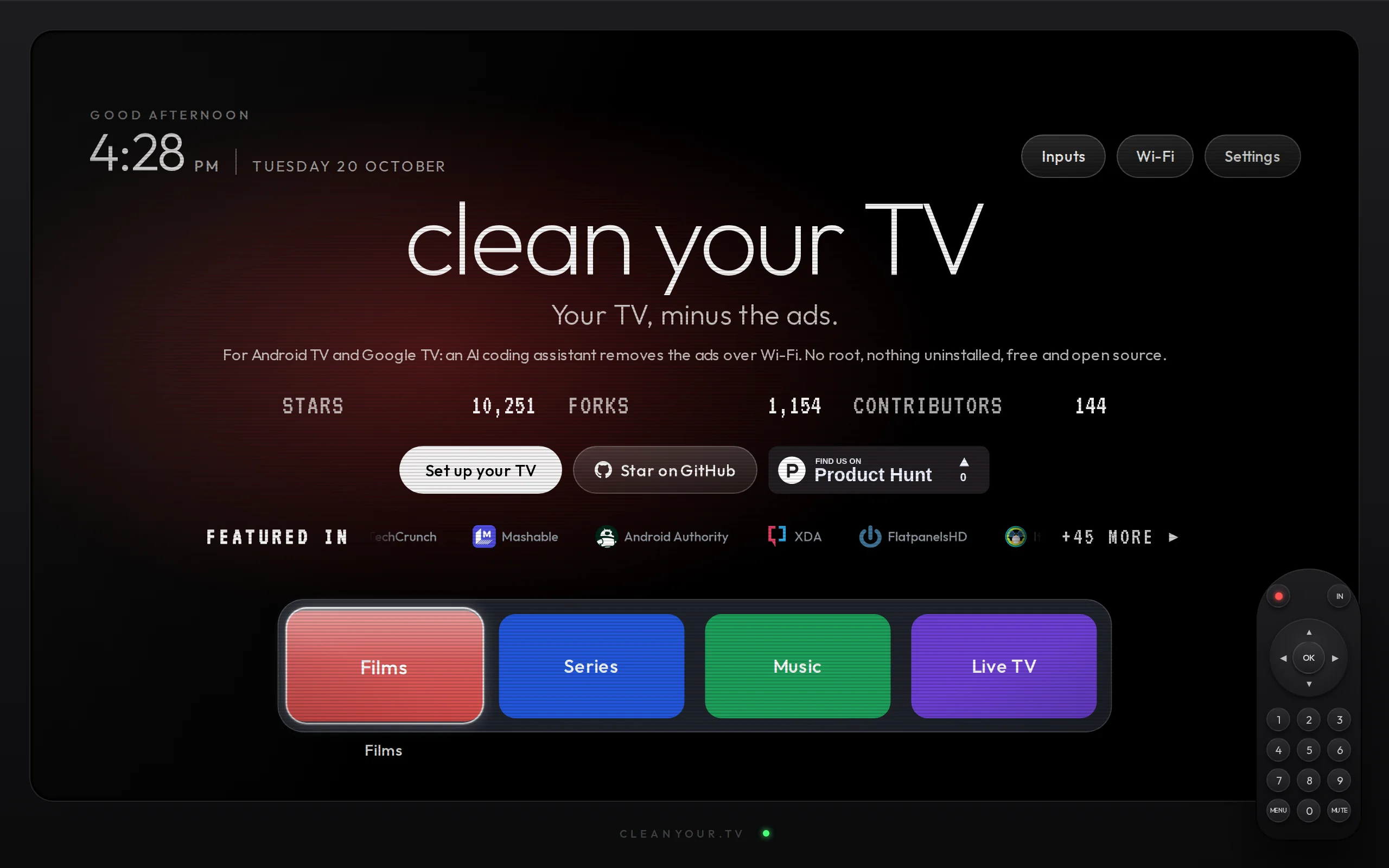
CleanYourTV – Open-Source Tool for Removing TV Ads and Clearing Bloatware
CleanYourTV is an open-source Android TV system optimization tool that connects to Android TVs via Wi-Fi using the ADB (Android Debug Bridge) protocol. It leverages AI Agents such as Claude Code, Code...
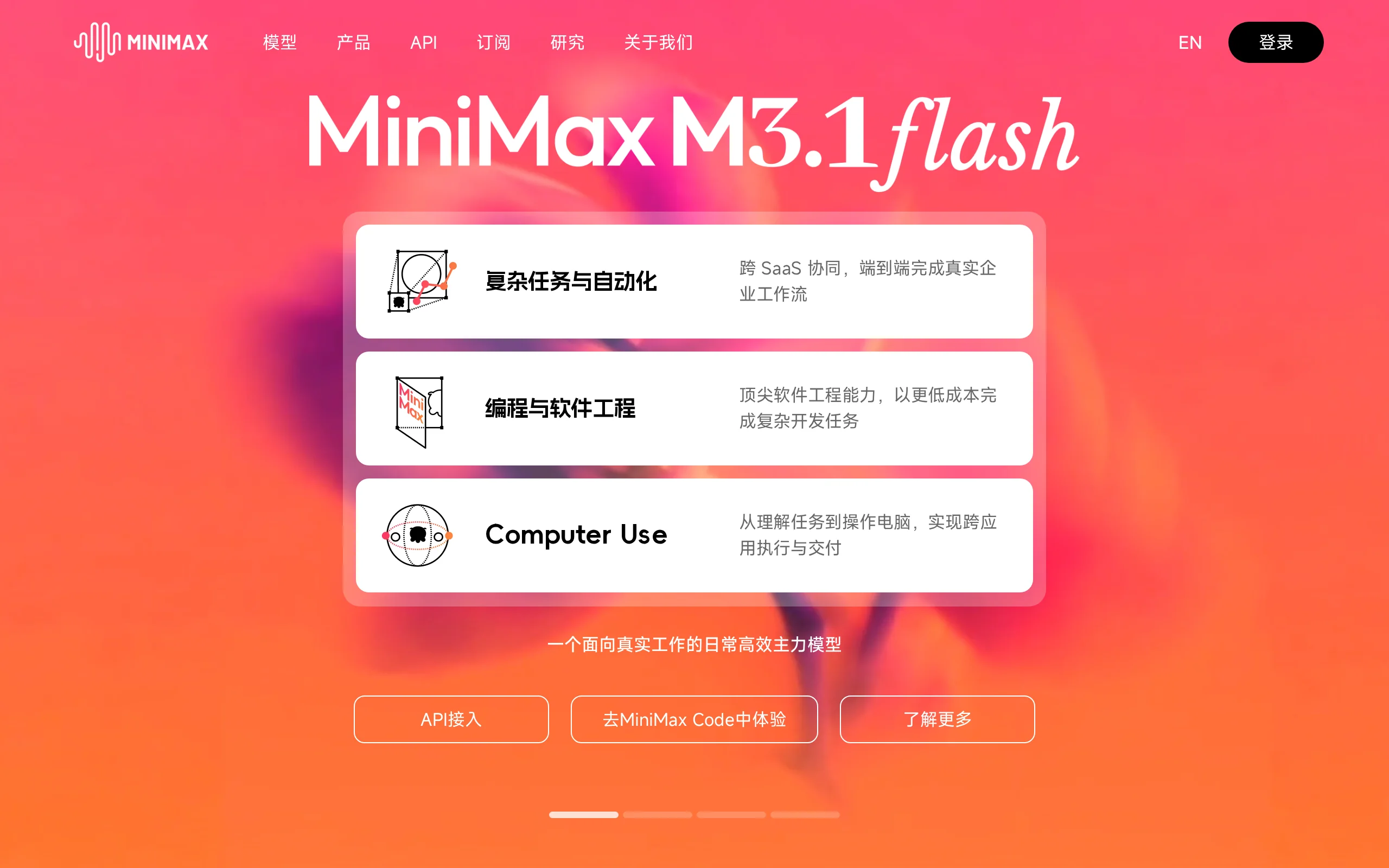
MiniMax M3.1 Flash – The Latest Flash Series Model from MiniMax
MiniMax M3.1 Flash is the new generation of the Flash series model launched by MiniMax in 2026. It made its debut under the anonymous name "Space Bunny" across major evaluation benchmarks, with a trai...
Hy Memory 2.0 – Tencent HunYuan's Open-Source Agent Memory Framework
Hy Memory 2.0 is an open-source agent memory framework developed by Tencent HunYuan, featuring a three-tier architecture: "model + framework + application." It includes the Hy-Memory-30A3B model speci...

BlenderWorld – Qwen's Open-Source 3D Creation Agent Evaluation Benchmark
BlenderWorld is an evaluation benchmark for 3D creation agents, jointly developed by the Qwen team with Zhejiang University, The Chinese University of Hong Kong, Fudan University, and National Univers...
© All Rights Reserved. Some content on this site is partially generated by AI with human review.