
Naive-N0.5-Flash: NaiveAI's First Open-Source 309B MoE Large Model, Designed for AI Research and Development
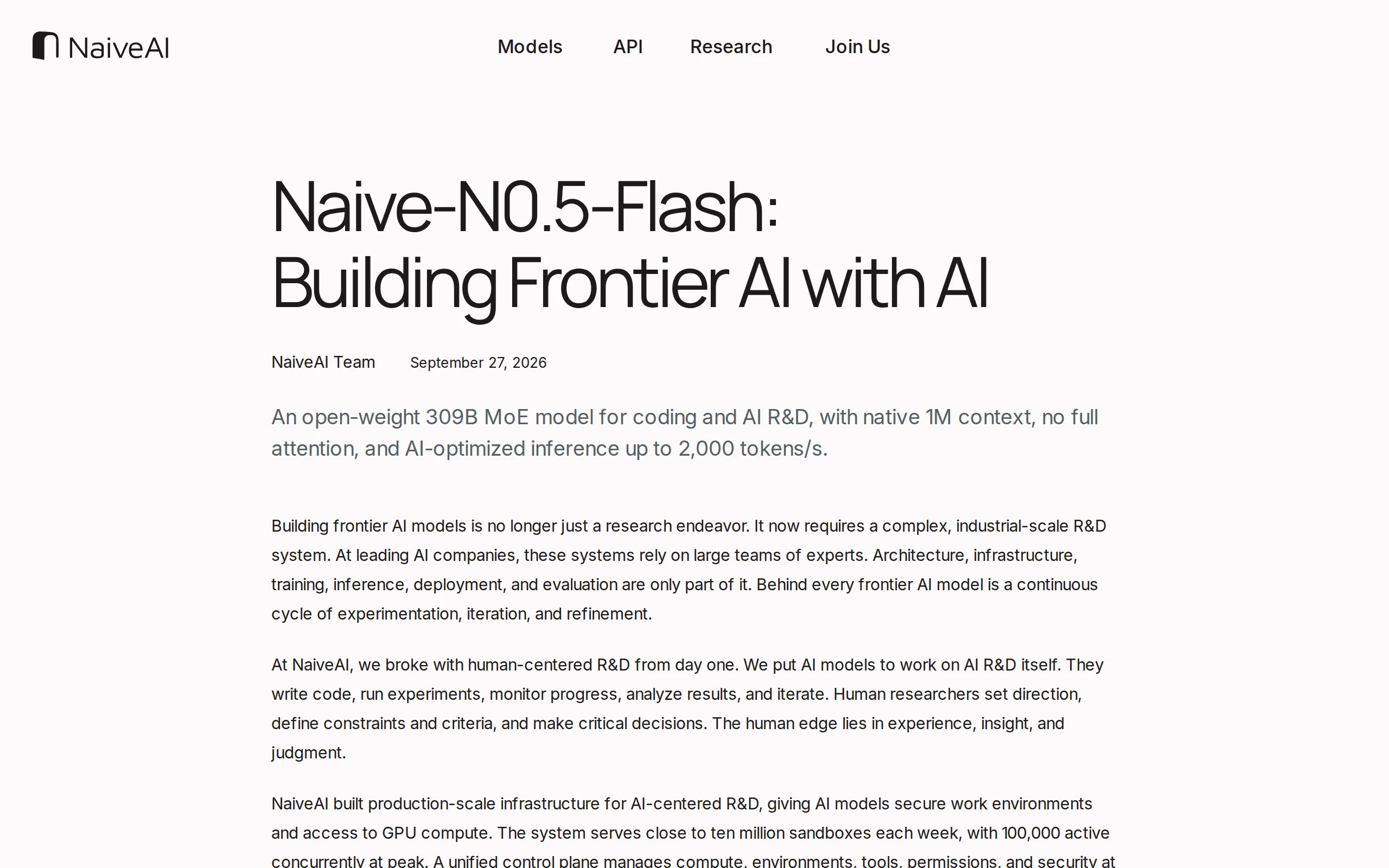
Executive Summary:
Naive-N0.5-Flash is NaiveAI's first open-source MoE large model, specifically designed for programming and AI research and development scenarios. This model is based on the MiMo-V2.5 base model from X...
1. What is Naive-N0.5-Flash
Naive-N0.5-Flash is NaiveAI's first open-source MoE large model, specifically designed for programming and AI research and development scenarios. This model is based on the MiMo-V2.5 base model from Xiaomi, utilizing a 309B MoE architecture. It introduces a hybrid sparse attention mechanism combining SWA and DSA, and natively supports up to 1M context without any fully-attentive layers throughout the network. The model was developed with deep AI involvement, and its accompanying inference system, NaiveRT, achieves a peak decoding rate of 2,122 tokens/s in single-stream mode. It performs exceptionally well in AI research and development benchmarks such as PaperBench and MLE-bench, representing a practical implementation of the "AI for AI Research" paradigm.
Technical positioning and domain: Naive-N0.5-Flash belongs to the field of natural language processing and large-scale sparse mixture-of-experts (MoE) models, focusing on two main directions: programming assistance and AI research automation. By innovatively introducing the SWA+DSA hybrid sparse attention mechanism on the MoE architecture, it achieves a balance between long-context processing and inference efficiency, positioning itself as a specialized foundational model for AI research scenarios.
Development background: This model was developed by the NaiveAI team, based on architectural modifications of Xiaomi's MiMo-V2.5 base model. The team's motivation stemmed from exploring the "AI for AI Research" paradigm—by enabling AI to deeply participate in model architecture design and system optimization, they aim to achieve an automated research and development loop where humans define goals and AI performs iterative execution. During model training, the team used AI to automatically complete top-k recall analysis and numerical stability fixes, showcasing the intelligent transformation of the development process.
Core value: Naive-N0.5-Flash addresses the issue of excessive computational overhead caused by full attention mechanisms in long-context programming tasks. By employing a sparse attention architecture, it maintains the ability to handle 1M context while significantly reducing decoding costs. Additionally, the model provides full-cycle assistance for AI research and development, capable of autonomously performing tasks such as paper reading, method reproduction, experimental execution, and result analysis, offering a practical technical solution for research automation.
Technical features: The model uses an architecture design that alternates stacking SWA and DSA in a 5:1 ratio, with no fully-attentive layers across the entire network. DSA employs a lightweight indexer to select the top-2048 tokens from the full history for the main computation, reducing the number of query heads from 64 to 16 and decreasing path latency by 44%. The accompanying NaiveRT inference system further reduces single-round decoding latency from 12.3ms to 3.4ms through massive operator fusion and speculative decoding optimization.
2. Key Features
Long Context Programming: Natively supports a 1M token context window, enabling the processing of ultra-large code repositories and long-range software engineering tasks. It achieved a score of 71.9 in the NL2Repo benchmark, capable of performing cross-file understanding, repository-level code generation, and complex bug fixing, significantly expanding the application boundaries of programming models.
AI Research and Development Assistance: It can read academic papers, reproduce research methods, run experiments, and analyze results, directly participating in the full workflow of model R&D. It scored 63.2 in the PaperBench evaluation and 73.7% in the MLE-bench-30, demonstrating end-to-end research capabilities from literature comprehension to experimental execution.
Inference Acceleration: The accompanying NaiveRT inference system enables high-performance decoding, achieving up to 50 tokens/s in standard mode and a peak of 2,122 tokens/s in turbo mode for single-stream decoding. Speculative decoding latency is reduced by 72.4% compared to SGLang, with single-round decoding latency dropping from 12.3ms to 3.4ms, providing performance guarantees for large-scale inference deployment.
Autonomous Research: Given a target, computational budget, and evaluation protocol, the model can autonomously advance the research process end-to-end. According to official disclosures, this model once trained the AutoWM world model within 400 hours and topped the WorldArena leaderboard, validating the feasibility of the autonomous research paradigm.
Deterministic Sampling Support: NaiveRT supports bit-level deterministic sampling based on random seeds, ensuring complete consistency between sampling and training logprob in RL training. This feature is particularly critical for long-range reinforcement learning training that requires precise reproducibility, effectively reducing straggler samples.
Hybrid Sequence Parallel Optimization: To address the differing requirements of SWA (which only needs a local window) and DSA (which requires full historical information), the model employs the Halo sequence parallel strategy respectively. On the GPU side, activation offloading granularity is refined to the operator level, explicitly retaining top-k indices to avoid changes in selection due to recomputation. A system of approximately 512 GPUs can train 1T tokens in about 4 days.
3. How to Use
Environmental Requirements: Requires an NVIDIA GPU that supports FP8. The model weights are approximately 315GB, and sufficient GPU memory should be reserved for inference. It is recommended to use data center-grade GPUs such as A100 or H100; consumer-grade GPUs may struggle to meet memory requirements.
Obtaining Weights: Pull the NaiveAI/Naive-N0.5-Flash-FP8 repository from Hugging Face. Ensure that the network environment can access Hugging Face services normally, and install the latest version of git-lfs to support large file downloads.
Installing Dependencies: Run
pip install "transformers[torch,kernels]>=5.17.0"to install the required dependency libraries. This version requires custom kernel support, so ensure that the Python environment version is compatible.Loading the Model: Load the model using
AutoTokenizerandAutoModelForCausalLMwithtrust_remote_code=Trueanddevice_map="auto". Due to the large model size, it is recommended to use multi-GPU parallelism or model parallelism strategies.Constructing Input: Pass the conversation messages into the model using the
apply_chat_templatemethod to generate input tensors. This model supports multi-turn dialogue formats, so messages should be structured according to the official template.Generating Results: Call
model.generate()to generate the response, then usetokenizer.decode()to decode the output. For general use cases, it is recommended to settemperature=1.0andtop_p=0.95to balance diversity and stability.Reproducing High-Performance Inference: To achieve the peak speed of 2,122 tokens/s, you can obtain the open-source code for NaiveRT, the Docker Compose environment, and the accompanying benchmark scripts for self-deployment. Note that this performance metric was measured under specific hardware and configuration conditions, and actual results may vary depending on the environment.
4. Pros and Cons Analysis
| Pros |
|---|
| Exceptional Long-Context Capability: Natively supports 1M token context without full-attention layers across the entire network, significantly reducing decoding costs for long sequences compared to conventional architectures, offering a clear advantage when handling large code repositories and long-range tasks. |
| Outstanding Inference Speed: The accompanying NaiveRT system achieves a peak decoding speed of 2,122 tokens/s in single-stream decoding, reducing speculative decoding latency by 72.4% compared to SGLang, providing a notable performance advantage in high-concurrency inference scenarios. |
| Strong AI Research and Development Capabilities: Achieves 63.2 on PaperBench, 73.7% on MLE-bench-30, and 73.8s on NanoGPT SpeedRun, outperforming peer models in multiple AI R&D benchmarks, demonstrating a complete research capability from paper reproduction to experimental execution. |
| Native AI R&D Paradigm: The model's architecture design and system optimization involve AI participation, embodying the practical implementation of the "AI develops AI" paradigm, and providing new insights for future model development approaches. |
5. Comparative Analysis with Similar Tools
| Comparison Dimension | Naive-N0.5-Flash | DeepSeek-V4.1-Flash | MiMo-V2.5 |
|---|---|---|---|
| Core Architecture | 309B MoE, SWA+DSA hybrid sparse attention, no full attention layer | MoE architecture, specific sparse design details to be disclosed by the official source | Traditional MoE architecture, global attention mechanism |
| Total Parameters / Activated Parameters | 309B / 15.5B | Official disclosure (Flash series focuses on lightweight activation) | To be disclosed by the official source |
| Context Length | Native 1M tokens | To be disclosed by the official source | Typically at the 128K level |
| Inference Speed | NaiveRT single-stream peak of 2,122 tokens/s, speculative decoding at 3.4ms per round | Standard inference stack, no comparable single-stream optimization data | Standard inference stack |
| R&D Positioning | Specifically designed for AI research and training, PaperBench 63.2, MLE-bench-30 73.7% | General-purpose programming model, limited specialized R&D benchmark data | General-purpose programming and dialogue model |
| NL2Repo Score | 71.9 | Below 71.9 | To be disclosed by the official source |
| R&D Approach | AI involvement in architecture design and system optimization (AI4AI / RSI route) | Traditional human-led R&D | Traditional human-led R&D |
| Open Source License | Open weights, specific license to be confirmed by the official source | Open weights | Open weights |
Selection Recommendations: For research institutions focused on AI research automation and requiring long-context processing capabilities, Naive-N0.5-Flash is a strong candidate due to its performance on PaperBench and MLE-bench, as well as its support for 1M context length, especially when paired with the NaiveRT inference system, which provides significant decoding speed advantages. However, its 315GB weight size imposes high hardware requirements, and the team should evaluate their own computational resources.
For general programming tasks and multilingual application scenarios, mature models like DeepSeek-V4.1-Flash may offer better ecosystem completeness, community support, and deployment toolchains. If the team already has development experience with the Xiaomi MiMo series, the Naive-N0.5-Flash architecture, which is based on MiMo-V2.5, can reduce migration costs. It is recommended to make a comprehensive decision based on specific task types, hardware conditions, and ecosystem preferences.
6. Editor's Summary
Naive-N0.5-Flash demonstrates multiple noteworthy breakthroughs in terms of technological innovation. The design of the SWA+DSA hybrid sparse attention architecture is particularly ingenious — by replacing the MLA in DSA with GQA and reducing the index query head from 64 to 16, it reduces the time spent on the index selection path by 44% while maintaining the performance of 1M context. This fine-tuned optimization at the engineering level reflects the development team's relentless pursuit of efficiency. The three-stage training process is also rigorously designed, progressing from KL divergence alignment to continued pre-training with sparse attention, and finally to supervised fine-tuning. Each step has a clear technical objective, and the entire process is automatically completed by AI with top-k recall analysis and numerical stability fixes, showcasing the practical effectiveness of AI involvement in model development.
In terms of practical value, the model's performance in AI research evaluations is compelling: it outperforms its peers with scores such as PaperBench 63.2, MLE-bench-30 73.7%, and NanoGPT SpeedRun 73.8s. Combined with the peak decoding speed of 2,122 tokens/s from the NaiveRT inference system, it provides a viable infrastructure solution for long-range reinforcement learning and large-scale inference deployment. The score of 71.9 on NL2Repo also confirms its practical capabilities in repository-level code generation tasks.
In terms of target users, this model is primarily aimed at AI researchers, large model training engineers, and senior software developers. For teams that need to handle ultra-long code contexts, conduct automated research experiments, or build RL training infrastructure, Naive-N0.5-Flash offers a comprehensive solution that is rare in the current market. However, it should be noted that its 315GB weight size and high hardware requirements make it more suitable for institutional users with sufficient computational resources.
Looking ahead, the "AI for AI research" paradigm validated by NaiveAI through this model shows promising potential. If future versions can further reduce hardware requirements, improve the toolchain ecosystem, and continue to lead in AI research evaluations, it could establish a differentiated competitive advantage in the field of automated research. The case of training the AutoWM world model in just 400 hours also provides empirical evidence for the feasibility of autonomous research.
7. Application Scenarios
AI Research Assistant: Assists researchers in completing the entire workflow of paper reading, method reproduction, experiment execution, and result analysis. In research tasks such as PaperBench and MLE-bench, the model can automatically execute experimental code, compare baseline results, and generate analysis reports, significantly improving research efficiency.
Long-range Software Engineering: With native 1M context handling for large code repositories, it enables cross-file understanding, bug fixing, and repository-level code generation. Achieved a score of 71.9 in the NL2Repo evaluation, suitable for scenarios such as complex project refactoring, legacy code maintenance, and large-scale code migration.
Long Context Agent Tasks: Maintains complete task history in long interaction scenarios such as terminal operations and multi-round tool calling. The 1M context window allows the Agent to remember operation records across extended time spans, enhancing the quality and coherence of multi-step tasks.
RL Training Infrastructure: Combined with NaiveRT's high single-stream decoding speed and bit-by-bit deterministic sampling, it accelerates long-range reinforcement learning rollouts and reduces straggler samples. Applicable to RLHF or RLAIF training processes that require large-scale sampling and precise reproducibility.
8. FAQ
Q: What are the core differences between Naive-N0.5-Flash and the DeepSeek series of models?
A: Naive-N0.5-Flash employs a SWA+DSA hybrid sparse attention architecture, with no fully attention layers throughout the network, and natively supports up to 1M context. Its core differentiation lies in being specifically designed for AI research and development scenarios, where it excels in research evaluations such as PaperBench and MLE-bench. It also achieves a peak single-stream decoding speed of 2,122 tokens/s through the accompanying NaiveRT inference system.
Q: What hardware configuration is required to deploy Naive-N0.5-Flash?
A: The model weights are approximately 315GB and require an NVIDIA GPU that supports FP8. It is recommended to use data center-grade GPUs such as A100 or H100 with multi-GPU parallelism, while also reserving sufficient GPU memory for inference calculations. Consumer-grade GPUs are unlikely to meet deployment requirements.
Q: How can I reproduce the 2,122 tokens/s inference speed?
A: This performance metric is achieved using the NaiveRT inference system. To reproduce it, you need to obtain the open-source code of NaiveRT, the Docker Compose environment, and the corresponding benchmark scripts for deployment. Actual speed is influenced by factors such as hardware configuration, batch size, and sequence length. It is recommended to conduct comparative tests under equivalent conditions.
Q: How does the model's "AI for R&D" mode work specifically?
A: During the model development process, AI automatically performs tasks such as top-k recall analysis and numerical stability fixes. At the application level, given a target, computational budget, and evaluation protocol, the model can autonomously advance research in an end-to-end manner—including designing experimental plans, executing training scripts, analyzing results, and iterating for optimization.
Q: Does the model support Chinese? How does it perform on Chinese programming tasks?
A: The model is based on the MiMo-V2.5 base model, which has multilingual capabilities. Currently, public evaluation data mainly focuses on English AI R&D benchmarks. Specific performance on Chinese scenarios will be disclosed by the official team or validated through community testing in the future.
Q: What are the practical applications of NaiveRT's deterministic sampling feature?
A: NaiveRT supports bit-level deterministic sampling based on a random seed, ensuring that sampling and training logprob are completely consistent during RL training. This is particularly important for long-horizon reinforcement learning, as it ensures experimental reproducibility and reduces straggler samples caused by sampling inconsistencies.
9. Project Links
- Project Website: https://naive.ai/en/research/
- GitHub Repository: https://github.com/NaiveAI-Labs/Naive-N0.5-Flash
- Hugging Face Model Library: https://huggingface.co/NaiveAI/Naive-N0.5-Flash
Related AI Model Articles
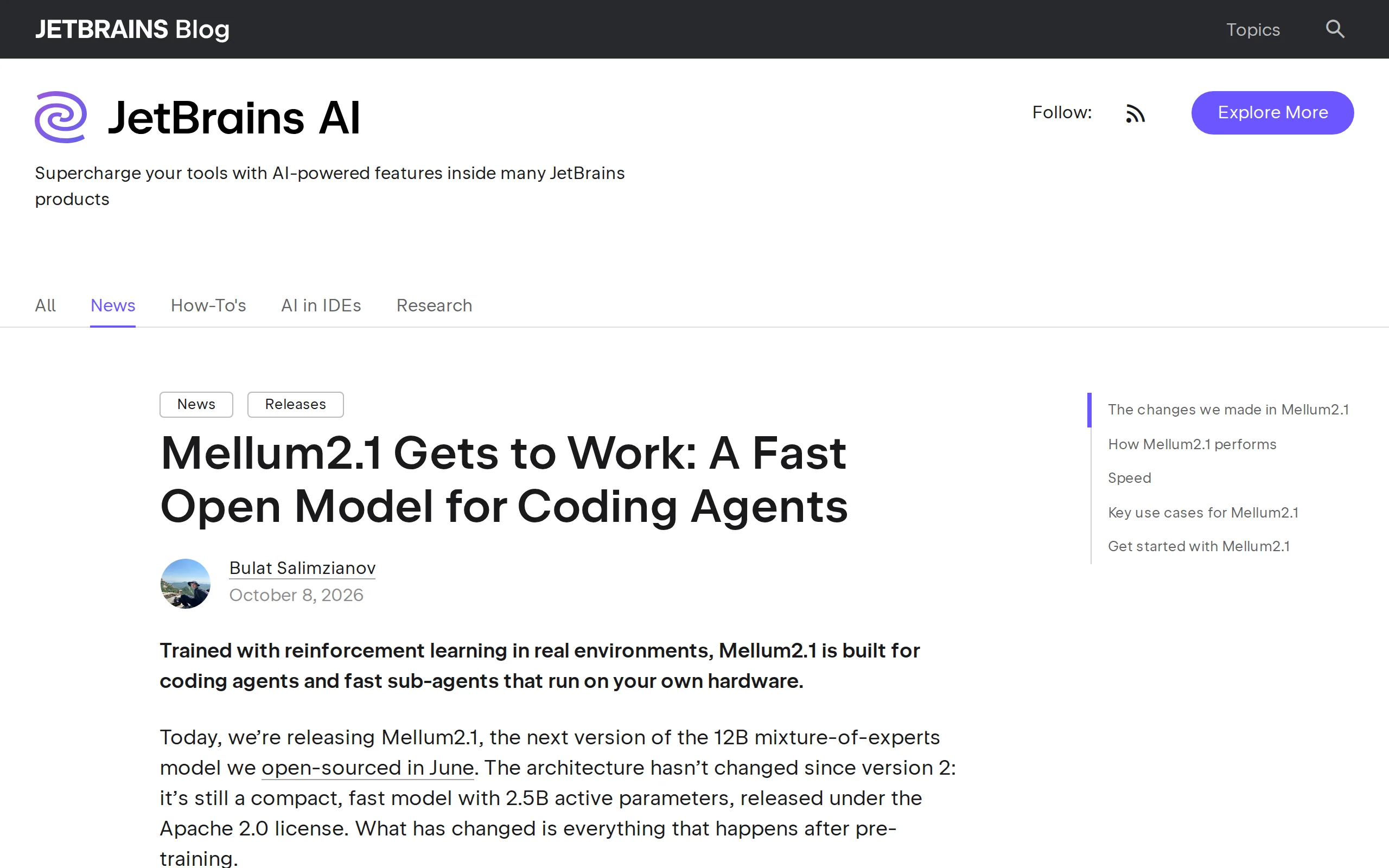
In-Depth Review of Mellum2.1: A Technological Leap in JetBrains' Open-Source Agentic Coding Model
Mellum2.1 is an open-source AI programming model launched by JetBrains, built on a 12B Mixture-of-Experts (MoE) architecture, activating only 2.5B parameters during each inference. The core breakthrou...
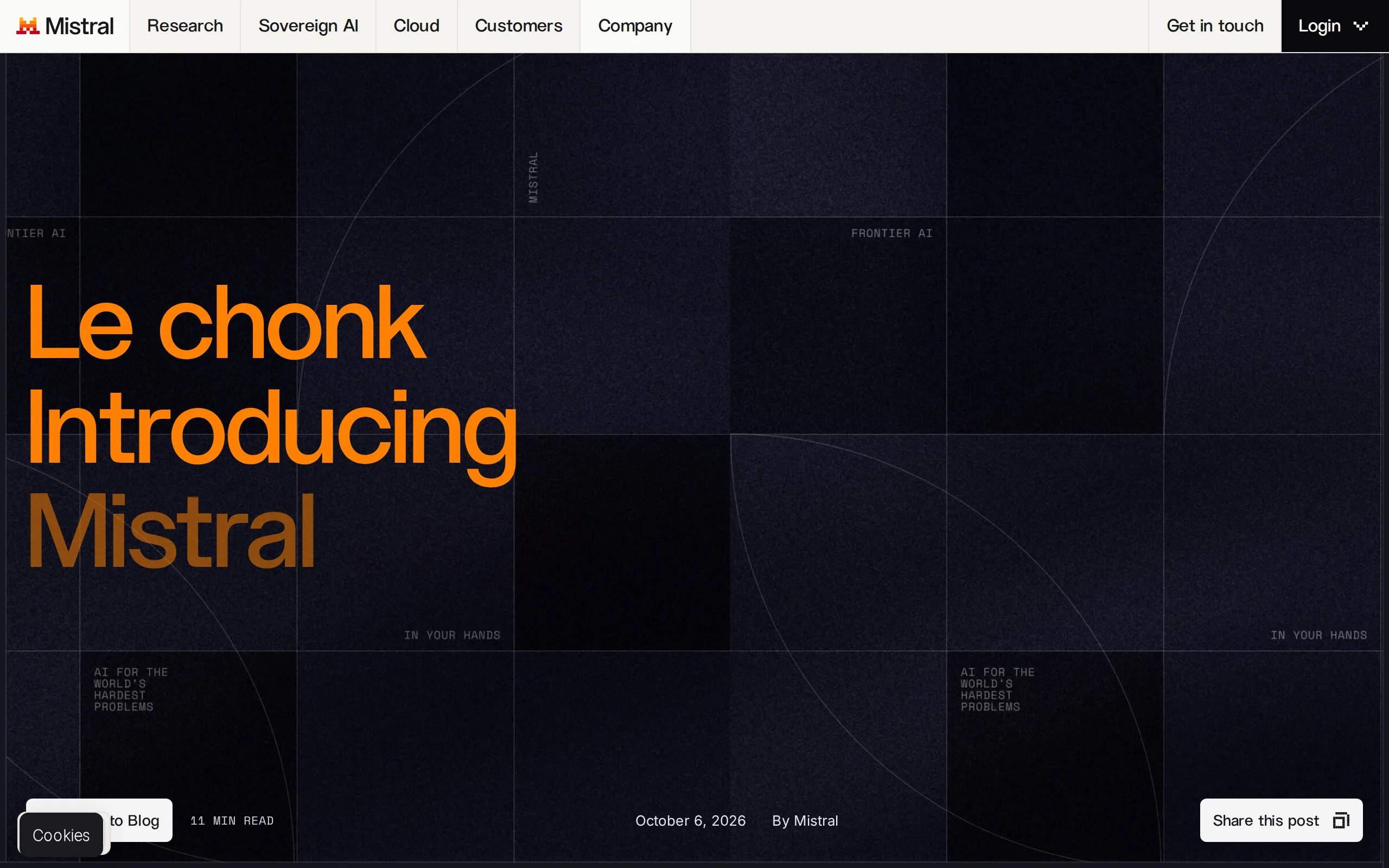
Mistral Large 4 – Mistral AI's Most Flagship Open-Source Large Model
Mistral Large 4 is the latest flagship open-source large model launched by Mistral AI, a French artificial intelligence company, and is nicknamed "Le Chonk" (the chubby cat). This model employs a fine...
Ling-3.1-flash – A New Generation Large Model Launched by the Bailing Team at Ant Group
Ling-3.1-flash is a new generation large language model launched by the Bailing team at Ant Group. It employs a hybrid linear Attention architecture and MoE sparse activation technology, with a total ...
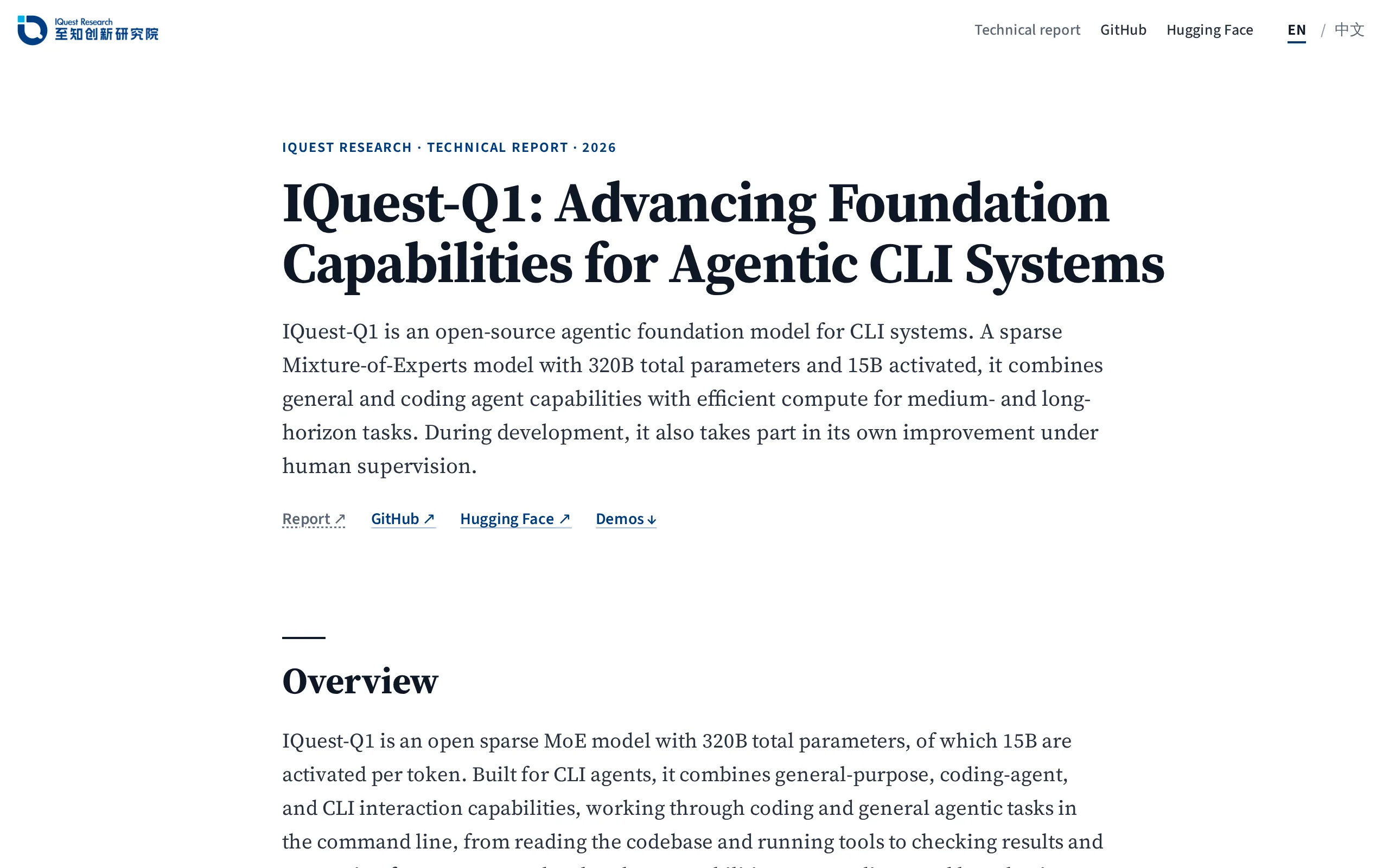
IQuest-Q1 Review: A 320B Sparse MoE Open-Source Agent Foundation Model Specializing in Code and Long-Horizon Agent Tasks
IQuest-Q1 is an open-source Agent foundation model developed by IQuestLab, with a core focus on code generation and Agent task execution. The model employs a sparse MoE architecture, featuring a total...
© All Rights Reserved. Some content on this site is partially generated by AI with human review.