
Vidu Q4 Preview: A Masterful Demonstration of Expressive Performance and Multi-Subject Consistency in ShengShu Technology's Flagship Video Generation Model
Executive Summary:
Vidu Q4 Preview is the first publicly available preview version of ShengShu Technology's next-generation flagship video generation model, launched on October 7, 2026. It emphasizes "expressive perform...
1. What is Vidu Q4 Preview
Vidu Q4 Preview is the first publicly available preview version of ShengShu Technology's next-generation flagship video generation model, launched on October 7, 2026. It emphasizes "expressive performance." This model has achieved significant upgrades in character performance, with more refined facial expressions, richer emotional delivery, and more natural body movements. It also supports up to 15 reference images and 3 reference audio clips, ensuring a high degree of consistency in character appearance, scene style, and voice tone throughout the entire generation process. In terms of cinematography, the model enhances dynamic camera movement, smooth scene transitions, and complex scene integration. Visual effects such as explosions, fireworks, and particles are more impactful, and it supports output in 2K/4K resolution and 10-bit color depth.
Technical Positioning and Domain: Belongs to the video generation (Video Generation) direction within the field of generative artificial intelligence. It focuses on high-expressive character performance, multi-subject visual consistency, and native audio joint generation, targeting professional creative scenarios such as film pre-visualization, advertising, and short video production.
Development Background: Developed by ShengShu Technology, it is a continuation of the Vidu series of models. Since its release, the Vidu series has continuously evolved, forming a model matrix that includes Vidu 2.0, ViduQ1, ViduQ2, and ViduQ3. As the first preview version of the next-generation flagship model, Vidu Q4 Preview continues the product philosophy of the Vidu Q series, "born for storytelling."
Core Value: Addresses core pain points in AI video generation, such as difficulty maintaining character consistency, audio-visual asynchrony, and rigid camera movements in complex scenes. Through industry-leading reference capacity (15 reference images + 3 reference audio clips) and an audio-visual joint generation solution, it ensures stable and unified character appearance, scene style, and voice tone across different shots and scenes, significantly enhancing the professional quality of the final output.
Technical Features: Based on the U-ViT diffusion Transformer architecture, it employs a diffusion-based generation process and a multi-reference conditioning mechanism. Reference images and audio are injected as unified conditions into the generation process, achieving end-to-end audio-visual joint modeling and avoiding issues such as mismatched lip movements and rhythmic disconnection caused by separated audio-visual splicing.
2. Key Features
Vivid Character Performance: Substantial improvements in facial expression detail and emotional richness, with natural and fluid body movements. Whether it's the subtle emotional flow in dialogue scenes or the intense bursts of energy in action scenes, the performance is highly engaging and well-suited for narrative content requiring deep character portrayal.
Voice Reference (Multi-Audio Condition Injection): Supports up to 3 reference audio clips, injected as voice conditions into the generation process to ensure consistent character voice and more dynamic emotional expression in dialogue. This feature is especially useful for content involving multi-character conversations or maintaining consistent voice for a character across multiple episodes.
Multi-Image Reference Consistency: Supports up to 15 reference images, achieving visual consistency across multiple subjects (such as characters, scenes, and props) through a unified condition injection mechanism. Specific reference subjects can be designated using tags in the prompt, locking in appearance and identity throughout the generation process to support complex creative implementations.
Dynamic Cinematic Storytelling: Enhanced capabilities in dynamic camera movement, scene transitions, and complex shot sequencing. Camera work in action, chase, and confrontation scenes is more dynamic and expressive. The system automatically performs smooth scene transitions and visual shifts, reducing the need for manual post-production editing.
Epic Visual Effects: Complex visual effects such as explosions, fireworks, particles, and energy flows naturally emerge with the narrative, with strong performance in lighting and texture. It supports 2K/4K resolution and 10-bit color depth output, offering a clear advantage in anime and high-energy genres, while preserving greater flexibility for post-production color grading.
Synchronized Audio-Visual Generation (Native Audio): Utilizes an end-to-end audio-visual joint modeling architecture, generating both visuals and dialogue/sound effects simultaneously within the same process. This avoids the issues of misalignment and rhythmic discontinuity that arise from separate audio-visual generation and subsequent splicing, achieving true audio-visual synchronization.
3. How to Use
Visit the official website: Access the Vidu official website (www.vidu.cn) or the RunningHub platform, register and log in to your account. API users can visit platform.vidu.com to view the API documentation.
Select generation mode: Choose between the 「Reference Video Generation」 or 「Image-to-Video」 mode based on your creative needs. The former supports multiple images + multiple audio references, making it suitable for complex projects requiring consistency across multiple subjects. The latter is ideal for quickly generating dynamic videos from a single image.
Upload reference materials: Upload reference images (up to 15) and MP3 format reference audio (up to 3 clips), and use tags in the prompt to reference the corresponding subjects. This ensures the model locks in the appearance and voice characteristics of the characters, scenes, and props during generation.
Enter the prompt: Provide a detailed description of the visual content, camera movement, and emotional atmosphere. Optionally enable the 「Smart Multi-Frame」 feature to enhance generation quality; this feature improves frame-to-frame coherence in complex action scenes.
Set output specifications: Choose the output resolution (2K/4K), aspect ratio (e.g., 16:9, 9:16), and video duration (3–16 seconds). Select the appropriate parameter combination based on the target platform for publishing.
Click Generate: Consume credits to generate the video, which typically takes about 10 seconds. After generation, you can repeatedly test and adjust until you are satisfied with the result.
Iterative optimization: If the generation result is unsatisfactory, adjust the prompt wording, replace reference images, or refine the camera position description and regenerate. It is recommended to change only one variable at a time to help identify the key factors affecting the outcome.
Export and deliver: Once the final video is confirmed, export it in 2K/4K high-definition format. API users can integrate and call the viduq4-preview interface at api.vidu.com to achieve an automated production workflow.
4. Pros and Cons Analysis
| Pros |
|---|
| Exceptional Expressiveness: Nuanced expressions, full emotional depth, and natural movements make both dialogue and action scenes compelling. It continues the "born for storytelling" tradition of the Vidu Q series, making it ideal for narrative content creation. |
| Industry-Leading Reference Capacity: Supports up to 15 reference images + 3 reference audio clips, achieving multi-subject consistency in character, scene, props, and audio tone, placing it ahead of other public models. |
| Audio-Visual Joint Generation: The end-to-end audio-visual joint modeling approach avoids misalignment of lip movements and rhythm fragmentation caused by separate audio and video splicing. Native audio output enhances the overall quality of the final video. |
| Strong Cinematic Storytelling Capabilities: Dynamic camera movements, smooth transitions, and complex shot connections are natural and expressive, especially in confrontation, chase, and fight scenes, reducing the workload for post-production editing. |
5. Comparative Analysis with Similar Tools
| Comparison Dimension | Vidu Q4 Preview | Kling 3.0 (Kling 3.0) | Runway Gen-3 |
|---|---|---|---|
| Technical Architecture | U-ViT diffusion Transformer + unified conditional injection | All-in-One multimodal vision-language (MVL) architecture | Multimodal diffusion Transformer |
| Reference Image Capacity | Up to 15 reference images + 3 reference audio clips (highest among public models) | Element binding system, reference images and subject total about 4–7 | Primarily single image reference |
| Maximum Resolution | 2K/4K, 10-bit color depth | Native 4K/60fps (Ultra tier) | Up to 4K |
| Single Segment Duration | 3–16 seconds, synchronized audio and video | 3–15 seconds, extendable to 3 minutes (Pro version) | 5–10 seconds |
| Native Audio | Supported, reference tone unified | Supported, 5+ language lip-sync | Supported |
| Camera Control | Dynamic camera movement, smooth transitions, complex connections (automatic) | 6-shot storyboard system, AI director for automatic/manual arrangement | Camera motion control |
Selection Recommendations: For complex narrative projects requiring consistency across multiple subjects (such as short dramas, comics, or multi-version ad testing), Vidu Q4 Preview offers a clear advantage with its highest reference capacity of up to 15 reference images + 3 audio clips, making it particularly suitable for content production that requires consistent character appearance and tone across multiple episodes. If the project demands longer output durations and more refined storyboard arrangements, Kling 3.0's Pro version supports extension up to 3 minutes, paired with a 6-shot storyboard system, making it more appropriate for long-form narrative creation. Runway Gen-3 demonstrates balanced performance in terms of image quality and community ecosystem, making it ideal for creators exploring diverse styles. Luma Dream Machine excels in rapid prototyping and ease of use, making it well-suited for the early stages of creative exploration.
6. Editor's Summary
The release of the Vidu Q4 Preview marks a significant step forward in the "character expressiveness" dimension of AI video generation. From a technological innovation perspective, its most core breakthrough lies in raising the reference capacity to the industry's highest level, with 15 reference images and 3 segments of reference audio, and achieving consistent control across multiple subjects through a unified conditional injection mechanism. This design directly addresses the long-standing "character drift" pain point in AI video generation—stability and consistency in a character's appearance and voice are fundamental requirements for professional creation, especially in long narratives or multi-shot scenarios. At the same time, the end-to-end solution for joint audio-visual generation avoids issues such as mismatched lip movements and rhythmic disconnection that arise from separating and splicing audio and video, showcasing Shengshu Tech's accumulated technical expertise in joint audio-visual modeling.
In terms of practical value, the model's "expressive character performance" positioning precisely aligns with the creative needs of high-emotion content such as short dramas, animated series, and advertising campaigns. The 16-second audio-visual co-generation capability, along with 2K/4K and 10-bit color depth output specifications, brings the final video quality close to professional production standards, potentially significantly reducing the cost and time required for creative validation and content production. For advertising agencies, film pre-visualization teams, short drama studios, and independent creators, this model provides a low-barrier pathway from creative concept to finished video.
It should be noted that, as a Preview version, its stability and some features are still under continuous iteration, and the single-segment duration limit imposes certain constraints on long-form narrative creation. However, considering the consistent iteration pace of the Vidu series, the technical direction demonstrated by the Q4 Preview—multi-reference consistency, joint audio-visual generation, and expressive character performance—represents an important trend in the evolution of video generation models, shifting from "being able to generate" to "being able to perform." As the official version is released in the future, its penetration into professional creative workflows is expected to further increase.
7. Application Scenarios
Advertising and E-commerce Marketing: Low-cost bulk generation of multiple versions of openings, scripts, and shot plans for A/B testing. After selecting the optimal plan, output the final video in 2K/4K resolution. The model can highlight product textures, lighting, and visual impact, significantly reducing the production cost and time for marketing videos, making it ideal for high-frequency marketing needs such as e-commerce promotions and new product launches.
Comic Series/Short Films/Video Content Production: Use 15 reference images + 3 audio clips to ensure consistent character appearance and voice across episodes. The 16-second audio-visual synchronization is suitable for the update rhythm of serialized content. The model's expressive performance and dynamic shot composition enhance the emotional depth of dialogue scenes and the intensity of action scenes, making it directly applicable for short film episode production or dynamic adaptation of comic series.
Storyboard Previsualization and Creative Validation: Quickly convert scripts into visual dynamic storyboards to validate character movement, shot paths, scene design, and emotional pacing. Directors and production teams can "make ideas visible" before formal filming, evaluating which shots are worth investing more production resources into, thereby reducing the risks and rework costs associated with actual filming.
Anime and High-Energy Genre Creation: Dynamic camera movement, smooth scene transitions, and fiery visual effects such as explosions, fireworks, and particles align with the narrative rhythm of action-packed anime and short films. The multi-image reference capability ensures consistency in character design and scene settings, maintaining a unified visual style across different shots, extending Vidu's traditional strengths into this domain.
8. FAQ
Q: What are the core improvements of Vidu Q4 Preview compared to previous models like Vidu Q3?
A: The core improvements of Q4 Preview focus on three areas: first, enhanced character performance capabilities, with significant improvements in facial expression detail, emotional richness, and naturalness of movements; second, a substantial increase in reference capacity, supporting up to 15 reference images + 3 reference audio clips, with a major leap in multi-character consistency control; third, strengthened cinematic storytelling and visual effects expression, with more natural dynamic camera movements and complex visual effects generation.
Q: How are 15 reference images managed in practical use, and could they cause style conflicts?
A: The model manages multiple reference subjects through a prompt tag mechanism. Users can specify the use case for each reference subject via tags in the prompt. It is recommended to organize reference images by character, scene, and props, and to assign clear role tags to each subject to avoid style conflicts between different reference images.
Q: What audio formats does the reference audio support, and how effective is the voice consistency?
A: The reference audio supports MP3 format, with a maximum of 3 audio clips. The model injects the audio as a voice condition into the generation process, ensuring that the generated character's voice matches the reference audio. For scenarios involving multiple character dialogues, it is recommended to provide a separate reference audio for each character and correspondingly reference them in the prompt.
Q: What hardware and time requirements are there for 2K/4K output?
A: Vidu Q4 Preview is a cloud-based generation service, so users do not need high-performance hardware locally. The generation time is approximately 10 seconds, but producing videos in 4K resolution or longer durations consumes more credits and may result in increased waiting times, depending on the current service load.
Q: How can API calls be integrated, and what programming languages are supported?
A: API users can integrate and call the viduq4-preview interface via api.vidu.com using standard RESTful API methods. Development can be done using mainstream languages such as Python and JavaScript. Detailed API documentation and model specifications are available on the Model Map page at platform.vidu.com.
Q: Can the generated videos be used for commercial purposes?
A: Vidu Q4 Preview supports commercial use, but specific licensing terms should be referenced in the Vidu platform's service agreement. It is recommended that commercial users carefully review the relevant terms before use to confirm the copyright ownership and scope of use for the generated content.
9. Project Links
- Vidu Official Website: https://www.vidu.cn/
- Vidu Q4 Product Page: https://www.vidu.cn/vidu-q4
- Vidu International Site: https://www.vidu.com/
- Vidu API Platform: https://platform.vidu.com/
- API Model Documentation: https://platform.vidu.com/docs/overview/model-map
Related AI Model Articles
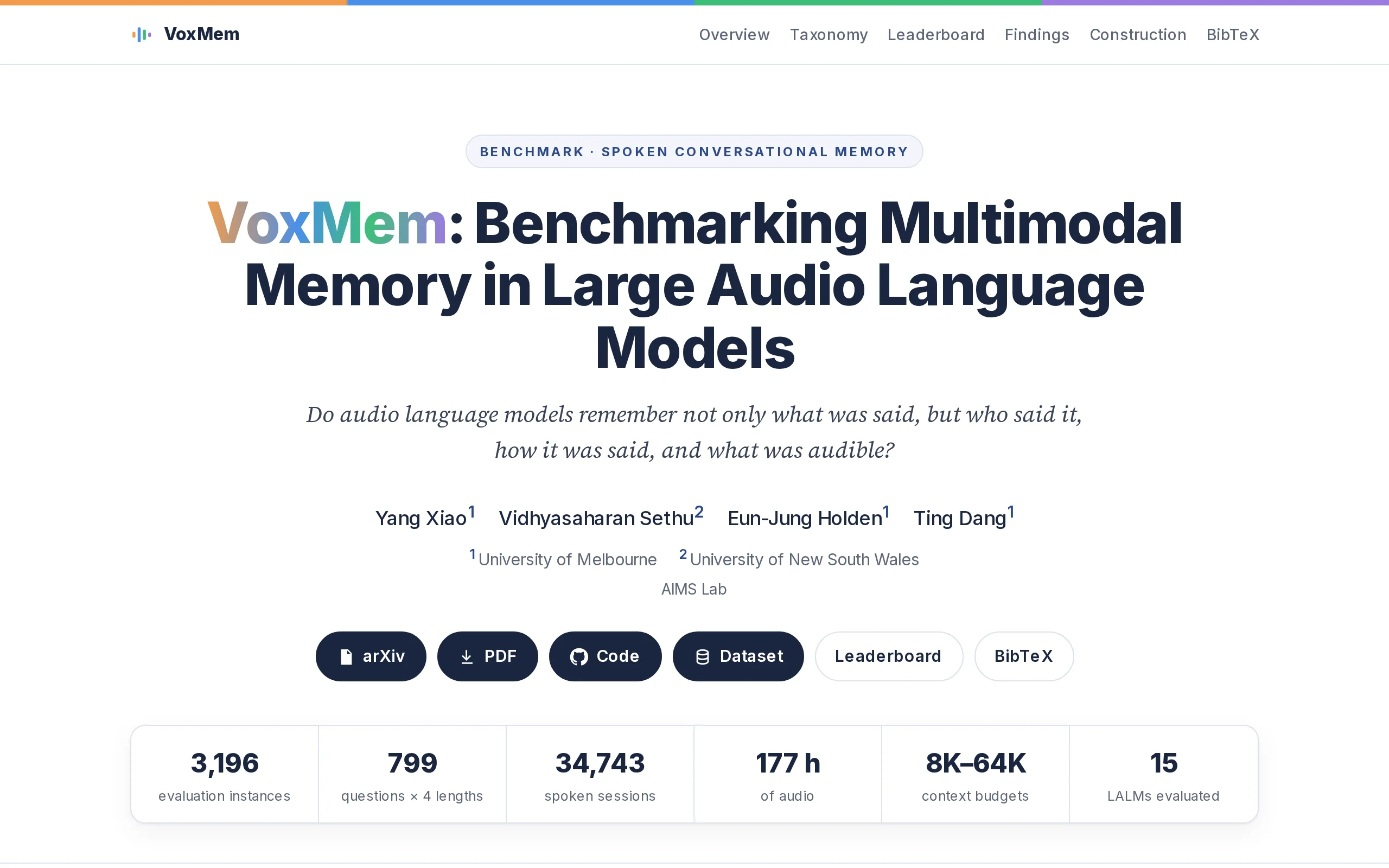
VoxMem – An Open-Source Audio Large Model Memory Benchmark from the University of Melbourne and Others
VoxMem is an audio large model memory benchmark introduced jointly by the research team from the University of Melbourne and the University of New South Wales. This benchmark pioneers a two-dimensiona...
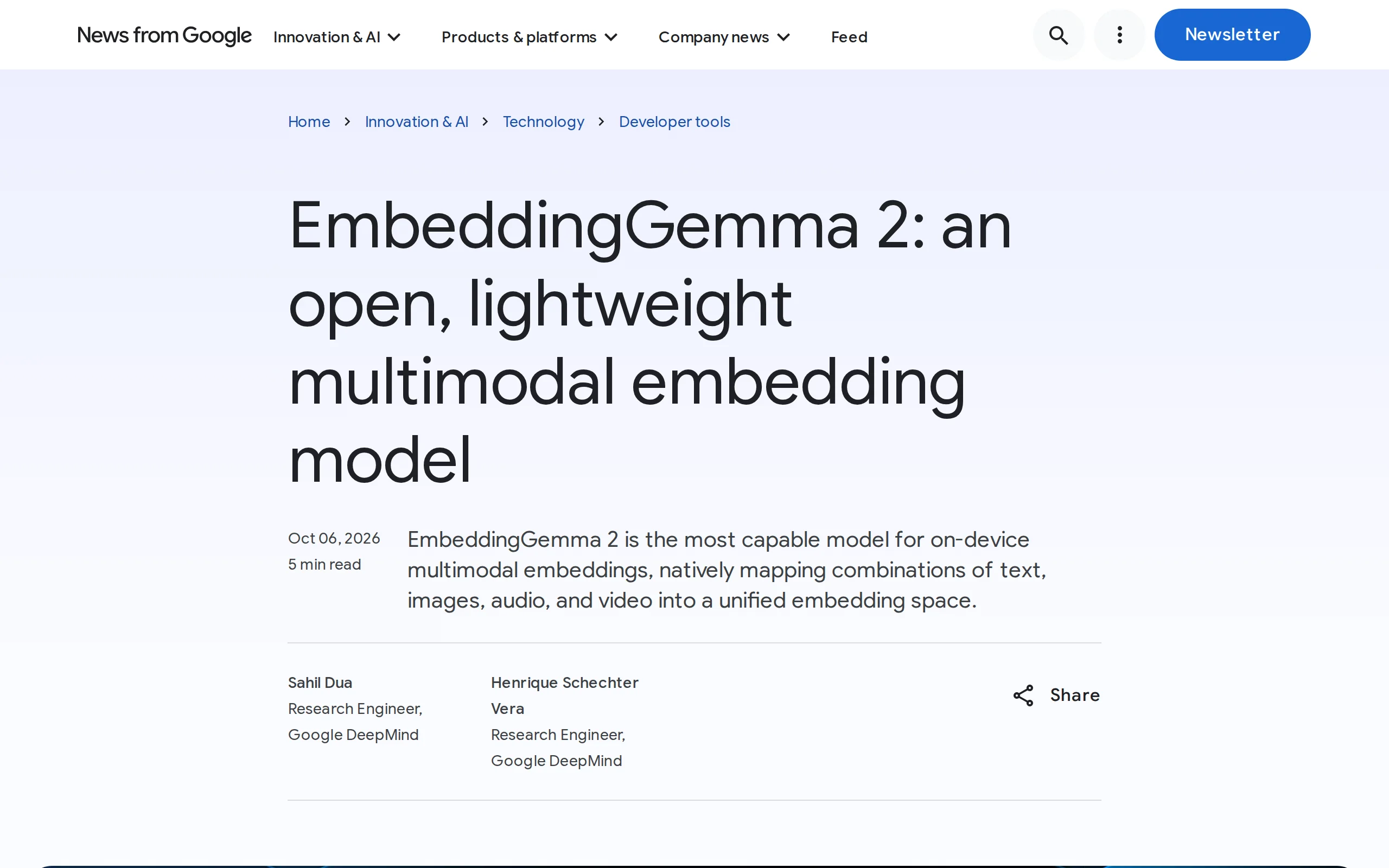
EmbeddingGemma 2 – Review of Google's Open-Source Native Multimodal Embedding Model
EmbeddingGemma 2 is an open-source native multimodal Embedding model developed by Google, built upon the Gemma 4 architecture. It unifies five modalities—text, code, images, video, and audio—into a si...
MAI-Transcribe-2-Streaming: In-Depth Evaluation of Microsoft's Real-Time Streaming Speech-to-Text Model
MAI-Transcribe-2-Streaming is Microsoft's first real-time streaming speech-to-text model, capable of continuously outputting text while speech is being delivered. It supports 60 languages and automati...
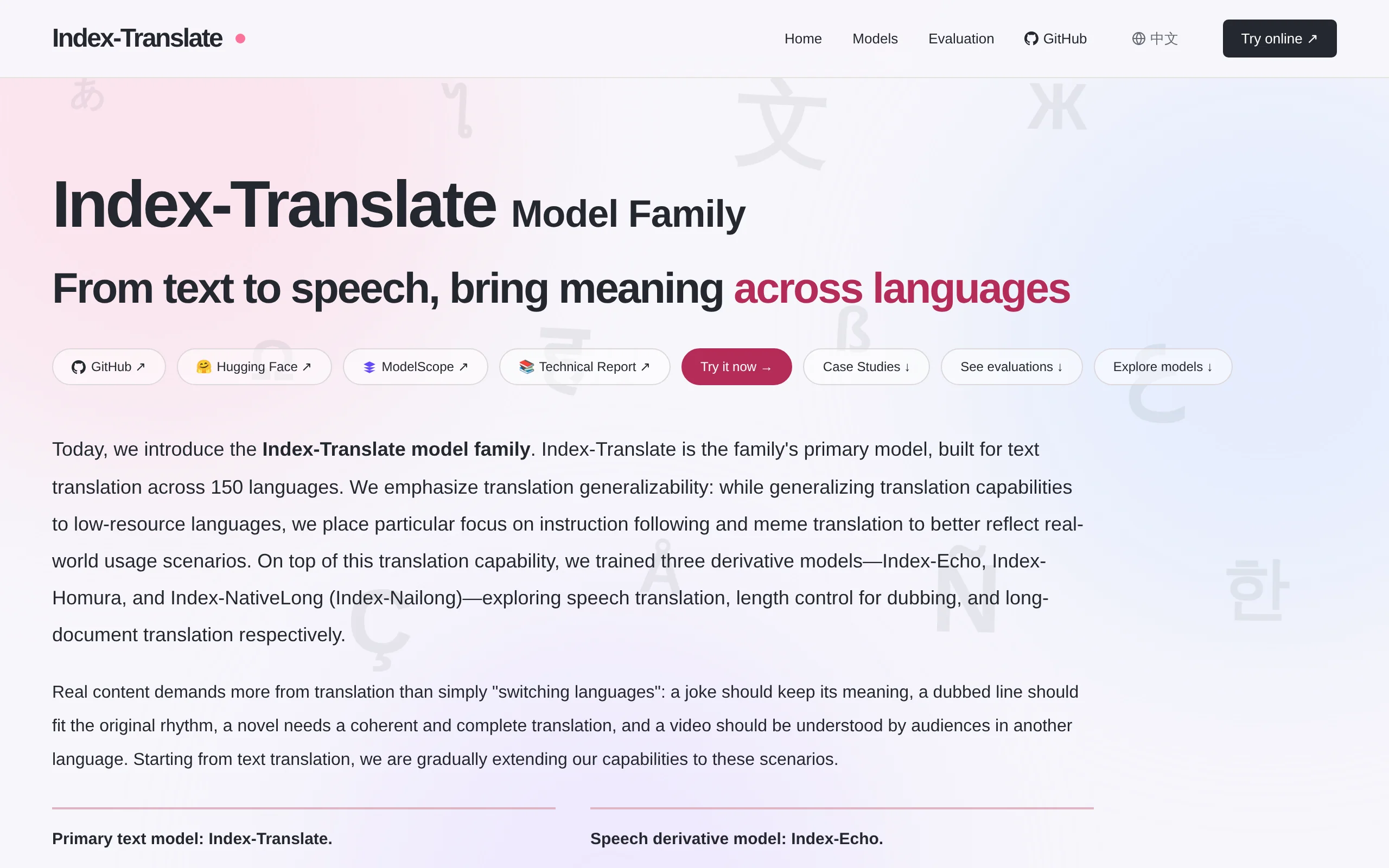
Index-Translate – Bilibili's Open-Source Multilingual Translation Model Family
Index-Translate is an open-source multilingual translation model family developed by Bilibili's Index LLM team. It is built upon the Qwen3.5 foundation and opens its weights under the Apache-2.0 licen...
© All Rights Reserved. Some content on this site is partially generated by AI with human review.