
Aure – DeepL's Speech Translation Model
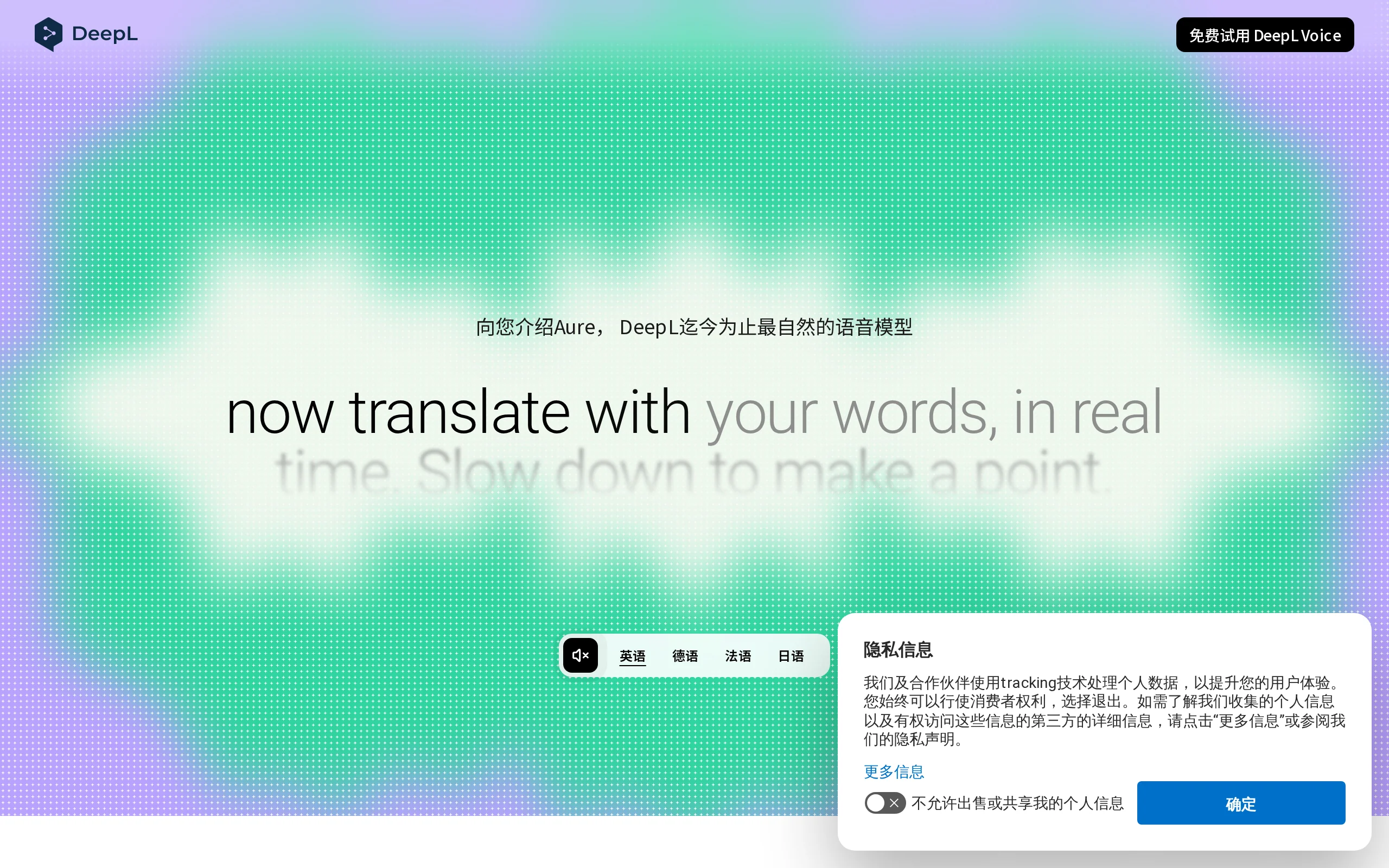
Executive Summary:
Aure is DeepL's next-generation speech translation model and serves as the core driving force behind all DeepL Voice products. Unlike traditional speech translation systems, Aure can continuously and ...
1. What is Aure
Aure is DeepL's next-generation speech translation model and serves as the core driving force behind all DeepL Voice products. Unlike traditional speech translation systems, Aure can continuously and dynamically adapt to the speech being translated in real-time conversations, reproducing the speaker's tone variations, emotional shifts, emphasis, and speech rate changes in real-time. This allows cross-language communication to retain the original voice characteristics and natural nuances. The model initially supports eight languages: English, German, Spanish, French, Italian, Japanese, Portuguese, and Korean. It covers three major application scenarios: web conferencing, face-to-face conversations, and voice APIs. Additionally, DeepL explicitly promises not to permanently store user voice records, establishing a new balance between real-time translation quality and privacy protection.
Technical positioning and domain: Aure belongs to the specialized model at the intersection of speech translation and text-to-speech synthesis. It focuses on real-time cross-language voice conversion, rather than traditional text-based machine translation. Its core technology lies in dynamic voice modeling, which retains and reproduces the speaker's voice characteristics in real-time during the translation process. This technical approach clearly distinguishes it from the current mainstream concatenative or static voice cloning solutions.
Development background: Aure was developed by DeepL's R&D team. DeepL has accumulated extensive algorithmic and engineering expertise in the field of neural machine translation, with its translation quality consistently leading in multiple benchmark evaluations. The release of Aure marks an important strategic move for DeepL to extend its high-quality translation capabilities from text-based environments into real-time voice translation scenarios.
Core value: Through its continuous and dynamic voice adaptation mechanism, Aure addresses the common "robotic" issue in traditional speech translation. The translated voice not only preserves the speaker's timbre and recognizability but also conveys rich paralinguistic information such as tone variations, emotional shifts, and emphasis. On platforms like Teams, Zoom, and Google Meet, Aure reduces serious translation errors by 76% compared to the platform's built-in tools, demonstrating substantial improvements in both translation accuracy and voice naturalness.
Technical features: Aure's core technical advantages are reflected in three aspects: first, its continuous dynamic adaptation mechanism, which captures the dynamic fluctuations and immediate responses in voice during conversations, unlike traditional one-time sampling matching; second, its ability to extract voice in noisy environments, effectively filtering out background noise, other voices, and echoes to extract the main speaker's voice; third, its strict privacy protection design, where voice data is only temporarily stored in memory and deleted immediately after the conversation ends. It is not used for model training and is encrypted throughout the transmission process.
2. Key Features
Real-time Tone Adaptation: Aure continuously and dynamically adjusts the translated speech during real-time conversations, instantly replicating the speaker's tone variations, emotional shifts, emphasis on words, and changes in speaking speed. This feature is based on dynamic speech modeling principles, where the system does not generate speech using fixed templates, but instead continuously analyzes changes in speaking style throughout the conversation, allowing the translated speech to reflect appropriate emotional nuances in different contexts.
Voice Fingerprint Preservation: Using voice retention technology, Aure enables cross-language communication with the speaker's own, highly recognizable natural voice, completely eliminating the cold, mechanical feel of synthetic voices. This technology surpasses traditional voice cloning solutions, which typically use a short segment of the speaker's voice for static matching. In contrast, Aure continuously captures dynamic changes in the voice throughout the entire conversation.
Meeting Translation: Integrated into the meeting version of DeepL Voice, Aure provides real-time translation of meeting content on platforms such as Microsoft Teams, Zoom, and Google Meet. In practical deployment, users simply need to enable DeepL Voice within the meeting platform to receive real-time multilingual subtitles and voice translation, with the translated results preserving each speaker's unique vocal characteristics.
Face-to-Face Conversation: Through the face-to-face conversation version of DeepL Voice, Aure enables real-time cross-language dialogue in offline scenarios such as front desks and factory workshops. Even in noisy environments, Aure's voice extraction technology effectively filters out background noise, other speakers' voices, and echoes, ensuring that the translated speech remains clear and natural.
Voice API: DeepL has opened the Voice API interface, allowing developers to integrate Aure's real-time speech translation capabilities into their own applications and products. This API is suitable for industry scenarios requiring real-time cross-language communication, such as education, healthcare, and tourism, reducing the development threshold for building custom speech translation systems.
Multilingual Support: Aure initially supports eight languages: English, German, Spanish, French, Italian, Japanese, Portuguese, and Korean. For languages not yet supported, the DeepL Voice system automatically switches to the previous voice model, ensuring that translation services remain uninterrupted.
3. Application Scenarios
Cross-border Online Meetings: After enabling DeepL Voice on mainstream video conferencing platforms such as Teams, Zoom, and Google Meet, Aure can real-time translate spoken content and output it with the speaker's own voice characteristics. Team members from different countries can naturally communicate in their native languages without relying on human interpreters, significantly improving meeting efficiency and communication quality.
Face-to-face Cross-language Communication: From company reception desks to factory workshops, service staff can use the face-to-face version of DeepL Voice to achieve real-time, barrier-free communication with foreign clients and colleagues. Guidance at the reception and technical explanations in the workshop can all receive clear voice translation support even in noisy on-site environments.
Cross-border Business Negotiations: In business negotiations, tone, emphasis, and speech rate often carry critical information—such as probing, stressing, or making concessions. Aure can accurately convey these subtle differences in tone, avoiding the misjudgment risks associated with traditional "robotic" speech delivery, and providing more reliable linguistic support for cross-border business communication.
Customer Service and Reception: Customer service centers of multinational corporations can use Aure to provide services in the customer's native language while retaining the voice characteristics of the customer service agent. This not only enhances the warmth of the communication but also maintains the interpersonal trust between the customer and the agent by keeping the agent's voice consistent, contributing to improved customer satisfaction.
Application Integration: Developers can integrate Aure's real-time voice translation capabilities into their own apps, hardware devices, or enterprise systems via the DeepL Voice API, covering industry scenarios such as education (cross-language classrooms), healthcare (patient communication), and tourism (multilingual guides), thereby achieving product-level multilingual voice interaction capabilities.
4. How to Use
Access DeepL Voice Service: Visit the DeepL Voice official website (https://www.deepl.com/zh/products/voice/aure) and choose between the web conferencing version, face-to-face conversation version, or the Voice API solution based on your specific needs. DeepL Voice offers various product forms, and users should select the appropriate one according to their use cases.
Confirm Language Support: Aure currently supports eight languages: English, German, Spanish, French, Italian, Japanese, Portuguese, and Korean. Before use, ensure that the target language pair is within the supported range. If the language is not among these eight, the system will automatically downgrade to DeepL's previous voice model.
No Manual Configuration Required: Aure is pre-integrated into all DeepL Voice products. Supported languages are automatically activated, and no additional parameter configuration or switching is needed. Users can directly access Aure's translation capabilities without needing to understand the underlying model's calling logic.
Enable in Meeting Scenarios: Enable the DeepL Voice application within Microsoft Teams, Zoom, or Google Meet, and Aure will provide real-time translation of meeting speech, outputting the translated content in the speaker's own voice characteristics. Each speaker in the meeting will be dynamically identified and adapted to.
Use in Face-to-Face Scenarios: Open the face-to-face conversation version of DeepL Voice to engage in real-time cross-language conversations with the other party. The system automatically filters out ambient noise and other interfering sounds, allowing for clear extraction of the main speaker's voice even in noisy environments.
Integrate in API Scenarios: Developers can integrate Aure's real-time voice translation capabilities into their own applications or products by calling the DeepL Voice API. The specific integration process includes obtaining an API key, configuring calling parameters, and handling the returned translated voice stream. Detailed documentation can be found on the DeepL Developer Platform.
5. Pros and Cons Analysis
| Pros |
|---|
| Superior Dynamic Voice Expressiveness: Aure continuously analyzes the speaker's tone, emotion, and emphasis variations throughout the conversation and dynamically adapts the translated speech, giving the translated voice natural emotional expression and infectiousness. This significantly outperforms traditional static voice-matching solutions. |
| Reliable Translation Quality: In real-world testing on mainstream platforms such as Teams, Zoom, and Google Meet, Aure reduced serious translation errors by 76% compared to the built-in translation tools of these platforms, demonstrating strong practicality in academic and business-level meeting scenarios. |
| Strong Adaptability in Complex Environments: The system can filter out background noise, other speakers' voices, and echoes, allowing it to extract the main speaker's voice and output realistic translated speech even in noisy offline environments. It is suitable for non-ideal acoustic environments such as factory workshops. |
| Clear Privacy Protection Design: Aure only dynamically matches the user's voice during real-time conversations. Voice data is temporarily stored in memory during processing and is immediately deleted after the session ends. It is not used for model training, and the entire transmission process is encrypted, with clear privacy and compliance design. |
6. Comparative Analysis with Similar Tools
Aure's primary competitors in its domain mainly involve real-time speech translation and speech synthesis tools, including Microsoft Azure AI Speech, Google's speech translation solutions, and traditional voice cloning and synthesis tools. The following comparison is made across multiple technical dimensions:
| Comparison Dimension | Aure (DeepL) | Microsoft Azure AI Speech | Google Speech Translation |
|---|---|---|---|
| Core Architecture | Dynamic speech modeling + continuous session adaptation, specifically designed for real-time speech translation | Static TTS + speaker voice training (Custom Neural Voice), requiring pre-registered voice samples | Based on end-to-end speech translation models, translating speech to text in real-time and then back to speech |
| Voice Expressiveness | Real-time reproduction of tone variations, emotional transitions, emphasis, and speech rate changes, with strong dynamic feel | Requires pre-training of acoustic models, resulting in speech that generally maintains a single emotional tone | Translated speech is mostly standardized synthetic voice, with limited expression of tone and emotion |
| Language Support | Initially supports 8 languages (English, German, Spanish, French, Italian, Japanese, Portuguese, Korean), does not support Chinese yet | Supports over 140 languages and regional variants, including major languages like Chinese | Covers 100+ languages, with mature support for Chinese |
| Deployment Method | Cloud API + official applications (Meeting Edition/Face-to-Face Edition), requires internet connectivity | Cloud API, supports containerized deployment and edge computing | Cloud API, integrated within the Google ecosystem |
| Privacy Mechanism | Speech data is only temporarily stored in memory and deleted immediately after the session ends, not used for training | Conversation data is retained by default for 30 days, with configurable shorter retention periods, but requires enterprise customers to manage policies themselves | Involves Google Cloud data processing policies, with relatively complex data retention strategies |
| Usability | Default integration across all DeepL Voice products, no manual configuration required, ready to use out-of-the-box | Requires developers to perform extensive configuration and model training in the Azure portal, with a relatively high usage threshold | Accessed via Google Cloud API, integration requires development capabilities |
Selection Recommendations: If the primary requirement is to "speak foreign languages in one's own voice" and the main use case is in international meetings, Aure is currently the most natural solution in terms of voice dynamic expressiveness along this technical route, especially suitable for business teams with high requirements for external communication image. However, it is necessary to confirm that the target language is within the eight supported languages, as it currently does not support Chinese scenarios.
If the enterprise needs to support multiple languages (especially Chinese) and already has a Microsoft ecosystem technology stack, Azure AI Speech is more mature, but its voice cloning still requires pre-registered samples, and its dynamic expressiveness is inferior to Aure. In scenarios requiring fully localized deployment or strong privacy protection, traditional open-source voice cloning solutions (such as self-built systems based on models like VITS) remain viable options, but naturalness and development costs must be balanced.
7. Editor's Summary
The launch of Aure marks a significant milestone in the technological evolution of real-time speech translation, shifting the focus from "translating accurately" to "speaking naturally." From an innovation standpoint, Aure's continuous dynamic speech modeling mechanism directly surpasses traditional static voiceprint matching approaches. Traditional methods rely on a single voice sample for consistent binding, essentially a form of "copying," whereas Aure achieves "reproduction" through full-session-level voice analysis. This distinction results in a noticeable difference in user experience.
DeepL's accumulated model optimization experience in the field of neural machine translation is also reflected in the translation quality of Aure. In testing on major conferencing platforms, severe translation errors were reduced by 76% compared to the platform's built-in tools. This data strongly supports the practicality of speech translation in serious business scenarios.
In terms of practical value, Aure covers three major application paths: meetings, face-to-face conversations, and APIs, offering a complete product form. The meeting translation and face-to-face conversation modes directly address high-frequency cross-border communication needs, with a low usage barrier—no configuration required, ready to use out of the box—which facilitates rapid adoption among non-technical user groups.
Regarding target users, the current ideal audience for Aure includes multinational corporate teams in multilingual meeting scenarios and outward-oriented business professionals who need to communicate with clients in multiple languages. However, it must be clearly noted that the initial release of eight languages (excluding Chinese) significantly limits direct use for Chinese users. This limitation is expected to be addressed as the product expands its language support in the future. For enterprises with strict data compliance requirements, although DeepL has provided relatively clear design commitments regarding privacy protection, it is still recommended to conduct thorough compliance evaluations before actual deployment.
Overall, Aure represents a significant technological breakthrough for DeepL in the speech translation domain, offering strong differentiating advantages with its dynamic voice expressiveness. As DeepL gradually expands its language coverage and integrates with broader ecosystems, the "continuous dynamic voice adaptation" technical paradigm established by Aure is likely to become a new benchmark for real-time speech translation products.
8. FAQ
Q: What is the fundamental technical difference between Aure and traditional voice translation tools?
A: Traditional voice translation tools typically use a pipeline architecture of "speech recognition → text translation → speech synthesis," employing standardized voices or one-time collected voice samples during synthesis. The resulting audio has minimal emotional variation throughout the conversation. Aure, on the other hand, introduces a continuous dynamic speech modeling mechanism that constantly analyzes the speaker's tone, emotion, emphasis, and speaking rate during real-time conversations. It then immediately shapes the translated speech using these dynamic features, producing results that are closer to natural human speech.
Q: Which languages does Aure support? Is Chinese included?
A: Aure initially supports eight languages: English, German, Spanish, French, Italian, Japanese, Portuguese, and Korean. It does not currently support Chinese. If the user's language is not on the support list, DeepL Voice will automatically switch to the previous voice model, and the translation function will still operate normally. However, the dynamic expressiveness of the voice may not reach the level of Aure.
Q: Does Aure store my voice data? Is my privacy protected?
A: According to DeepL's official privacy design documentation, Aure dynamically matches the user's voice only during real-time conversations and does not create or permanently store voice profiles. Voice data is temporarily stored in memory during processing and is immediately deleted after the conversation ends. Transcribed and translated data is not permanently saved and is not used for model training, with encryption applied throughout the transmission process.
Q: Is the translation performance of Aure reliable in noisy meeting environments?
A: DeepL Voice includes built-in voice extraction technology that can filter out background noise, other speakers' voices, and echoes, extracting the main speaker's voice. This ensures that the translated speech remains natural and realistic, even in noisy environments. This feature has been specifically designed for face-to-face conversation scenarios, such as factory workshops.
Q: Does using Aure require complex configuration or development skills?
A: No. Aure is natively integrated into all DeepL Voice products. In meeting or face-to-face scenarios, users simply need to open the application directly to use it, and the system will automatically activate the supported languages without manual configuration. If developers wish to integrate Aure into their own applications via API, they will need basic interface calling capabilities. DeepL provides corresponding developer documentation for this purpose.
9. Project Links
- DeepL Official Website: https://www.deepl.com/
- Product Website: https://www.deepl.com/zh/products/voice/aure
- DeepL Developer Documentation: https://www.deepl.com/docs-api (API integration guide, covering DeepL Voice API)
Related
Hy4 flash – Tencent HunYuan's High-Cost-Performance Large Model
Hy4 flash is a high-cost-performance large model launched by Tencent HunYuan, which employs a sparse mixture-of-experts (MoE) architecture with a total of 224B parameters and 12B active parameters. It...
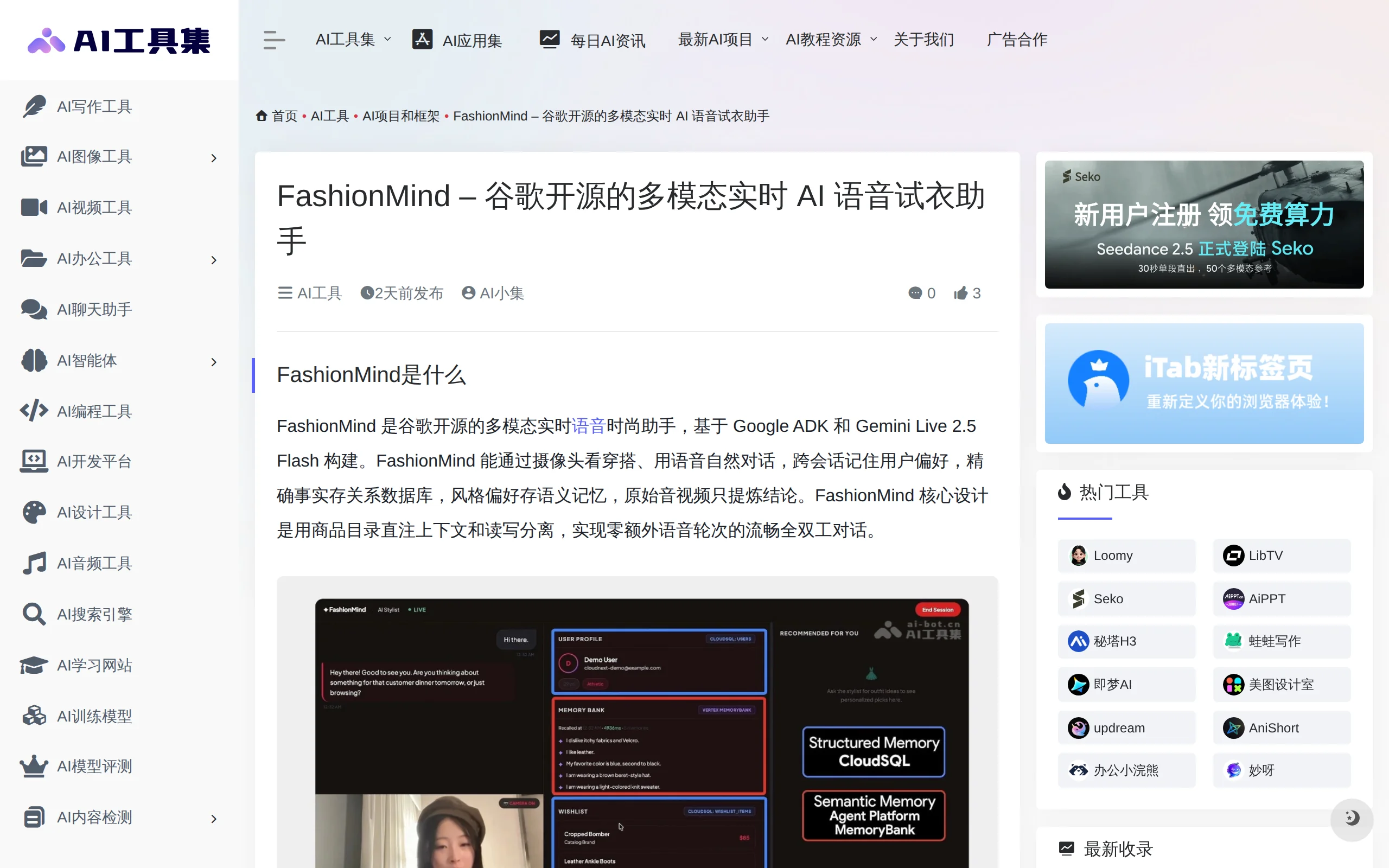
FashionMind – Google's Open-Source Multimodal Real-Time AI Voice-Fashion Assistant
FashionMind is a multmodal real-time voice fashion assistant open-sourced by Google, built on the Google ADK agent framework and the Gemini Live 2.5 Flash model. This project centers on camera-based v...
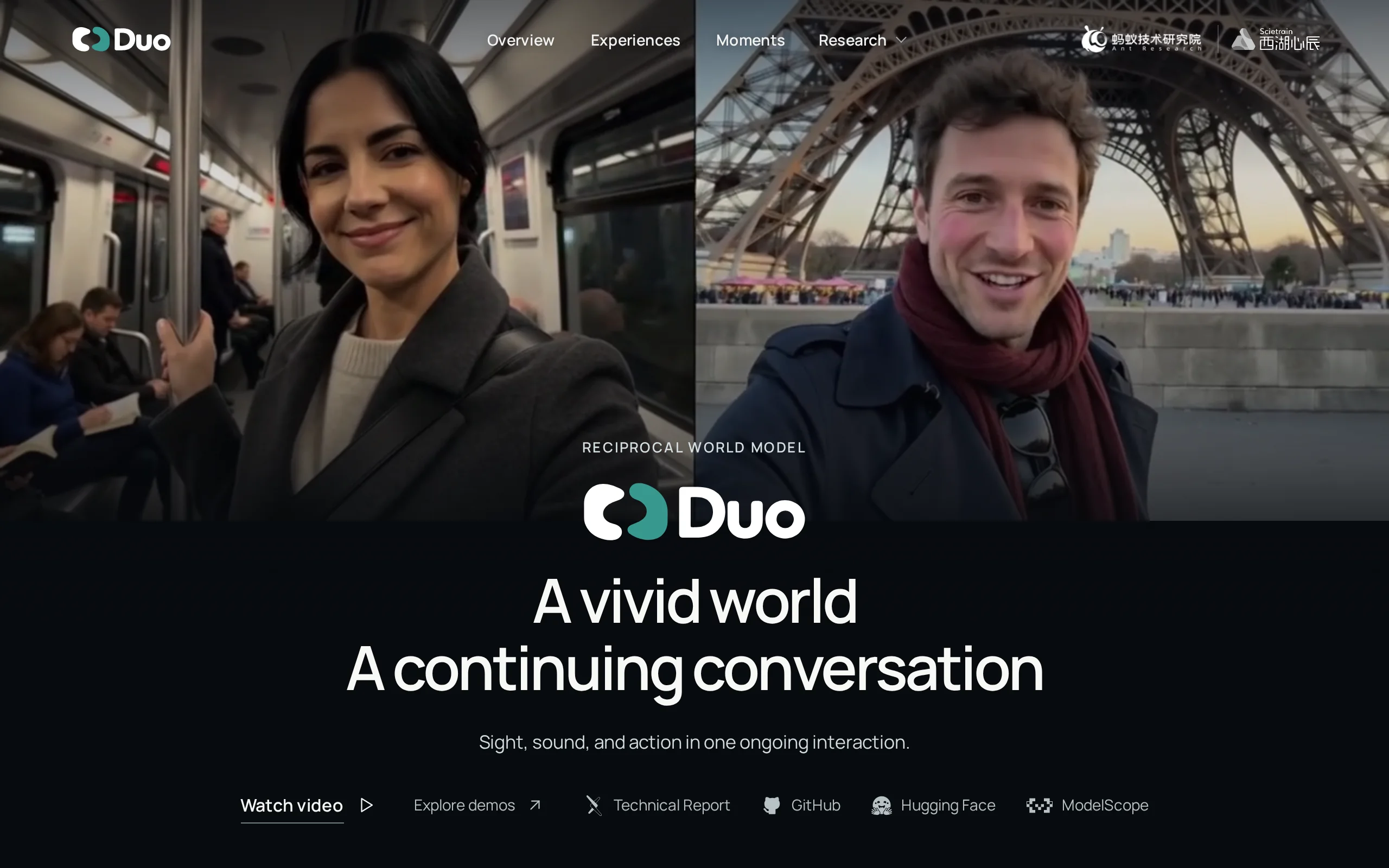
Duo v1 – Full-duplex Audio-Visual Interaction Model Open-sourced by Ant Group and West Lake Heart
Duo v1 is a full-duplex audio-visual interaction model open-sourced jointly by Ant Group's Technology Research Institute and West Lake Heart. It is also the first complete implementation of a Reciproc...
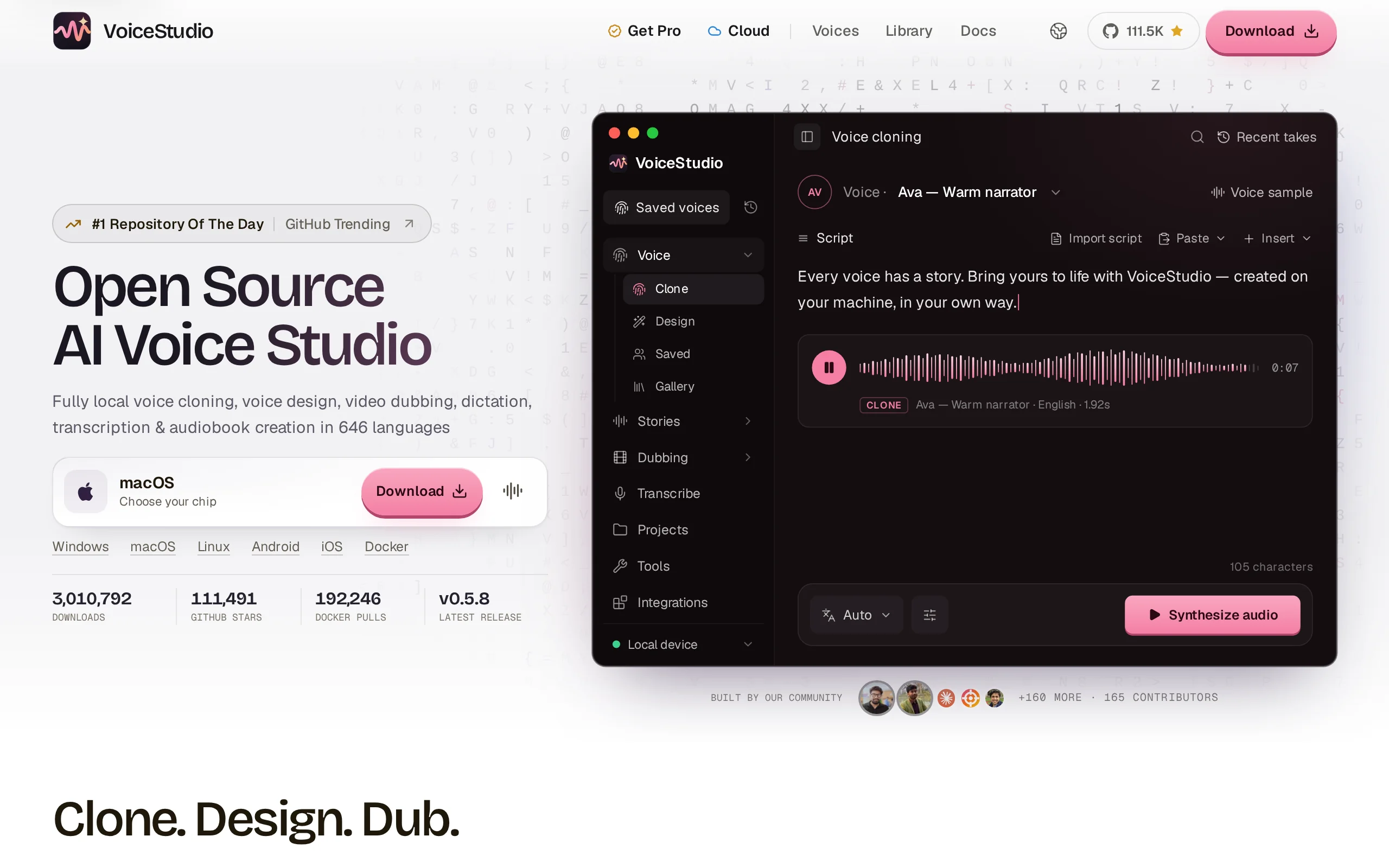
VoiceStudio – Open-Source Local AI Voice Studio, Generating Voice from Text Descriptions
VoiceStudio is an open-source, fully local AI voice studio that integrates multiple capabilities—such as voice cloning, sound design, video dubbing, speech-to-text transcription, and batch generation ...
© All Rights Reserved. Some content on this site is partially generated by AI with human review.