
GPT-Live-1.1 Review: In-Depth Analysis of OpenAI's New Full-Duplex Voice Model
Executive Summary:
GPT-Live-1.1 is a new voice model for ChatGPT introduced by OpenAI in 2025, succeeding the previous generation GPT-Live-1 as the "front-end engine" for voice interaction. It also introduces the lightw...
1. What is GPT-Live-1.1
GPT-Live-1.1 is a new voice model for ChatGPT introduced by OpenAI in 2025, succeeding the previous generation GPT-Live-1 as the "front-end engine" for voice interaction. It also introduces the lightweight version GPT-Live-1.1 Quip to replace the original mini version. This model continues the classic full-duplex interaction architecture, allowing the model to continuously capture voice streams without waiting for the user to finish speaking. It can real-time detect pauses, interruptions, and changes in speaking rate, dynamically determining the response timing. It supports users to interject or change the direction of their questions at any time, making the conversation rhythm closer to human interaction. In handling complex tasks, GPT-Live-1.1 forwards requests requiring search or deep reasoning to backend models (such as GPT-5.6/Astra) for processing, and then returns the results in audio form, achieving a collaborative division of labor between the front-end interaction and the backend reasoning.
Technical positioning and domain: Belongs to the voice interaction models in the field of natural language processing, focusing on real-time voice conversation scenarios. It serves as the voice interaction entry point in OpenAI's product ecosystem, differing from text-based dialogue models by focusing on optimizing the real-time performance, naturalness, and multilingual support of voice interactions.
Development background: Developed by the OpenAI team, this model is an iteration based on the practical deployment feedback of the previous GPT-Live-1. The motivation for development was to address issues such as rigid accents in multilingual scenarios, lack of feedback during the search process, and mechanical interaction rhythms. The goal is to make AI voice conversations more natural and rhythmic in terms of listening experience and interaction flow.
Core value: This model addresses the two major shortcomings of the previous generation in terms of naturalness of multilingual accents and the waiting experience during interaction. It adds six new language voices and optimizes accent performance, while replacing the monotonous "checking…" prompts with a variety of search prompts, eliminating user anxiety during silent waits and significantly improving the completeness and comfort of voice interaction.
Technical features: The core advantage lies in the combination of the full-duplex voice architecture and the front-end/backend model division mechanism. The voice model focuses on real-time communication, while complex reasoning tasks are handled by the backend model, balancing response speed and processing depth. In terms of security, OpenAI has released an official system card, disclosing specialized security evaluation results for synthetic audio, demonstrating its execution standards for model safety and transparency.
2. Key Features
Multilingual New Voices: Added voice options for six new languages: French, German, Hindi, Japanese, Korean, and Mexican Spanish. The English side has introduced a new voice called Bubbie. Expanding the language coverage directly enhances the usability of voice assistants in non-English markets and reduces the usage barriers for multilingual users.
Accent Naturalness Optimization: The new model significantly improves accent performance in multilingual scenarios, making it much closer to native speakers and greatly reducing the "robotic" tone. This improvement involves fine-tuning in the speech synthesis frontend and prosody modeling layers, rather than simply adding more voice files. The actual listening experience has improved noticeably. Available voices may vary by region and account.
Visualized Feedback During Search: During the search process, the model provides users with a variety of short prompts to indicate the current status, replacing the previously repetitive "checking…". The diverse prompt strategy reduces the sense of repetition, allowing users to clearly perceive that the system is working, and avoiding confusion caused by prolonged silence.
Full-Duplex Conversation Mechanism: The model continuously listens to the user's voice stream and determines the response timing based on pauses, interruptions, and changes in speaking rate. Users can interject, add information, or completely change the direction of the question during a conversation, making the interaction rhythm closer to human conversation. This is also a hallmark technical feature of the GPT-Live series.
Multimodal Collaboration Capabilities: Within the same conversation, voice, text, images, search, memory, and connected applications can be integrated. Voice conversations are no longer limited to single-modal interaction but instead leverage multimodal capabilities to comprehensively address user needs. Complex questions are processed by the backend model and then presented in voice form.
Cross-Product Synchronization Push: The update is synchronized across three products: ChatGPT Voice, Codex, and dots. Plus and higher-tier users will default to the full version of GPT-Live-1.1, while other users will default to the lightweight version, Quip. This single update benefits three types of scenarios: everyday conversations, development collaboration, and resident agents.
3. How to Use
Update the Client: Update the ChatGPT app to the latest version. The application supports web, iOS, and Android clients. To fully utilize the capabilities of GPT-Live-1.1, ensure that the client version matches the server-side model version.
Log in to Your Account: Open ChatGPT (web, iOS, or Android) and log in to your OpenAI account. Plus and Pro subscription users will automatically use the full version of GPT-Live-1.1, while free users will default to the lightweight version, GPT-Live-1.1 Quip. Your account tier determines which model version is available.
Access Voice Settings: Click on 「Settings → Voice」 to enter the voice settings interface. Here, you can view the current available model version and voice options for your account. Voice options may vary by region and account tier, so confirm the actual available choices here.
Select a Voice: Choose your preferred voice from the list. New users can directly find newly added options such as French, German, Hindi, Japanese, Korean, Mexican Spanish, and English Bubbie. The selection takes effect immediately upon switching.
Start a Conversation: Return to the main interface and enter Live mode to begin a voice chat. During the conversation, you can interrupt or change the direction of your questions at any time. The system will adjust its response strategy in real time based on the voice stream.
Use Advanced Features: Within the same conversation, you can integrate search, memory, images, and connected apps. When encountering complex questions that require deeper reasoning, the model will automatically offload the task to the backend model for processing, without the need for users to manually switch modes.
4. Pros and Cons Analysis
| Pros |
|---|
| Multilingual Support Expansion: Added six new languages—French, German, Hindi, Japanese, Korean, and Mexican Spanish—significantly broadening the reach for non-English users. The model's performance across different accents in these languages is closer to native speaker levels. |
| Mature Full-Duplex Interaction: Continuously listens to audio streams and dynamically determines response timing, supporting interruptions, interjections, and topic changes at any moment. The interaction rhythm closely resembles human conversation, maintaining a competitive edge over similar products. |
| Improved Search Feedback Experience: Replaced the monotonous "checking…" message with a variety of short prompts, reducing the anxiety caused by silent waiting periods and significantly enhancing interaction transparency. |
| Cross-Product Ecosystem Integration: Simultaneously rolled out to three products—ChatGPT Voice, Codex, and dots—covering everyday conversations, development collaboration, and resident Agent scenarios, demonstrating strong ecosystem integration capabilities. |
5. Comparative Analysis with Similar Tools
| Comparison Dimension | GPT-Live-1.1 (OpenAI) | Grok Voice 3.0 (xAI) |
|---|---|---|
| Model Positioning | Front-end voice engine for ChatGPT, complex tasks are handled by back-end GPT-5.6/Astra | End-to-end speech-to-speech model, audio in and audio out with no text intermediate step |
| Response Latency | Officially undisclosed specific figures | Average first audio response of 0.81 seconds, officially claimed to be about 40% lower than GPT-Live-1 |
| Multilingual Support | Added 6 new language voices + English Bubbie, emphasizing natural accents | Automatic detection of 20 language regions, 28 built-in voices, supports 120-second sample cloning |
| Backend Model Division | Clear division between front-end voice and back-end inference, complex tasks are automatically distributed | End-to-end processing, no clear front-end/back-end division |
| Commercial Deployment | Targets ChatGPT Plus/Pro subscribers and Codex, dots products | Deployed in Tesla in-car systems and Starlink customer service, processes about 20,000 multilingual calls daily, with approximately 70% requiring no human intervention |
| Security Transparency | Released official system card, disclosing synthetic audio security testing and some fallback mechanisms | No official security system card released, evaluation data mostly based on official statements |
| Ecosystem Integration | Covers conversation, development, and Agent scenarios across ChatGPT, Codex, and dots | Deeply integrated with Tesla in-car systems and Starlink customer service, with clear commercial deployment in industry-specific scenarios |
Selection Recommendations: For general users prioritizing the naturalness of voice interaction and the quality of multilingual accents, GPT-Live-1.1 is the default choice within the ChatGPT ecosystem. Its full-duplex interaction and search feedback optimization make it suitable for daily conversations, information queries, and language learning scenarios, especially for users who have already subscribed to ChatGPT Plus/Pro, as they can access full capabilities without additional costs. If end-to-end speech processing architecture and measured response speed are more important, Grok Voice 3.0's average first audio response time of 0.81 seconds is superior based on publicly available data. Its commercial deployment in Tesla in-car systems and Starlink customer service also provides valuable reference points, making it suitable for deploying voice automation services in industry-specific scenarios.
6. Editor's Summary
The core value of GPT-Live-1.1 in terms of technological innovation lies not in altering the fundamental architecture of speech models, but in systematically refining the details of the interactive experience. The full-duplex speech architecture and the front-end/back-end model division mechanism were already established in the previous generation, GPT-Live-1. This update focuses on three specific dimensions: naturalness optimization for multi-language accents, diversification of feedback strategies during the search process, and synchronized deployment across products (ChatGPT Voice, Codex, dots). This "architecture continuity, experience refinement" iteration strategy reflects the industry trend of transitioning from "functional" to "user-friendly" in the speech interaction domain. The addition of six new language voices provides strong coverage competitiveness, while improvements in accent representation directly enhance the daily usage willingness of non-English speakers.
From a practical value perspective, GPT-Live-1.1 has clear applications in scenarios such as language learning, commuting assistance, development collaboration, and cross-timezone companionship. The naturalness of multi-language accents reduces the language barrier for AI voice assistants, optimized search feedback alleviates anxiety during waiting periods, and cross-product deployment allows the voice capabilities to deliver differentiated value across various product forms. The inclusion of safety evaluations for synthesized audio and the system card release also indicates that OpenAI maintains transparency in managing safety risks associated with speech synthesis.
In terms of target users, GPT-Live-1.1 primarily serves ChatGPT Plus/Pro subscribers, as well as developers and efficiency tool users who utilize voice interaction through Codex and dots. For free users, Quip Lite offers basic voice conversation capabilities, but full functionality still requires a subscription. Looking ahead, the division of labor between voice interaction and backend inference models is reasonable, and future versions' improvements in localized rollbacks for synthesized audio safety evaluations, expansion of more languages and voices, and disclosure of response latency data are all worth continued attention as evolutionary directions.
7. Application Scenarios
Multilingual Spoken Language Practice: Utilize the newly added natural accents in French, German, Hindi, Japanese, Korean, and Mexican Spanish to simulate real native conversation environments. Language learners can practice listening and pronunciation during dialogues, with full-duplex interaction allowing for interruptions and corrections at any time, making it closer to real-world practice than traditional recording and reading methods.
Voice Assistant for Commuting: Hands-free operation throughout the commute, allowing users to query routes, weather, news, and more via voice. The search process includes voice prompts to indicate progress, preventing long periods of silence. Users can interject at any time to change the query direction, reducing the risk of driver distraction.
Codex Development Collaboration: Developers can issue coding tasks, inquire about progress, and adjust requirements using voice commands, achieving a "talk, not type" programming workflow. The integration of voice interaction with the coding environment reduces instruction input time, making it ideal for multitasking scenarios.
Cross-Timezone Companionship and Consultation: dots' resident Agent combined with live voice capabilities offers long-term memory companionship, reminders, or light psychological consultation-style conversations. Voice interaction is warmer than text-based dialogue, making it suitable for remote scenarios requiring emotional support.
Multilingual Family Services for Multiple Members: Switch between different language voices on the same device to serve foreign language speakers, the elderly, and children in the household. Lowering the operational barrier, allowing family members unfamiliar with text input to complete information queries and device control through voice.
8. FAQ
Q: What is the difference between GPT-Live-1.1 and GPT-Live-1.1 Quip?
A: GPT-Live-1.1 is the full version of the voice model, which is used by default by users with a Plus or higher subscription and includes all features. Quip is the lightweight version, used by default for free users, with some simplifications in the number of voices and certain advanced features, but it retains the core full-duplex conversation capability.
Q: What hardware requirements are needed to use GPT-Live-1.1?
A: GPT-Live-1.1 is a cloud-based model, with inference performed on OpenAI's servers. Users do not need high-performance hardware on the client side. You only need a device capable of running the latest version of the ChatGPT app (web browser, iOS, or Android device) and ensure a stable internet connection.
Q: Are the six new language voices available to all users?
A: The specific available voices depend on the region and account level. Some of the newly added voices may be available only to Plus/Pro subscribers, while free users have a more limited range of available voices. It is recommended to check the actual list of available voices in the 「Settings → Voice」 interface.
Q: How does GPT-Live-1.1 handle complex questions?
A: The Live model handles the "front-end" part of real-time communication. When encountering complex questions that require searching or in-depth reasoning, it forwards the task to a backend model (such as GPT-5.6/Astra) for processing, then brings the results back into the voice conversation. This division of labor has existed since the GPT-Live-1 era, and version 1.1 mainly optimizes the voice prompting strategy during the search process.
Q: What do the official synthetic audio safety test results mean?
A: OpenAI disclosed specialized safety tests for synthetic audio in the system card, evaluating dimensions such as sexual content, mental health, emotional dependency, and violent content. The results show that GPT-Live-1.1 is comparable to the previous generation overall, but there was a statistically significant decline in some categories during the most challenging synthetic audio tests. OpenAI has stated that improvements will be made in future versions, and users should be mindful of the associated risks when using the model.
9. Project Links
- ChatGPT Official Website (Product Entry): https://chatgpt.com/
- OpenAI Official Website (GPT-5 Product Page): https://openai.com/gpt-5/
- OpenAI Official Website (GPT-4 Technical Report): https://openai.com/index/gpt-4/
- OpenAI GitHub Organization: https://github.com/openai/
Related
FLUX 3 Max – In-Depth Review of the Video Generation Model from fal and Black Forest Labs
FLUX 3 Max is a post-training video generation model jointly developed by fal Research and Black Forest Labs, based on BFL's self-developed FLUX 3 multimodal foundation model. It supports three workfl...
MiDashengLM-Spatial – Xiaomi's Open-Source Spatial Audio Understanding Large Model
MiDashengLM-Spatial is an open-source spatial audio understanding large model developed by Xiaomi's Dasheng team. It is the first industry-leading end-to-end model that unifies general audio understan...
Muse Spark Open – In-Depth Review of Meta's Open-Source Multimodal Large Model
Muse Spark Open is Meta's latest open-source multimodal large model, built using a sparse Mixture-of-Experts (MoE) architecture. It has a total parameter count of 816 billion, with only 420 billion pa...
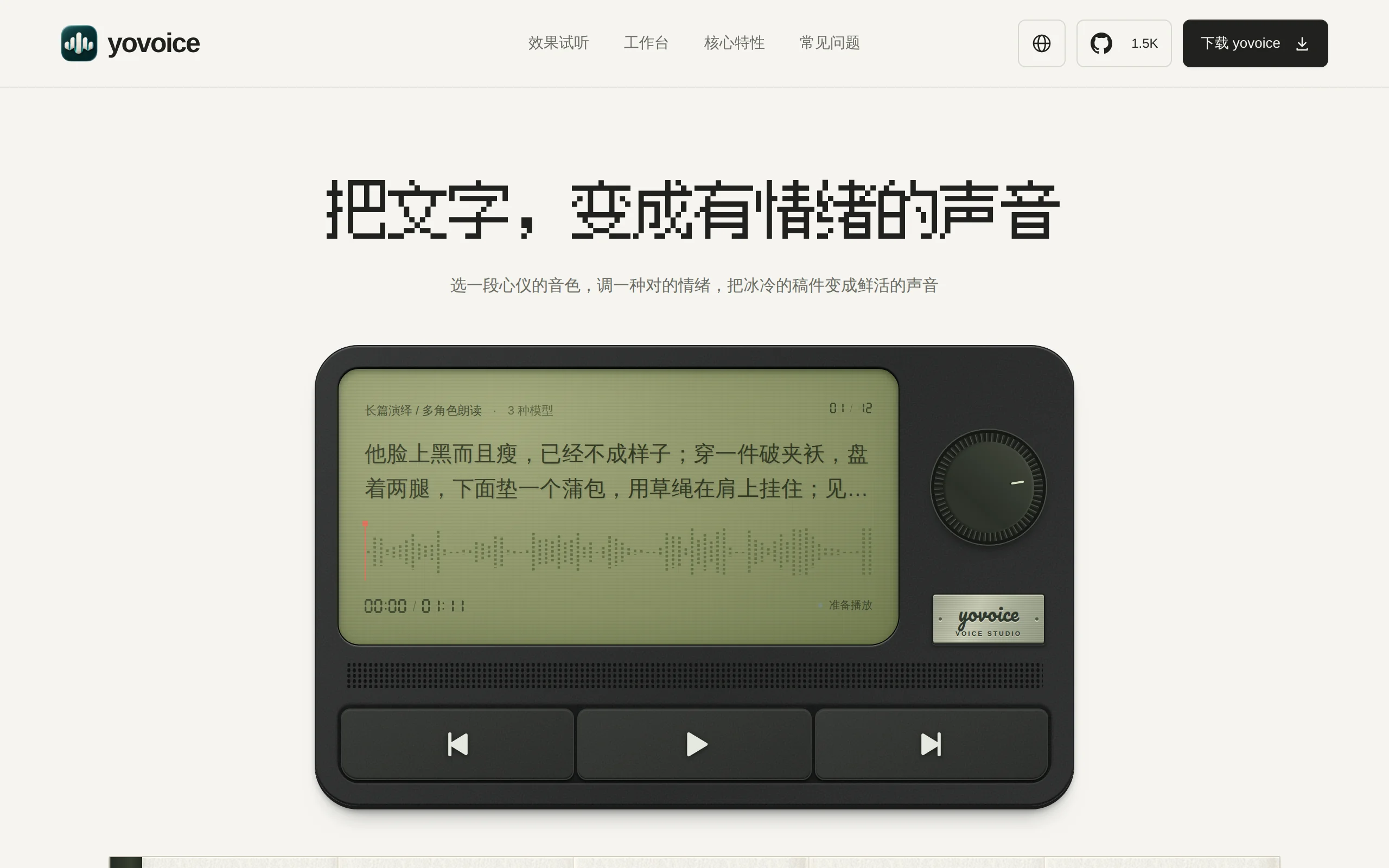
YoVoice – Open-Source Local Audio Creation Tool Covering the Full Workflow from Text-to-Speech to Music Composition
YoVoice is an open-source local audio creation tool designed for macOS and Windows platforms, developed by leemysw. It provides users with a complete creation workflow, ranging from text-to-speech (TT...
© All Rights Reserved. Some content on this site is partially generated by AI with human review.