
Hy Realtime – In-depth Evaluation of Tencent HunYuan's Real-time Speech Model
Executive Summary:
Hy Realtime is a real-time speech model launched by Tencent HunYuan, deeply optimized for real-world conversation scenarios. It accurately reconstructs natural spoken phenomena such as ambiguous expre...
1. What is Hy Realtime
Hy Realtime is a real-time speech model launched by Tencent HunYuan, deeply optimized for real-world conversation scenarios. It accurately reconstructs natural spoken phenomena such as ambiguous expressions, incomplete utterances, and mid-sentence corrections, maintaining stable context understanding and instruction-following capabilities in multi-turn, long conversations. The model has achieved systematic upgrades in audio quality, prosody, and emotional expression, supporting empathetic communication and enabling autonomous decisions on whether to perform internet searches or call tools based on the intent of the conversation. Notably, Hy Realtime has established a deep collaboration with Tencent Music Lingyin, offering unique capabilities to select and perform songs based on dimensions such as artist, genre, language, and year. Currently, the model has been deployed in Yuanbao voice calls and Tencent customer service scenarios, and it is planned to open API services through Tencent Cloud.
Technical Positioning and Domain: Hy Realtime belongs to the real-time speech model (Realtime Speech Model) category, situated at the intersection of speech recognition, natural language understanding, and speech synthesis. Its core innovation lies in unifying speech understanding and generation capabilities at the model level, rather than using the traditional cascaded pipeline architecture. In terms of the technical ecosystem, this model directly competes with OpenAI's GPT-Realtime series, positioning itself as a high-quality speech interaction solution for real-world conversation scenarios in the Chinese environment.
Development Background: This model was developed by the Tencent HunYuan large model team, leveraging Tencent's extensive real-world conversation data accumulated from social, gaming, and cloud computing domains, as well as its long-term technical expertise in speech technology. Previously, the HunYuan team had already laid out in the field of multimodal large models, and the release of Hy Realtime represents a significant technical extension in the vertical direction of speech interaction. Its training system includes multiple stages such as pre-training, supervised fine-tuning, multi-phase optimization (MOPD), and reinforcement learning (RL), and employs a dual-track reward mechanism to balance intelligence and expression quality.
Core Value: Hy Realtime addresses the core pain points of traditional voice assistants in real-world conversation scenarios, such as "not hearing clearly, not understanding, and not answering well," especially in handling common spoken phenomena like ambiguity, omission, and mid-sentence corrections. This significantly enhances the naturalness and reliability of speech interaction. At the same time, its tool calling and internet search capabilities elevate voice assistants from simple Q&A tools to intelligent agents capable of executing tasks, while its unique song selection and singing functionality opens up new application scenarios for speech interaction in music and entertainment.
2. Key Features
Real-time Speech Understanding: This is the core differentiating capability of Hy Realtime. The model can integrate contextual information to effectively reconstruct incomplete expressions such as unclear pronunciations, truncated speech, or mid-sentence corrections during a call. Even in high-noise, real-world call environments with varying conditions, it maintains stable speech recognition and semantic understanding accuracy, addressing the performance degradation issue traditional speech models face under non-ideal acoustic conditions.
Multi-turn Instruction-following: The model has enhanced context management capabilities, allowing it to continuously track the conversation state and user intent in long dialogues. It can accurately execute complex, continuous, or nested multi-turn instructions. This ability is crucial for scenarios such as customer service conversations and task-oriented interactions that require multiple steps, preventing common issues like "forgetting" or "semantic drift" in extended dialogues.
Human-like Spoken Expression: On the speech synthesis side, Hy Realtime has achieved a systematic upgrade across four dimensions: sound quality, pronunciation, prosody, and emotion. The generated speech includes natural tone variations, can demonstrate emotional progression within a conversation, and can even show empathetic responses based on the content of the dialogue. This makes machine speech less mechanical and more aligned with human conversational rhythm and emotional expression.
Agentic Tool Calling: The model has autonomous decision-making capabilities for tool calling, allowing it to determine whether to perform an internet search based on the conversation context and user intent. It completes the full closed-loop of "decision-making—retrieval—answer generation" within the same inference framework. This capability enables Hy Realtime to go beyond a closed QA system, giving it the characteristics of an intelligent agent capable of actively acquiring external information and integrating it to generate responses.
Singing and Song Requesting Capabilities: Through deep collaboration with Tencent Music's Lingyin, Hy Realtime supports song requests based on combinations of criteria such as artist, genre, language, year, and popularity. It can also perform the selected songs. More importantly, the model can maintain conversation context and, in continuous dialogues, continue selecting and singing songs based on the user's subsequent instructions, forming a complete music interaction experience chain.
Low-latency Streaming Generation: The model employs a technical approach that jointly models text and speech, synthesizing corresponding speech while generating text in parallel. It does not require waiting for the full text to be generated before proceeding to the speech synthesis stage, significantly reducing the first-response latency. This design is critical for real-time call experiences and directly affects user perception of waiting time and conversation smoothness.
Productization and Implementation Capabilities: Hy Realtime has successfully transitioned from model capabilities to productized services. It is currently integrated into two major real-world business scenarios: Yuanbao Voice Calls and Tencent Customer Service. Users can directly experience these features through the product interface. This rapid engineering implementation validates the model's stability and usability in real production environments and lays the groundwork for future API services offered through Tencent Cloud.
3. Application Scenarios
Smart Customer Service and After-sales Support: In customer service call scenarios, users often express themselves with emotional fluctuations, heavy use of colloquial language, and fragmented information. Hy Realtime can effectively identify ambiguous and hesitant expressions, and provide natural responses by retrieving the latest information from the internet, significantly enhancing the human-machine interaction experience and problem-solving efficiency of customer service chatbots.
Personal Voice Assistant and Companionship: For companionship scenarios requiring long, continuous conversations, Hy Realtime's long dialogue context management capability supports in-depth multi-turn exchanges. Combined with its human-like emotional expression and empathy, it is well-suited for serving as a comprehensive voice assistant for tasks such as schedule management, life-related Q&A, and emotional companionship.
In-vehicle and Smart Hardware Interaction: The in-vehicle environment includes complex noises such as wind noise, engine sounds, and music. Users often issue requests using short, imperative spoken commands. Hy Realtime's stable recognition capability in noisy environments and its low-latency response speed enable in-vehicle voice assistants to perform navigation, communication, and entertainment control operations with minimal driver distraction.
Education and Spoken Language Practice: Language learning scenarios require models to have error-correction capabilities, multi-turn conversation capabilities, and emotional perception capabilities. Hy Realtime can maintain consistent understanding during extended conversations, provide feedback on pronunciation and expression, and adjust its interaction tone based on the learner's emotional state, making it suitable for creating an immersive spoken language practice environment.
Music and Entertainment Interaction: Through its deep collaboration with Tencent Music Lingyun, Hy Realtime has a unique advantage in voice entertainment scenarios. Users can directly request songs using natural language, and the model can retrieve and perform songs on-site based on conditions such as genre, language, and release year. This is applicable to use cases such as smart speakers, live streaming interactions, and voice entertainment communities.
4. How to Use
Hunyuan App Experience Entry: Users need to download the Hunyuan App on their mobile devices and update it to the latest version. After opening the app, click on the phone icon in the top-right corner to enter the voice call interface, which is the most direct way to experience the full capabilities of Hy Realtime.
Switch to Target Voice: Once in the voice call interface, open the voice setting in the "Free Conversation" scenario and switch the current voice to "Chuyu." This voice is specifically designed for Hy Realtime. If not switched, the default voice model will be used for interaction.
Start Natural Conversation: After completing the setup, users can converse naturally with the model. There is no need to deliberately slow down speech or simplify sentence structures; users can speak in a natural, conversational manner, including using colloquial expressions or incomplete sentences. The model will automatically complete the sentences and understand the intent based on the context.
Experience Song Requests and Tool Calling: To test the song request capability, users can directly state requests with conditions, such as "Play an English folk song from 2010 to 2020." The model will automatically parse the conditions and perform the search. Similarly, conversations involving the latest information or factual questions will automatically trigger internet searches and tool calling processes, without requiring users to manually enable any switches.
Web-based Experience Method: Users can also access the web Demo at https://rtcube.cloud.tencent.com/component/hunyuan/index.html to experience some of Hy Realtime's capabilities. The web version is suitable for quick functional verification, but the range of features may differ from the Hunyuan App.
Developer Integration Method: For enterprise developers, Tencent Cloud API integration is currently under planning. At present, users can experience and evaluate the features within the Hunyuan App. The official release time and specific integration guidelines for the formal API service will be announced by Tencent Cloud.
5. Pros and Cons Analysis
| Pros |
|---|
| Outstanding real-world spoken language understanding: Specifically optimized for non-ideal speech inputs such as ambiguous speech, incomplete utterances, and mid-sentence corrections. It maintains stable recognition performance even in real-world noisy call environments, significantly surpassing the spoken language tolerance of traditional cascaded speech models. |
| Systematic training framework: Utilizes a multi-stage training strategy (CT/SFT/MOPD/RL) and a dual-track reward mechanism, balancing logical reasoning capabilities with natural expression, avoiding the one-sided imbalance of traditional speech models that prioritize either expression or understanding. |
| Cross-modal alignment reduces capability degradation: Cross-modal alignment between text and speech is conducted during pre-training and post-training stages, minimizing the dilution of the model's knowledge base and logical reasoning abilities during conversational expression, overcoming the downward effect of the speech modality on the model's intelligence level. |
| Low-latency streaming architecture provides a good experience: The co-modeling design of text and speech significantly reduces first-response latency, making the conversation waiting feel close to human interaction levels, providing a solid foundation for real-time speech interaction experiences. |
6. Comparative Analysis with Similar Tools
| Comparison Dimension | Hy Realtime | GPT-Realtime-2.1 | Gemini 2.0 Flash Live |
|---|---|---|---|
| Product Positioning | Tencent Hunyuan Realtime Speech Model, focusing on Chinese scenario understanding, expression, and entertainment | OpenAI Realtime Speech Agent, targeting global speech agents and phone access | Google multimodal real-time interaction solution, covering text, audio, and visual |
| Spoken Expression | Emphasizes the restoration of ambiguous speech, truncated sentences, and hesitations, with natural prosody and emotion | Emphasizes low-latency natural conversation and interruption cancellation, with Chinese speech optimization not disclosed | Multimodal fusion expression, relatively natural, with Chinese performance to be tested |
| Tool Calling | Determines whether to search online based on context, uniformly completing decision-making + generation | General function calling and MCP tool integration | Supports Google ecosystem services and third-party tool calling |
| Special Features | Supports song selection and singing based on singer, style, language, and year | Tends toward general real-time speech agent, no similar song selection functionality disclosed | Multimodal real-time perception, capable of understanding visual and audio inputs simultaneously |
| Integration Method | Already launched with Yuanbao and Tencent Customer Service, Tencent Cloud API will be open soon | Multi-protocol integration with WebRTC/WebSocket/SIP | Accessible via Google AI Studio and Cloud API |
| Open Source License | Closed-source commercial model, cloud API access (pending release) | Closed-source commercial model, billed by usage | Closed-source commercial model, billed by token/time |
| Ecosystem Advantages | Tencent Music content library + Yuanbao + Tencent Cloud ecosystem | OpenAI developer ecosystem and global community | Integration with Google services such as search and maps |
Selection Recommendations: For real-world Chinese voice call scenarios, especially for businesses requiring complex spoken expression understanding and emotional changes (such as call centers, voice companions, and in-car interaction), Hy Realtime is a more targeted choice. Its tolerance for ambiguous spoken expressions and natural Chinese prosody are key advantages. If the business involves entertainment features such as music playback, the support from the Tencent ecosystem will be a clear advantage.
For enterprises with global deployment needs or requiring deep integration with complex toolchains, GPT-Realtime-2.1's open protocols and mature developer ecosystem are more appealing. For interactive scenarios requiring multimodal perception (simultaneous processing of visual and voice inputs), Gemini 2.0 Flash Live offers broader capability coverage. Overall, the specific selection should be based on a weighted evaluation of three dimensions: the language distribution of target users, dialogue complexity, and ecosystem dependency.
7. Editor's Summary
Hy Realtime demonstrates the clear technical direction of Tencent HunYuan's team in the field of voice interaction: rather than being a generic follower of voice assistants, they are deeply focusing on the high-value, high-difficulty vertical scenario of "real conversations." The innovation of this model can be understood from three levels. First, at the model architecture level, the collaborative modeling approach between text and speech breaks away from the traditional cascaded framework of recognition-understanding-synthesis, addressing from the ground up the long-standing issues of latency in voice interaction and the loss of spoken information. Second, at the training system level, the multi-stage strategy of CT/SFT/MOPD/RL and the dual-track reward mechanism indicate that the team recognizes that the intelligence level of voice models is not simply transferred from text models, but requires specialized data and training strategies to maintain. This understanding places them at the forefront of the industry. Third, at the scene understanding level, the dedicated optimization for real spoken phenomena such as ambiguity, backtracking, and truncated speech reflects the team's deep insight into user pain points, rather than merely focusing on optimizing technical metrics.
In terms of practical value, Hy Realtime has already made the leap from technical validation to commercial deployment. Its integration with Yuanbao Voice Calls and Tencent Customer Service proves its usability in production environments, while its collaboration with LingYin from Tencent Music provides a reference model for entertainment-oriented voice applications. The model has clear application paths in scenarios such as intelligent customer service, in-vehicle interaction, educational coaching, and voice entertainment. Particularly in the Chinese context, the combination of "understanding emotions" and "singing" builds a differentiated competitive advantage.
This model is most suitable for three types of users: enterprise developers who need to build Chinese customer service voice robots, internet product teams looking for voice companionship capabilities, and researchers who are interested in the evolution of voice interaction technology. For developers, in the short term, attention should be paid to the progress of Tencent Cloud API openness; in the long term, the real-time voice agent direction represented by Hy Realtime will drive human-machine voice interaction from command-based to conversational, and from functional to emotional. Key areas to watch in the future include: the scalability of the context window, the progress of cross-lingual expansion, and the development of the developer ecosystem after API openness.
8. FAQ
Q: What is the fundamental difference between Hy Realtime and traditional speech recognition + large model + speech synthesis solutions?
A: Traditional solutions use a cascaded architecture, where speech is first converted to text, then the large model generates a response, and finally the text is synthesized into speech. Each step introduces latency and information loss, with paralinguistic information such as tone, pauses, and emotional cues being lost during the transcription phase. Hy Realtime employs a collaborative modeling approach between text and speech, performing cross-modal semantic understanding and expression generation internally within the model. This not only reduces first-response latency but also directly utilizes prosodic and emotional information from the speech layer during the understanding phase, minimizing performance degradation caused by colloquial expressions.
Q: Does performance significantly degrade in noisy environments?
A: According to official information, Hy Realtime has been specifically optimized for noisy and variable communication environments, and it exhibits strong error tolerance for ambiguous pronunciations and partially occluded speech inputs. However, the exact range of applicable signal-to-noise ratios and specific noise reduction performance metrics have not yet been officially disclosed. It is recommended to verify the actual performance in real voice communication scenarios within the Yuanbao App.
Q: How can I experience all the full features of Hy Realtime?
A: The best way to experience all the full features is to download the latest version of the Yuanbao App, click on the phone icon in the top-right corner to enter voice calls, and switch the voice style to "Chuyu" in the "Free Conversation" scenario. This will allow you to use all capabilities, including voice conversation, internet search, tool calling, and song requests. A web demo is available at https://rtcube.cloud.tencent.com/component/hunyuan/index.html, but it may not cover all the features available on the app side.
Q: What types of songs does the song request feature support? Does it include non-Chinese songs?
A: Hy Realtime supports song requests based on dimensions such as artist, genre, language, year, and popularity, meaning that in theory, it can cover songs in different languages and from various eras. The song content comes from Tencent Music's Lingyin copyright library, and the actual coverage is subject to licensing restrictions. Please refer to the actual search results for the specific range of songs available. However, as a whole, the music library is among the leading ones in China.
Q: When will developers be able to access Hy Realtime via API?
A: Tencent has stated that Hy Realtime will be made available through Tencent Cloud's API service. However, the exact release date, pricing strategy, and API usage specifications have not yet been officially announced. It is recommended to follow Tencent Cloud's official website and Tencent Hunyuan's official channels for the latest updates on API access and documentation.
Q: Does the model support conversations in English or other foreign languages?
A: This model has been specifically optimized for Chinese and bilingual Chinese-English scenarios, and it demonstrates good understanding of real-world spoken expressions that mix Chinese and English. However, there is currently no official evaluation data available regarding performance in long conversations in pure English or third-party languages. If you plan to use it in non-Chinese scenarios, it is recommended to first conduct small-scale real-world testing to verify its effectiveness.
9. Project Links
- Tencent Cloud API Integration: Official integration documentation will be released soon. Please visit the Tencent Cloud official website https://cloud.tencent.com/ for updates.
- Hy Realtime Web Demo: [(https://rtcube.cloud.tencent.com/component/hunyuan/index.html)
- Official Page of Tencent Hunyuan Large Model: https://hunyuan.tencent.com/ (Information related to Hy Realtime should be based on official announcements)
Related
Hy4 flash – Tencent HunYuan's High-Cost-Performance Large Model
Hy4 flash is a high-cost-performance large model launched by Tencent HunYuan, which employs a sparse mixture-of-experts (MoE) architecture with a total of 224B parameters and 12B active parameters. It...
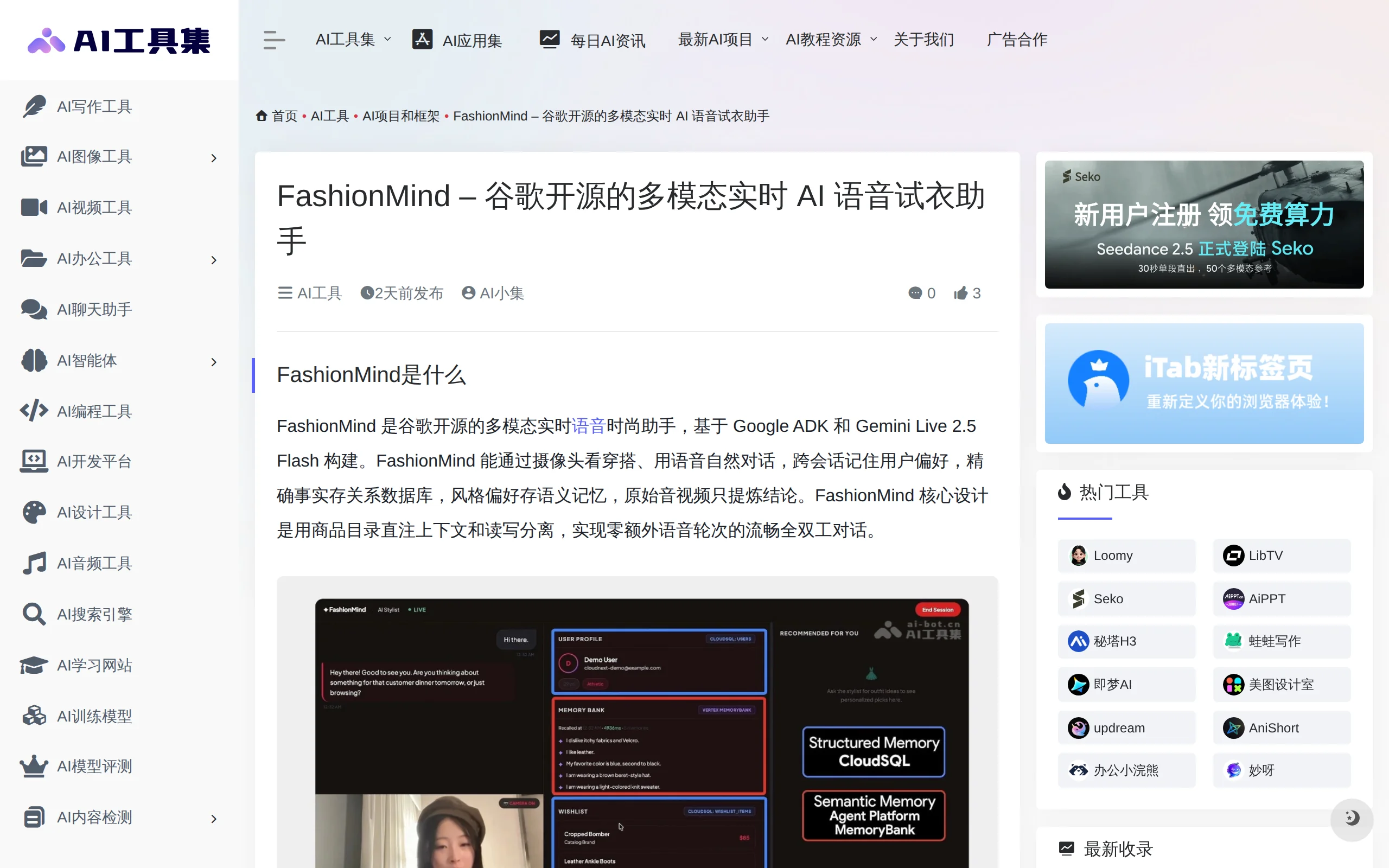
FashionMind – Google's Open-Source Multimodal Real-Time AI Voice-Fashion Assistant
FashionMind is a multmodal real-time voice fashion assistant open-sourced by Google, built on the Google ADK agent framework and the Gemini Live 2.5 Flash model. This project centers on camera-based v...

Duo v1 – Full-duplex Audio-Visual Interaction Model Open-sourced by Ant Group and West Lake Heart
Duo v1 is a full-duplex audio-visual interaction model open-sourced jointly by Ant Group's Technology Research Institute and West Lake Heart. It is also the first complete implementation of a Reciproc...
Aure – DeepL's Speech Translation Model
Aure is DeepL's next-generation speech translation model and serves as the core driving force behind all DeepL Voice products. Unlike traditional speech translation systems, Aure can continuously and ...
© All Rights Reserved. Some content on this site is partially generated by AI with human review.