
Ling-3.2-flash – The Most Native Multimodal Large Model Launched by Ant Bailing
Executive Summary:
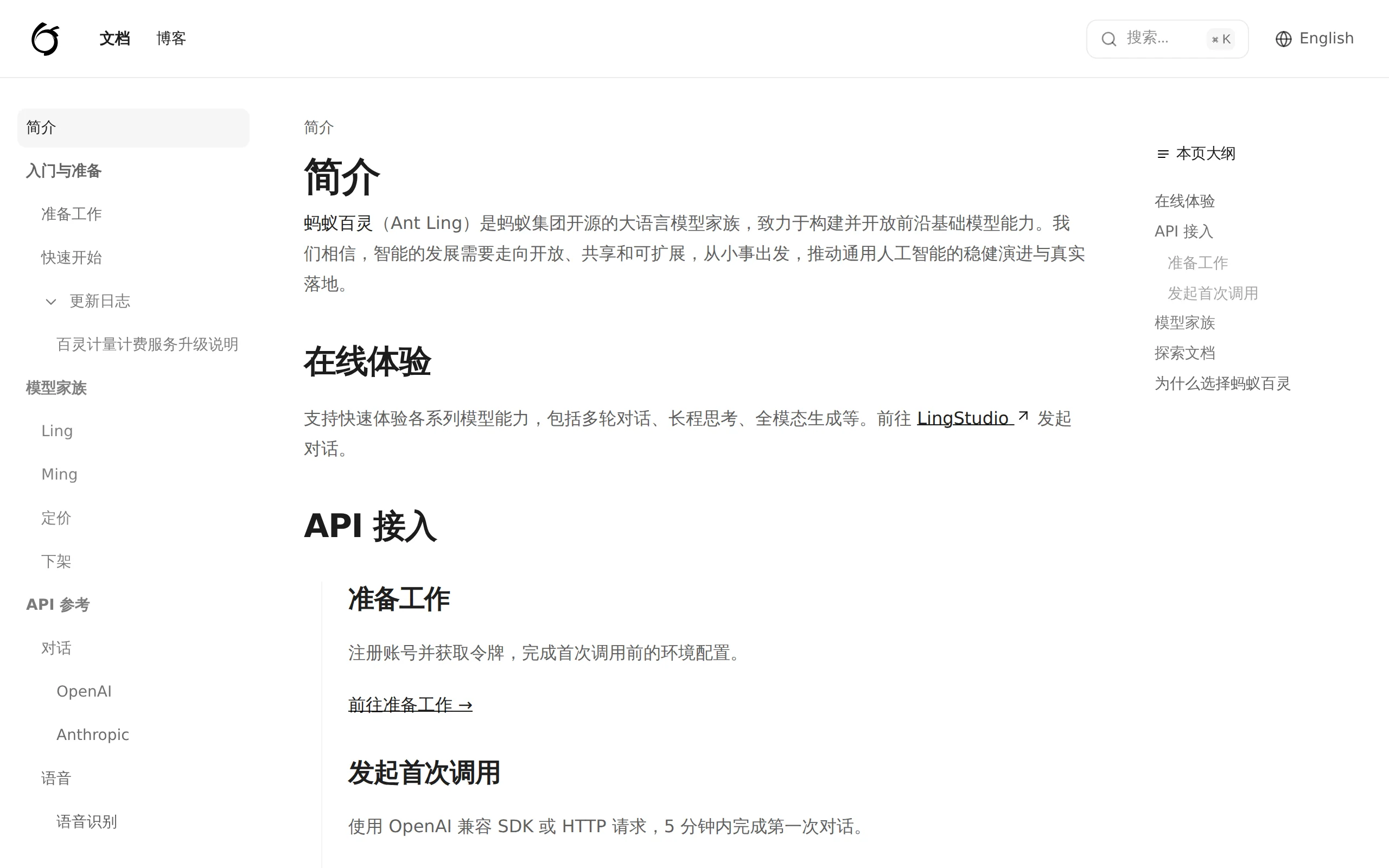
Ling-3.2-flash is the latest native multimodal large model launched by Ant Bailing, employing a Mixture-of-Experts (MoE) architecture. It has a total parameter count of 560B, activating approximately ...
1. What is Ling-3.2-flash
Ling-3.2-flash is the latest native multimodal large model launched by Ant Bailing, employing a Mixture-of-Experts (MoE) architecture. It has a total parameter count of 560B, activating approximately 25B parameters per step, and features a context window of 1M tokens. It natively supports image, text, and video inputs. The model emphasizes four core capabilities: complex visual understanding, long-range multimodal Agent processing, 3D understanding and interaction, and medical multimodal processing. According to official internal testing, it outperforms Claude Opus 5 on three benchmark tasks. This model is positioned for integrated scenarios involving multimodal understanding and intelligent agent execution, aiming to achieve a balance between inference efficiency and model capacity.
Technical Positioning and Domain: Belongs to the field of multimodal large language models (Multimodal LLM), targeting tasks such as visual-language joint understanding, long-context analysis, and autonomous agent execution. It covers multiple types of visual inputs, including images, videos, 3D scenes, and medical imaging.
Development Background: Developed by the Ant Bailing team under Ant Group. The team has accumulated multiple rounds of iterative experience with the Ling series of models, such as the visual feedback loop mechanism introduced in Ling-3.0-flash-VL. This generation of the model further strengthens native multimodal integration and long-context modeling capabilities at the architectural level, reflecting Ant Group's ongoing investment in foundational model research.
Core Value: Addresses two major pain points in traditional multimodal systems: insufficient cross-modal understanding depth and long-sequence information degradation. The model provides 1M context, native visual input support, and autonomous execution capabilities within a single framework, reducing the complexity of integration and deployment for multimodal applications.
Technical Features: A capacity-overhead balanced design under the MoE architecture with 560B total parameters and 25B activated per step; continues to use the KDA mechanism introduced in the Ling 3.0 series to enhance long-sequence memory updates and information retention; maintains the "observe → act → verify → correct" visual feedback loop, integrating perception, reasoning, and execution into a unified process.
2. Key Features
Complex Visual Understanding: The model can deeply analyze image and video content, including object recognition, scene understanding, action judgment, and visual reasoning. It is applicable to tasks such as visual question answering, image analysis, and video content summarization, demonstrating strong capabilities in scenarios requiring precise visual judgment.
Multimodal Long-Range Agent: Designed for multi-step tasks, the model maintains consistent goal alignment throughout the execution process, making decisions by integrating visual and textual information. It dynamically adjusts the execution path based on intermediate results, making it suitable for complex Agent workflows such as web operations, interface interactions, and tool calling.
3D Understanding and Interaction: The model can parse the structure and spatial relationships of 3D scenes, supporting multiple types of 3D data inputs such as point clouds and depth maps. This provides a foundational understanding for tasks like 3D scene reconstruction, spatial cognition, and 3D interaction, extending the capabilities of traditional multimodal models.
Medical Multimodal Capabilities: Covers medical image understanding and interpretation of imaging reports, enabling structured analysis of imaging content such as CT, MRI, and X-ray. This capability supports medical diagnostic assistance scenarios, giving the model practical application value in specialized domains.
1M Context Handling: Supports a long context window of up to 1 million tokens, enabling comprehensive understanding and analysis of long documents or videos. Combined with the KDA mechanism, the model can stably retrieve target information located at the beginning, middle, or end of the context sequence, with good control over information decay.
Native Multimodal Architecture: Unlike technical approaches that attach visual modules externally, this model natively integrates visual and linguistic capabilities at the architectural level. Images, text, and videos serve as fundamental inputs for inference and participate in computations, achieving deeper cross-modal semantic alignment.
Efficient Inference Scheduling: Based on the MoE expert routing mechanism, only approximately 25B parameters are activated per token, significantly reducing computational overhead per step while retaining a 560B model capacity. Inference latency and resource consumption are within acceptable ranges, making it suitable for service-oriented deployment.
API Protocol Compatibility: The model interface is compatible with the two mainstream protocols from OpenAI and Anthropic. Developers can use familiar SDKs to integrate the model into existing code projects, reducing migration costs.
3. Application Scenarios
Enterprise-Level Visual Analysis Platform: In scenarios such as security surveillance, content moderation, and industrial quality inspection, the model can perform real-time understanding and anomaly detection on image and video streams. Its native visual capabilities support zero-shot or few-shot transfer to specific business domains, shortening the scenario adaptation cycle.
Multimodal Intelligent Agent Applications: For scenarios such as automated office work, data organization, and customer service, the model can autonomously switch operations between multiple tools or interfaces based on user instructions and continuously adjust its execution path according to visual feedback. It is well-suited for delivering end-to-end digital employee applications.
3D Scene Interaction Systems: In fields such as architecture, urban planning, and game development, the model can analyze the spatial composition of 3D scenes and assist with tasks such as scene annotation, spatial question answering, and interactive control. Developers can build applications for 3D content based on this capability.
Medical Imaging Auxiliary Analysis: In radiology or auxiliary diagnostic workflows, the model can perform preliminary analysis of medical images and generate structured report summaries, helping doctors quickly identify suspicious areas. It is suitable as a pre-analysis component in the imaging review workflow.
Long Document and Long Video Analysis: With a 1M context window, the model can process hundreds of pages of technical documents or several hours of long video content in one go, extracting key information, generating summaries, and answering detailed questions. It is applicable to scenarios such as contract review, academic research, and video content management.
4. How to Use
Access the Platform: Visit the Ant Lingma official website and navigate to the conversation page for Ling-3.2-flash to experience it directly online. The platform provides a Web-based interface, ideal for quickly verifying model capabilities.
Obtain an API Key: After registering an account on the platform console, create an API key. This key serves as the identity credential for subsequent API calls and should be kept secure, avoiding exposure in public code.
Initiate a Call: The model is compatible with both OpenAI and Anthropic protocols, allowing requests to be made using either style. Using the OpenAI protocol as an example, point the base_url to the Ant Lingma API endpoint and input the model name "Ling-3.2-flash" to initiate a conversation request. Alternatively, you can use the official SDK or a general HTTP client to encapsulate the calls yourself.
Utilize the Free Trial: For the first two weeks after the model's release, a limited free usage quota is available. It is recommended to complete feature verification, stress testing, and effectiveness evaluation within this free period. Based on the test results and your specific business needs, decide whether to transition to a paid usage plan.
Explore Advanced Capabilities: For advanced usage, try inputting long contexts of up to 1M tokens (e.g., submitting long documents or video clips), as well as multimodal inputs such as images and videos (passing parameters via Base64 encoding or file URLs). You can also attempt Agent-style tasks involving multiple modalities by combining with the tool calling interface. It is recommended to start with the official example code and gradually expand from there.
Notes and Best Practices: When using multimodal inputs, be mindful of controlling image resolution and video slice length to reduce transmission and computational overhead. In long context scenarios, it is advisable to distribute key information evenly across the input sequence rather than concentrating it at the end. For Agent tasks, clearly define the objective, constraints, and validation criteria in the prompt, and iteratively refine based on the returned results.
5. Pros and Cons Analysis
| Pros |
|---|
| Native Multimodal Architecture: Natively integrates image, text, and video at the lower level without relying on external visual modules, achieving more thorough cross-modal semantic alignment and deeper visual reasoning capabilities compared to shallow multimodal approaches. |
| Balanced Capacity and Overhead: The MoE architecture retains a total parameter capacity of 560B while activating only about 25B per step, balancing model capability with inference efficiency and keeping long-term service costs relatively under control. |
| 1M Long Context: Combines the KDA mechanism to enhance long-sequence memory retention, enabling processing of long documents and videos, and mitigating the issue of information recall degradation in ultra-long inputs. |
| Four Specialized Capabilities: Specifically enhanced for visual understanding, long-range Agent tasks, 3D interaction, and medical multimodal applications, covering multiple high-value vertical domains with clear differentiation and unique features. |
| Competitive API Pricing: According to media reports, the price is approximately 2 yuan for input and 6 yuan for output per million tokens, offering a price advantage compared to models of similar scale and reducing the barrier to entry for users. |
6. Comparative Analysis with Similar Tools
| Dimension | Ling-3.2-flash | Tencent HunYuan Hy4 | Claude Opus 5 |
|---|---|---|---|
| Core Architecture | MoE, 560B total parameters / 25B activated | Scalable MoE, 770B total parameters / 49B activated | Closed-source commercial model, architecture details not disclosed |
| Context Window | 1M | 1M | Approximately 200K (based on public information) |
| Multimodal Capabilities | Native support for images, text, and video, with additional 3D and medical specializations | First introduction of visual and computer operation capabilities | Supports image input, with strong visual reasoning capabilities |
| API Pricing | Input approximately 2 RMB / output approximately 6 RMB per million tokens (media-reported figures) | Input 6 RMB / output 18 RMB per million tokens | Pay-as-you-go, relatively high pricing (approximately 5/25 USD per million tokens based on public information) |
| Openness | Only API is open, no mention of open-source weights | Apache 2.0 open-source preview, full version planned to open-source weights | Closed-source, only API access |
| Key Selling Points | Four specialized capabilities in vision, Agent, 3D, and medical fields plus low cost | Joint development with IEG for game development and open-source first in financial testing | Strong overall text and visual reasoning capabilities, mature ecosystem |
Selection Recommendations: If you need to support multimodal understanding, long context, and low cost, and plan to use it via API services, Ling-3.2-flash offers high cost-effectiveness under the current pricing model, making it suitable for medium to large-scale business scenarios where cost is a key concern. If open-source control and local deployment capabilities are important, Tencent HunYuan Hy4's Apache 2.0 licensing strategy is more appealing, especially for teams with private deployment needs or those wishing to perform secondary development based on open-source weights.
For users who have already deeply integrated with the OpenAI or Anthropic ecosystems, Ling-3.2-flash's protocol compatibility reduces migration costs and allows for quick replacement and testing within existing code frameworks. Users seeking the ultimate in general-purpose capabilities may continue to use Claude Opus 5 or Gemini 2.5 Pro, both of which have demonstrated strong overall performance in long-text and visual tasks through extensive external validation. Specific choices should be made based on comparative testing with actual datasets, and it is recommended to conduct thorough evaluations during the free trial period.
7. Editor's Summary
Ling-3.2-flash has opted for a native multimodal fusion approach rather than an external visual module, a key architectural decision that gives it a natural advantage in cross-modal semantic alignment and deep understanding. Combined with the MoE architecture's 560B/25B parameter configuration and a 1M context window, the model achieves a balance across three dimensions: capacity, efficiency, and long-sequence processing. The introduction of the KDA mechanism continues the technical accumulation of the Ling series in the direction of long context, holding significant importance for long document and long video scenarios.
Notably, the model has designated 3D understanding and medical multimodal capabilities as specialized competencies, a positioning that goes beyond the scope of most general-purpose multimodal models. This reflects the intent of Ant Lingma to establish a differentiated layout in vertical domains. In terms of pricing, the cost of approximately 2 yuan per million input tokens and approximately 6 yuan per million output tokens is competitive among models of similar specifications. Combined with the two-week free trial policy, this pricing strategy is conducive to attracting developers to quickly integrate and validate the model.
This model is suitable for the following user groups: application developers requiring visual-language integrated understanding capabilities, enterprise-level users concerned with inference costs, and technical teams exploring multimodal Agent and 3D interaction scenarios. For institutions requiring private deployment or weight customization, the current strategy of only opening the API may pose a limitation. It is recommended to keep an eye on Ant Lingma's future open-source plans.
Overall, Ling-3.2-flash is a distinctive large model product in terms of multimodal understanding and specialized capabilities. Its native multimodal architecture, long context capabilities, and pricing strategy form a differentiated combination. As the model continues to iterate and its ecosystem gradually improves, its practical value in multimodal Agents and enterprise applications is yet to be fully realized. Independent third-party evaluations and the disclosure of more real-world use cases will help the market form a more complete understanding of this model.
8. FAQ
Q: Is Ling-3.2-flash open source? Can it be deployed locally?
A: Currently, the model only provides API access. The official does not offer weight downloads, so local private deployment or fine-tuning is not supported at this time. For private deployment solutions, please follow the open-source updates of Ant's Bailing in the future, or consider already open-sourced models such as Tencent HunYuan Hy4.
Q: How is the API pricing for Ling-3.2-flash calculated?
A: According to media reports, the input side costs approximately 2 yuan per million tokens, and the output side costs approximately 6 yuan per million tokens. The final price should be based on the actual display in the Ant Bailing console. A free trial quota is available for the first two weeks after the model's launch, allowing new users to conduct thorough testing during this period.
Q: What is the KDA mechanism? How does it help with long context?
A: KDA is a long-sequence memory enhancement mechanism introduced in the Ling 3.0 series, used to optimize the efficiency of information updates and retention in the context memory. This mechanism enables the model to stably recall target information located at the head, middle, or tail of a 1M-length context, reducing long-range information decay.
Q: What are the practical differences in performance compared to Tencent HunYuan Hy4?
A: Ling-3.2-flash emphasizes native multimodal capabilities and has specialized strengths in vision, Agent, 3D, and healthcare. It also offers a lower API price. Tencent HunYuan Hy4 has a larger total parameter scale (770B/49B activated) and provides an Apache 2.0 open-source preview, with the official version planned to release weights. Performance differences should be tested on specific tasks; it is recommended to compare and verify during the free trial period.
Q: What input formats does Ling-3.2-flash support?
A: The model natively supports image, text, and video inputs and can process multimodal mixed content. Images and videos can be input via Base64 encoding or file URLs. Specific formats and parameter requirements should be referred to the official API documentation.
Q: What are the prerequisites for building a multimodal Agent using Ling-3.2-flash?
A: Agent tasks can leverage the model's native visual understanding and decision-making capabilities through the tool calling interface. It is recommended to clearly define the task objectives, operational boundaries, and validation criteria in the prompt, and to continuously refine the instructions based on the intermediate results returned by the model during execution. The platform is compatible with OpenAI and Anthropic protocols, making it relatively easy to integrate with existing Agent frameworks.
9. Project Links
- Ant Ling Official Website: https://developer.ant-ling.com/
- Product Official Documentation (Ling-3.2-flash): https://developer.ant-ling.com/zh-CN/docs/models/ling/#ling-32-flash
Related
LoopForge – Tencent's Open-Source Cloud-Based AI R&D Collaboration Platform
LoopForge is an open-source, team-level cloud-based AI R&D collaboration platform developed by Tencent, designed to address engineering breakpoints that occur during multi-Agent handover processes. Un...
Muse Ember Review: Meta Redefines the Efficiency Boundaries of Lightweight Models
Muse Ember is Meta's smallest parameter-scale AI model introduced in mid-2026, specifically designed for high-frequency, repetitive tasks in agents. According to official benchmark data, this model ac...
Claude Fable 5.2 – Anthropic's Flagship AI Model
Claude Fable 5.2 is Anthropic's flagship AI model, sharing a common origin with the security-focused Claude Mythos 5.2. This model is renowned for its capability of autonomous collaboration among thou...
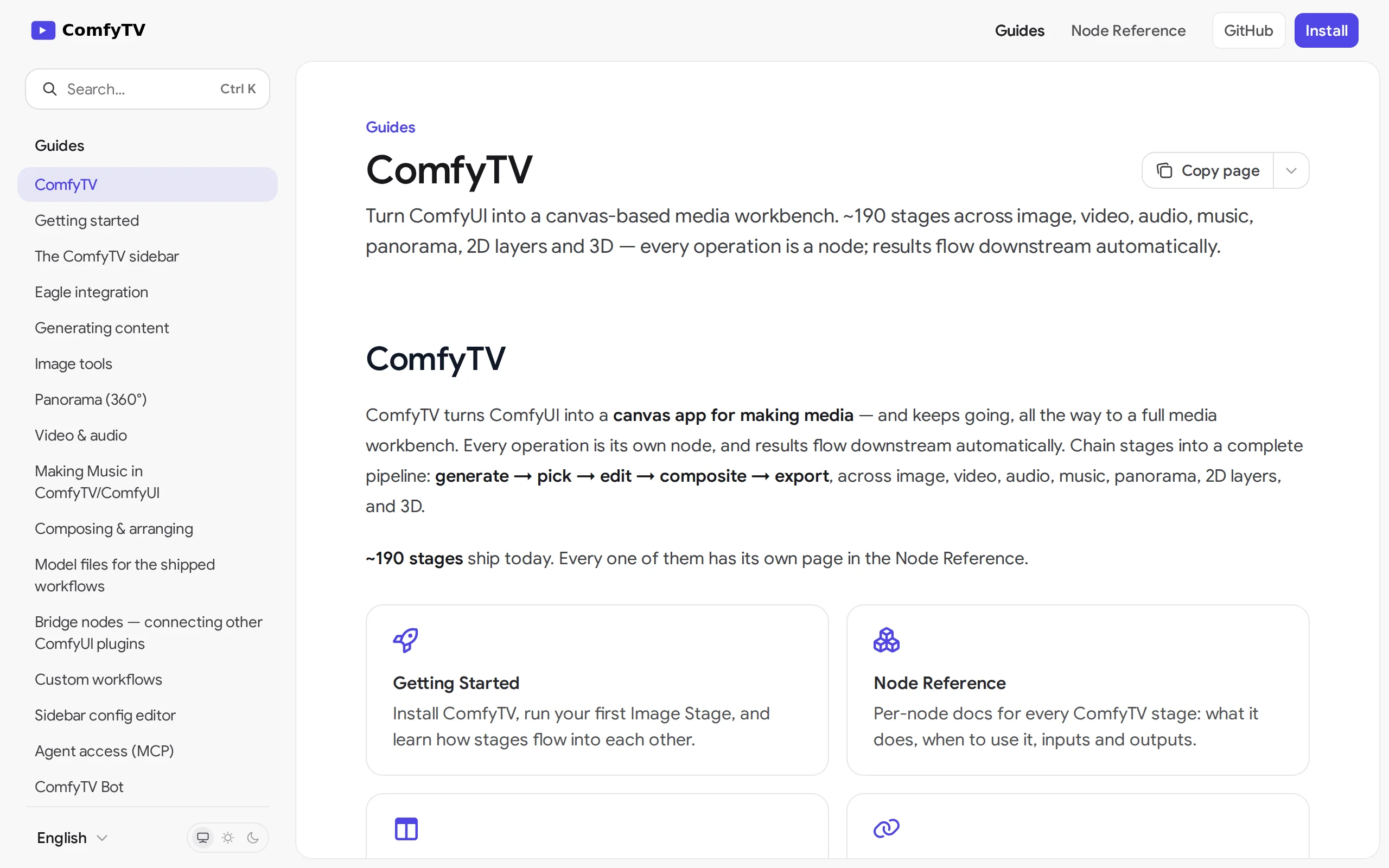
ComfyTV – Open-Source ComfyUI Plugin, Local Infinite Canvas Media Workbench
ComfyTV is an open-source ComfyUI plugin that operates entirely locally, transforming ComfyUI into an infinite canvas-style media workbench similar to TapNow and LibTV. Each operation on the canvas is...
© All Rights Reserved. Some content on this site is partially generated by AI with human review.