
WBench – Meituan’s Interactive Video World Model Multi-Turn Benchmark

Executive Summary:
WBench is Meituan LongCat’s first systematic multi-turn benchmark for interactive video world models—289 test cases, 1,058 interaction rounds, six scene types (nature, city, indoor, workspace, fantasy...
1. What Is WBench
WBench is Meituan LongCat’s first systematic multi-turn benchmark for interactive video world models—289 test cases, 1,058 interaction rounds, six scene types (nature, city, indoor, workspace, fantasy, sports), and seven art styles (photoreal, anime, cartoon, oil, ink, flat, sketch). A unified interaction interface evaluates 20 frontier models, mapping the gap from passive viewing to active control—navigation, manipulation, camera changes—and exposing where today’s world models fail on long-horizon interaction.
Technical positioning and domain: Evaluation for interactive video worlds vs single-clip quality metrics. Multi-turn feedback loops are first-class—industry lacked a reproducible standard here until WBench.
Development background: LongCat’s video/world-model work needed apples-to-apples comparison as Genie, Kling, Wan, etc. evolved. WBench standardizes protocols, decouples scene from action, and scores five hard dimensions.
Core value: Solves three evaluation gaps: no multi-turn framework (error accumulation invisible), heterogeneous action APIs (text vs 6DoF vs discrete keys), and scene-action coupling (can’t isolate failure modes). Think “CT scan” for world models.
Technical characteristics: World definition + instruction sets + Action Router + metric suite; autoregressive rounds feed prior frames forward—e.g., navigation scores drop ~33 points over turns on average.
2. Key Features
Rich world definitions: Six scenes × seven styles × first/third/embodied POV—controlled diversity from realistic to stylized fantasy.
Four interaction families: Navigation (move/turn), agent motion (run/jump/grab), event editing (spawn objects, weather), camera control (free look, target lock).
Action Router: Maps text, 6DoF poses, and keyboard discretions to a common schema—fair compare across Kling 3.0 text mode vs HY-World 1.5 action controls.
Five-metric suite: Video quality, spec adherence, interaction adherence, temporal consistency, physical plausibility—plus NavScore and Gated Spatial Consistency.
Multi-turn evaluation: Default up to 8 autoregressive rounds—quantifies drift vs single-turn peaks.
Batch cross-model runs: Same cases across models → radar charts and CSV tables for procurement/research.
3. How to Use
Environment: Python 3.8+, Linux/macOS; GPU with ≥16 GB VRAM for model inference; Git + pip installed.
Clone & install:
git clone https://github.com/meituan-longcat/WBench.git
pip install -r requirements.txt
Download data:
huggingface-cli download meituan-longcat/WBench --local-dir ./dataRegister models: Edit
config/models.yamlwith API endpoints or local inference scripts; adapt via Action Router examples.Pick scenario:
config/scenario.yaml—scene, style, subject, POV; or use bundled 289 cases.Pick interactions:
config/interaction.yaml—compose nav/motion/edit/camera sequences.Single-turn run:
python run.py --mode single --scenario config/scenario.yaml --interaction config/interaction.yamlMulti-turn run:
python run.py --mode multi --rounds 8 ...Batch compare:
python run.py --mode batch --models model1,model2,model3Reports: Results under
results/;python visualize.py --report results/report.jsonfor charts.
4. Pros and Cons
| Pros |
|---|
| First multi-turn interactive bench: Quantifies long-horizon failure—critical for world-model R&D. |
| Scene–action decoupling: Isolate nav vs style vs physics failures precisely. |
| Hard metrics: NavScore etc. enable reproducible leaderboards. |
| Actionable insights: e.g., text models understand but navigate poorly; quality ⊥ nav skill. |
5. Comparison with Similar Tools
| Dimension | WBench | WorldScore | VBench |
|---|---|---|---|
| Focus | Multi-turn interactive video worlds | Unified world generation eval | Video quality |
| Release | May 2026 | 2025 | 2024 |
| Scale | 289 cases / 1,058 turns | 3,000 cases | 1,600+ prompts |
| Interaction | Nav, motion, edit, camera | Trajectory conditioning only | None (single clip) |
| Multi-turn | Native autoregressive | Sequential scenes, not interactive | No |
| Unified I/O | Action Router | World spec layout | N/A |
| Metrics | Quality, adherence, interaction, consistency, physics | Control, quality, dynamics | Quality/style/temporal |
| License | Apache 2.0 | MIT | MIT |
Selection guidance: Interactive world models (Genie/Kling/Wan) needing nav + multi-turn decay → WBench (only option). Classic T2V quality → VBench. Unified 3D/4D/I2V/T2V worlds → WorldScore. Lightweight multi-model scoring → EvalCrafter.
6. Editor's Take
WBench moves evaluation from “pretty frame” to “can you steer the world over time.” Decoupling stage (scene) from script (actions) is the key design win—finally see which skill broke.
Findings already steer R&D: text-first models vs navigation specialists, quality decoupled from control—teams shouldn’t optimize pixels alone.
Audience: World-model researchers, embodied AI groups, interactive video/game PMs, paper reviewers needing a standard harness.
Future: Richer physics, custom world gen, adversarial action suites, public leaderboards.
— − for case count, physics depth, 8-round limit; still indispensable in its niche.
7. Use Cases
Model iteration: Compare single- vs multi-turn scores to fix nav/consistency regressions.
Embodied AI proxy: NavScore as virtual path-planning/memory probe.
Product QA: Stress AI game/world products with long action chains.
Academic baselines: Reproducible cross-paper comparisons.
Build vs buy: Open vs API world models on identical WBench cases.
8. FAQ
Q: Which models work?
A: Any interactive video generator—text-driven (Kling, Wan) or action-native (Genie, HY-World)—via Action Router adapters.
Q: Trust scores?
A: Open cases/commands; automated metrics with human validation on NavScore etc.; rerun for means.
Q: How is multi-turn realistic?
A: Each round conditions on prior generated frames + new command—mirrors streaming user control; compare to single-turn to see drift.
Q: Custom scenes/actions?
A: Yes—JSON scene specs plus composable instruction sets thanks to decoupled design.
Q: Hardware?
A: Harness runs on CPU; model inference wants ≥16 GB GPU; parallel batch needs multi-GPU planning.
Q: vs VBench?
A: VBench = static clip quality; WBench = interactive control + multi-turn decay.
9. Project Links
- Site: https://meituan-longcat.github.io/WBench/
- GitHub: https://github.com/meituan-longcat/WBench
- Hugging Face dataset: https://huggingface.co/datasets/meituan-longcat/WBench
- Paper: https://huggingface.co/papers/2605.25874
Related AI Model Articles
Vidu Q4 Preview: A Masterful Demonstration of Expressive Performance and Multi-Subject Consistency in ShengShu Technology's Flagship Video Generation Model
Vidu Q4 Preview is the first publicly available preview version of ShengShu Technology's next-generation flagship video generation model, launched on October 7, 2026. It emphasizes "expressive perform...
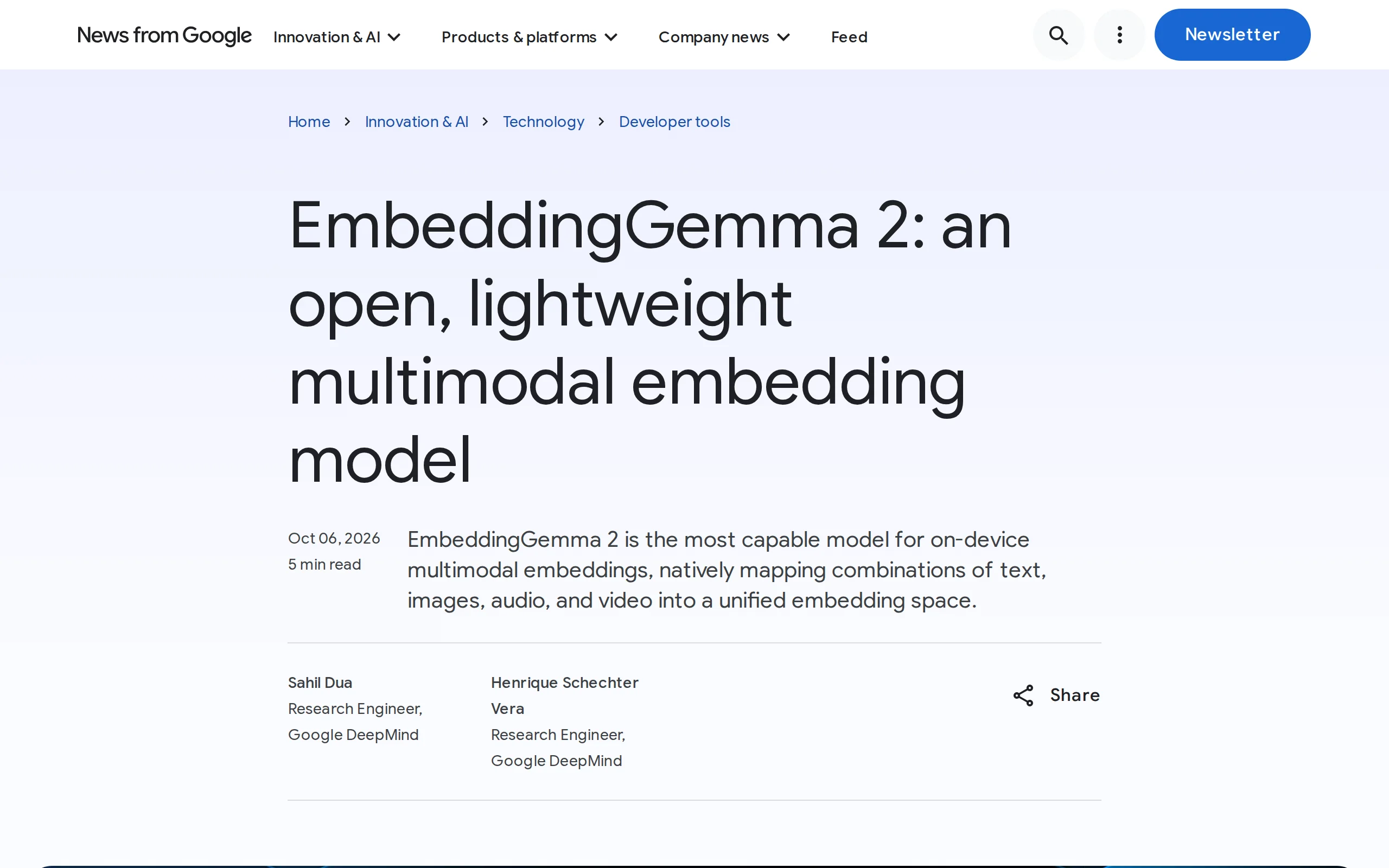
EmbeddingGemma 2 – Review of Google's Open-Source Native Multimodal Embedding Model
EmbeddingGemma 2 is an open-source native multimodal Embedding model developed by Google, built upon the Gemma 4 architecture. It unifies five modalities—text, code, images, video, and audio—into a si...
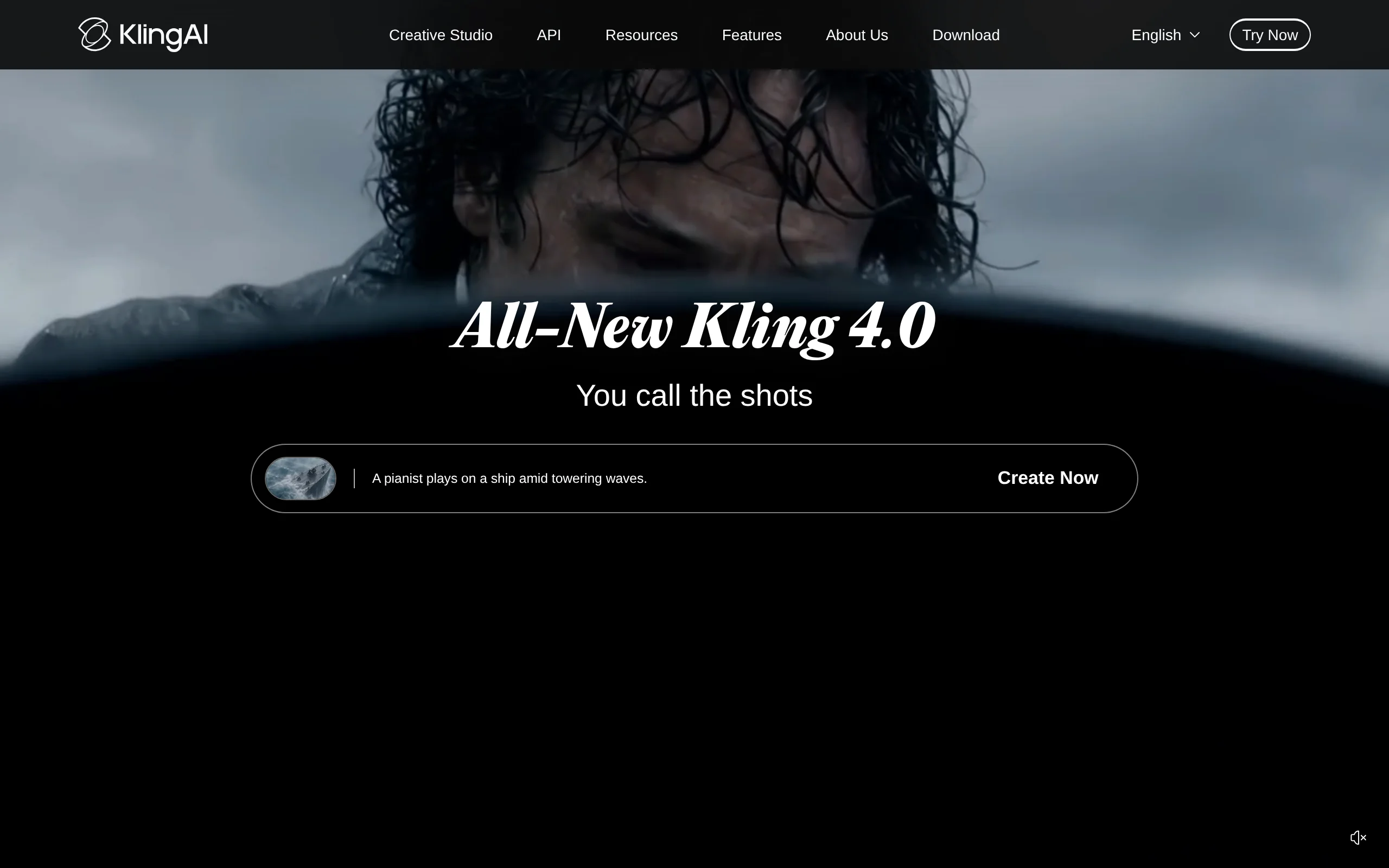
Kling 4.0 – A New Generation AI Video Generation Model Launched by Kuaishou
Kling 4.0 is the latest generation video generation model introduced by Kuaishou's Keling AI. The lightweight version, Kling 4.0 Flash, is now open for early access, with the full version expected to ...

SocialCoach – AI Emotional Intelligence Coach Open-Sourced by the Hong Kong University of Science and Technology (Guangzhou) and Microsoft Research Asia
SocialCoach is a one-stop AI social communication training tool open-sourced by the Hong Kong University of Science and Technology (Guangzhou) and Microsoft Research Asia. It focuses on addressing com...
© All Rights Reserved. Some content on this site is partially generated by AI with human review.