
HelixHarness – AI Coding Engineering Framework Open-Sourced by Didi
Executive Summary:
HelixHarness is an AI Coding engineering framework open-sourced by the Didi Financial Technology team. It operates on top of Codex and Claude Code, positioned as a standardized infrastructure for team...
1. What is HelixHarness
HelixHarness is an AI Coding engineering framework open-sourced by the Didi Financial Technology team. It operates on top of Codex and Claude Code, positioned as a standardized infrastructure for team-level AI research and development delivery. This framework drives the development process through a three-stage standard workflow: Propose→Apply→Archive. It employs a four-layer structured context—Knowledge, Harness, Specs, and Hooks—to systematically inject team business knowledge, engineering standards, and inspection rules into the Agent execution flow. The optional accompanying platform provides process observability, version comparison evaluation, and controlled evolution capabilities, helping teams continuously build, validate, and optimize their dedicated Harness. The core value of HelixHarness lies in elevating AI Coding from a personal efficiency tool to an organizational delivery system, addressing the challenges of stability, consistency, and measurability when enterprises scale the adoption of AI programming.
Technical Positioning and Domain: It belongs to the intersection of AI Software Engineering and Intelligent Agent Orchestration, situated in the engineering and governance layer of the AI Coding toolchain. Unlike Copilot or auto-completion tools that directly target coding, HelixHarness focuses on the standardization of Agent workflows, structured context management, and the testability of framework iterations, serving as the intermediate infrastructure between the underlying Coding Agent and enterprise delivery standards.
Development Background: Developed and open-sourced by the Didi Financial Technology team, HelixHarness originates from real production practices across more than 10 departments and hundreds of business modules within Didi. During the process of scaling AI Coding adoption, the team found that simply introducing Agent tools could not guarantee delivery quality or process compliance. This led to the gradual development of the Harness mechanism—explicitly encoding organizational engineering constraints into loadable, testable, and evolvable context assets, which were eventually released as open-source.
Core Value: It addresses three key issues: first, AI behavior is unstable in complex real-world engineering environments; the Harness layer injects business rules and architectural boundaries to constrain behavior within acceptable limits. Second, the execution process of Agents lacks observability and post-hoc review evidence; the full traceability of the Propose→Apply→Archive workflow enables auditability of the delivery process. Third, framework iterations lack quantitative basis; the accompanying evaluation platform ensures that every change is data-backed through frozen version comparison testing, reducing the risks associated with evolution.
Technical Features: It employs a dual-host (Dual-host) plugin architecture, compatible with the plugin markets of both Codex and Claude Code. Installation can be completed without manually cloning source code. The four-layer context directory (Knowledge, Harness, Specs, Hooks) combined with an indexing mechanism enables on-demand document loading, ensuring the complete injection of task-related constraints while controlling context window overhead. This is its core technical design for practical engineering applications.
2. Key Features
Standardized Workflow-Driven: The Propose→Apply→Archive command sequence ties together the complete R&D lifecycle, from solution design and development execution to archiving and knowledge accumulation. In the Propose phase, the Agent must first generate a requirement proposal and acceptance criteria. In the Apply phase, code changes are implemented under the constraints of Harness. In the Archive phase, validated experiences are stored in the repository. This process transforms uncontrolled Agent behavior into a structured pipeline, with clear deliverables and status records at each task handoff.
Four-Layer Structured Context Management: The Knowledge layer holds team business knowledge and architectural decisions, the Harness layer defines engineering standards and hard constraints, the Specs layer records specific requirement contracts and acceptance criteria, and the Hooks layer configures automatically executed check rules and safeguard logic. These four layers operate independently yet reference each other, transforming scattered documents and verbal experiences into maintainable, versioned structured assets within the repository.
On-Demand Context Loading Mechanism: Instead of full injection, the framework uses an indexing mechanism to precisely call the required document fragments for the current task. This design significantly reduces context window usage in long documents and large codebases, avoiding interference from irrelevant information while ensuring critical constraint information is not lost. It is a core method for balancing practicality and cost control in the framework.
Knowledge Compounding and Accumulation: Verified experiences confirmed by humans are archived through the Archive phase and automatically loaded and reused in subsequent similar tasks via indexing. As the project progresses, accumulated knowledge assets in Harness continuously evolve, advancing the starting point of the Agent's execution. The team's engineering DNA gradually solidifies into inheritable digital assets, creating a flywheel effect that continuously enhances performance.
Process Observability and Auditing: The framework records execution data for each workflow phase, state transitions, Token consumption, and rework paths, providing managers with a visual view of the execution process. These data can be used to identify friction points (e.g., rules that frequently cause rework) and also serve as a basis for process auditing and resource cost analysis, enabling quantifiable ROI for AI Coding.
Framework Evaluation and Controlled Evolution: The accompanying platform allows the framework to be frozen into two versions: Base and Candidate, enabling comparative testing in the same task scenarios. This objectively measures the actual impact of rule adjustments, Skill modifications, or context organization optimizations. Improvement hypotheses are formed based on observational evidence, then validated through evaluation and human review, forming a closed-loop iterative mechanism of "Observation → Hypothesis → Evaluation → Adoption" to prevent arbitrary changes based on intuition.
Dual Host Compatibility and Plugin Market Installation: The framework supports both OpenAI Codex and Anthropic Claude Code host environments, and can be installed via the plugin market with one click, eliminating the need for manual source code cloning or complex dependency configuration. This design lowers the team's adoption barrier and reserves expansion space for future compatibility with more Coding Agents.
3. Application Scenarios
Enterprise-level Business Function Development: In projects within finance, e-commerce, and other sectors with complex business rules and strict compliance requirements, HelixHarness injects domain-specific business knowledge through the Knowledge layer, defines acceptance criteria via the Specs layer, and mounts compliance checks through the Hooks layer, enabling the Agent to deliver new features within predefined boundaries. The practical outcome is that business logic compliance shifts from "manual post-hoc review" to "real-time constraints during Agent execution," significantly reducing rework rates and compliance risks.
Scaled Multi-team Collaboration: Under a microservices architecture, different departments and teams using AI coding tools separately may lead to fragmented standards. HelixHarness's multi-repository Workspace mechanism coordinates cross-service requirements uniformly, records responsibilities for each repository, and enforces consistent engineering standards through the Harness layer. Teams no longer need to customize their own rule sets individually, as they can achieve unified behavioral constraints and delivery standards at a global level.
Legacy System Maintenance and Modernization: Legacy codebases often suffer from missing documentation and unclear architectural decisions. After using HelixHarness, teams can organize existing system architecture, key historical decisions, and implicit constraints into the Knowledge layer. This allows the Agent to quickly understand the design logic of the legacy code and perform refactoring and migration within the modification boundaries defined by the Harness, controlling modernization risks from the source.
Continuous Optimization of Frameworks and Standards: Framework maintainers can use the accompanying platform's observable data to identify rule conflicts and process bottlenecks. After proposing improvement hypotheses, they can compare evaluations on the same task set using Base/Candidate frozen versions, making data-driven decisions on whether to adopt rule additions, deletions, or adjustments. This scenario ensures that the evolution of Harness is always based on evidence rather than subjective experience, making it ideal for technical teams with ongoing governance needs for AI coding processes.
4. How to Use
Environment Preparation: Ensure that Python 3.10 or higher, Git, and a logged-in and functional Codex or Claude Code account are installed on your local machine. It is recommended to use a Linux or macOS environment; Windows users must ensure that their command-line toolchain is fully functional and available.
Install Plugin: In the terminal, execute the following two commands in sequence to complete plugin market registration and install the Helix plugin:
codex plugin marketplace add https://github.com/didi/helixharness.git
codex plugin add helix@helixharness-marketplace
After installation, type
/helix:helpin a Codex or Claude Code session to verify that the plugin has been loaded successfully.Initialize Project: Switch to the target business repository directory, start a new Agent session, and run
/helix:init. This command automatically generates the required directory structure for HelixHarness (four directories: Knowledge, Harness, Specs, and Hooks) and creates initial context files.Write Requirements Document: Write the requirement description into the specifications document under
docs/specs/. Markdown format is recommended, with clear acceptance criteria. Alternatively, you can use the interactive/helix:proposecommand to generate requirement specifications, reducing the writing barrier.Start Workflow: Execute
/helix:propose <task> <requirements file> --loop, and the Agent will automatically complete the full workflow: Propose → Apply → Archive. The--loopparameter allows the Agent to automatically re-enter the repair and retry cycle if the acceptance check fails.Manual Decision-Making: The workflow will pause at key nodes (scope confirmation, solution review, acceptance criteria confirmation) and wait for manual input. Simply follow the prompts to confirm, provide modification suggestions, or reject the proposal, ensuring that critical decisions remain under human control.
Progress Check and Archiving: Use
/helix:statusto check the current phase, blocking items, and processing progress at any time. After task completion, review the proposed entries in the Archive to be retained, and confirm them to be written into the project knowledge base for reuse in subsequent tasks.Configuration Management: Use
/helix:configto view or modify configuration items such as telemetry authorization and upload addresses. Telemetry data is recorded locally by default. Explicit authorization is required before uploading to the配套 platform, ensuring control over data privacy.
5. Pros and Cons Analysis
| Pros |
|---|
| Engineering Knowledge Assetization: Converts business knowledge and architectural constraints scattered across documents and personal experience into structured, maintainable, reusable assets within the project, effectively reducing the team's reliance on individual experience. |
| Fully Auditable Lifecycle: The entire process from Propose→Apply→Archive is traceable within the repository, making requirement specifications, execution evidence, and acceptance results transparent and verifiable, providing a complete audit trail for the delivery process. |
| Quantifiable Framework Upgrades: The comparison and evaluation mechanism between frozen Base/Candidate versions provides data-driven justification for every rule change, avoiding subjective iteration and reducing the risk of framework evolution. |
| Knowledge Compounding and Team Scaling: Verified experiences are automatically reused in similar tasks, allowing the Agent to evolve continuously with the project. This approach has been validated for scalability across hundreds of business modules within DiDi. |
| Cross-Repository Collaboration Capabilities: The multi-repository Workspace records responsibilities and dependencies across repositories, supporting cross-service task coordination and session resumption, aligning with team collaboration models under microservices architectures. |
6. Comparative Analysis with Similar Tools
| Dimension | HelixHarness | Superpowers |
|---|---|---|
| Core Positioning | A team-level AI Coding engineering harness, focusing on organizational delivery standards and knowledge accumulation | A set of composable development skills and practices, focusing on enhancing individual Agent capabilities |
| Core Problem | How to enable AI to deliver reliably and measurably in real team engineering environments | How to provide high-quality development methodologies and skill combinations for Agents |
| Capability Form | Plugin + optional platform, supporting a complete system for knowledge, constraints, processes, and evaluation | A set of pluggable Skills (e.g., brainstorming, TDD, review, etc.) |
| Knowledge Management | Four-layer structured directory, verified experiences are archived and automatically reused by index | General practice accumulation based on skills, decoupled from specific project knowledge |
| Workflow | Fixed three-stage process: Propose → Apply → Archive, with full-process driving and traceability | No fixed workflow, skills are called as needed |
| Assessability | Supports freezing Base/Candidate versions for comparative evaluation, quantifying the impact of framework changes | No evaluation mechanism, optimization relies on experience |
| Project Adaptability | Strong: The Harness layer carries team-specific rules and architectural boundaries, closely aligned with real engineering environments | Weak: Skills are more general-purpose, requiring separate organization of project knowledge |
| Host Support | Installed via the Codex and Claude Code plugin market | Primarily within the Claude Code ecosystem |
| Applicable Scenarios | Scalable, standardized, and sustainable delivery for enterprise teams | Enhancing the quality of individual task development for personal or small teams |
Selection Recommendations: For large-scale development teams that have established complex business rules and require cross-team collaboration, HelixHarness is a more suitable choice. Its value lies not in making individual AI tasks better, but in unifying, tracing, evaluating, and iterating the entire team's AI coding behavior. If the team is currently in the early stages of using AI coding tools on an individual developer level and has not yet established unified delivery standards, it may start with Native Rules or Superpowers to experience Agent capabilities at a lower cost. Once sufficient practice is accumulated, the team can then introduce the Harness system.
Notably: Skill-set tools like Superpowers do not directly conflict with HelixHarness; there is potential for synergy in their design. Skill-set tools address the methodological question of "how to make Agents better," while HelixHarness addresses the organizational question of "how to constrain and accumulate AI delivery within a team." In practice, teams can solidify verified skill practices into HelixHarness Skill assets and continuously validate their effectiveness using HelixHarness's evaluation mechanisms, thereby creating a pathway to convert individual experience into organizational capability.
7. Editor's Summary
HelixHarness presents a clear path for the evolution of AI coding tools from "individual augmentation" to "organizational governance." Most AI programming tools on the current market focus on solving the question of "how to make a single Agent smarter," while HelixHarness addresses a more practical issue—how to ensure AI behavior is stable, controllable, auditable, and continuously optimizable within real-world software projects involving dozens or even hundreds of collaborators. Its four-layer context structure is closely aligned with engineering practices: the Knowledge layer accumulates domain expertise, the Harness layer imposes organizational constraints, the Specs layer anchors requirement contracts, and the Hooks layer embeds automated checks. Each layer addresses a specific real-world pain point rather than merely stacking conceptual ideas.
In terms of technical implementation, HelixHarness adopts a plugin-based form rather than an independent IDE or CLI, allowing it to build upon the existing capabilities of Codex and Claude Code. This design enables teams to introduce a governance layer without changing their existing toolchain, significantly reducing the barrier to adoption. The three-stage process of Propose→Apply→Archive may appear simple, but by retaining human decision-making authority at key checkpoints, it actually establishes a human-AI collaboration structure where humans are responsible for goals and standards, and Agents handle execution and iteration, balancing efficiency with accountability.
HelixHarness features a rare differentiating design among similar open-source projects: its framework evaluation capabilities. Most teams rely on the subjective judgment of their leads to determine how rules and skills should evolve, but HelixHarness's contrast evaluation mechanism between frozen Base and Candidate versions provides repeatable validation for every change. Its limitations include limited host support (currently only Codex and Claude Code), a relatively high initial setup cost, and the need for further refinement in supporting exploratory tasks with its fixed process model.
Overall, HelixHarness is well-suited for mid-to-large development teams that have already achieved a certain depth of AI coding usage and are beginning to focus on delivery consistency and process governance. As AI coding tools continue to gain traction within enterprises, the need to systematically inject organizational knowledge into Agents and establish an assessable, evolvable delivery system will become widespread. HelixHarness's approach provides a valuable reference model for the industry. Its future trajectory will depend largely on the speed of its community ecosystem expansion and whether it supports additional host environments.
8. FAQ
Q: What is the difference between HelixHarness and using Codex/Claude Code directly?
A: When using a coding agent directly, the agent's behavior is primarily influenced by the model's capabilities and the constraints of a single conversation, lacking explicit awareness of the team's existing business knowledge, architectural decisions, and engineering standards. HelixHarness adds a structured context injection mechanism and standard workflow on top of the agent: it precisely loads the required constraints for a task through the four directories — Knowledge/Harness/Specs/Hooks — and ensures clear deliverables and human confirmation points at each delivery stage via the Propose→Apply→Archive process. In short, a native agent addresses the question of "being able to write code," while HelixHarness addresses "writing code according to the team's rules."
Q: Will installing HelixHarness affect the existing use of Codex/Claude Code?
A: No, it will not cause any disruptive impact. The plugin registers independently in the host environment and only activates the workflow mechanism when the /helix:* series of commands are invoked. Regular conversational programming usage remains unaffected. If you wish to remove it, simply execute the delete command in the plugin marketplace to restore the original state.
Q: How are the responsibilities of the four directories (Knowledge, Harness, Specs, Hooks) divided?
A: The Knowledge layer addresses "what the team knows," storing declarative knowledge such as business context, system architecture, and historical decisions; the Harness layer addresses "what the team requires," defining constraints such as coding standards, architectural boundaries, and prohibited actions; the Specs layer addresses "what this task needs," documenting the contractual description and acceptance criteria for specific requirements; the Hooks layer addresses "what to check during execution," configuring automatically triggered validation scripts and guardian rules. The four layers progressively focus from general to specific, and are supported by an indexing mechanism to load them as needed.
Q: Does HelixHarness support multi-repository scenarios? How is coordination handled?
A: Yes, it supports multi-repository scenarios. The Workspace mechanism records the responsibility assignments and dependencies among multiple repositories. When the agent executes cross-service tasks, it automatically identifies the involved repositories based on the task context while maintaining session continuity. The archived experiences are shared within the Workspace scope by default, ensuring knowledge flows across repositories during collaboration.
Q: To which servers will telemetry data be uploaded? How is privacy protected?
A: By default, telemetry data is only stored in the local execution logs. To upload it to the accompanying evaluation platform, the administrator must explicitly configure the upload address and authorize it via the /helix:config command. At the framework level, data collection is decoupled from functional execution, and all features operate normally without authorization. Enterprises that wish to build their own evaluation platform can keep the data entirely within their internal network environment.
9. Project Links
- GitHub Repository: https://github.com/didi/helixharness (Plugin installation and source code can be obtained from here, official public repository. The product official website has not been released yet, and the project homepage is the GitHub repository. Please continue to follow updates from the DiDi open source organization)
Related
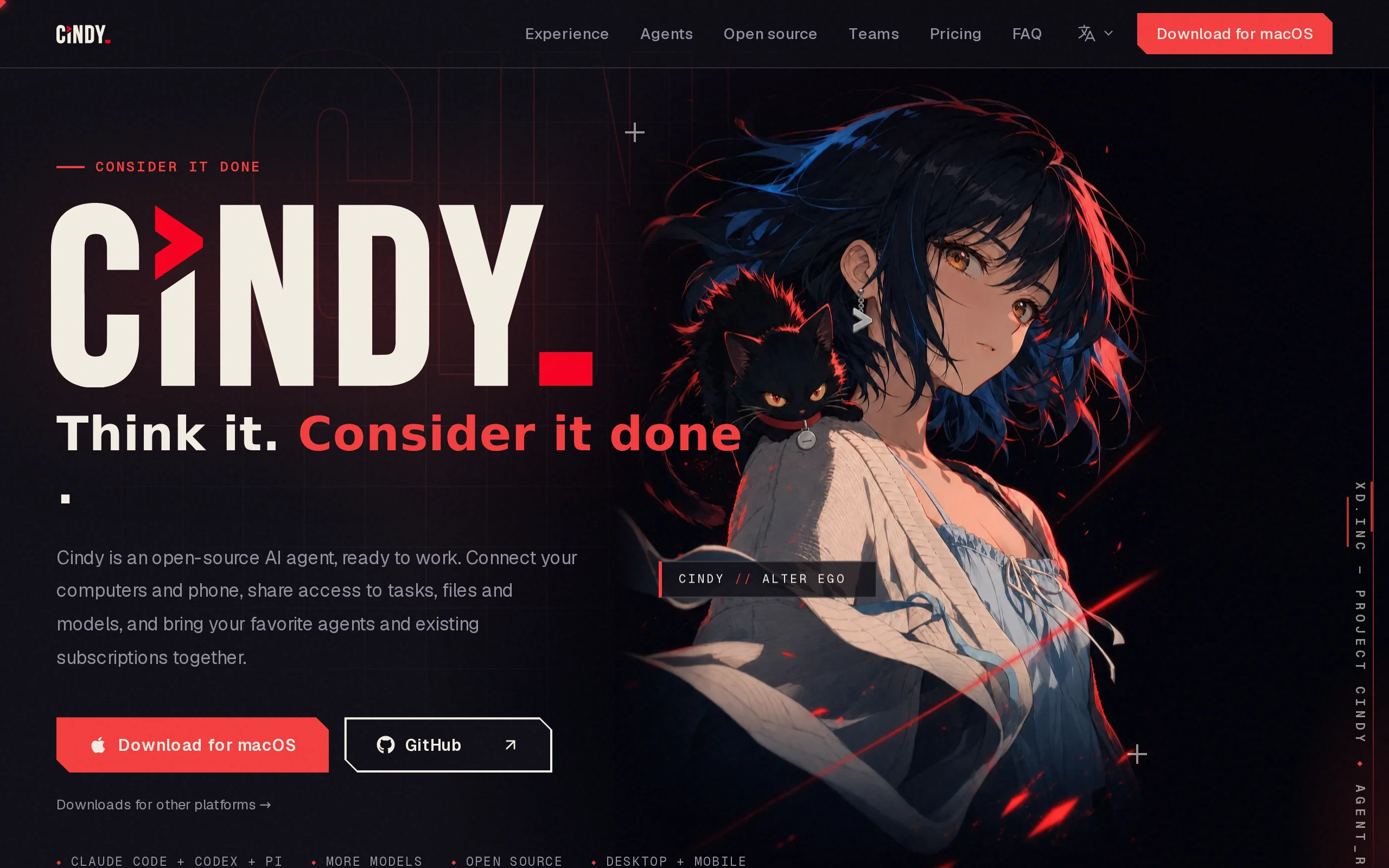
Cindy – Open-Source AI Agent Workbench Review: Multi-Engine Integration and Real Automation with Browser Login State
Cindy is an open-source AI Agent workbench that users can deploy on their own devices. It integrates multiple mainstream Agent engines, such as Claude Code, Codex, and Pi, through a unified graphical ...
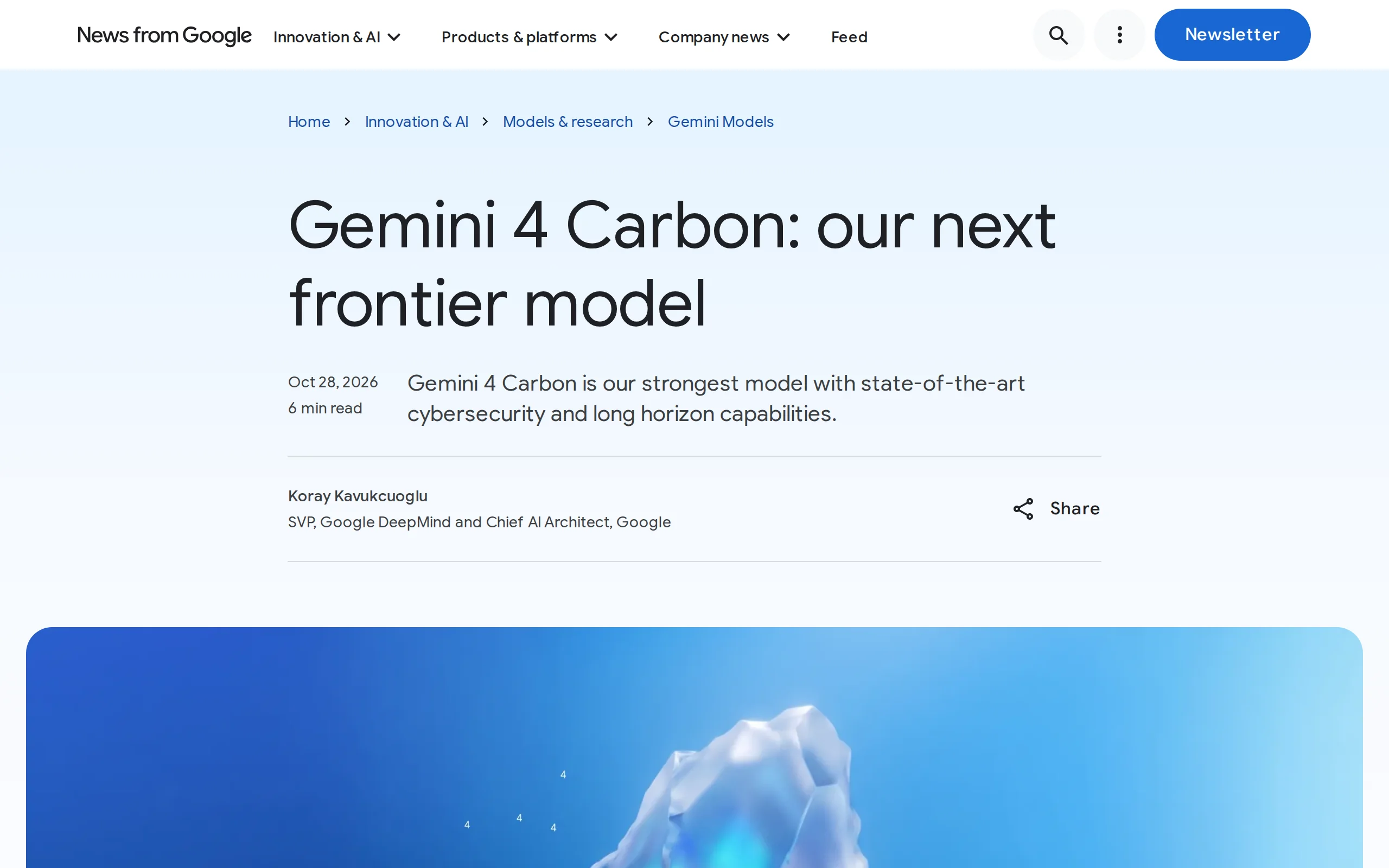
Gemini 4 Carbon – Google DeepMind's Latest Flagship Large Model
Gemini 4 Carbon is the latest flagship large model introduced by Google DeepMind. As the next-generation product of Gemini 4 Argon, it ranks first globally in the Artificial Analysis Smart Index 5.0 w...
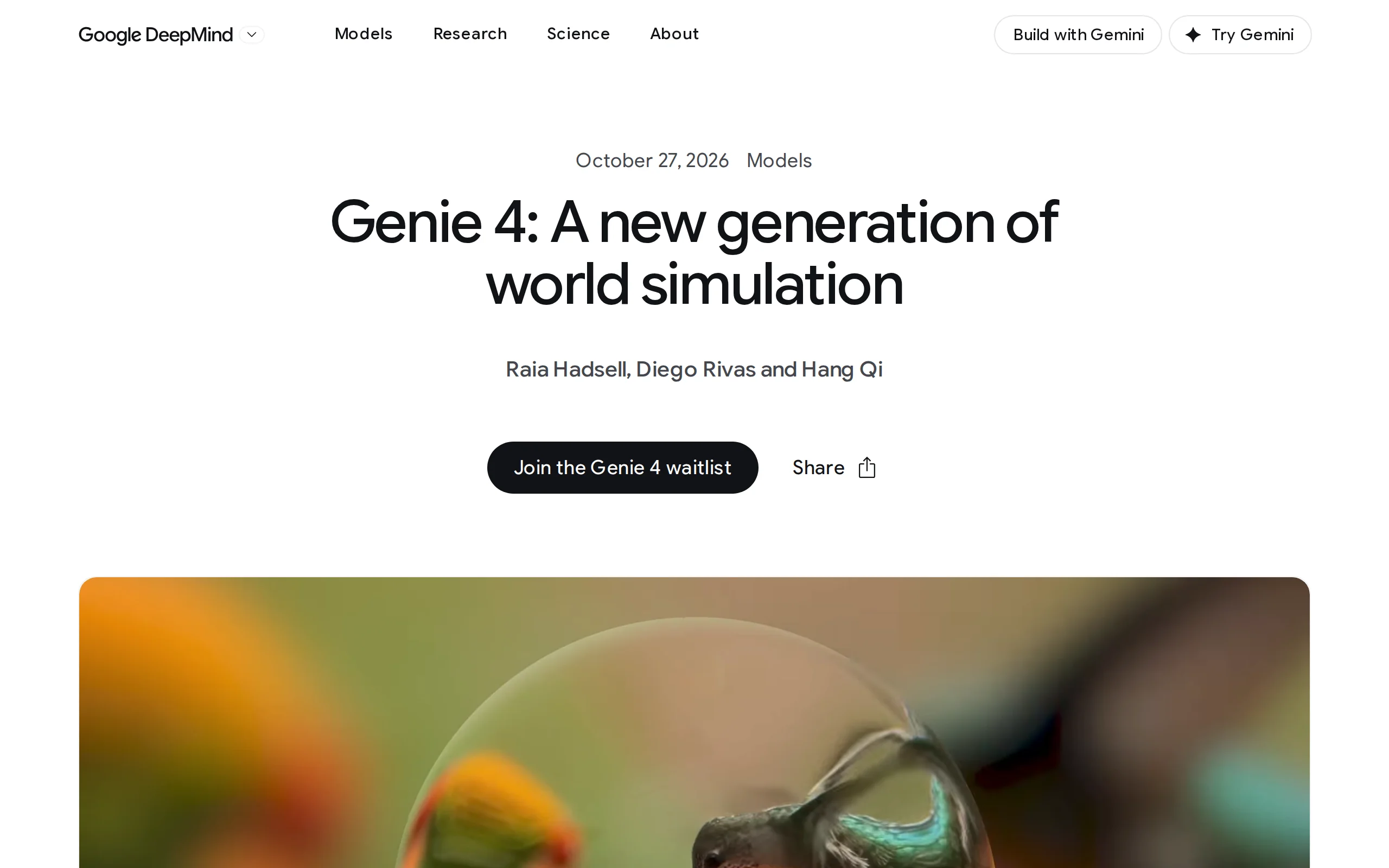
Genie 4 – A New Generation World Model from Google DeepMind
Genie 4 is a new generation world model introduced by Google DeepMind, capable of generating virtual worlds that can be freely explored in real-time. Users can control character movement via a keyboar...
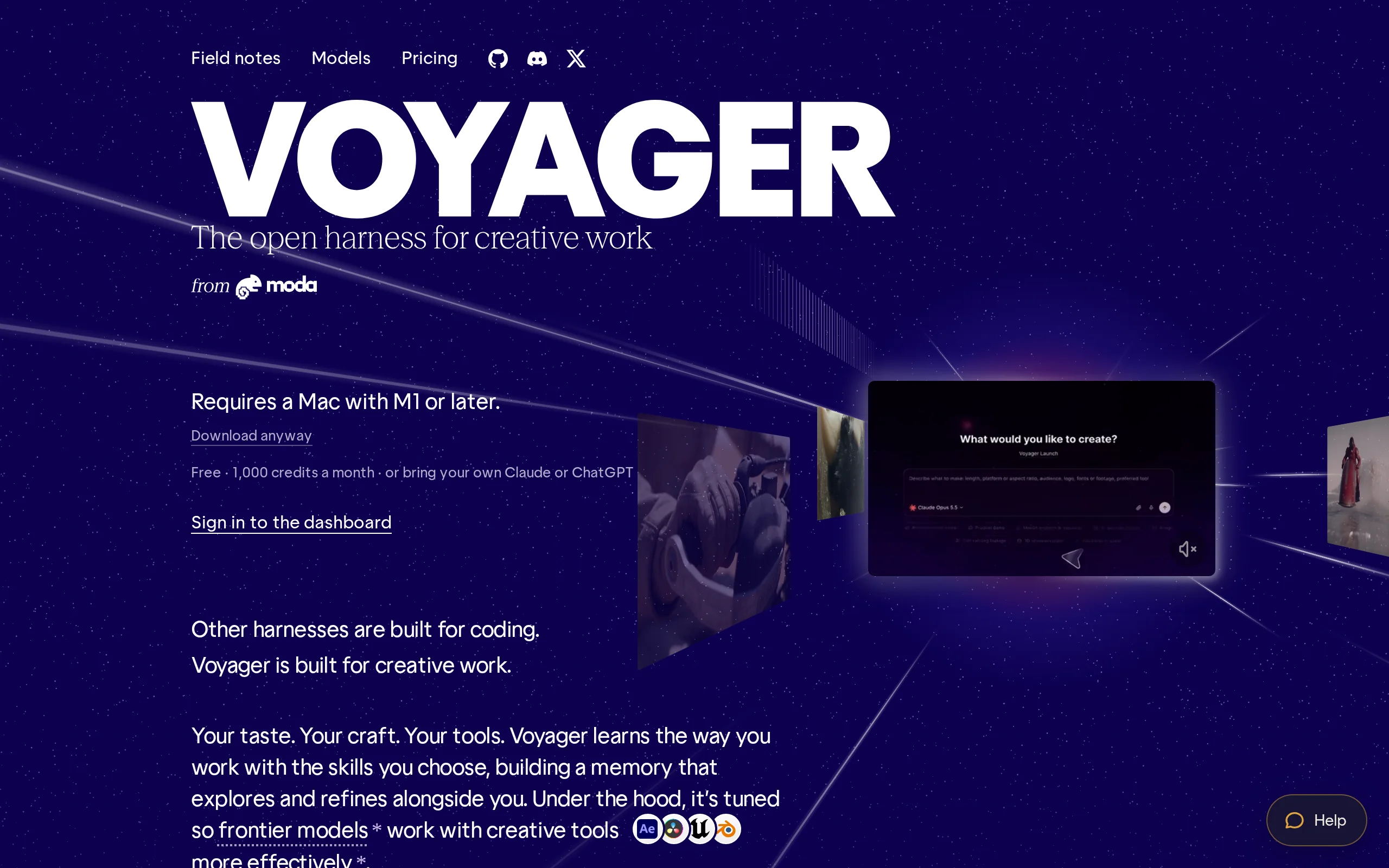
Voyager – Open-Source Desktop Creative Agent Covering the Full Production Workflow
Voyager is an open-source desktop creative Agent developed by Nullframe, designed to directly embed AI capabilities into creators' existing professional software workflows through natural language int...
© All Rights Reserved. Some content on this site is partially generated by AI with human review.