
In-Depth Review of Pagekin: Can Chapter-Level Context Management Cure Long-Form AI Writing's Memory Decay?
Executive Summary:
Pagekin is an open-source and free desktop software for AI-assisted long-form novel writing, supporting both Windows and macOS platforms. It breaks down the novel creation process into a seven-step pi...
1. What is Pagekin?
Pagekin is an open-source and free desktop software for AI-assisted long-form novel writing, supporting both Windows and macOS platforms. It breaks down the novel creation process into a seven-step pipeline: setting, architecture, blueprint, drafting, reviewing, revising, and finalizing. AI is responsible for drafting and providing assistance, with each step requiring confirmation and oversight from the author. Its core innovation lies in the chapter-level context management mechanism—when AI writes each chapter, it only reads the chapter's blueprint, related characters, a summary of the preceding content, and the full text of the previous chapter, addressing the issue of memory decay in long-form AI writing from an engineering perspective. The software does not include any built-in models; users must connect to cloud APIs such as DeepSeek or run it locally via Ollama. All work data is stored in a local SQLite database, ensuring clear privacy boundaries. The project is open-sourced under the GPL-3.0 license and is primarily maintained by an individual developer.
Technical Positioning and Domain: Pagekin falls at the intersection of natural language processing technology and creative writing tools, specifically positioning itself as a professional desktop application for AI-assisted long-form novel writing. Unlike general-purpose AI chat or short-text generation tools available on the market, it is tailored for long-form narrative creation, a scenario with extremely high demands for contextual continuity and plot consistency. Its technical approach centers around two core aspects: "structured creative workflow" and "context window engineering," making it an application-oriented tool that deeply integrates large language model capabilities with domain-specific workflows.
Development Background: This software was developed and open-sourced by GitHub user EthanYoQ, under the GPL-3.0 license. The motivation behind its development stems from a typical pain point in long-form AI writing—the limited context window of mainstream large models, which often leads to the forgetting of earlier details when writing novels, resulting in character inconsistency, lost foreshadowing, and plot contradictions. By designing a seven-step pipeline and a chapter-level context management mechanism, the developer aims to elevate "AI-assisted creation" from short-text generation to full-length novel completion, while ensuring the author retains complete control over the creative process.
Core Value: Pagekin addresses three key practical issues. First, it resolves the problem of memory decay in long-form writing by injecting a minimal necessary context set for each chapter (including blueprint, characters, summary of prior content, and the full text of the previous chapter), rather than simply concatenating the entire previous text, thereby maximizing information utilization within a limited context window. Second, it enhances the controllability of the creative process by enforcing a seven-step pipeline that requires the author to complete planning tasks such as setting, architecture, and blueprint before writing. AI is only responsible for drafting and offering revision suggestions, without overriding the author's decisions. Third, it tackles cost and privacy concerns by supporting local deployment via Ollama, enabling zero API cost operation. All works and API keys are stored locally, without reliance on any cloud-based writing platform.
Technical Features: The chapter-level context management is Pagekin's most distinctive technical capability. Unlike the approach of injecting the entire previous text at once, the system constructs a minimal necessary context set for each chapter. The review-revision segment-by-segment confirmation mechanism ensures complete transparency in the revision process. The deconstruction and imitation feature allows users to reverse-engineer structure and extract writing style from reference novels, with reference materials only entering the knowledge base and not affecting the main text. The writing Skill system enables users to import rule files in the form of prompts and automatically apply them during specific creative stages, while also refusing to execute scripts, balancing customizability with security.
2. Key Features
Chapter-level Context Management: This is the most core technical innovation of Pagekin. When the AI writes each chapter, the system only injects the chapter blueprint, related character profiles, a summary of the preceding text, and the full text of the previous chapter, forming a minimal necessary context set. Compared to the "full-text concatenation" approach, this mechanism significantly improves the hit rate of key information within a limited context window, addressing the issue of memory decay in long-form writing from an engineering perspective, and supporting long-form creation across hundreds of chapters.
Seven-Step Writing Pipeline: The novel writing process is broken down into seven stages: setting, architecture, blueprint, drafting, reviewing, revising, and finalizing. Each stage produces structured data and stores it on disk, forming a traceable writing pipeline. The setting stage determines genre, audience, language, number of chapters, and word count; the architecture stage completes the story premise, character list, world view, and plot outline; the blueprint stage plans the protagonist's goals, conflict turns, suspense hooks, and characters appearing in each chapter. The entire process involves AI drafting and author confirmation, with no skipped steps or overwriting.
Review-Revision Difference Confirmation: After the AI reviews the draft, it generates a detailed report of suggested revisions. The author can select items to address or add personal comments. During the revision phase, the AI rewrites based on the feedback, and the result is displayed alongside the original text for segment-by-segment comparison. The author then decides which version to retain for each segment. This mechanism ensures complete transparency and control over the revision process, fundamentally preventing content loss or control issues caused by AI overwriting the original draft with a single command.
Decomposition and Imitation Writing: Supports importing reference novels in .txt, .md, and .epub formats. AI automatically decomposes the structure, extracts stylistic features, and infers the chapter blueprint, generating imitation constraints for new book creation. The reference material only enters the knowledge base as an analysis object and is not mixed into the main text generation process, avoiding "AI plagiarism"-style style contamination and clearly defining the boundary between imitation and original creation.
Original Draft Continuation and Paragraph Expansion: Already written chapters can be imported as finalized content, and AI can continue writing subsequent chapters based on the preceding narrative. In the main text editor, selecting any paragraph triggers AI continuation, polishing, expansion, or rewriting into dialogue format. This feature enables Pagekin to support both new book creation from scratch and the continuation and modification of existing manuscripts.
Writing Skill System: Supports importing SKILL.md files in the form of prompts and binding them to specific writing stages such as planning, drafting, and reviewing, where they automatically take effect. For example, custom rules such as "Reduce AI flavor" can be loaded to adjust the output style. The system explicitly refuses to execute any scripts, ensuring operational safety while offering customization options.
Plot and Foreshadowing Tracking: Records the setup, progression, and resolution status of main plots, subplots, and foreshadowing on a chapter-by-chapter basis, tracking the completeness of narrative threads in real time during the writing process. For novels with over 100 chapters, this feature effectively prevents common long-form writing issues such as forgotten character relationships, unresolved foreshadowing, and broken subplots.
Work Management and Version History: The library interface centrally manages all works, supporting the organization of chapters and drafts by work. Historical versions of each chapter can be compared and reverted, with the entire revision process fully documented, providing authors with ample space for backtracking and error correction. Finished works can be exported as merged or chapter-separated Markdown/TXT formats, and WebDAV cloud backup is supported.
3. Application Scenarios
Daily Web Novel Updates: The batch creation feature supports writing up to 10 consecutive chapters in one go, with the ability to pause and resume during the process. In case of failure, it retains recovery candidates. Combined with a plot and foreshadowing tracking system, this helps authors maintain a stable daily update schedule. For web novel writers requiring high-volume output, this mechanism ensures efficient content generation while preserving narrative consistency and coherent foreshadowing.
Full-Length Novel Creation: The seven-step pipeline with chapter-level context management is designed for full-length novel creation spanning hundreds of chapters. Every stage from world-building to final proofreading is structured for output. Chapter-level context ensures that the AI remembers the foreshadowing from Chapter 5 and the narrative tone from earlier chapters when writing Chapter 80, maintaining accurate character relationships and plot consistency across long-form content.
Mimicking Blockbuster Novels to Launch New Books: Import popular market works in .txt, .md, or .epub formats, and the AI will analyze their chapter structure, extract stylistic features, and reverse-engineer a chapter blueprint. This generates a framework for imitation, which can be used as a reference for new book planning. The reference material is only added to the knowledge base and not mixed into the main text, making it ideal for creators who want to learn the pacing of successful narratives without directly plagiarizing.
Continuation and Rewriting of Original Manuscripts: For writers with existing content, already written chapters can be imported as drafts, and the AI will continue writing based on the summary of previous content and the full text of the last chapter. Any paragraph in the main text can be selected to trigger continuation, polishing, expansion, or dialogue rewriting. This scenario covers a variety of needs, from reviving "abandoned" novels to refining individual chapters.
Beginner Writing Practice and Writing Instruction: The blueprint phase forces authors to clearly define the protagonist's goals, conflict turning points, and suspense hooks for each chapter before writing begins. This process itself is a structured writing exercise. Combined with loadable Skills such as "de-AI-ify," beginners can produce finished works while gradually mastering the planning techniques for long-form novels, making it suitable for writing instruction scenarios.
4. How to Use
Download and Install: Download the installation package for the corresponding operating system (Windows or macOS) from the GitHub Releases page. Upon first launch, you will enter the initialization interface of the writing room. The software is a native desktop application and does not rely on a browser for operation.
Configure the Model: In the "Settings → Model" section, enter the service provider address, model name, and API Key. If using cloud services, you can integrate with APIs compatible with the OpenAI protocol, such as DeepSeek. If aiming for zero-cost operation, configure the Ollama local model according to the official documentation. Simply point the service provider address to your local Ollama service address (typically http://localhost:11434) and enter the name of the model already pulled locally.
Create a New Work: Return to the writing room page and click "New Work" to enter the setup phase. You will need to fill in the novel genre, target audience, writing language, total number of chapters, and word count per chapter. The setup information generated in this step will be used throughout all subsequent writing stages and is the first link in the production pipeline.
Build Architecture and Plan the Blueprint: The architecture phase consists of four sections, completed sequentially: story premise, character list, world view, and plot outline. For each section, the AI can generate a draft, which the author can confirm or modify. The blueprint phase involves writing out the protagonist's minor goals, conflicts and turning points, suspense hooks, and characters appearing in each chapter, chapter by chapter. The AI can generate content in batches by chapter range, and the author can confirm each chapter individually.
Write the Main Text and Batch Creation: Click "Write Chapter N" to generate the main text. You can specify the model to be used and enter author instructions (such as the intended meaning, style requirements, etc.). For rapid output, use the "Batch Creation" feature, which can consecutively write up to 10 chapters at a time. The process can be paused and resumed. After the main text is generated, it supports paragraph-level continuation, polishing, expansion, or dialogue revision.
Review and Edit: After the draft is generated, initiate an AI review. The report will list modification suggestions item by item. The author can select the items to be addressed or add their own comments. Once confirmed, the AI will rewrite the text according to the suggestions. The revised version will be compared with the original paragraph by paragraph, and the author can decide which version to retain for each paragraph, ensuring full control over the editing process.
Finalize and Export: After confirming there are no errors, execute the finalization operation. The chapter will then be marked as the final version. Once all chapters are completed, the work can be exported as a combined or chapter-separated Markdown/TXT file. You can also configure WebDAV for cloud backup, combining local storage with disaster recovery in remote locations.
Best Practice Recommendations: For first-time users, it is recommended to start with a short story of 10–20 chapters to familiarize yourself with the full workflow. When importing reference novels for deconstruction and imitation writing, note that the reference material is only for knowledge base analysis and should not influence the main text generation. For writing skills, begin with "de-AI-izing" rules shared by the community, understand the binding mechanism first, and then create your own rules. Store the API Key locally, but when using a public computer, ensure system account security.
5. Pros and Cons Analysis
| Pros |
|---|
| Chapter-level Context Mechanism: By injecting a minimal context set consisting of blueprint + role + summary of previous content + full text of the previous chapter, it maximizes the utilization of key information within a limited window. This engineering approach mitigates the degradation of long-term memory and supports creation at the scale of hundreds of chapters. |
| Full Control Over the Writing Process: Every step from setup to final draft is confirmed by the author. Editorial feedback is checked item by item, and revisions are compared paragraph by paragraph. The AI never overrides the author's decisions, and the entire modification process is fully transparent and traceable. |
| Local Priority and Privacy Protection: Works are stored locally in SQLite, and the API Key is only stored on the local machine. It does not rely on cloud-based creation platforms, and internet connectivity is only used for checking updates. Data ownership is entirely retained by the author. |
| Open Source and Free: Open-sourced under the GPL-3.0 license, the software itself is free of cost. When used with Ollama, it can be fully operated for free, making it ideal for creators with limited budgets. |
| Decomposition and Imitation Writing Ability: By importing a reference novel, it can reverse-engineer the structure, extract the writing style, and generate imitation constraints. The reference material only enters the knowledge base and does not contaminate the main text, providing a compliant path for learning how to write bestsellers. |
| Safe Expansion of Writing Skills: Supports importing prompt-style SKILL.md files and automatically applying them to specific stages. It also refuses to execute any scripts, achieving a balance between customization and security. |
6. Comparative Analysis with Similar Tools
| Comparison Dimension | BookScribe Pagekin | Bingling AI Novel | FrogFrog Writing |
|---|---|---|---|
| Product Nature | Open-source and free (GPL-3.0) desktop software, led by individual developers | Closed-source commercial SaaS, web-based, under Bingling | Commercial SaaS, web-based |
| Core Architecture | Seven-step pipeline + chapter-level context management (blueprint + character + summary + full text of previous chapter), local SQLite storage | Over 200 genre-based generators for "one-sentence drafting," with built-in models on the platform | AI-assisted writing organized by outline and chapters, focusing on web novel scenarios |
| Model Strategy | No built-in model; can integrate with APIs like DeepSeek or run locally via Ollama, with controllable costs | Built-in platform model, no user selection or replacement options | Built-in platform model, no user selection |
| Long-form Consistency | Chapter-level context management, injecting only the minimal necessary context for each chapter, supporting hundreds of chapters without distortion | Weak support for long-form content, requiring segmented generation and lacking a dedicated context management mechanism | Supports long-form serialization, but context management relies on model window size and outline constraints |
| Revision Mechanism | Select review comments one by one + compare and confirm revisions paragraph by paragraph, never overwriting the original manuscript | Intelligent rewriting and polishing, without a paragraph-by-paragraph difference confirmation process | Provides AI rewriting suggestions, with authors deciding whether to adopt them |
| Book Dissection and Imitation | Import local .txt/.md/.epub files to dissect structure and extract writing style, reference materials not included in the main text | Dissect best-selling books, generating imitation templates in 5 minutes | Supports imitation reference, but with weaker structural dissection capabilities compared to Pagekin |
| Data and Privacy | Local-first, storing works in local SQLite, API keys stored locally only | Works stored in the cloud, dependent on platform continuity, claims "encrypted transmission" | Works stored in the cloud |
| Platform Coverage | Windows + macOS desktop clients | Pure web-based | Pure web-based |
| Pricing Model | Software is free, model API costs are paid separately; can achieve zero cost with Ollama | Very limited free quota, monthly subscription around 69 RMB, annual subscription 99 RMB, lifetime membership limited-time offer at 199 RMB | Subscription-based pricing |
Selection Recommendations: If the primary goal is long-form novel creation with controllable writing processes and the desire to keep all data locally stored with minimal cost, BookScribe Pagekin's chapter-level context management and open-source free nature offer clear advantages, though users must accept its desktop-only limitations and learning curve. If the goal is zero-threshold rapid drafting and access to built-in material libraries, Bingling AI Novel's one-click generation mode is more straightforward, though its long-form coherence and data autonomy are relatively weaker. If the main task is paragraph-level polishing and completion rather than full-length novel creation, lightweight assistant tools like Tencent Effidit can meet the needs. For web novel serial writers, FrogFrog Writing has mature experience in serialization workflows, but users must accept the trade-offs of cloud storage and subscription fees. Overall, BookScribe Pagekin is more suitable for authors who prioritize creative sovereignty, data privacy, and long-form consistency.
7. Editor's Summary
Pagekin Bookmate introduces a distinct technical approach within the AI writing tool space: rather than relying on a larger context window to handle long-form memory challenges, it employs an engineered context management strategy—injecting chapter-level blueprints, roles, summaries, and the full text of the previous chapter—using the minimal necessary context set to meet the information consistency requirements of long-form narratives. This design philosophy holds practical value under the current real-world constraints of limited context windows in large models and provides a reference architecture for similar tools.
From a practical standpoint, the seven-step pipeline breaks down the highly intuitive and experience-dependent creative activity of "writing a novel" into a structured, executable, verifiable, and traceable process. Each step, from AI drafting to author confirmation, leverages the LLM's strengths in generation speed and breadth while maintaining the底线 of authorship. The proofreading and revision pipeline with segment-by-segment comparison directly addresses the industry pain point of "uncontrollable AI revisions." Combined with auxiliary capabilities such as deconstruction imitation, foreshadowing tracking, and version rollback, this tool now has the completeness to support full-length novel creation.
In terms of target users, Pagekin Bookmate is primarily aimed at writers who value process control, have long-form completion goals, and possess a certain level of technical acceptance. Creators willing to invest time in learning the workflow and not seeking "one-click drafting" can gain more solid support within this system. Additionally, the local execution model combined with the zero-cost Ollama solution makes it appealing to users with limited budgets.
The project's open-source nature and GPL-3.0 license leave room for future development, but the maintenance model led by individual developers presents a practical limitation. The completeness of documentation and update frequency require ongoing observation. As a tool focused on the niche scenario of "AI-assisted long-form creation," Pagekin Bookmate has taken a different technical and product-oriented path compared to commercialized writing platforms, making it worthy of attention from creators and technical researchers in the relevant field.
8. FAQ
Q: Is Pagekin completely free?
A: The software itself is open source under the GPL-3.0 license and is entirely free. However, the software does not include its own models; you must connect to a cloud API (such as DeepSeek) yourself and bear the API costs, or run open-source models locally via Ollama, which allows for zero API cost.
Q: What configuration is required to run locally with Ollama?
A: It depends on the parameter size of the selected model. For models in the 7B-8B range, it is recommended to have at least 16GB of memory, with the quantized version requiring slightly less. Larger models will require more memory and VRAM. Since writing tasks are not sensitive to inference latency, they can also be run on a CPU, although the generation speed will be significantly slower than on a GPU.
Q: How does the chapter-level context management work?
A: When the AI writes a chapter, the system only injects the chapter blueprint (main character's goal, conflicts, plot twists, suspense hooks, and characters appearing in the chapter), related character profiles, a summary of the preceding text, and the full text of the previous chapter, rather than concatenating all previous chapters into the prompt. This mechanism maximizes the hit rate of key information within the limited context window and avoids memory degradation in long-form writing.
Q: Does the deconstruction and imitation feature lead to content plagiarism?
A: The reference novel only enters the knowledge base as an object for structural analysis and style extraction. When generating the main text, the system does not directly call original text fragments from the reference material. The system is designed to isolate reference materials from the generation of the main text, and the author is still responsible for the originality of the output content.
Q: Is the storage of API Key secure?
A: The API Key is only stored in the local configuration and is not uploaded to any server. However, it is important to note that when using it on public or shared computers, the security of the system account itself directly affects the security of the API Key. It is recommended to enable system-level encryption or avoid storing keys on public devices.
Q: Can existing manuscripts be imported for continuation?
A: Yes. Already written chapters can be imported and marked as finalized, and the AI will continue writing subsequent content based on the summary of the preceding text and the full text of the previous chapter. In the main text editor, selecting any paragraph can trigger paragraph-level continuation, polishing, expansion, or dialogue rewriting.
Q: What is the maximum number of chapters that can be created in one batch?
A: In one batch creation, a maximum of 10 chapters can be written consecutively. The process supports pausing and resuming, and in the event of failure, recovery candidates are retained, making it easy to retrieve intermediate results in case of network fluctuations or API anomalies.
Q: Can the work be exported in other formats?
A: After finalizing, the work can be exported as merged or chapter-separated Markdown/TXT formats and backed up to the cloud using the WebDAV protocol. Exported files can be freely used for processing or publishing on other platforms.
9. Project Links
- GitHub repository: https://github.com/EthanYoQ/AI-Novel-Writer (official public repository, currently only available through this channel; official website to be announced)
Related
Hy-SimulMT – In-Depth Review of Tencent HunYuan's Open-Source Simultaneous Interpretation Large Model
Hy-SimulMT is an open-source simultaneous interpretation large model developed by the Tencent HunYuan team, specifically designed for real-time speech-to-speech translation between Chinese and English...
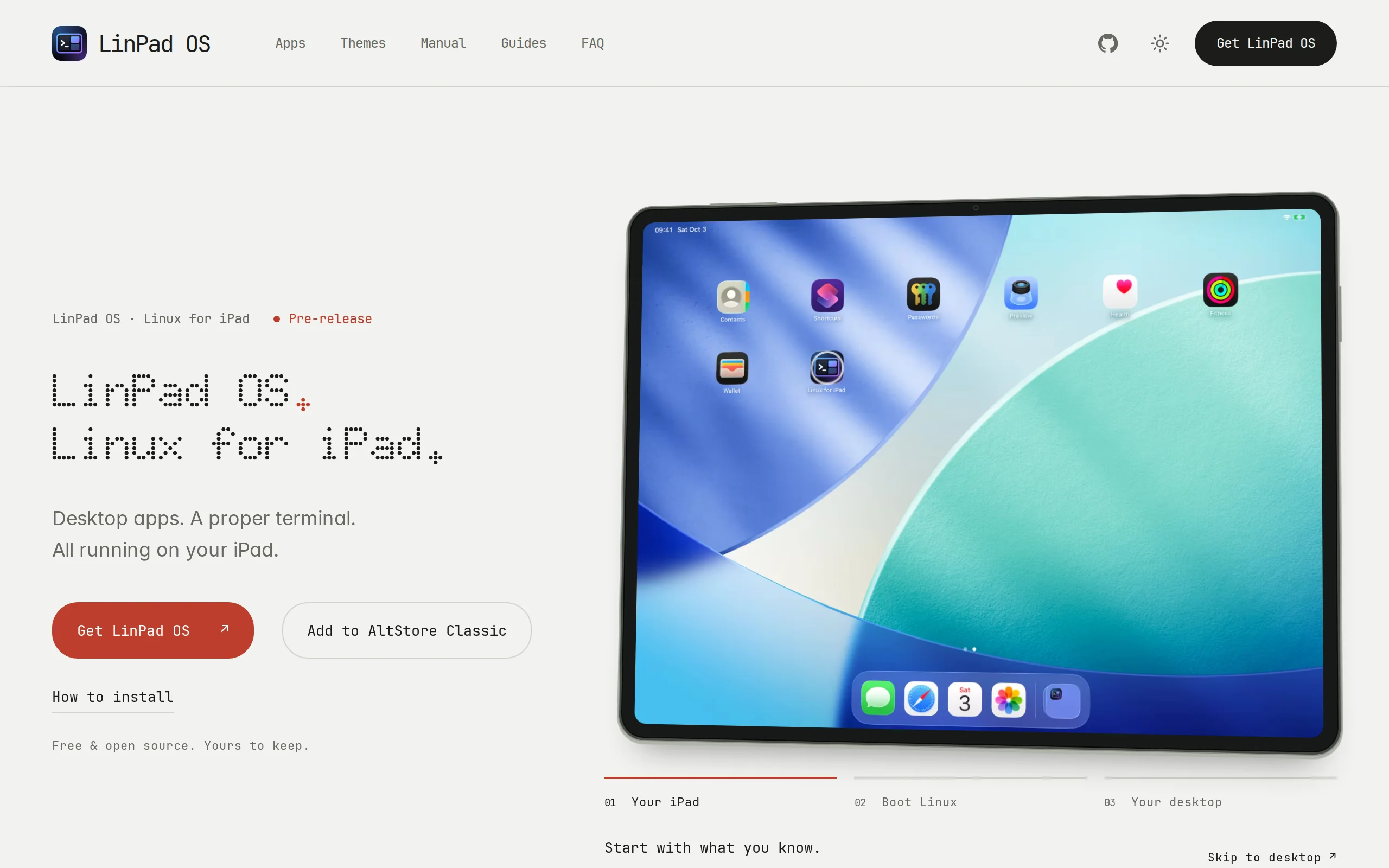
LinPad OS – Open-Source Native Linux Desktop Environment for iPad
LinPad OS is an open-source application designed for iPad, offering a complete local Alpine Linux environment and graphical desktop interface. This allows users to experience a multi-window Linux oper...

Review of Seedance 2.5 4K: Volcano Engine Enters the High-End Video Generation Market with 4K and 10-bit Color Depth
Seedance 2.5 4K is a premium version of the Seedance 2.5 base model, launched by Volcano Engine. It is positioned as a professional-grade tool for the film production and commercial advertising sector...
Hi3D 1.0 – Math Magic Open-Source Professional AI 3D Generation Model
Hi3D 1.0 is an open-source domestic AI 3D generation model developed by the Math Magic team, based on the Sparc3D architecture introduced in the NeurIPS 2025 paper. This model is trained on approximat...
© All Rights Reserved. Some content on this site is partially generated by AI with human review.