
In-Depth Review of Piccolo – The Open-Source Decision Model Series from Alibaba's AgentScope Team
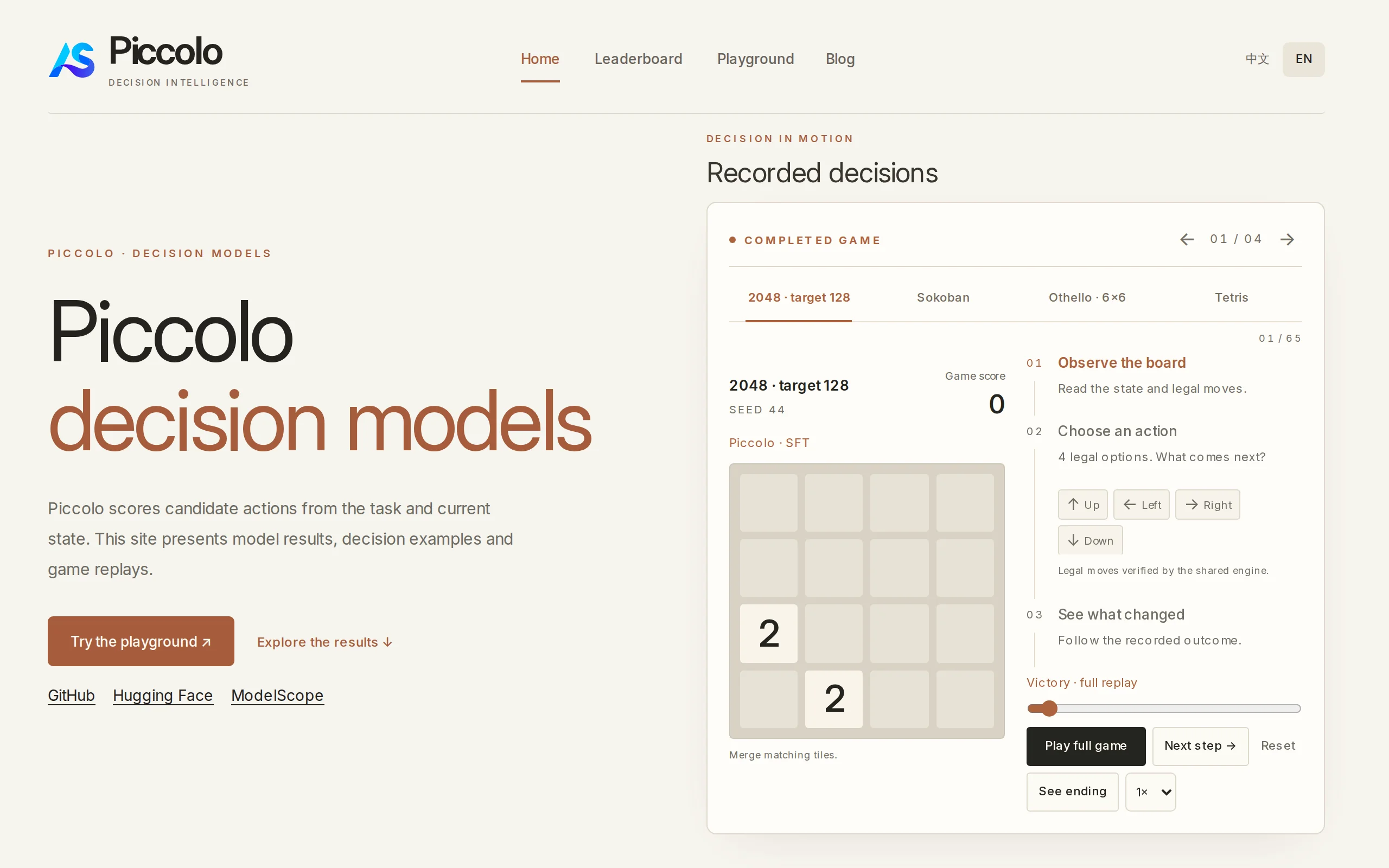
Executive Summary:
Piccolo is an open-source decision model series developed by Alibaba's AgentScope team, available in three sizes: 27B, 9B, and 4B. This series of models can directly output structured decision results...
1. What is Piccolo
Piccolo is an open-source decision model series developed by Alibaba's AgentScope team, available in three sizes: 27B, 9B, and 4B. This series of models can directly output structured decision results along with corresponding probabilities, making it suitable for critical components in intelligent agent workflows such as tool selection, permission judgment, and failure recovery. It is also applicable in scenarios like data processing and real-time decision-making in games. The 27B version achieves a 92.21% accuracy rate on the JevBench Public benchmark, with a text Decision Index of 68.59. The team has also built and open-sourced two scenario-based benchmarks, HarnessJevBench and DataJevBench, and employs a recursive self-improvement framework to continuously evolve the model through the analysis of agent errors and iterative data refinement.
Technical Positioning and Domain: Piccolo is a specialized judgment component in the fields of natural language processing and agent decision-making. Unlike general-purpose large language models that focus on broad text generation capabilities, Piccolo specializes in making high-quality decision judgments. Its role is as the "judgment core" within an agent workflow, addressing the central issue of what an agent should and should not do in complex execution chains.
Development Background: This model series was developed by Alibaba's AgentScope team. AgentScope is a multi-agent application development framework introduced by Alibaba. During the process of building and deploying agent applications, the team accumulated a large number of decision-making requirements—such as selecting tool calls, determining permission boundaries, and verifying task completion—which demand high-frequency, low-latency, and reliable judgment capabilities. This led to the development of the Piccolo series.
Core Value: Piccolo addresses the issue of decision reliability faced by agents during actual operation. The text generation approach of general large models has shortcomings in decision-making scenarios, such as high latency, unstable outputs, and difficulty in programmatic consumption. Piccolo directly reads the logits of candidate tokens to output structured decisions and probabilities, minimizing judgment latency while ensuring that decision results can be directly parsed and consumed by programs. This significantly enhances the automation level and stability of agent workflows.
Technical Features: The model employs a bidirectional prompt attention mechanism, allowing the question and the candidate options to reference each other throughout the process, without generating any text. The training data comes from 6.65 million samples collected from open-source communities, covering various tasks such as classification, retrieval, mathematical reasoning, and preference judgment. These samples are uniformly organized into a decision format of "state, question, candidate options, target distribution." The team has built a semantic labeling system with 13 annotation dimensions and 551 predefined values based on Data-Juicer, and uses a recursive self-improvement closed-loop to continuously optimize model performance.
2. Key Features
Tool Selection: Determine which tool should be called from the candidate tool list based on the current task objective, existing evidence, and constraints. For example, when a user inquires about a delivery date, the model can identify the need to call the query interface in the order system, rather than any unrelated tools.
Model Routing: When multiple models can accomplish the same task, decide which execution resource is most appropriate by considering factors such as budget, latency requirements, and task complexity. This capability directly contributes to controlling the operational costs of agents.
Context and Memory Filtering: Within the context of a conversation or workflow, determine which information should be retained and which outdated or irrelevant content can be filtered. This helps manage context length, reduce computational overhead for subsequent reasoning, while ensuring that critical information is not lost.
Permission and Trust Judgment: Make compliant decisions within the boundaries of permissions. For instance, if an Agent is only authorized to save drafts but not approved to send directly, the model will choose "save" instead of "send," effectively preventing unauthorized operations.
Completion Verification and Failure Recovery: After task execution, assess whether the evidence is sufficient and whether the result meets the completion criteria; if the evidence is insufficient, continue verification, and determine whether to retry in case of temporary failures. This capability is crucial for ensuring the reliability of autonomous agent operations.
Data Processing Decisions: In data workflows, determine the order of data cleaning and deduplication, select an appropriate summarization method, request additional information when fields are missing, and decide whether to perform data anonymization before transmitting data, enabling automated decision-making in data pipelines.
Real-time Gaming Decisions: Provide operation guidance at the key-press level for continuous actions such as movement, attack, and dodging based on the game's visual state, and support various game types including action, puzzle, and board games, showcasing the model's capabilities in real-time decision-making scenarios.
3. Application Scenarios
Agent Tool Auto-Approval: Embed QwenPaw or a custom Agent runtime to automatically evaluate each tool call. Allow read-only operations and block destructive commands such as overwriting writes, replacing traditional manual line-by-line approval processes. This ensures security while significantly improving operational efficiency.
Context Compression and Memory Filtering: When context pressure increases, the model determines which historical messages and tool results are low-relevance content and decides whether to compress or discard them, while retaining key information. This feature effectively controls costs and maintains response quality in long conversation scenarios.
Data Processing Workflow Decision-Making: Make decisions at each stage of data intake, cleaning, anonymization, and delivery. For example, determine the order of cleaning and deduplication, request additional information when a tax amount field is missing, or decide whether email anonymization is needed before data transmission, achieving full automation across the entire data pipeline.
Business Process Authorization and Acceptance Judgment: During Agent execution control, the model determines whether an operation exceeds authorized limits, whether the task evidence is sufficient to declare completion, and whether to retry upon encountering temporary failures. This is suitable for industries such as finance, government services, and enterprise solutions that have strict requirements for compliance and operational boundaries.
Real-Time Decision-Making in Gaming and Interactive Environments: Provide key-level action guidance for character movement, attack, and evasion based on the game screen. It can also be used in strategy games such as Othello and Sokoban that require situational judgment. This scenario demonstrates the model's performance in high-frequency, real-time decision-making tasks.
4. How to Use
Online Experience: Visit the official online experience page at https://decisionplayground.agentscope.io/ to try it out directly without downloading any model files. You can quickly experience Piccolo's decision-making performance across various judgment tasks, making it ideal for initial evaluation and feature verification.
Download Model Weights: Choose from the full weights or three GGUF quantized versions (BF16, Q8_0, Q4_K_M) of 4B, 9B, and 27B models available on Hugging Face. When selecting GGUF format, ensure that each shard file is downloaded to the same directory to allow proper concatenation during loading.
Local Runtime Environment Setup: Install QwenPaw and its Piccolo-compatible llama.cpp runtime from the source code. In the Models section of the QwenPaw interface, select QwenPaw Local → Decision models, download the corresponding GGUF file, and click Start. Then, confirm in the Default models section that the default decision model is pointing to this model.
Enable Automatic Review Functionality: Enable the Use decision model option in the session model menu and select Decision Model Mode in the tool approval settings. Thereafter, Piccolo will automatically evaluate and control each tool call, while still retaining manual approval as a fallback option.
Enable Context Compression: After enabling the Context Compaction feature, turn on the Decision Model Compaction switch. Piccolo will determine which tool results are low-relevance and compressible when the context reaches a threshold, enabling dynamic context management.
Integrate with Custom Workflow via API: Refer to the example inference implementation in the repository's inference/ directory and the minimal request example in examples/. Call the native /v1/systemone endpoint, sending requests in the "status, question, candidates" format, and parse the returned structured decision and probability results.
Watch Demo Replays: After cloning the GitHub repository, run the interactive Arena tool in the arena/ directory. You can pause, drag, and view each decision's candidate probabilities individually in the nine archived replays, such as combat scenarios from Zero Zero Zero, to gain deeper insight into the model's actual decision-making process.
5. Pros and Cons Analysis
| Pros |
|---|
| Fully open-sourced with a permissive license: The 4B, 9B, and 27B model sizes, along with their weights, are all released under the Apache-2.0 license. Full weights and three GGUF quantization formats are provided, covering deployment needs from the cloud to local environments, with no legal barriers for commercial use. |
| Excellent performance in small size: The 4B version achieves 87.01% on JevBench Public and a Decision Index of 58.00, surpassing the performance of most competitors' 9B versions. It meets the needs of high-frequency invocation and cost sensitivity in decision-making models, maintaining good decision quality even in low-compute environments. |
| Leading benchmark performance: The 27B version achieves 92.21% on JevBench Public and a Decision Index of 68.59. In the team's 11-model comparison, it ranks first in HarnessJevBench, DataJevBench, and JevBench, demonstrating consistent decision accuracy. |
| Low-latency decision interface: It directly reads the logits of candidate tokens and returns structured results and probabilities, without generating any text. Combined with bidirectional attention and flex_twice input arrangement, the optimized inference path makes it naturally suitable for high-frequency judgment tasks embedded in workflows. |
| Seamless integration with the Alibaba ecosystem: The model is hosted on the ModelScope platform and has been integrated into the QwenPaw main version. It allows one-click activation of tool auto-approval and context compression features. It is also source-compatible with the AgentScope framework, offering the shortest onboarding path and seamless integration with the Alibaba technology stack. |
| Fully open-stack engineering: The data pipeline for recursive self-improvement (Agentic Data Engineering, DataJuicer-Sandbox), as well as the two scene benchmarks, HarnessJevBench and DataJevBench, are all open-sourced. The community can fully reproduce the research process and contribute improvement proposals. |
6. Comparative Analysis with Similar Tools
Below is a multi-dimensional comparison of Piccolo with other decision-making models and general-purpose large models currently available on the market.
| Comparison Dimension | Piccolo-27B (AgentScope) | JEV (Autotrust) | DeepSeek-V3 |
|---|---|---|---|
| Core Positioning | A specialized decision-making model series for agents and data workflows | An open-source Jev-style decision-making model, primarily focused on replicating the closed-source Jev | A general-purpose large language model, excelling in text generation and reasoning |
| Model Specifications | Three sizes: 4B / 9B / 27B, full spectrum coverage, suitable for different computational scenarios | Mainly 27B, with a VL multimodal variant | 671B MoE architecture (activated 37B), single large-scale size |
| Open Source License | Apache-2.0, full openness of weights and code | Open-source weights, with specific licenses per repository | MIT license, open-source weights, active community ecosystem |
| Interface Form | Native/v1/systemone endpoints, bidirectional attention reads candidate logits, no text generation | Compatible with Jev decision protocol, dual-channel System 1/2 design | Standard Chat Completions interface, generates token text |
| Decision Performance | JevBench Public 92.21%, Decision Index 68.59 | Average of six public benchmarks at 84.07, roughly comparable to closed-source Jev | Excellent performance on general benchmarks, no specialized decision-making benchmark results |
| Scenario Benchmarks | Self-built and open-sourced HarnessJevBench (84.41%), DataJevBench (82.60%) | Primarily relies on general public benchmarks, no equivalent scenario-specific benchmarks | Relies on general public benchmarks, no scenario-specific decision-making benchmarks |
| Ecosystem Integration | Hosted on ModelScope, integrated into the QwenPaw mainline, enabling one-click activation of tool approval and context compression | Independently released, integration requires self-connection | Large open-source community, compatible with OpenAI API format, convenient integration |
| Engineering Openness | Entire RSI data pipeline (Agentic Data Engineering, DataJuicer-Sandbox) is open-sourced | Primarily focuses on model weights, with limited disclosure of training and data engineering details | Training framework and inference code are open-sourced, with detailed technical reports |
Selection Recommendations: For development teams planning to build agent applications, especially those requiring tool calling approval and context compression capabilities, Piccolo offers a complete solution from model weights to workflow orchestration, thanks to its Apache-2.0 license and native QwenPaw integration, making it ideal for technically oriented teams seeking autonomy and deep customization.
For enterprise users who have already adopted an OpenAI-compatible API architecture, JEV provides decision-making performance comparable to the closed-source Jev, and can be integrated into existing systems via a relatively standardized interface. If an enterprise needs to balance decision-making capabilities with general text generation requirements and has already built applications within the Alibaba Cloud ecosystem, Qwen-Max, as a closed-source commercial solution, offers a convenient API calling method. If open-source autonomy and sufficient computational resources are priorities, DeepSeek-V3 has advantages in general capabilities, but lacks Piccolo's specialized decision-making interface and performance optimizations.
7. Editor's Summary
Piccolo represents a significant technical practice by the Ali AgentScope team in the field of agent decision-making. From an innovation perspective, this model series has made valuable explorations in three areas: first, the design of the decision-making interface — by utilizing bidirectional prompt attention and directly reading the logits of candidate tokens, it achieves a pure judgment output without generating any text, a design that offers clear differentiation within the current large model ecosystem; second, a unified data engineering approach — it systematically organizes 6.65 million samples covering various tasks such as classification, retrieval, and reasoning into a decision-making format of "state, question, candidates, target distribution," and establishes a semantic tagging system with 13 annotation dimensions and 551 predefined values, providing a reusable methodology for training data governance of decision models; third, the engineering of a recursive self-improvement closed-loop — by driving error analysis and data iteration through Agent research, and leveraging DataJuicer-Sandbox to automate data processing, training, and evaluation workflows, it offers a fully operational mechanism for continuous model evolution.
From a practical value standpoint, the 4B version of Piccolo maintains high decision accuracy while also meeting cost control requirements, aligning well with the product positioning of high-frequency invocation for decision models. Its deep integration with QwenPaw, hosting on the ModelScope platform, and the Apache-2.0 license make the path from evaluation to production deployment relatively smooth. For development teams building or optimizing agent applications, enterprise users looking to embed automated judgment capabilities into data workflows, and game AI developers, Piccolo provides a complete open-source solution. The full openness of the model's training pipeline and scenario benchmarks also creates opportunities for academic research and community collaboration.
Looking ahead, the specialized decision-making model direction represented by Piccolo — delivering structured decision results with extremely low latency and directly embedding into business logic — is a crucial step toward the maturation of agent infrastructure. As agent applications become more deeply integrated into industries such as finance, government services, and healthcare, efficient and reliable decision-making capabilities will become increasingly important. The team's approach of fully open-sourcing the training data pipeline and benchmarks lays a solid foundation for the ongoing evolution of this technical path.
8. FAQ
Q: What differentiates Piccolo from general-purpose large models (such as Qwen, DeepSeek)?
A: Piccolo is a specialized decision-making model that does not generate text, but instead directly outputs structured decision results and probabilities. It takes in "state, question, and candidates" and returns judgment results by reading the logits of candidate tokens. Its response latency is significantly lower than the text generation approach used by general-purpose large models. General-purpose large models are designed for broad language understanding and generation, while Piccolo is designed as a high-frequency judgment component within an agent workflow. These two models are complementary rather than substitutes, with completely different use cases and objectives.
Q: Can Piccolo be deployed and run locally? What hardware configuration is required?
A: Yes, Piccolo can be deployed locally. The 4B version is suitable for consumer-grade GPUs and CPUs, the 9B version requires a GPU with at least 8GB of VRAM, and the 27B version is recommended for GPUs with 24GB or more VRAM (such as RTX 3090/4090 or A10 professional cards). In addition to full weights, the team also provides three GGUF quantization formats: BF16, Q8_0, and Q4_K_M. Among these, Q4_K_M can reduce resource consumption by approximately 75%, making it suitable for deployment environments with limited memory resources.
Q: How can I integrate Piccolo into my own Agent framework?
A: Piccolo provides native endpoints such as /v1/systemone, compatible with the Jev protocol. The request format consists of three parts: "state, question, and candidates," and it returns structured decisions along with the probability of each candidate option. The inference/ directory in the GitHub repository contains reference implementations for inference, while the examples/ directory provides minimal request examples. Engineering teams can refer to these examples to quickly integrate Piccolo into their custom workflows.
Q: Does Piccolo's recursive self-improvement (RSI) mechanism run automatically?
A: The recursive self-improvement mechanism is driven by a research agent, with the core signal being per-question KL loss. After the system slices and aggregates data by semantic tags, it automatically rechecks answers, retrieves similar materials, or synthesizes more conditional combinations for data with consistently high deviation. However, full RSI pipeline operation requires certain engineering configurations, including an Agentic Data Engineering environment and a DataJuicer-Sandbox workflow orchestrator. The team has fully open-sourced this pipeline, allowing the community to reproduce and contribute to its improvement.
Q: What is the specific processing latency of Piccolo? How much faster is it compared to text generation?
A: Since Piccolo does not generate any text throughout the process, but instead directly reads the logits of candidate tokens to output decision results, its inference latency is significantly lower than the text generation approach of general-purpose large models with the same parameter scale. According to the team's published architecture design, the interface is naturally suited for high-frequency judgment tasks within workflows, thanks to the flex_twice input arrangement optimization. Specific latency data is influenced by hardware, and it is recommended to obtain end-to-end latency metrics for each model size through the official online experience platform or by deploying locally.
Q: Does Piccolo support Chinese input? Is there a difference in decision-making performance between Chinese and English inputs?
A: Piccolo's training data covers multiple task types, including Chinese data, and the model can process both Chinese and English inputs. However, as a decision-making model, its output is structured candidate selection rather than natural language. Therefore, its language capability mainly manifests in the understanding of the question and the candidate options. For specific performance in Chinese scenarios, it is recommended to conduct practical tests using Chinese examples on the online experience platform.
Q: Is it allowed to use the model weights in commercial projects?
A: Yes. The Piccolo series models (4B, 9B, 27B) are released under the Apache-2.0 license, which allows free use, modification, and distribution, including for commercial purposes, without requiring derivative works to be open-sourced. This provides clear legal protection and flexibility for enterprise users who wish to integrate the model into commercial products.
9. Project Links
- Project Website (Online Experience): https://decisionplayground.agentscope.io/
- GitHub Repository: https://github.com/agentscope-ai/Piccolo
Related
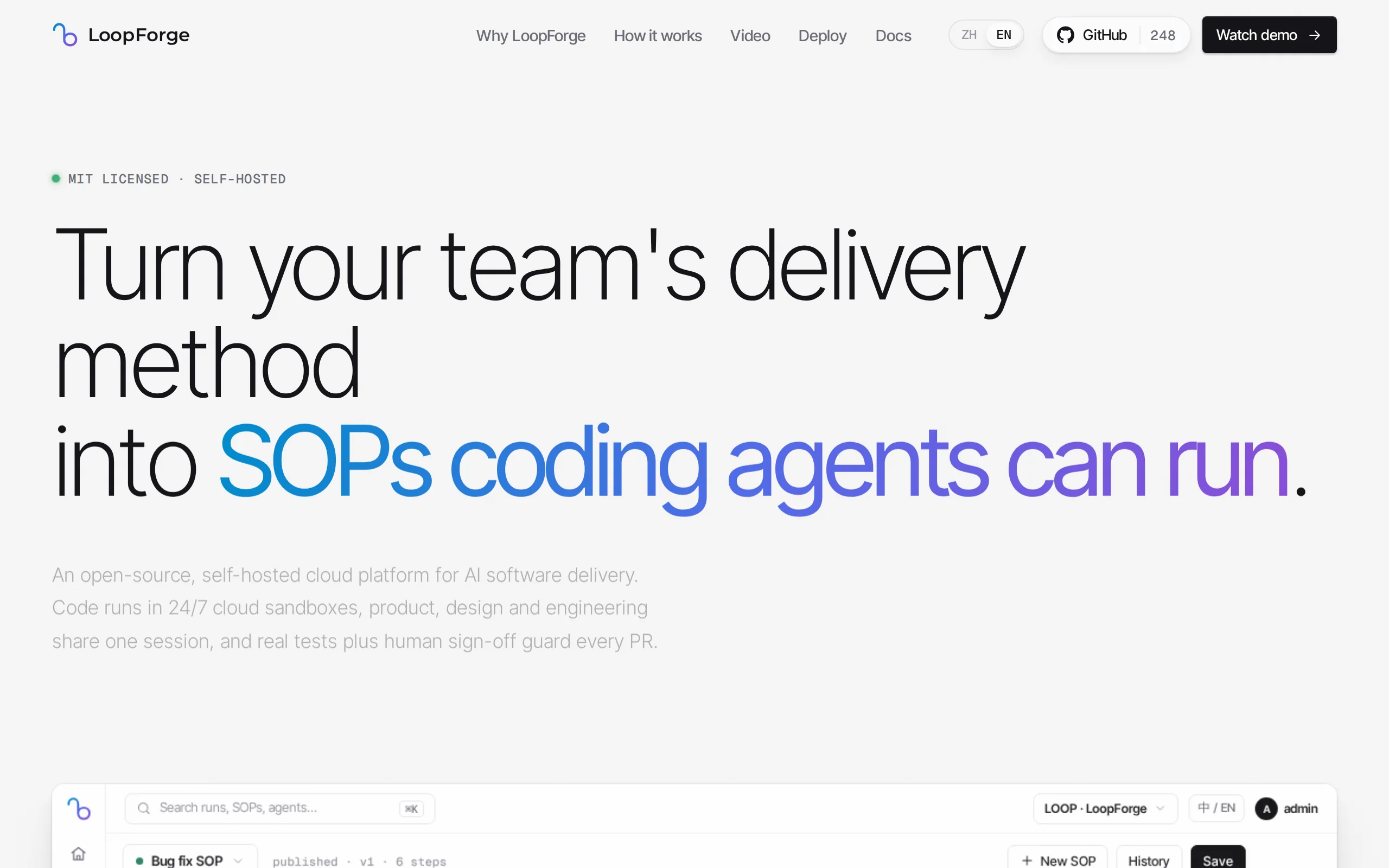
LoopForge – Tencent's Open-Source Cloud-Based AI R&D Collaboration Platform
LoopForge is an open-source, team-level cloud-based AI R&D collaboration platform developed by Tencent, designed to address engineering breakpoints that occur during multi-Agent handover processes. Un...
Muse Ember Review: Meta Redefines the Efficiency Boundaries of Lightweight Models
Muse Ember is Meta's smallest parameter-scale AI model introduced in mid-2026, specifically designed for high-frequency, repetitive tasks in agents. According to official benchmark data, this model ac...
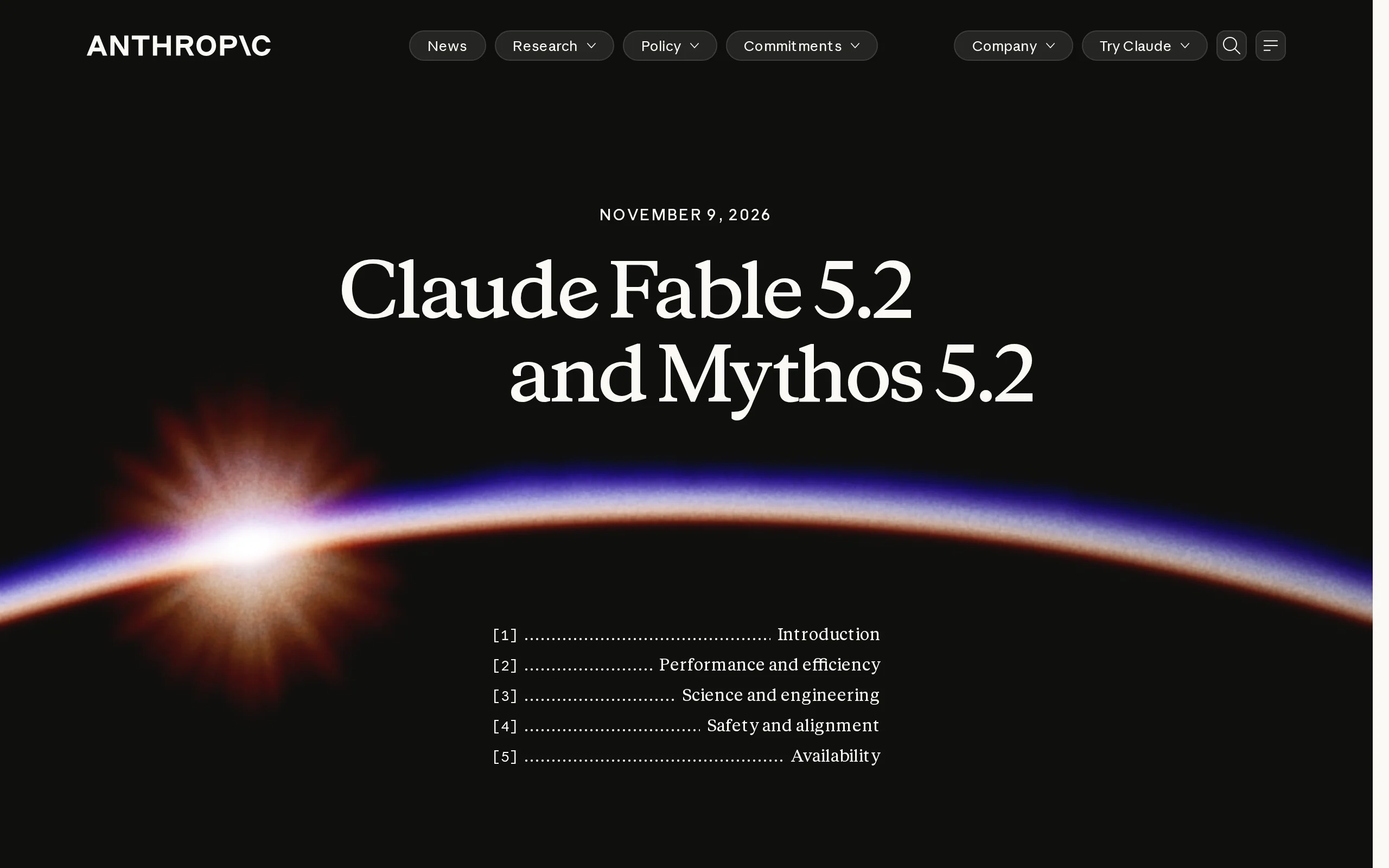
Claude Fable 5.2 – Anthropic's Flagship AI Model
Claude Fable 5.2 is Anthropic's flagship AI model, sharing a common origin with the security-focused Claude Mythos 5.2. This model is renowned for its capability of autonomous collaboration among thou...
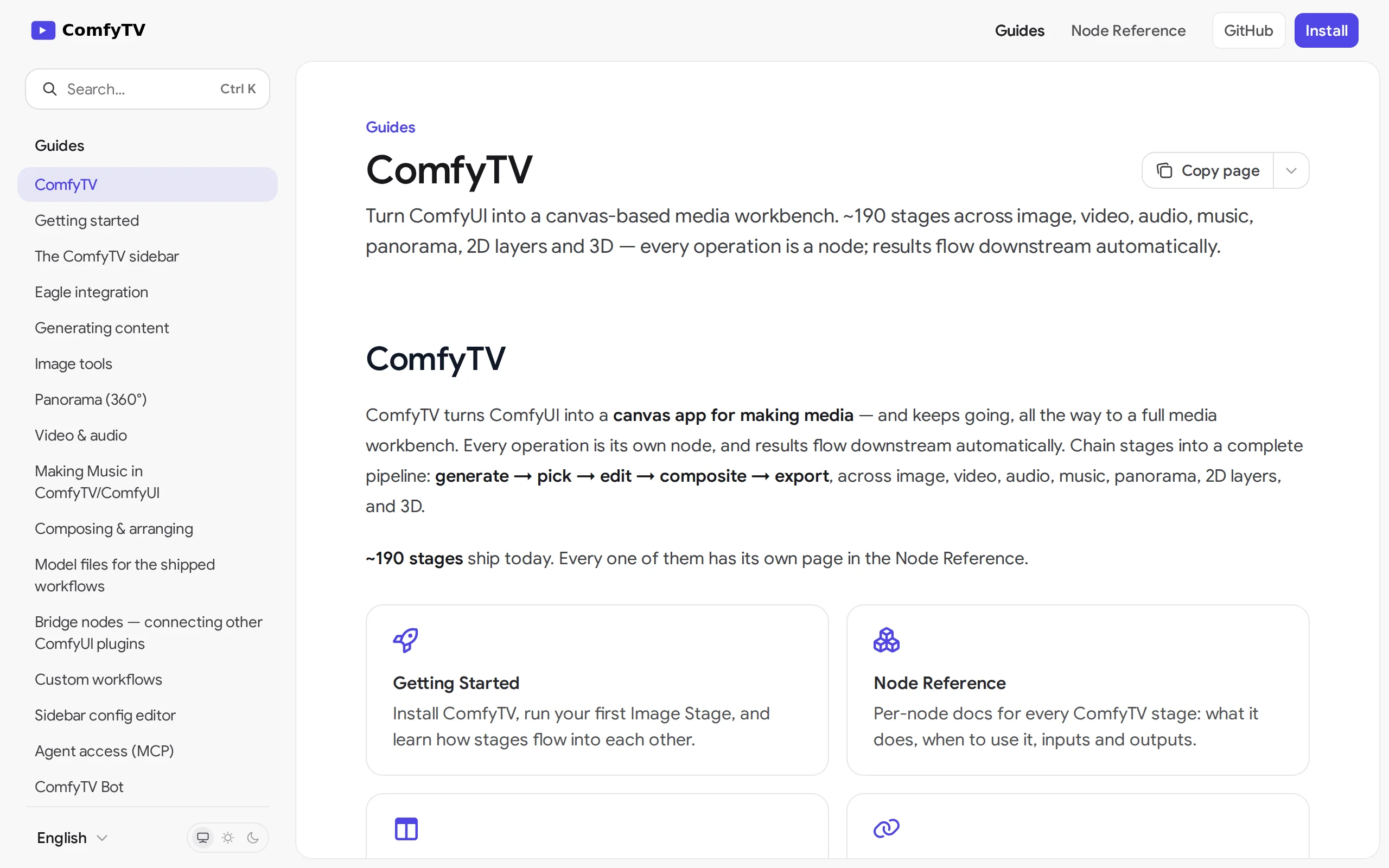
ComfyTV – Open-Source ComfyUI Plugin, Local Infinite Canvas Media Workbench
ComfyTV is an open-source ComfyUI plugin that operates entirely locally, transforming ComfyUI into an infinite canvas-style media workbench similar to TapNow and LibTV. Each operation on the canvas is...
© All Rights Reserved. Some content on this site is partially generated by AI with human review.